Photo
Browse an alphabetical list of photographs. These historical images portray people, places, and events before, during, and after World War II and the Holocaust.
<< Previous | Displaying results 276-300 of 2608 for "Photo" | Next >>
-
Antisemitic graffiti
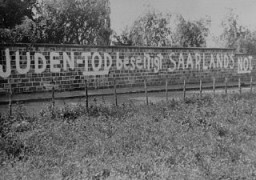
PhotoAntisemitic graffiti painted on the wall of a Jewish cemetery reads "The death of the Jews will end the Saarland's distress." Berlin, Germany, November 1938.
-
Antisemitic graffiti in Danzig
PhotoAntisemitic graffiti on Jewish-owned businesses on a Danzig street in 1935. The local Nazi Party had dominated the Danzig Senate since 1933. Danzig, 1935.
-
Antisemitic graffiti in Danzig
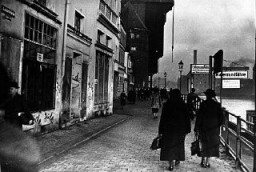
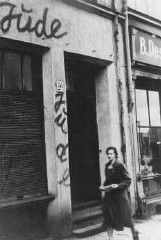
PhotoAntisemitic graffiti on a Jewish-owned shop that has been forced to close. Danzig, 1939.
-
Antisemitic graffiti in Vienna, Austria
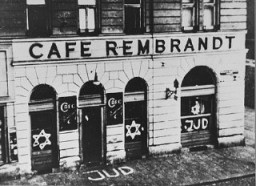
PhotoA Jewish-owned cafe in Vienna that was defaced with antisemitic graffiti. Vienna, Austria, November 1938.
-
Antisemitic handbills, posters, and stickers
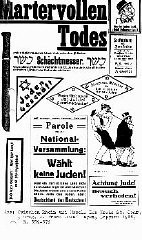
PhotoAn assortment of antisemitic handbills, posters, and stickers from Germany, 1919.
-
Antisemitic illustration on a page of Der Stürmer
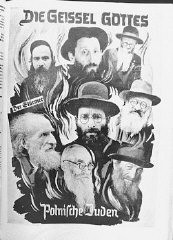
PhotoPage of Der Stürmer (The Attacker), a viciously anti-Jewish newspaper published by Julius Streicher. The illustration is an antisemitic photomontage, Germany, 1939. This image was presented as evidence at the Nuremberg trials.
-
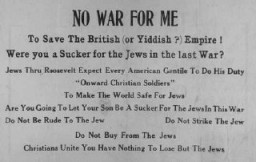
Antisemitic isolationist publication
PhotoAn antisemitic isolationist publication in the United States, ca. 1938–41. It blames Jews and Jewish interests for the war and advocates the boycott of Jewish businesses.
-
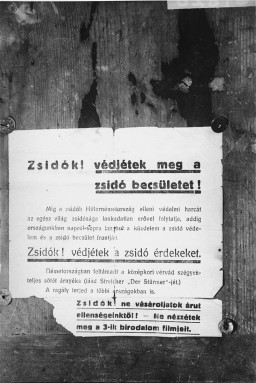
Call for Jews to fight antisemitism in prewar Hungary
PhotoThis photo shows a placard urging Hungarian Jews to unite against rising antisemitism in prewar Hungary and Europe. It rallies Jews to protest, using such phrases as: "Protect Jewish honor!”; “Do not buy from our enemies!”; and “Do not watch movies from the Third Reich." Hungary, 1937.
-
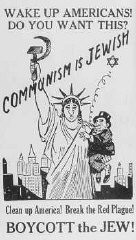
Antisemitic poster in the United States
PhotoAntisemitic poster equating Jews with communism. The poster calls for the boycotting of Jewish interests. United States, 1939.
-
Antisemitic poster published in German-occupied Poland in March 1941.
PhotoAn antisemitic poster published in German-occupied Poland in March 1941. The caption reads, "Jews are lice; They cause typhus." This German-published propaganda poster was intended to instill fear of Jews among Christian Poles.

-
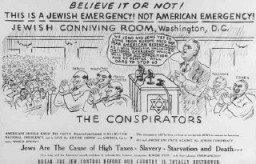
Antisemitic propaganda in the United States
PhotoAntisemitic propaganda in the United States that presents President Franklin D. Roosevelt's declaration of a state of unlimited national emergency as the product of an international Jewish conspiracy to save world Jewry and to bring destruction upon America. United States, ca. 1938–41. Among the antisemitic declarations on the caricature are: "Jews Are The Cause of High Taxes - Slavery - Starvation and Death ---" "How long will the American people continue to tolerate this…
-
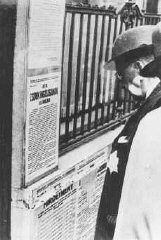
Antisemitic regulations posted in Budapest
PhotoA Jewish man wearing a yellow star reads newly posted antisemitic regulations in Budapest. Hungary, 1944.
-
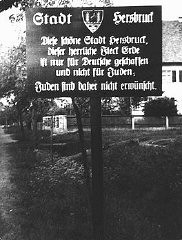
Antisemitic sign outside a town in northern Bavaria
PhotoA sign outside a town in northern Bavaria warns: "City of Hersbruck. This lovely city of Hersbruck, this glorious spot of earth, was created only for Germans and not for Jews. Jews are therefore not welcome." Hersbruck, Germany, May 4, 1935.
-
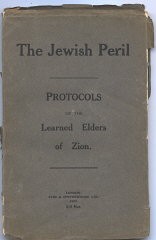
Antisemitic work published in London
PhotoCover of The Jewish Peril: The Protocols of the Learned Elders of Zion, published in London, 1920. The Protocols of the Elders of Zion is the most notorious and widely distributed antisemitic publication of modern times. Its lies about Jews, which have been repeatedly discredited, continue to circulate today, especially on the Internet.
-
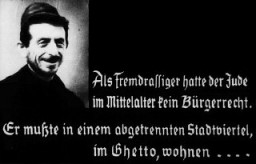
Antisemitism illustration from a Nazi film strip
PhotoAn antisemitic illustration from a Nazi film strip. The caption, translated from German, states: "As an alien race Jews had no civil rights in the middle ages. They had to reside in a restricted section of town, in a ghetto." Place and date uncertain.
-
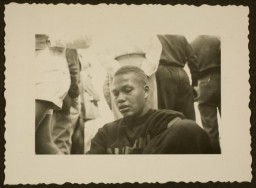
Archie Williams at the 1936 Olympic Games in Berlin
PhotoAfrican American athlete Archie Williams competed in the 1936 Berlin Olympic Games. He won the gold medal in the 400-meter race. The US team was the second largest to compete in the 1936 Summer Olympic Games with 312 members, including 18 African Americans.
-
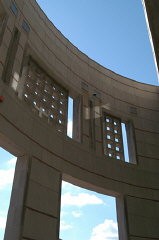
Architectural detail
PhotoDetail of the 14th Street facade of the United States Holocaust Memorial Museum. Washington, DC, April 2003.
-
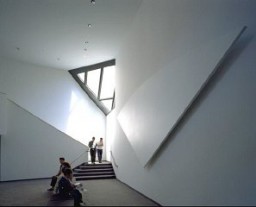
Architectural details in the United States Holocaust Memorial Museum.
PhotoArchitectural details in the third floor lounge in the United States Holocaust Memorial Museum.
-
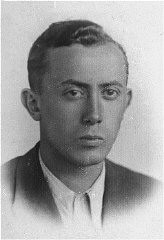
Arie Wilner
PhotoArie Wilner, a founder of the Warsaw ghetto's Jewish Fighting Organization (ZOB). He was killed in the Warsaw ghetto uprising. Warsaw, Poland, before 1943.
-
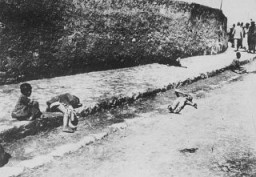
Armenian children lie in the street of an unidentified town
PhotoArmenian children lie in the street of an unidentified town. Photograph taken by Armin T. Wegner. Wegner served as a nurse with the German Sanitary Corps. In 1915 and 1916, Wegner traveled throughout the Ottoman Empire and documented atrocities carried out against the Armenians. [Courtesy of Sybil Stevens (daughter of Armin T. Wegner). Wegner Collection, Deutsches Literaturarchiv, Marbach & United States Holocaust Memorial Museum.]
-
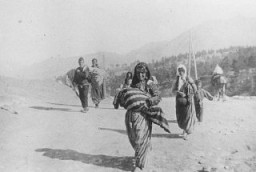
Armenian deportees
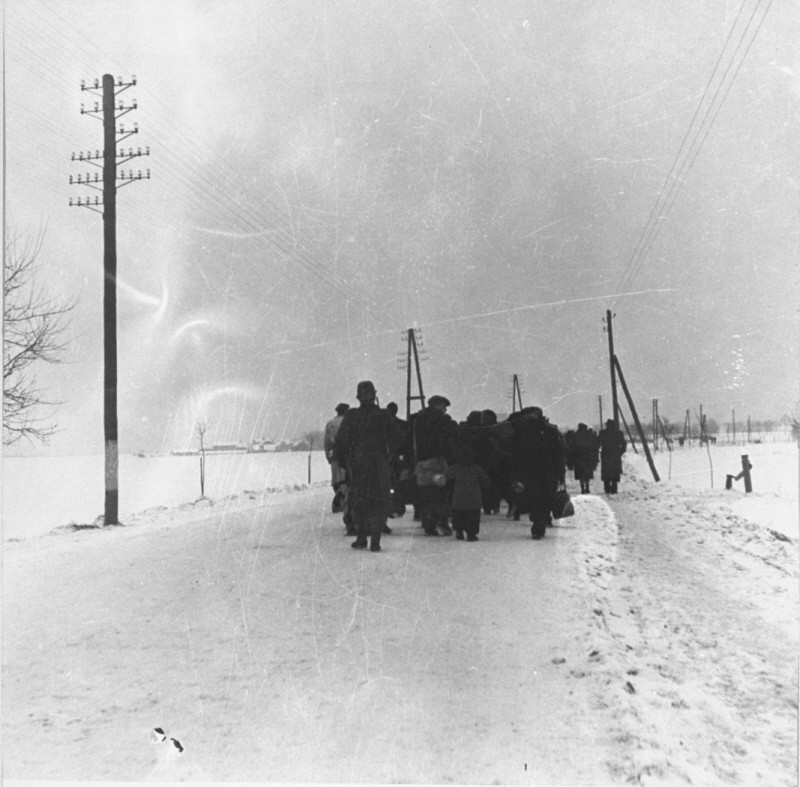
PhotoA small group of Armenian deportees walking through the Taurus Mountain region, carrying bundles. A woman in the foreground carries a child. Ottoman Empire, ca. November 1915. Photograph taken by Armin T. Wegner. Wegner served as a nurse with the German Sanitary Corps. In 1915 and 1916, Wegner traveled throughout the Ottoman Empire and documented atrocities carried out against the Armenians. [Courtesy of Sybil Stevens (daughter of Armin T. Wegner). Wegner Collection, Deutsches Literaturarchiv, Marbach…
-
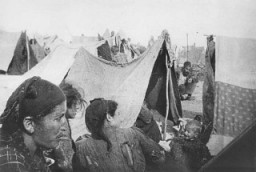
Armenian families in a refugee camp
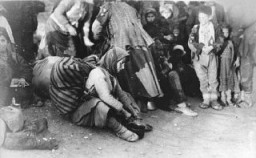
PhotoArmenian families next to makeshift tents in a refugee camp. Ottoman Empire, 1915-16.Photograph taken by Armin T. Wegner. Wegner served as a nurse with the German Sanitary Corps. In 1915 and 1916, Wegner traveled throughout the Ottoman Empire and documented atrocities carried out against the Armenians. [Courtesy of Sybil Stevens (daughter of Armin T. Wegner). Wegner Collection, Deutsches Literaturarchiv, Marbach & United States Holocaust Memorial Museum.]
-
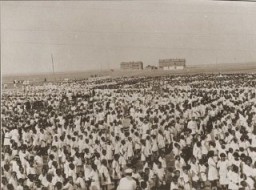
Armenian refugee children
PhotoA group of 1,500 Armenian children at a refugee camp of the Near East Relief organization in Alexandroupolis. Greece, 1921–22.
-
Armenian refugees
PhotoA group of Armenian refugees. 1915-20. Sometimes called the first genocide of the twentieth century, the Armenian genocide refers to the physical annihilation of Armenian Christian people living in the Ottoman Empire from spring 1915 through autumn 1916. There were approximately 1.5 million Armenians living in the multiethnic Ottoman Empire in 1915. At least 664,000 and possibly as many as 1.2 million died during the genocide, either in massacres and individual killings, or from systematic ill treatment,…
-