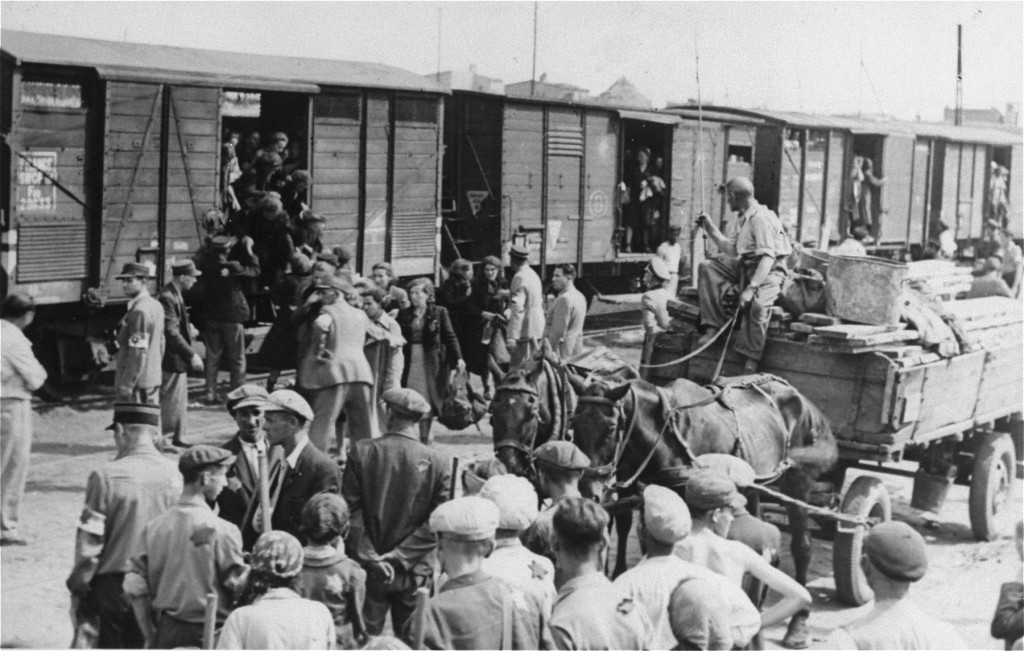
Jews from the Łódź ghetto are loaded onto freight trains for deportation to the Chełmno killing center. Łódź, Poland, 1942–1944.
Item View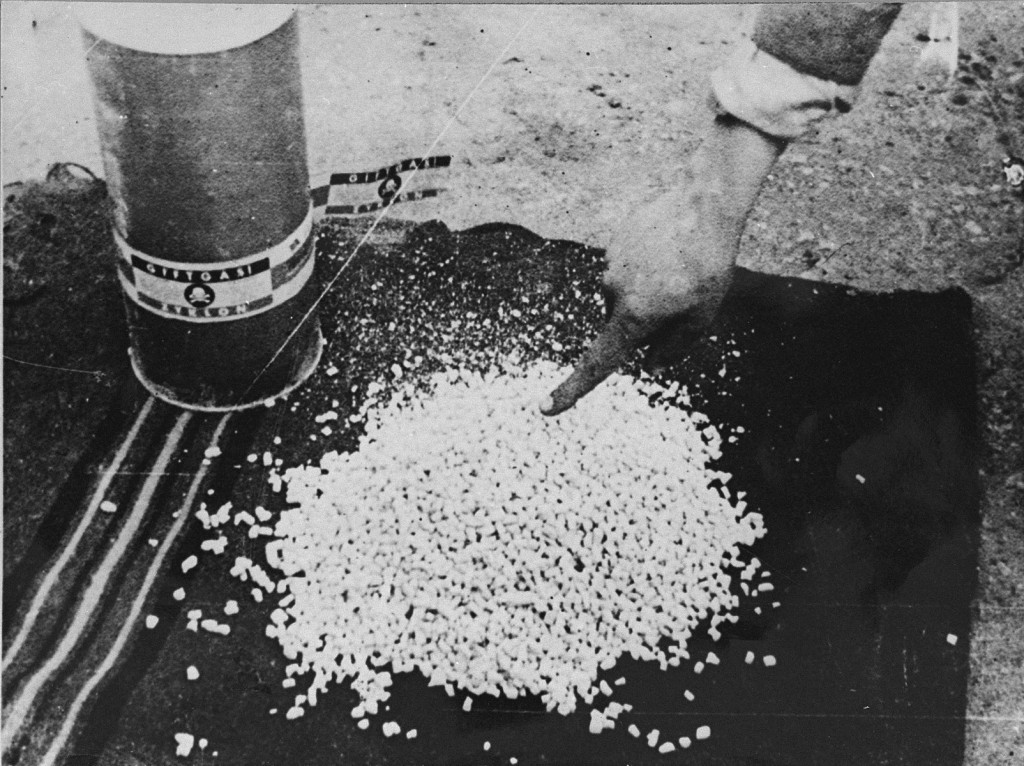
Zyklon B pellets found after Soviet forces liberated the Lublin concentration camp (called Majdanek) in late July 1944. The Nazis used Zyklon B to murder Jews in the gas chambers of the Auschwitz-Birkenau killing center and at other sites, including Majdanek.
Zyklon B is the brand name of a pesticide and disinfectant distributed by the Degesch company (Deutsche Gesellschaft für Schädlingsbekämpfung mbH), a subsidiary of the German chemical company Degussa. Zyklon B is produced as pellets infused with hydrogen cyanide, a poisonous gas. When these pellets are exposed to air, the hydrogen cyanide is released. Before World War II, Zyklon B was commonly used for fumigation (killing bugs and pests). It was also an effective disinfectant. The Nazis used Zyklon B not only for its intended purpose as a disinfectant, but also to murder people in gas chambers.
Item View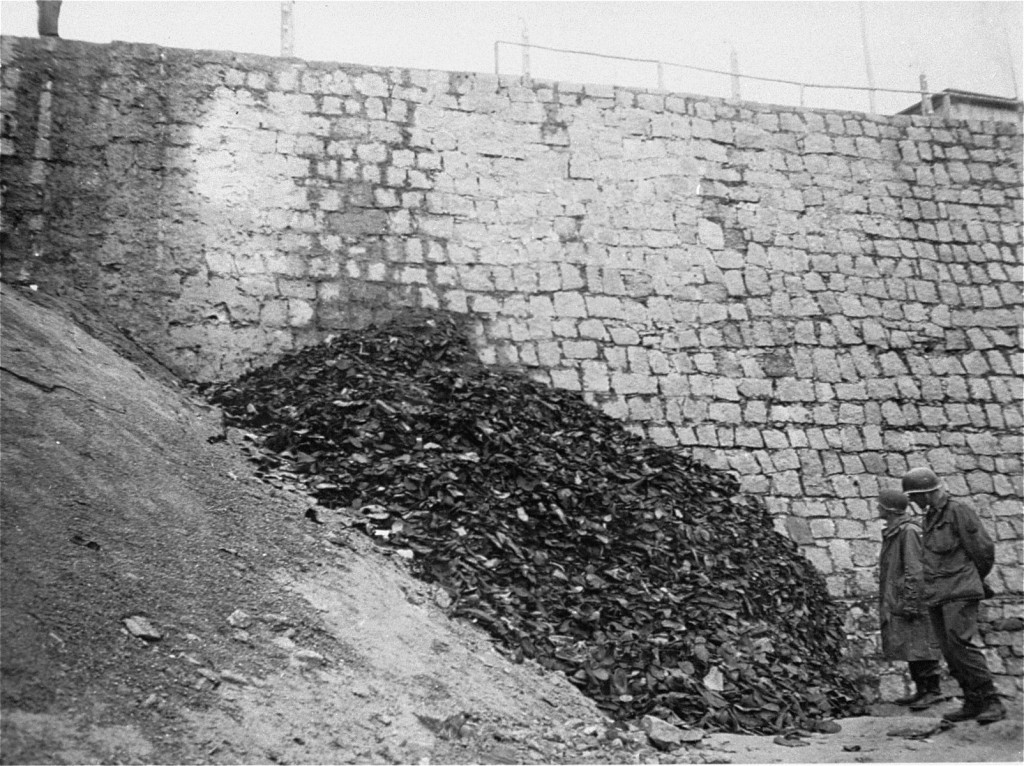
After the liberation of the Flossenbürg concentration camp, two US army infantrymen examine a pile of shoes belonging to victims of the camp. Flossenbürg, Germany, April–May 1945.
Item View![The valuables displayed here were confiscated from prisoners by German guards at the Buchenwald concentration camp and later found ... [LCID: 0230]](https://encyclopedia.ushmm.org/images/large/1144e26b-94cd-47a2-9b17-ca09c4dc116a.jpg "The valuables displayed here were confiscated from prisoners by German guards at the Buchenwald concentration camp and later found ... [LCID: 0230]")
The valuables displayed here were confiscated from prisoners by German guards at the Buchenwald concentration camp and later found by soldiers of the Third US Army after the liberation of the camp. Buchenwald, Germany, after April 1945.
Item View![Soviet officials view stacked corpses of victims at the Klooga camp. [LCID: 03182]](https://encyclopedia.ushmm.org/images/large/1b5fdac0-12f8-4944-923a-e40028e43357.jpg "Soviet officials view stacked corpses of victims at the Klooga camp. [LCID: 03182]")
Soviet officials view stacked corpses of victims at the Klooga camp. Due to the rapid advance of Soviet forces, the Germans did not have time to burn the corpses. Klooga, Estonia, 1944.
Item View
Dr. Fritz Klein stands among corpses in a mass grave at Bergen-Belsen, after the liberation of the camp. He was required to assist in the burial of inmates who died there. Klein was a camp doctor at both Auschwitz and Bergen-Belsen. Germany, after April 15, 1945.
Item View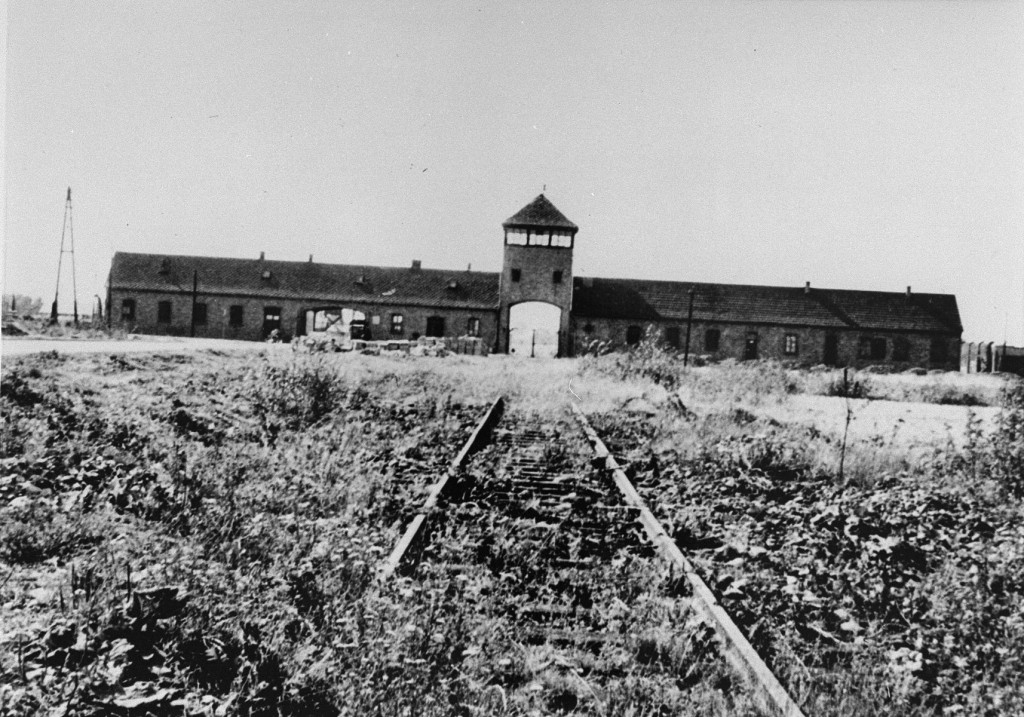
Post-liberation photograph showing the main entrance to the Auschwitz-Birkenau concentration camp and killing center. Beginning in spring 1942, the Nazis murdered hundreds of thousands of Jews in the gas chambers of Auschwitz-Birkenau. This photograph was taken some time after Soviet forces liberated Auschwitz on January 27, 1945, but the exact date is unknown.
Item ViewWe would like to thank Crown Family Philanthropies, Abe and Ida Cooper Foundation, the Claims Conference, and BMF for supporting the ongoing work to create content and resources for the Holocaust Encyclopedia. View the list of all donors.

![Generals Eisenhower, Patton, and Bradley view corpses of inmates at Ohrdruf, a subcamp of Buchenwald. [LCID: 10315]](https://encyclopedia.ushmm.org/images/large/d5c8ae20-5cdd-4664-a513-0bc6e3477ef4.jpeg "Generals Eisenhower, Patton, and Bradley view corpses of inmates at Ohrdruf, a subcamp of Buchenwald. [LCID: 10315]")