
Charles Lindbergh and the “War Agitators” Speech
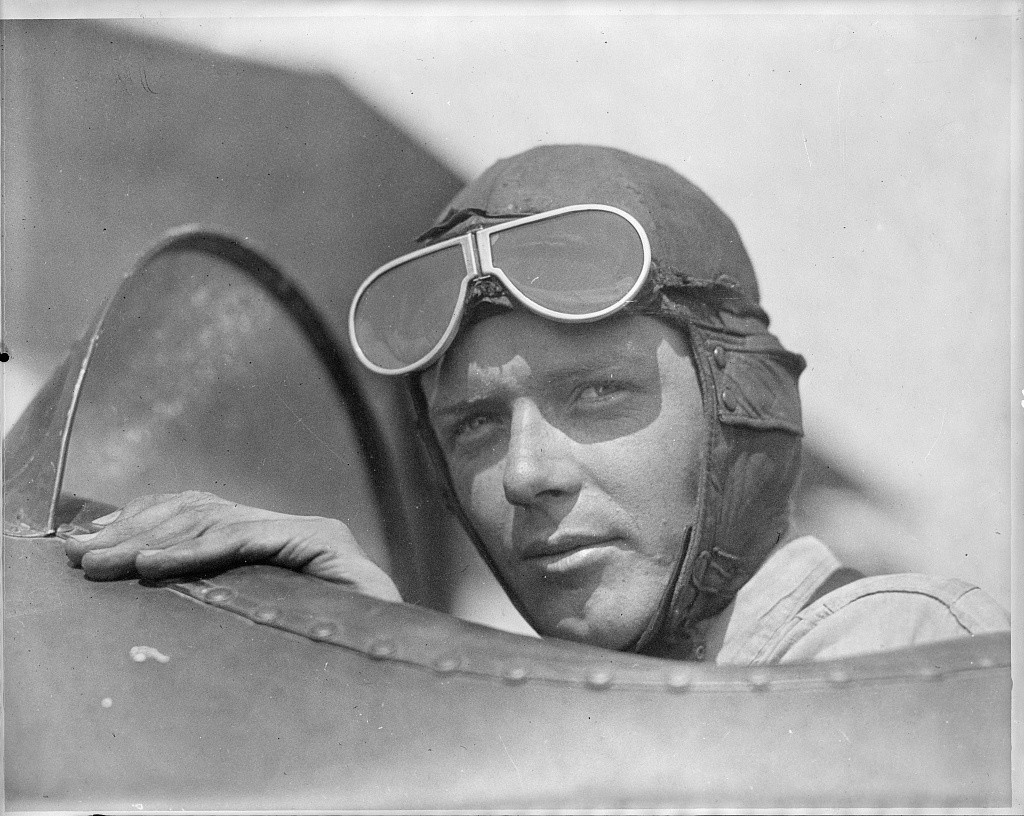
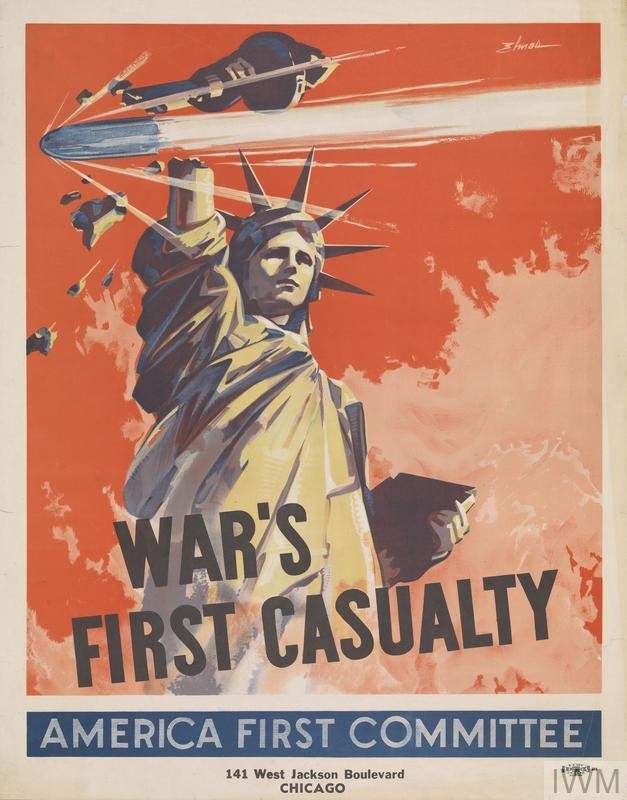
Renowned aviator Charles Lindbergh was an influential spokesperson for the America First Committee (AFC). The America First Committee was an organization that advocated against US intervention in World War II. At an AFC rally in September 1941, Lindbergh gave a speech titled, “Who are the War Agitators?” In the speech, he accused the British, Jewish people, and President Franklin D. Roosevelt of pushing for the United States to enter the war.
Key Facts
-
1
Lindbergh and the AFC entered into many public disagreements with President Roosevelt about whether the United States should enter World War II.
-
2
At an AFC rally in Des Moines, Iowa, on September 11, 1941, Lindbergh accused Great Britain, Jews, and the Roosevelt administration of leading the United States into war. During the speech, he repeated multiple antisemitic lies based on conspiratorial ideas about Jewish influence. He suggested that Jewish people were un-American.
-
3
After the speech, many critics and press outlets accused Lindbergh of antisemitism. Some also accused him of supporting Nazi Germany.
From 1939 to 1941, during the first two years of World War II, the United States remained neutral. Americans debated whether or not to provide economic and military assistance to Great Britain and others fighting against Nazi Germany and its Axis partners. Some influential individuals, especially the celebrated pilot Charles Lindbergh, spoke out publicly against American involvement in World War II.
American aviator Charles Lindbergh (1902–1974) was the most famous spokesperson for the isolationist movement in the years before the United States entered World War II (1939–1945). Lindbergh delivered more than a dozen speeches for the America First Committee (AFC), an organization that advocated against US entrance into the war.
Lindbergh delivered his most infamous public address at an America First Committee rally in Des Moines, Iowa, on September 11, 1941. He titled the speech, “Who are the War Agitators?” After this speech, Lindbergh was accused of antisemitism and support for Nazi Germany.
Lindbergh vs. President Roosevelt
Soon after its founding in 1940, the America First Committee persuaded Charles Lindbergh to publicly support its cause. Lindbergh was a world-renowned aviator who had completed a solo, nonstop flight across the Atlantic Ocean in 1927. His enormous celebrity helped the AFC gain notoriety and members. The AFC became the most influential isolationist organization in the United States during the World War II era.
During its short existence (1940–1941), the AFC entered into many public disagreements with President Franklin D. Roosevelt. They disagreed on whether the United States should enter the war in Europe. But that debate sometimes seemed like an ongoing, public argument between two famous Americans: Lindbergh and Roosevelt. President Roosevelt’s interests almost always prevailed, despite vocal opposition from Lindbergh, the AFC, and other isolationist groups and individuals.
President Roosevelt’s Fireside Chat: September 11, 1941
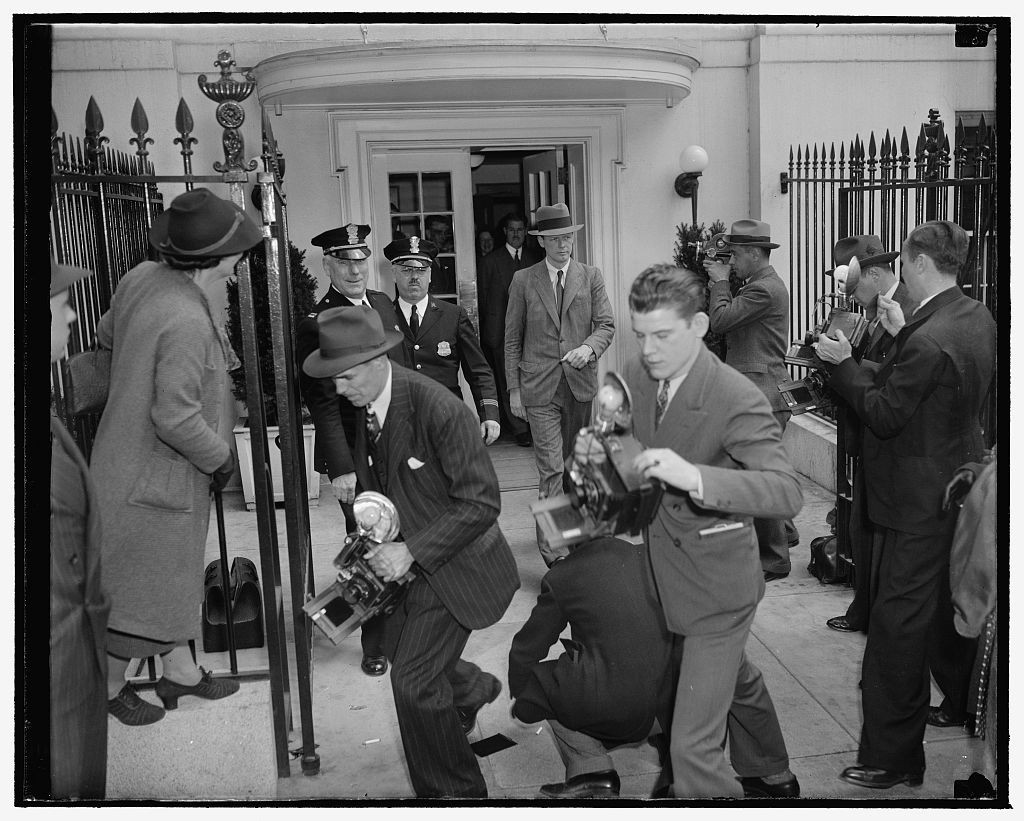
On September 11, 1941, President Roosevelt delivered one of his fireside chats. The fireside chats were evening radio addresses during which Roosevelt spoke directly to Americans about policy issues and current events. In this particular radio address, Roosevelt explained that German forces had carried out multiple attacks against US ships in the Atlantic Ocean. He said that Adolf Hitler had launched a ruthless “campaign to control the seas” and that Hitler could not be appeased. The president aimed to persuade his listeners that the time had come to defend American seas against Nazi Germany.
By the time Roosevelt gave this address, Europe had already been at war for two years. The British were the last line of defense in Europe against the advancing Nazi regime. Many Americans still hoped that the United States would not enter the war. However, it was becoming clear to them that war was unavoidable.
Lindbergh’s “War Agitators” Speech
On the same evening that Roosevelt delivered his September 11, 1941, fireside chat, Charles Lindbergh was scheduled to speak at an AFC rally at the Des Moines Coliseum in Des Moines, Iowa. Before Lindbergh took the stage, Roosevelt’s radio address was broadcast live over loudspeakers at the rally. Most America First Committee supporters opposed Roosevelt’s policies, and the speech riled up those in attendance.
Lindbergh’s isolationist stance was well known to those at the rally. He had long been an outspoken opponent of the United States’ involvement in conflicts abroad. After the outbreak of World War II, he published an article in the popular magazine Reader’s Digest. In the article, Lindbergh explained his isolationist views based on racial thinking. He wrote that people of “European blood” needed to ensure peace and security by preventing “attack by foreign armies and dilution by foreign races.” He also suggested that war would “reduce the strength and destroy the treasures of the White race.”
In Des Moines, Lindbergh reiterated his isolationist views. He told the audience that three groups were agitating for the United States to enter the war.
Lindbergh said that the British were the first group that wanted the United States to join the war effort. Lindbergh claimed that the British were in a “desperate position” after France and other western European nations fell to the Nazis in the summer of 1940. He said that this was because Britain’s air power and army were not “strong enough” to invade Europe and defeat Nazi Germany. Lindbergh knew that Germany had been developing its air power for years in an effort to catch up with Great Britain and the United States. Before the war began in 1939, Lindbergh had suggested to the US Ambassador to the United Kingdom, Joseph P. Kennedy, that it would be “wiser to permit Germany’s eastward expansion” rather than to ask Great Britain and France to fight a war against them.
In his speech at Des Moines, Lindbergh claimed that “the Jews” were the second group of war agitators. Lindbergh first acknowledged the Nazi regime’s persecution of Jews in Europe. He said, “No person with a sense of the dignity of mankind can condone” the Nazis’ treatment of Jews. However, Lindbergh then shifted his focus to Jews in the United States. Lindbergh said that “tolerance” toward Jewish people in the United States “depends on peace and strength.” He warned that such tolerance might evaporate if the United States went to war. Lindbergh then repeated multiple lies about Jewish conspiracies. He claimed that the “greatest danger” posed by Jews to the United States was “their large ownership and influence in our motion pictures, our press, our radio, and our Government.” His accusations drew on hateful and commonly held stereotypes about Jewish people.
Finally, Lindbergh said that the Roosevelt administration was agitating for war. He accused the administration of lying to the American public by promising peace while secretly looking for a path to enter World War II.
Press Response to Lindbergh’s Speech
Outside of America First Committee circles, the press reaction to Lindbergh’s speech was resoundingly negative. Many American press outlets asked if Lindbergh supported Nazi Germany and its leaders. One popular American magazine published an article about Lindbergh entitled, “The Most Dangerous Man in America.” Political cartoonists, including Theodor Geisel (Dr. Seuss), accused Lindbergh of spreading Nazi propaganda. The Des Moines Register ran a front-page political cartoon that depicted Hitler and Benito Mussolini cheering Lindbergh’s speech. Even newspapers that hoped the United States would stay out of war condemned the speech.
The speculation about Lindbergh’s support for Nazism was not new, however. On October 18, 1938, Hermann Göring, a high-ranking Nazi leader, had presented Lindbergh with a medal. Lindbergh was given the Service Cross of the German Eagle (with Star) for his services to world aviation. The award included a signed proclamation from Hitler. One month later, a representative of the Roosevelt administration said that anyone who accepts an award like this from Germany “forfeits his right to be an American.” Some critics of Lindbergh called for him to return the medal, but he never did. Lindbergh’s “War Agitators” speech reignited questions about whether he supported the Nazi regime.
America First Committee’s Response to Lindbergh’s Speech
Lindbergh’s speech damaged the reputation of the America First Committee. It intensified accusations that the organization was antisemitic. Nevertheless, AFC leadership decided not to publicly criticize Lindbergh. Instead, the AFC issued a statement saying that Lindbergh was not antisemitic and that the committee was the victim of a smear campaign. AFC leaders blamed its critics for pulling the country’s focus away from the most important issue: staying out of World War II.
After the controversy, Lindbergh was no longer invited to speak at AFC rallies.
The Attack on Pearl Harbor and Lindbergh’s Response
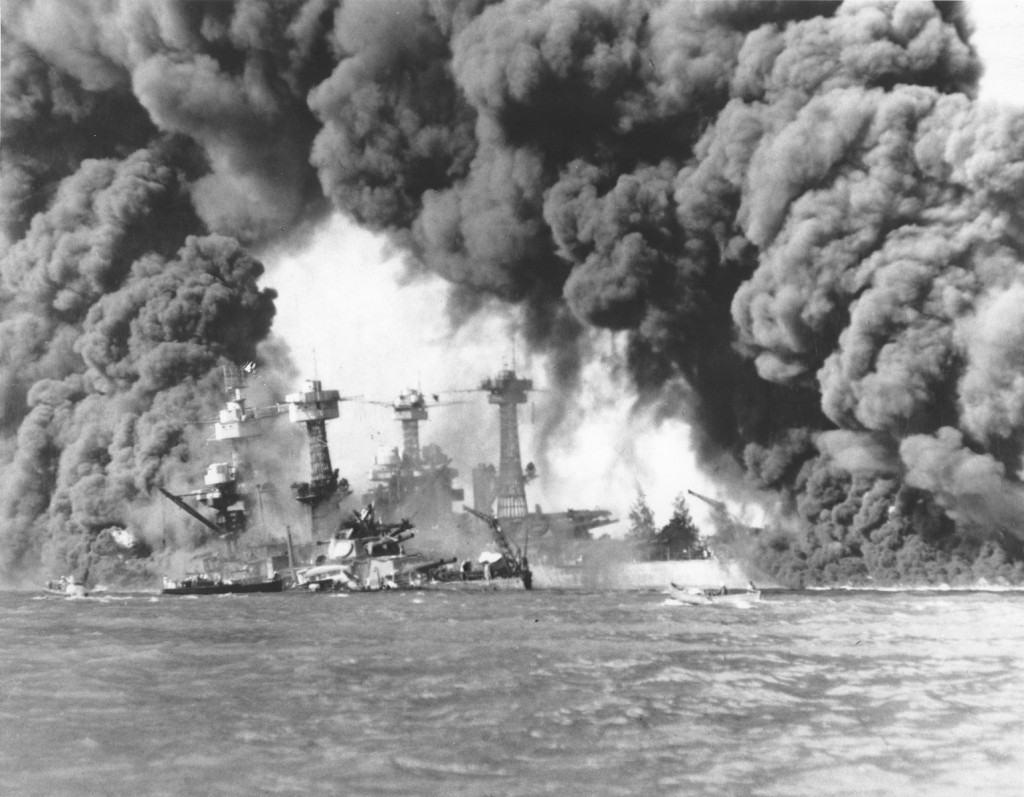
On December 7, 1941, the Imperial Japanese Navy launched a surprise attack on the US Pacific Fleet stationed at Pearl Harbor. The United States declared war on Japan the next day, and the debate between isolationists and interventionists was over.
Lindbergh issued a personal statement as soon as the United States entered World War II. He said, “Our country has been attacked by force of arms, and by force of arms we must retaliate.”
After the United States entered the war, Lindbergh was eager to join the armed services and support the US war effort. However, members of the Roosevelt administration denied him any official role after his long public feud with the president. With his reputation tainted by accusations of antisemitism and support for Nazism, Lindbergh stayed out of the limelight for the rest of the war.
Footnotes
-
Footnote reference1.
Franklin D. Roosevelt, “Fireside Chat 18,” September 11, 1941, Miller Center, University of Virginia, transcript and audio, 28:13, https://millercenter.org/the-presidency/presidential-speeches/september-11-1941-fireside-chat-18-greer-incident.
-
Footnote reference2.
Charles Lindbergh, “Aviation, Geography, and Race,” Reader’s Digest, November 1939.
-
Footnote reference3.
Charles Lindbergh to Joseph P. Kennedy (September 22, 1938), quoted in A. Scott Berg, Lindbergh (London: Simon & Schuster, 2013), 374–75.
-
Footnote reference4.
Charles Lindbergh, quoted in Berg, Lindbergh, 427.
-
Footnote reference5.
“The Most Dangerous Man in America,” Liberty, October 18, 1941.
-
Footnote reference6.
Secretary of the Interior Harold Ickes, quoted in Berg, Lindbergh, 380.
-
Footnote reference7.
Charles Lindbergh, quoted in Berg, Lindbergh, 432.