View photographs that show moments from the life of the Mandils—a Jewish Yugoslavian family who survived the Holocaust by hiding with a Muslim Albanian family.
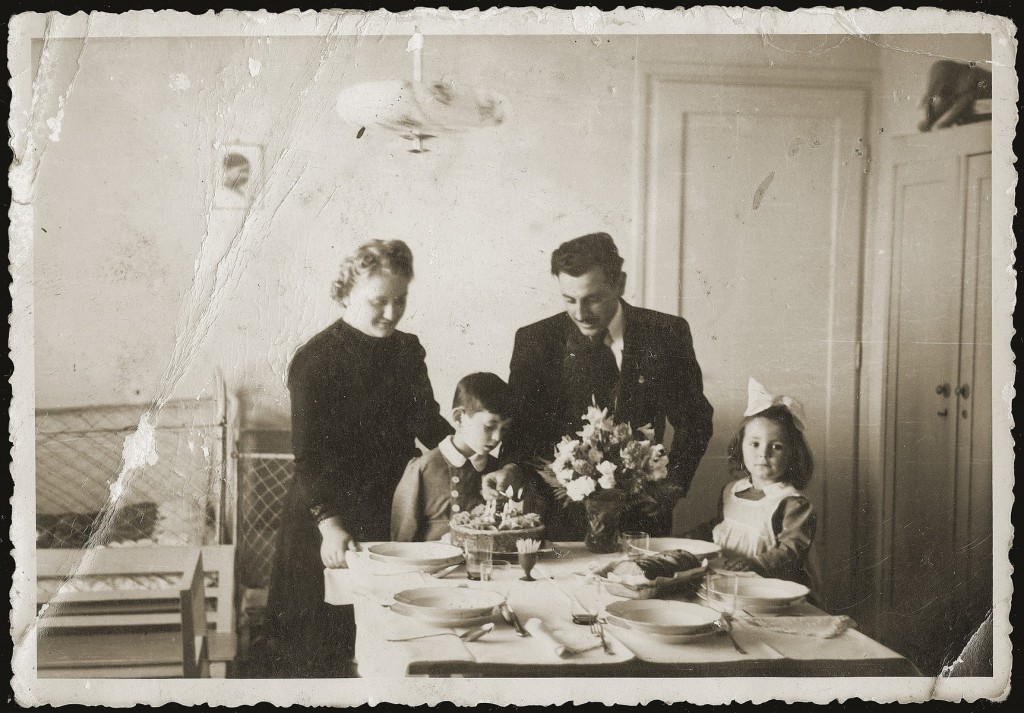
Gabriela, Gavra, Mosa, and Irena Mandil celebrate Gavra’s fourth birthday in Novi Sad on September 6, 1940.
Mosa was a professional photographer with a successful studio when World War II began in 1939. He and his wife Gabriela had two young children at the time—their son Gavra was born in 1936, and their daughter Irena was born in 1938. Mosa often used photographs of the two children to advertise the family’s business. This image provides a glimpse into the life of the Mandil family before the Axis invasion of Yugoslavia in 1941.
Item View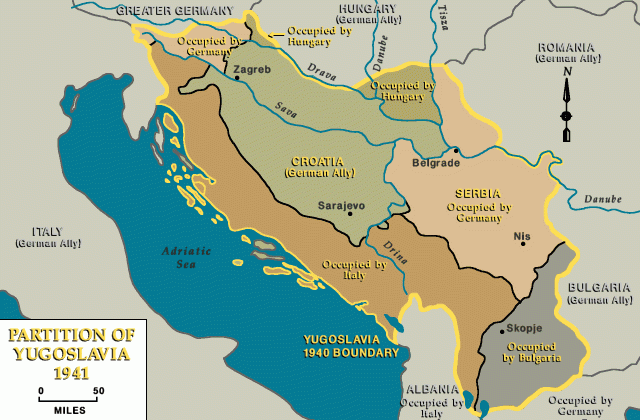
German-led Axis forces invaded Yugoslavia in April 1941, and they rapidly conquered and partitioned the country. Conditions varied greatly between Yugoslavian territories under German, Italian, Bulgarian, Hungarian, or Croatian rule. Jewish Yugoslavians living under German occupation faced the harshest anti-Jewish policies in the country.
The Mandils decided it would be safest for them farther from German forces in Italian-occupied regions of Yugoslavia. With the help of Christian friends in German-occupied Belgrade, Mosa Mandil and his family obtained fake documents with false identities. The Mandils disguised themselves as a Christian family and set out from Belgrade. They traveled south by train for the relative safety of Italian-occupied Yugoslavia in present-day Kosovo.
Item View
Gavra and Irena Mandil pose in front of a Christmas tree in 1940.
This photograph helped the Mandil family escape from German-occupied Yugoslavia in 1941. Mosa Mandil staged this holiday scene with his children a few months before Christmas in 1940. The Mandil family was Jewish, but Mosa posed the children in front of a Christmas tree to show his Christian clients the kind of festive photographs that he could take.
After the Mandil family got fake documents with false identities, they headed south by train toward Italian-occupied territory in Yugoslavia. Their train stopped before it passed into the area. German authorities at the border took the Mandil family’s fake documents. An SS officer accused the family of being Jews traveling under false names. Mosa convinced the man that his family was Christian by showing him this photograph of Gavra and Irena posed in front of a Christmas tree. They were permitted to reboard the train and continued into Italian-held territory.
Item View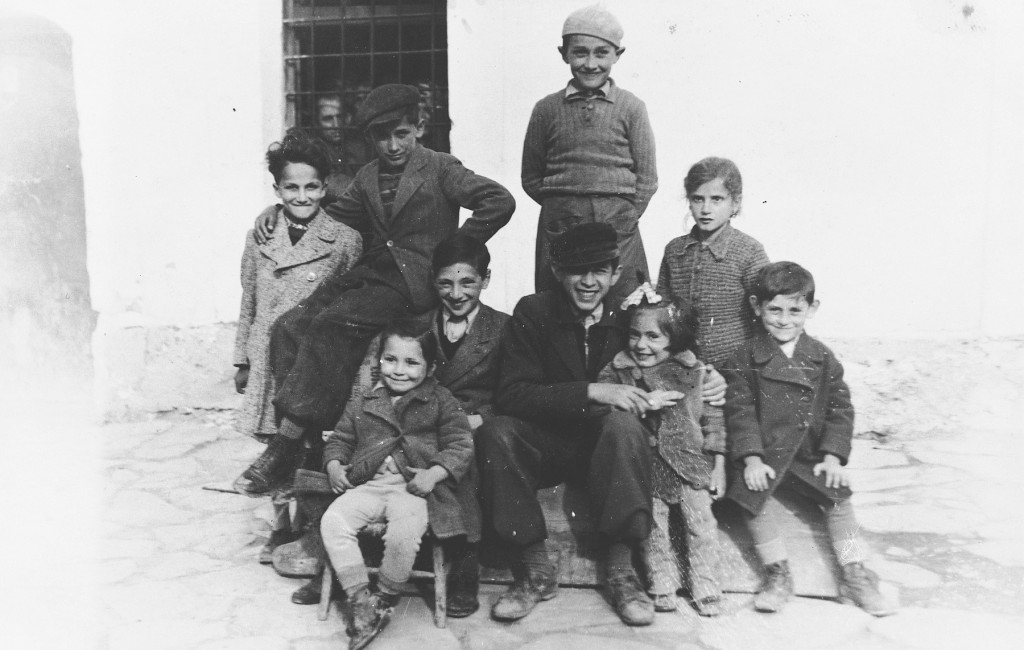
Jewish refugee children interned in the prison at Pristina, circa April 1942. Gavra Mandil is seated on the right, and Irena Mandil is sitting in the front on the far left.
The Mandil family managed to escape from German-occupied Yugoslavia to the relative safety of Italian-occupied territories in present-day Kosovo. They lived freely for a short time among the Jewish community in the city of Pristina. However, Italian occupation forces soon interned the growing number of Jewish refugees in an empty school before relocating them to the city’s prison. The Mandils were confined there with more than a hundred others for several months. Gavra Mandil would later recall that he and his sister Irena spent much of their time at Pristina playing war in the prison courtyard with the other children.
The Italian guards treated the interned Jews decently. Mosa Mandil began to earn their respect and favor with his photography skills. He created portraits of the guards and officers and soon was on friendly terms with them. But German authorities were pressuring the Italians to turn over Jewish refugees to them. German forces took custody of dozens of the interned Jews at Pristina in late spring 1942 and killed them. In response, the Italian guards at Pristina prison found several trucks to transport the remaining Jews farther away from German influence. The Jewish refugees drove to Italian-occupied Albania. Each truck went to a different city or town. The Mandils and several other families went to the Albanian city of Kavaja.
Item View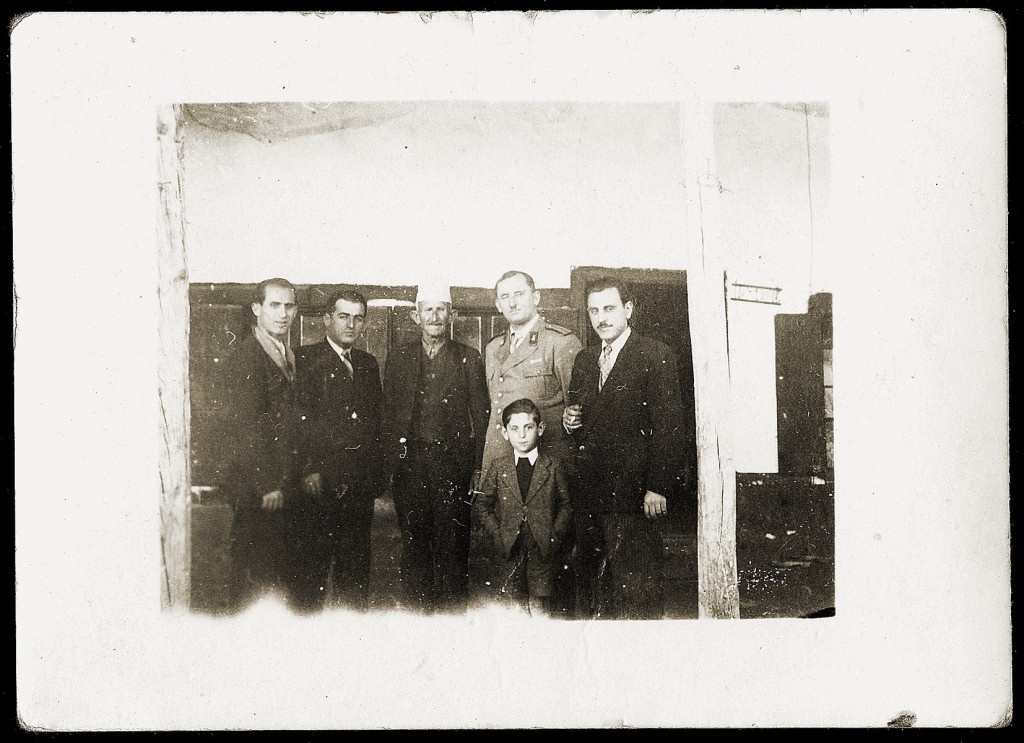
Mosa (right) and Gavra (front) Mandil with local officials in Albania, including the mayor and chief of police of Kavaja, 1942–1943.
Jewish refugees were required to check in daily at the police station in Kavaja but were otherwise permitted to live freely in Albania. They felt welcomed by Albanian citizens. Albanian cultural traditions and ethical codes known as Besa taught that a person must help somebody in need regardless of their faith or national origin. Albanian villagers brought the Jewish refugees food and blankets. Gavra Mandil would later recall that the warm welcome they received made his family feel “as if we have come to paradise.”
The Mandil family rented an apartment in Kavaja with several other Jewish refugee families. Mosa hung a sign from the upstairs balcony advertising his photography services. Gavra, who was nearly 7 years old, began attending school. Albania’s population was mostly Muslim, although Gavra had both Muslim and Christian classmates. He enrolled under a false identity, pretending to be a Muslim boy named Ibrahim Mele. Gavra learned Muslim prayers so people would not suspect he was Jewish.
Item View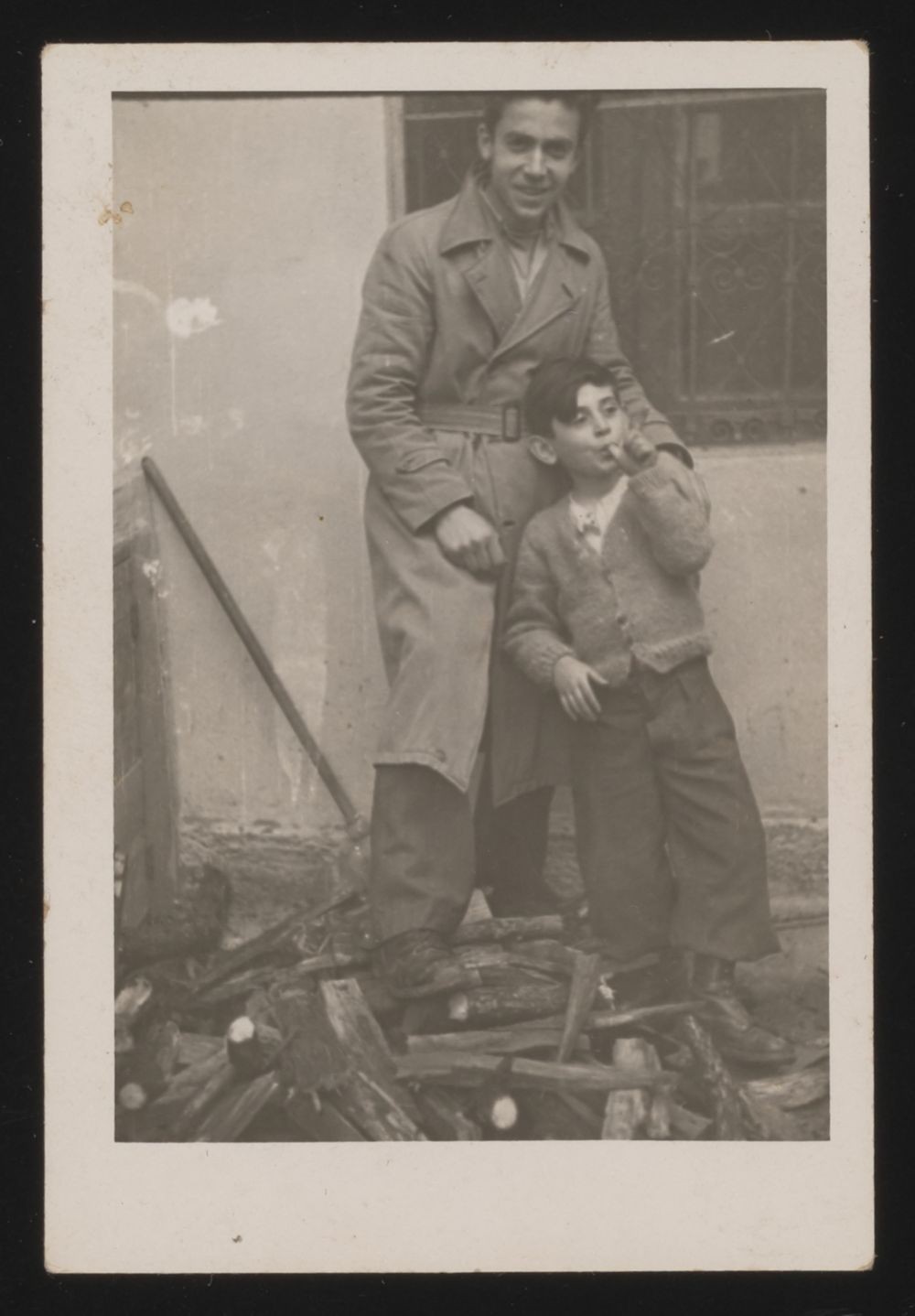
Gavra Mandil (right) with Refik Veseli, 1943.
German forces occupied Albania and other Italian-occupied territories after Italy surrendered to the Allies in 1943. With the country under German occupation, the Mandil family decided it might be safer to blend in with the masses of people in the Albanian capital of Tirana.
Mosa and Gabriela disguised themselves as Muslims and began looking for photographers in Tirana who might hire Mosa. They stumbled across the studio of Neshed Ismail, a former apprentice of Gabriela’s father. Ismail recognized the Mandils and insisted that they move into his apartment. The Mandils lived with Ismail, and Mosa worked at his studio. There, he took portraits of many German officers who did not realize he was a Jewish refugee.
Around this time, a young Muslim Albanian man named Refik Veseli had also moved to Tirana to study photography. Mosa began to teach Veseli at Ismail’s studio. When conditions in the city became too dangerous for the Mandils, Veseli invited them to hide at his family home in the town of Kruje to the north of Tirana.
Item View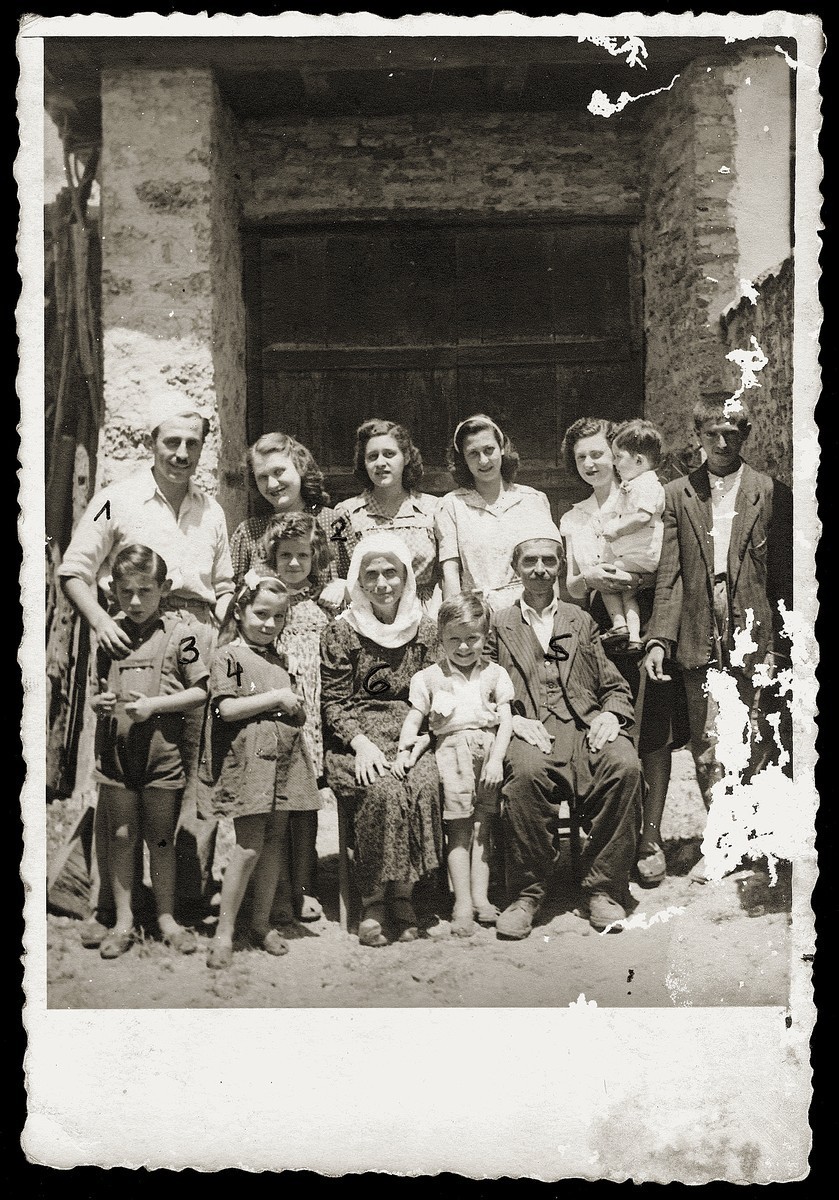
Pictured in the front row and identified with numbers are Gavra Mandil (3), Irena Mandil (4), Fatima Veseli (6), and Vesel Veseli (5). Standing behind them are Mosa (1) and Gabriela (2) Mandil. Kruje, Albania, circa July 1944.
The Mandil family traveled from Tirana to the Veselis’ home in Kruje under the cover of night. Mosa and Gabriela had to stay hidden in a room above the Veselis’ barn. Gavra and Irena were able to live disguised as Muslim Albanians and could move about town and play with the other children. The Veselis also sheltered another Jewish family who had worked in the clothing shop owned by Refik Veseli’s brother. Their neighbors became aware that the Veselis were hiding Jewish refugees but did not report them to German authorities. The Veselis sheltered and provided for the families until the region was liberated from German control in late 1944.
Item View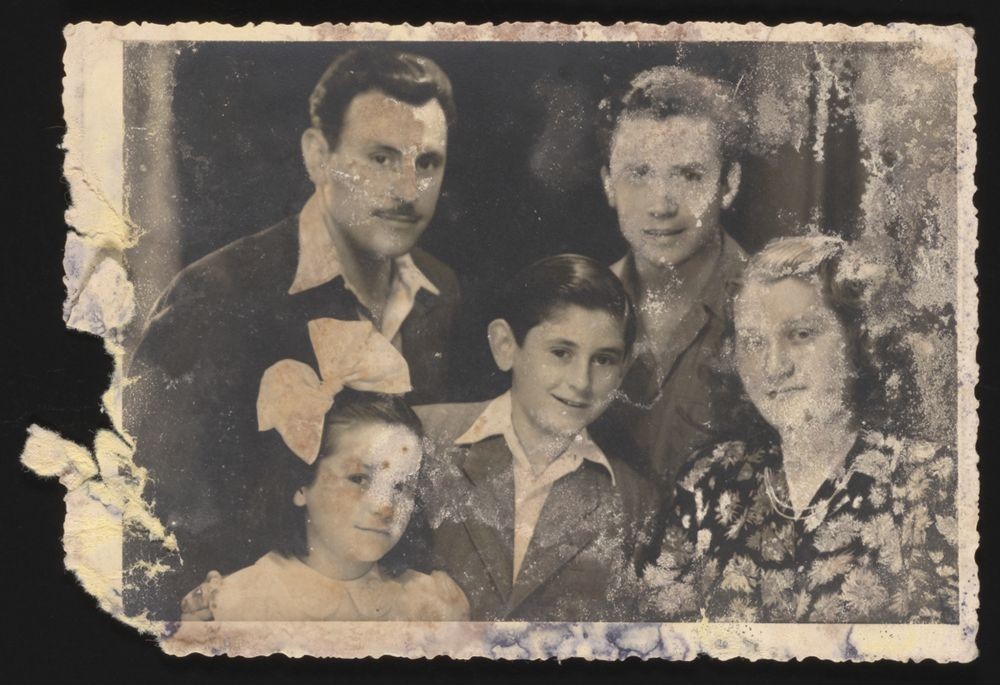
Refik Veseli with Mosa, Gabriela, Gavra, and Irena Mandil after World War II.
The Mandil family returned to Novi Sad after the war. Mosa opened a new studio and continued working as a photographer. In 1946, Refik Veseli moved to Novi Sad to complete his apprenticeship with Mosa. The Mandil family immigrated to the newly created state of Israel in 1948. Refik Veseli and his parents were eventually honored by Yad Vashem as Righteous Among the Nations.
Item ViewWe would like to thank Crown Family Philanthropies, Abe and Ida Cooper Foundation, the Claims Conference, and BMF for supporting the ongoing work to create content and resources for the Holocaust Encyclopedia. View the list of all donors.