Selections of Jews Upon Arrival at Auschwitz
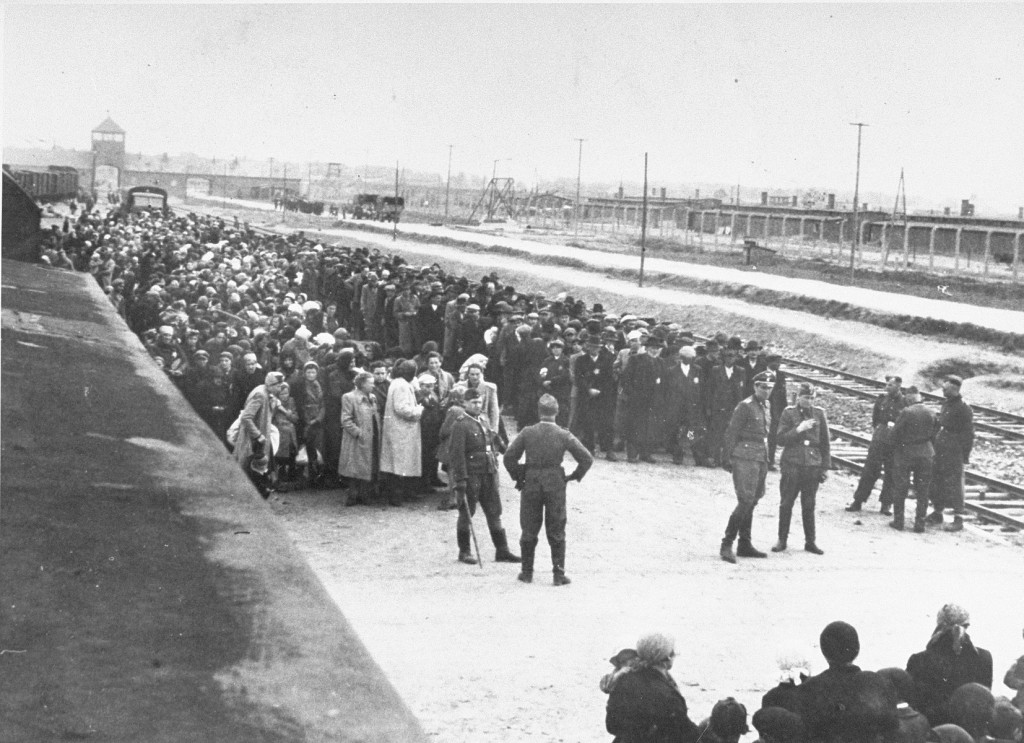
When transports of Jews arrived at Auschwitz, German authorities usually conducted a selection on the arrival ramp. The goal was to separate those Jews who would be used in the camp for forced labor from those who would be sent to die in the gas chambers. For Jews, these judgments were the difference between a chance to live and immediate death.
Key Facts
-
1
From July 1942 until October 1944, SS physicians carried out selections of Jews upon arrival at Auschwitz.
-
2
The majority of Jewish people were selected for murder in the gas chambers upon arrival at the camp. In total, about one million Jews were killed in Auschwitz. Most were murdered in the gas chambers.
-
3
For Jews, selection upon arrival at Auschwitz was a moment of extreme danger, uncertainty, and traumatic separation from family members and loved ones.
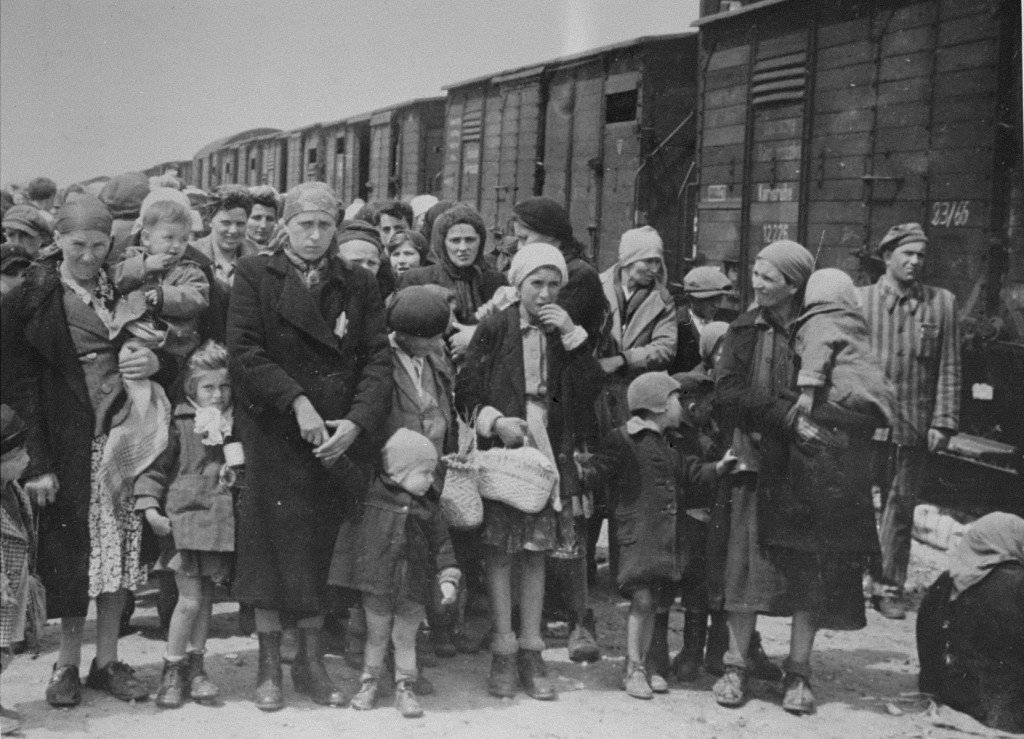
In spring 1942, Nazi German authorities and their collaborators began transporting Jews from all over Europe by train to the Auschwitz-Birkenau killing center. Most of these Jewish men, women, and children were murdered upon arrival at Auschwitz in the gas chambers. However, the SS chose to temporarily keep a small number of Jewish prisoners alive at Auschwitz for forced labor.
Beginning with transports in July 1942, SS physicians at Auschwitz determined who to keep alive by carrying out a selection process. The German authorities called this process Aussortierung (literally, “sorting out”). It is commonly referred to as “selection.” During selections, SS camp authorities chose physically fit, young, and healthy Jews to perform forced labor.
For Jews, selection upon arrival at Auschwitz was a moment of extreme danger, uncertainty, and traumatic separation from family members and loved ones.
Auschwitz-Birkenau was the only killing center where the Nazis carried out this type of selection process. At the other killing centers, only very small numbers of prisoners were kept alive for forced labor. Because of this, there were far more Jewish survivors of Auschwitz than of all of the other killing centers combined.
Which Jewish People Did the Nazis Murder Upon Arrival at Auschwitz?
Most transports of Jews deported to Auschwitz included people of all ages and in varying states of health. The majority of these Jewish people were murdered upon arrival. Among those murdered were:
- babies and children (usually under the age of 16, but later under the age of 14);
- women who were visibly pregnant;
- women with young children;
- people with identifiable disabilities;
- people who were noticeably ill or frail; and
- middle-aged and elderly people (typically around age 50 or older).
Which Jewish People Did the Nazis Select for Forced Labor Upon Arrival at Auschwitz?
When transports of Jews arrived at Auschwitz, the Nazis selected certain people for forced labor. The number of people that the SS selected from each transport varied based on a number of factors. These factors included:
- the demographic composition of the transport;
- the current labor needs at Auschwitz and other sites; and
- the mood of the SS officer conducting the selection.
The SS physicians selected people whom they believed could perform physical labor. They chose people who appeared to be healthy and who were roughly between 14 and 50 years old (though this age range varied at times).
The SS physicians also sometimes selected certain Jewish people to be subjects of the inhumane medical experiments they were conducting at Auschwitz. This included twins; people with dwarfism or gigantism; people who had a clubfoot; and individuals with heterochromia (two different color eyes). At times, dozens of Jewish women were also selected from the newly arrived transports for sterilization experiments.
Being selected for forced labor or medical experiments did not guarantee survival.
The Ramps at Auschwitz: The Sites of Arrival and Selection
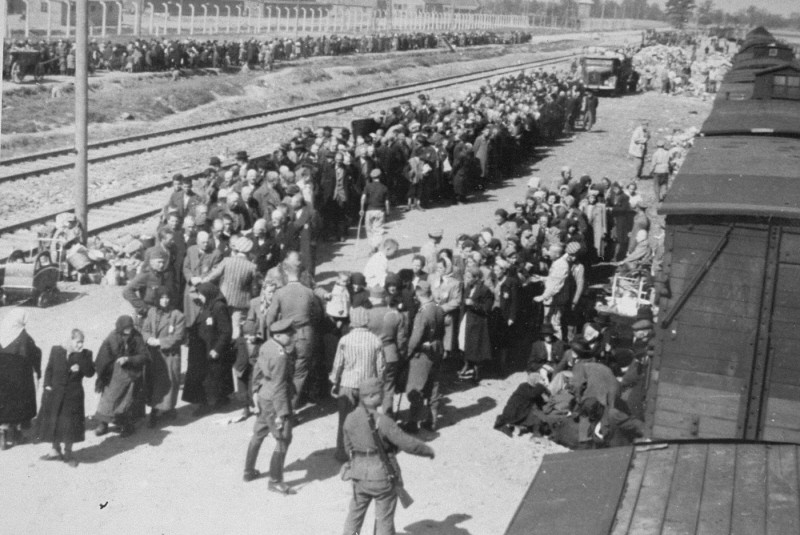
When transports of Jews arrived at Auschwitz, selections took place on train platforms. These platforms are often referred to as “ramps” (from the German Rampen). In the Auschwitz camp complex, selections took place on two different ramps. From July 1942 until May 1944, the SS unloaded transports of Jews on a train platform commonly called the Alte Judenrampe (literally, “the old ramp for Jews”). This ramp was located at a freight station between the Auschwitz main camp and the Auschwitz-Birkenau camp. Beginning in mid-May 1944, selections took place on a newly built ramp located within the boundaries of Auschwitz-Birkenau (Auschwitz II). This ramp was built specifically for the arrival of transports of Jews from Hungary. This is the best-known unloading ramp, in large part because it appears in the photographs from the Auschwitz Album.
Who Carried out Selections at Auschwitz?
SS physicians usually carried out selections of Jews at Auschwitz. Sometimes, physicians were assisted by other SS medical personnel or by non-medical, higher ranking SS staff. Among the SS physicians and medical personnel known to have carried out selections on the ramps were: Fritz Klein; Josef Mengele; Willi Schatz (a dentist); Victor Capesius (a pharmacist); Heinz Thilo; and Eduard Wirths, among others.
The Arrival and Selection Process at Auschwitz
The Nazis and their allies used trains to transport Jews from all over Europe to the Auschwitz-Birkenau killing center. In most cases, Jews were forced onto overcrowded freight trains. They were often trapped inside the railcars for several days with little food or water. There were no bathrooms. During the transports, people often died of illness and suffocation. Some people were even trampled to death.
Upon arrival at Auschwitz, Jews were forced to leave the train. When the doors to the rail cars opened, the people on board usually did not know where they were or what was happening. There were shouting SS men, barking dogs, and bright lights at night. The people from the transport were rushed out of the train with blows from sticks and other violent measures.
Once the transport was unloaded onto the ramp, the SS ordered people to divide into two groups and line up, usually in rows of five. Men and teenage boys were in one group. Women, girls, and young children were in the other group.
After these two groups had lined up, an SS physician began to conduct the selection, briefly looking at each individual. Selections were not thorough medical examinations. The SS official in charge made very quick assessments of a person’s physical condition and age. Sometimes, the SS officer would ask a question. For the Jews on the ramps, these judgments were the difference between a chance to live and immediate death.
A group of Auschwitz prisoners from a work detail called the "Kanada" commando were also on the ramps. These prisoners were supervised by the SS and tasked with unloading people, corpses, and luggage from the arriving trains. Sometimes the Kanada commando prisoners warned the Jews on the ramps, even though they were expressly forbidden from doing so. They would hint at the criteria for selection. Under their breath or when the SS officers were not watching, they told the new arrivals what to say or how to behave. They instructed people to lie about their ages. Children were told to say they were older. Older people were told to say they were younger. Women were sometimes prompted to hand over their babies and young children to elderly relatives. Such warnings and advice often saved people’s lives.
Did Being Selected for Forced Labor at Auschwitz Guarantee Survival?
No, being registered in the camp as a prisoner did not guarantee survival. Life in the Auschwitz camp complex was characterized by deliberate starvation, diseases and epidemics, murderous labor conditions, and physical abuse. Jewish prisoners were particularly targeted by camp authorities, and their mortality rate was the highest among all prisoner groups. In addition, the SS conducted selections of registered prisoners who were too ill or weak to perform forced labor. The victims of these selections included Jewish prisoners, but also people from other prisoner groups.
Did Selection of Jews Always Happen Upon Arrival at Auschwitz?
No, not all transports of Jews underwent selection upon their arrival at Auschwitz. Sometimes selections happened before Jews arrived at Auschwitz. In other cases, selections were skipped entirely. Sometimes an entire transport was registered in the camp. At other times, entire transports were sent directly to the gas chambers. Additionally, the Nazis conducted selections of registered prisoners in the Auschwitz camp complex. Passing the first selection upon arrival did not guarantee Jewish prisoners were safe from these selections.
March–July 1942: Before the Start of Selections on the Ramps
The first transports of Jews arrived at Auschwitz in spring 1942. They did not undergo selection upon arrival at Auschwitz. The standardized selection process began in July 1942.
Before July 1942, the treatment of Jewish transports varied. In some cases, entire transports were registered in the camp. In those cases, prisoners had been pre-selected for forced labor before the train left for Auschwitz. For example, the first transport of Jews from Slovakia in March 1942 consisted of women and teenaged girls, most between the ages of 18 and 30. Subsequent transports from Slovakia also included men and women considered fit for work. These prisoners were registered in the camp. Most of them died because of the dire conditions. Among the prisoners who arrived on these transports were Rudolf Vrba and Alfréd Wetzler. These Slovak Jews escaped Auschwitz in April 1944. They gave a detailed report about the mass murder of Jews at the camp. Vrba and Wetzler’s firsthand report was distributed worldwide in summer 1944. Excerpts of the report appeared in the international press.
In other cases, entire transports were murdered upon arrival in the first half of 1942. For example, in early May, 5,200 Polish Jews from Upper Silesia were gassed upon arrival without going through selection at Auschwitz.
August–December 1942: Selections at Cosel for Organization Schmelt
Beginning in late August 1942, many transports from France, Belgium, and the Netherlands underwent a selection before arrival at Auschwitz. These transports stopped en route from western Europe at the train station in the town of Cosel (today, Kędzierzyn-Koźle, Poland). Cosel was located about 50 miles northwest of the Auschwitz camp. At Cosel, physically fit men and teenaged boys were taken off each transport. They were then sent to labor camps located in the surrounding region of Silesia. These camps were under the auspices of a program called Organization Schmelt (Organisation Schmelt). In some cases, authorities at Cosel put ill, starved, and frail prisoners on the trains bound for Auschwitz. Rudolf Höss, the commandant of Auschwitz, objected to this process in fall 1942 because it was depriving Auschwitz of able-bodied prisoners. In total, about 9,000 people (almost all men) were selected for labor at Cosel in 1942. Among them was Ernest Koenig, a 25-year-old Jewish man deported from France. Unlike most Jews on his transport, Koenig survived the Holocaust.
The stop at Cosel did not completely stop the selection process. The transports continued on to Auschwitz, where they typically underwent another selection.
September 1943–May 1944: Bypassing Selection; The Theresienstadt Family Camp
In 1943–1944, seven transports of Jews deported from the Theresienstadt ghetto to Auschwitz did not undergo selections upon arrival. Instead, about 17,000 prisoners of all ages were registered in the camp and housed in a separate area of Auschwitz-Birkenau designated Section BIIb. It was commonly called the Czech camp (Tschechenlager) or the Theresienstadt family camp (Familienlager). It is unclear exactly why the SS authorities at Auschwitz-Birkenau created this special family camp.
Bypassing the selection process, however, did not save most of these prisoners from mass murder. In March and July 1944, the SS murdered most of the Jews imprisoned in the Theresienstadt family camp in the gas chambers. In July, the SS carried out selections, choosing some prisoners from the family camp for forced labor.
The Grunwald family was sent to Auschwitz in December 1943. There, Kurt, Vilma, and their sons, František (age 11) and Hanuš (age 15), were imprisoned in the Theresienstadt family camp for nearly seven months. In July 1944, the SS selected Kurt and František for forced labor. Hanuš, who walked with a limp, was not selected. His mother chose to stay with him. On July 11, knowing she and Hanuš would soon be murdered, Vilma wrote a farewell letter to Kurt.
Summer–Fall 1944: Bypassing Selection; Transports from Labor Camps in the General Government
In summer and fall 1944, transports of Jews from certain labor camps in German-occupied Poland were brought to Auschwitz and registered in the camp without undergoing a selection. These included transports of Jews from the Kielce, Pionki, and Starachowice forced labor camps. All prisoners, including young children, were registered in the camp. For example, ten-year-old Thomas Buergenthal was registered in Auschwitz with the transport from the Kielce camp in August 1944. Sam Spiegel and Regina Gutman were among the Jews from the Pionki camp in July 1944.
The Last Selection on the Ramp at Auschwitz and the Liberation of Auschwitz
In fall 1944, as Soviet forces drove the Germans back and drew closer to Auschwitz, SS leader Heinrich Himmler halted mass killing in the gas chambers of Auschwitz-Birkenau. The last transport to undergo selection on the ramp arrived from the Theresienstadt ghetto on October 30, 1944. Four days later, on November 3, all Jews on board a transport from Slovakia were registered in the camp.
In January 1945, the SS evacuated the Auschwitz camp complex. The SS forced tens of thousands of prisoners on death marches. Most of these prisoners were Jews who had been selected for forced labor. Prisoners who were physically unable to walk were left behind or shot. Many of these prisoners were eventually put on unheated freight trains and transported to other concentration camps in Germany.
On January 27, 1945, Soviet troops liberated approximately 7,000 prisoners from Auschwitz, Auschwitz-Birkenau, and Monowitz. Among these prisoners was four-year-old Sarah Racimora (later, Sarah Ludwig). Despite her young age, Sarah was registered in the camp because her transport from the Pionki labor camp did not undergo selection.
In total, the Nazis deported 1.1 million Jewish people to Auschwitz. Some 200,000 of these Jews became prisoners of the Auschwitz camp complex. Of these, about half died in the camp. In total, approximately one million Jews were murdered at Auschwitz.