
Auschwitz
Auschwitz was a Nazi camp that functioned as both a concentration camp and a killing center. The Nazis murdered about one million Jewish people in the Auschwitz camp complex, most in the gas chambers of Auschwitz-Birkenau. In addition to being a site of mass murder and imprisonment for Jews, Auschwitz was a site of suffering and mass death for other groups of people, including Poles, Roma, and Soviet prisoners of war, among others.
Key Facts
-
1
Nazi German authorities established the Auschwitz concentration camp in 1940. Over time, the Nazis turned Auschwitz into a massive camp complex that included a killing center for the mass murder of Jews.
-
2
The Nazis murdered about 1.1 million people at Auschwitz, including about one million Jews.
-
3
Auschwitz has become well-known through survivor accounts, photos, and memoirs. Two of the most famous accounts are Elie Wiesel’s Night and Primo Levi’s Survival in Auschwitz.
Auschwitz is the most infamous Nazi camp and often serves as a symbol of Nazi evil and the Holocaust. It was a site of extreme cruelty, inhumanity, and brutality. At Auschwitz, the Nazis murdered approximately one million Jewish people, most in gas chambers using Zyklon B. They also imprisoned hundreds of thousands of people—Jews and non-Jews—in the Auschwitz camp complex. Prisoners were subjected to extreme dehumanization and murderous conditions.
What was Auschwitz?
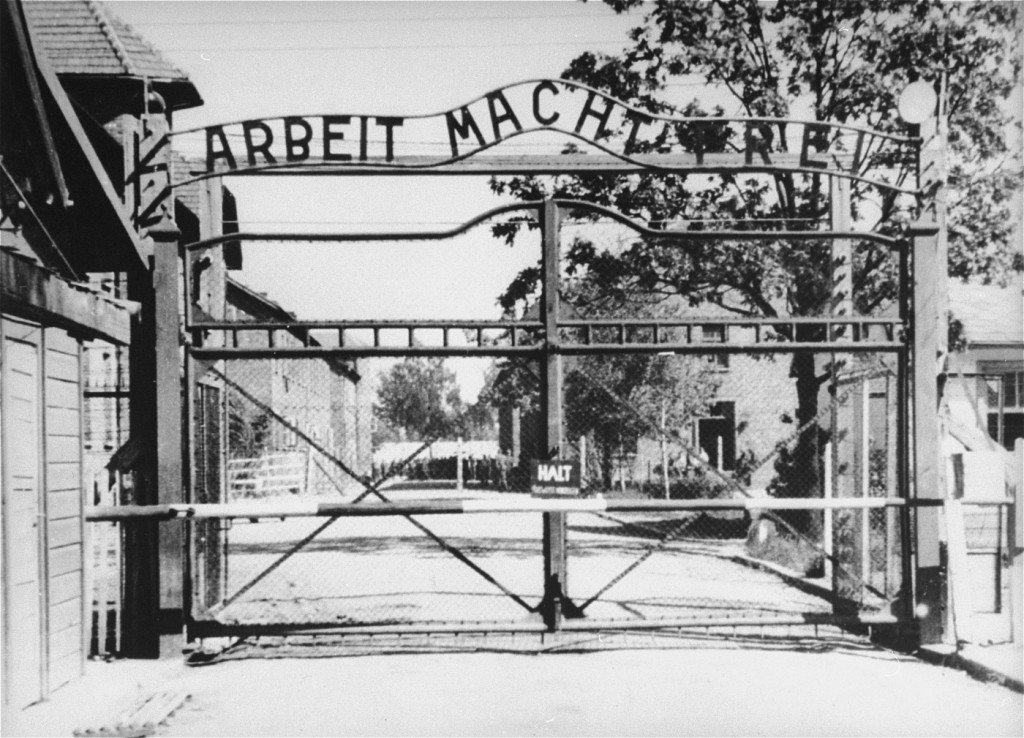
Auschwitz was a Nazi concentration camp complex located in German-occupied Poland. Unlike other Nazi concentration camps, it also included a killing center. The SS established the Auschwitz concentration camp (Konzentrationslager Auschwitz) in spring 1940 as a concentration camp for Polish political prisoners. Over the next several years, the camp was expanded and transformed into a sprawling camp complex. In March 1942, the SS began operating a killing center at Auschwitz-Birkenau. There, the Germans murdered Jewish people from all over Europe.
Auschwitz was the largest Nazi concentration camp by number of SS staff, physical size and geographic sprawl of the camp, and number of prisoners. At Auschwitz, the Germans killed about 1.1 million people from across Europe. The victims included approximately one million Jews; 70,000–75,000 Poles; about 21,000 Roma; more than 14,000 Soviet prisoners of war; and 10,000–15,000 other people.
Establishment of the Auschwitz Concentration Camp, 1940
The SS established the Auschwitz concentration camp in spring 1940. It was located in an abandoned Polish army garrison on the outskirts of the town of Oświęcim (called Auschwitz in German). Oświęcim is located about 18 miles (35 kilometers) southeast of Katowice. Nazi Germany annexed this area after invading Poland in September 1939. The Auschwitz concentration camp was originally established to imprison Polish political prisoners, whom the occupation authorities accused of resisting German rule.
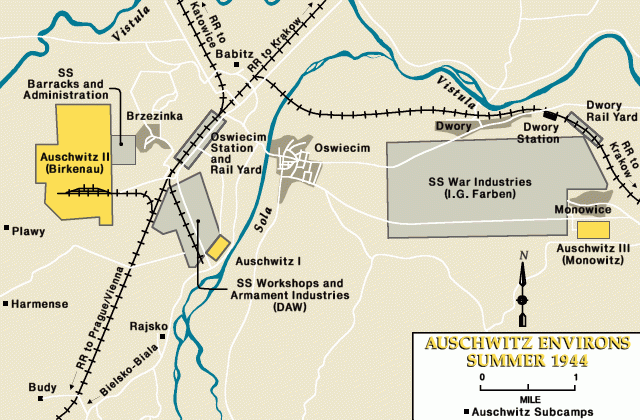
Rudolf Höss, a high-ranking SS officer, was officially named commandant of the Auschwitz concentration camp on May 4, 1940. The first Polish prisoners arrived in June. The Auschwitz camp made use of existing structures, such as brick barracks and warehouses. Later, as the SS expanded Auschwitz by adding more camps, this original site became known as the Auschwitz main camp or Auschwitz I.
Expansion of the Auschwitz Camp Complex, 1941–1944
Over the course of several years, beginning in spring 1941, the SS expanded and transformed Auschwitz into a large camp complex with multiple detention sites.
Establishing the Interest Zone
As part of the expansion of Auschwitz, the SS established the Interest Zone of the Auschwitz Concentration Camp (Interessengebiet des KL Auschwitz) in spring 1941. The Interest Zone (sometimes called the Zone of Interest) comprised a 15.5 square mile (40 km2) area adjacent to the Auschwitz main camp. The SS expelled the local population from this area and confiscated the residents’ property. The SS created the Interest Zone to guarantee the security of Auschwitz and to prevent the local Polish population from witnessing SS crimes and assisting prisoner escapees.
Creation of Auschwitz-Birkenau (also called Auschwitz II)
The Nazi authorities at Auschwitz began building a second camp in October 1941. The Auschwitz-Birkenau camp was located in the Polish village of Brzezinka (called Birkenau in German). It was originally intended to accommodate a large increase in the number of Soviet POWs at Auschwitz, but this plan was never realized. Instead, SS leader Heinrich Himmler decided Auschwitz-Birkenau would be the destination for Jews deported from Germany. This decision eventually expanded the function of the Auschwitz-Birkenau camp. In March 1942, Auschwitz-Birkenau began to function as both a concentration camp and a killing center, where the Nazis murdered Jews in gas chambers.
From November 1943 to November 1944, Auschwitz-Birkenau was designated as a separate camp and officially referred to as Auschwitz II.
Creation of Auschwitz-Monowitz (also called “Buna” or Auschwitz III)
In late October 1942, the SS established a large subcamp that became known as Auschwitz-Monowitz. The Monowitz camp was located in the Polish village of Monowice. It was near the site of the future I. G. Farben synthetic rubber and fuel plant. The SS established this subcamp to house Auschwitz prisoners assigned to forced labor at I. G. Farben. Eventually, Monowitz served as the headquarters for all of the Auschwitz industrial subcamps. Prisoners also sometimes called the camp “Buna.” Buna was the brand name for the synthetic rubber produced at the I. G. Farben factory.
From November 1943 to November 1944, Auschwitz-Monowitz was designated as a separate camp and known as Auschwitz III. In November 1944, it became a separate concentration camp known as Monowitz.
Auschwitz Subcamps
Between 1941 and 1944, the SS authorities at Auschwitz established almost 50 subordinate camps, also called subcamps. These subcamps varied in design and purpose, but all supported the economic and ideological goals of the SS. At the subcamps, prisoners were forced to work in farming, animal husbandry, forestry, construction, and various industries (such as coal mining, armaments production, and chemical factories).
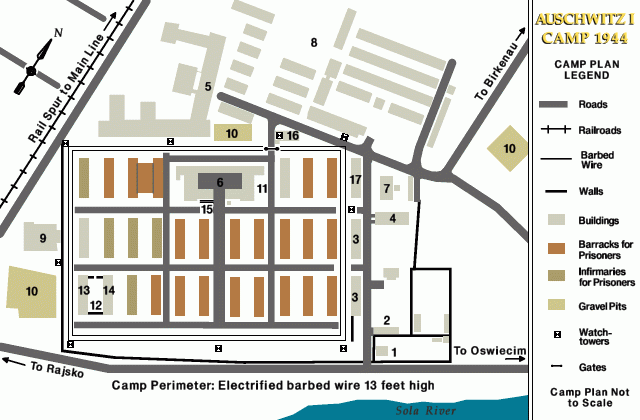
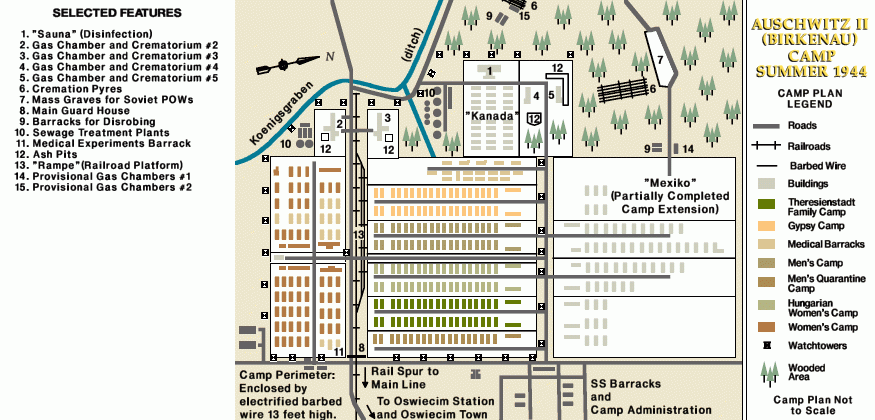
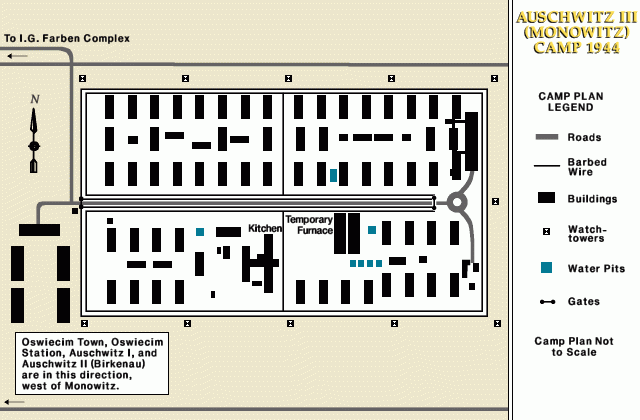
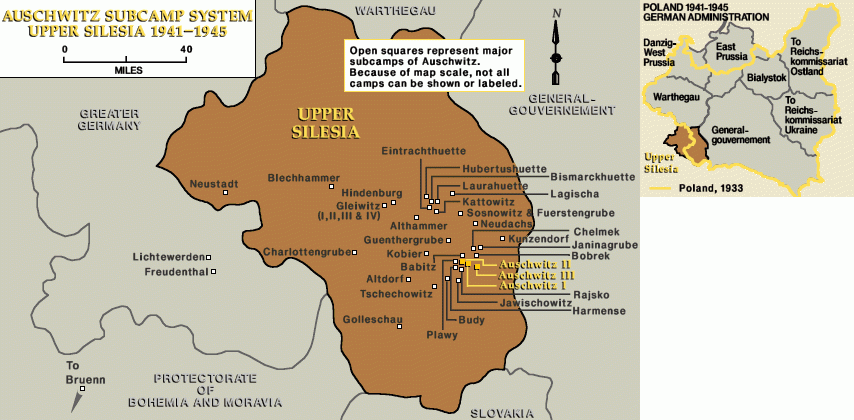
Prisoners and Victims of the Auschwitz Camp Complex
Between spring 1940 and January 1945, the SS persecuted, tortured, imprisoned, and murdered various groups of people from almost every country in Europe at the Auschwitz camp complex.
Poles at Auschwitz
Beginning in June 1940, the Nazis imprisoned Poles in the Auschwitz concentration camp. In total, 140,000–150,000 Poles were imprisoned in Auschwitz. Of these, 70,000–75,000 were murdered there. Until mid-1942, Polish prisoners made up the majority of Auschwitz prisoners. Many of them were sent to Auschwitz because the Germans accused them of undermining or resisting German rule. German authorities also deported Polish civilians, including children, to Auschwitz, as part of Germanization and reprisal actions.
Soviet Prisoners of War at Auschwitz
Beginning in summer 1941, the Nazis imprisoned Soviet prisoners of war at Auschwitz. In total, about 15,000 Soviet POWs were imprisoned there. At least 3,000 of them were killed shortly after arrival and were never registered as prisoners. Of the nearly 12,000 Soviet POWs who were registered, very few survived the camp. The SS murdered hundreds of them using poisonous gas. Thousands of others died from forced labor, physical abuse, and camp conditions.
Jews at Auschwitz
The overwhelming majority of people sent by the Nazis to Auschwitz were Jews. The Nazis deported 1.1 million Jewish people to Auschwitz. Initially, a small number of Jews were imprisoned there on an individual basis as political prisoners. But beginning in March 1942, Nazi authorities sent Jews to Auschwitz en masse solely because they were Jewish. The SS murdered most of these Jews in the gas chambers upon arrival. Some 200,000 Jews became prisoners at the camp complex. Of these, about half died in the camp. In total, approximately one million Jews were killed at Auschwitz.
Roma at Auschwitz
In February 1943, Nazi German authorities began deporting Roma (derogatorily called “Gypsies”) to Auschwitz. In total, 23,000 Roma were imprisoned there. Of these, about 21,000 were murdered. The SS authorities imprisoned Roma without separating families in Section BIIe of Auschwitz-Birkenau. This sector became known as the Zigeunerlager (literally, “Gypsy camp”). Thousands of Romani prisoners in Auschwitz died of typhus, and others were murdered to prevent the disease from spreading. Still others died of starvation and other epidemics. On August 2, 1944, SS camp authorities murdered the last Romani prisoners of the Zigeunerlager—about 4,200 people—in a gas chamber.
Other Groups at Auschwitz
The SS also imprisoned other prisoner groups in Auschwitz in smaller numbers. This included prisoners categorized as “asocials”; “professional criminals”; and “homosexuals.” The Nazis also imprisoned a small number of Jehovah's Witnesses there.
The Administration of the Auschwitz Camp Complex
Like all Nazi concentration camps, Auschwitz was administered by the SS. Auschwitz was part of the SS concentration camp system. It had the same administrative divisions as other Nazi concentration camps.
Commandants of Auschwitz and the Organizational Structure of the Auschwitz Camp Complex
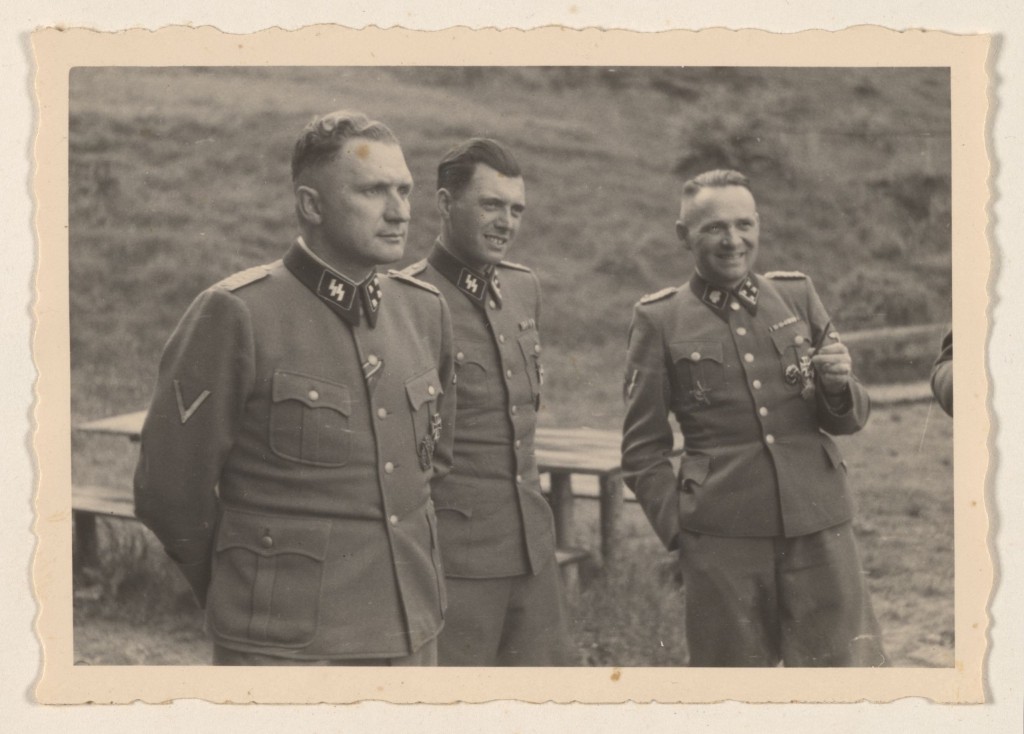
At the top of the SS hierarchy at Auschwitz was the camp commandant. SS officer Rudolf Höss was the first commandant of the Auschwitz concentration camp. He served in this role from May 1940 until November 1943. Under his command, the camp expanded to include Auschwitz-Birkenau and numerous subcamps.
Following Höss’s departure in November 1943, Arthur Liebehenschel was appointed camp commandant. The Auschwitz camp complex also underwent a structural reorganization:
- the Auschwitz main camp was designated as Auschwitz I;
- Auschwitz-Birkenau was designated as Auschwitz II; and
- Auschwitz-Monowitz was designated as Auschwitz III.
Auschwitz I, II, and III each had its own commandant. Liebehenschel was the commandant of Auschwitz I. He was therefore also the senior officer for the entire Auschwitz camp system. In May 1944, Richard Baer became the commandant of Auschwitz I. Also in May 1944, Höss temporarily returned to Auschwitz as the SS garrison commander to oversee the mass murder of Jews from Hungary. In this position, he (not Baer) oversaw the commandants of Auschwitz I, II, and III. Upon Höss’s departure in July 1944, Baer became the senior officer of the Auschwitz camp system.
A final reorganization of the camp complex took place in November 1944. At that time, Auschwitz III was renamed Monowitz. Auschwitz I was redesignated as Auschwitz. And Auschwitz II came back under the control of the main camp as a subordinate camp. This structure was short-lived. The SS evacuated and abandoned Auschwitz in January 1945.
The SS Hierarchy at Auschwitz
The commandant oversaw a staff of SS officers, non-commissioned officers, and enlisted men. The staff was divided into two main groups:
- Commandant’s staff (Kommandantur): This group included the senior administrators of the Auschwitz camp complex. They were responsible for security inside the camp and the administration of prisoners. The structure of the commandant's staff followed that of all Nazi concentration camps.
- SS guard troops: These were sentries responsible for securing the perimeter of the camp. The SS guards patrolled the exterior of the prisoner compounds, manned the watchtowers, and guarded certain labor detachments.
Most of the SS guard troops were young with a high school education. They far outnumbered the older and more educated men of the commandant’s staff. In total, thousands of SS members served at Auschwitz.
Women Affiliated with the SS at Auschwitz
Hundreds of German women helped administer the Auschwitz camp complex. There were three main groups of women employed there:
- Aufseherinnen (female overseers): These were women employed by the SS to guard and oversee female prisoners. Many, including Maria Mandl, earned a reputation for brutality.
- SS-Helferinnen (female communication specialists): This was a group of SS auxiliaries who operated telecommunications for the SS.
- Schwestern (literally, “sisters”): These were nurses who treated SS men (not prisoners) in the SS hospitals and infirmaries.
Prisoner Functionaries
In addition to the SS hierarchy, every Nazi concentration camp, including Auschwitz, had a structure of prisoner functionaries to oversee the prisoners. Prisoner functionaries (Funktionshäftlinge) were concentration camp prisoners assigned to supervisory or administrative positions. These positions included camp elders, block elders, clerks, kapos, and others.
Mass Murder of Jews at the Auschwitz-Birkenau Killing Center
Beginning in March 1942, the Auschwitz-Birkenau concentration camp also functioned as a killing center, where the Nazis murdered Jewish people in gas chambers.
Deportation Transports of Jews to Auschwitz
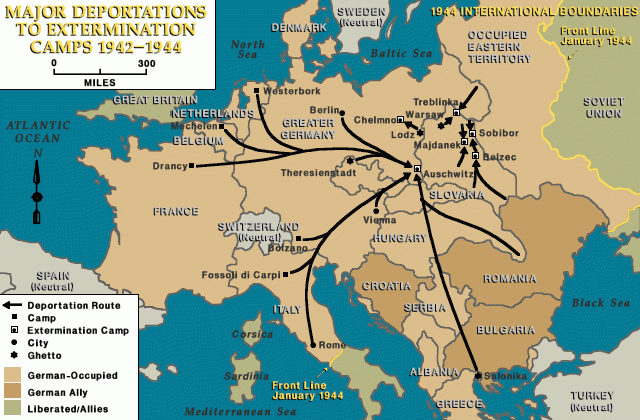
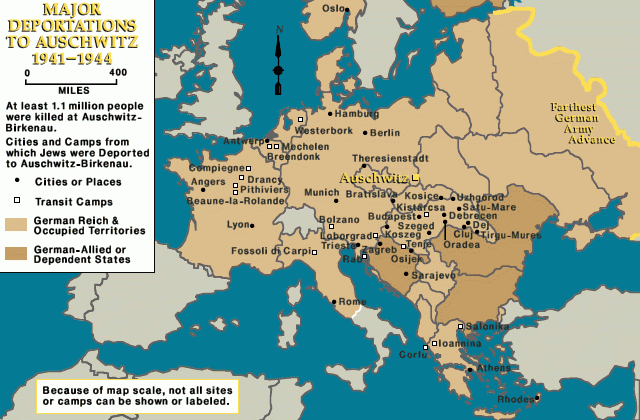
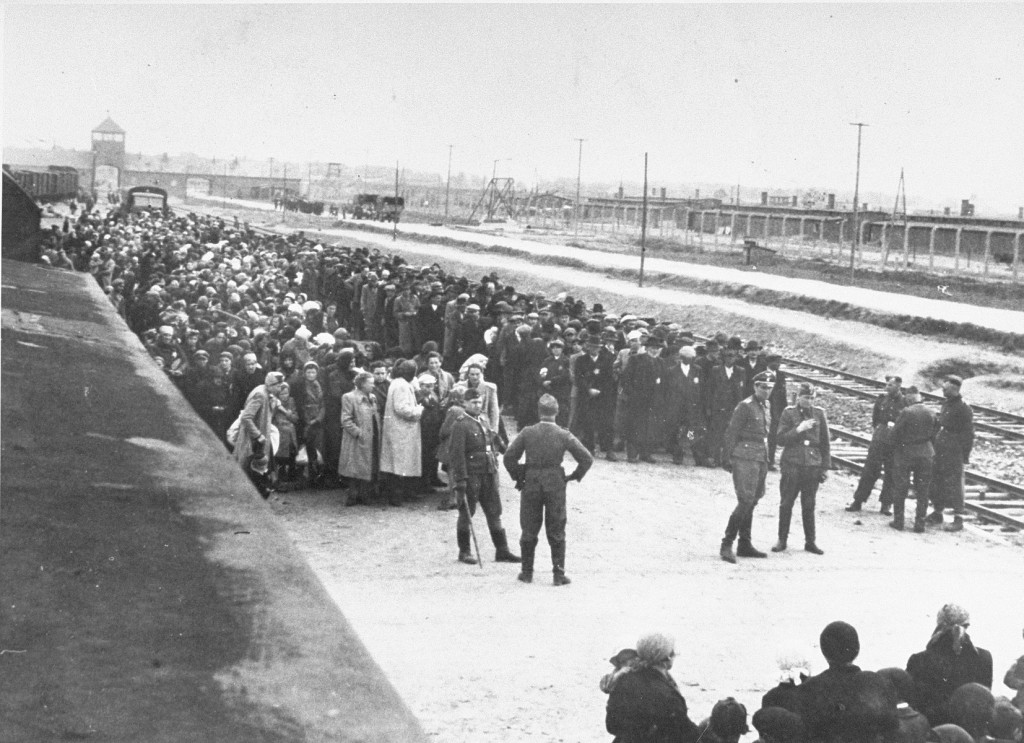
The Nazis deported 1.1 million Jews to Auschwitz from all over Europe. Jews were deported to Auschwitz by train, usually on freight cars. Most of these transports were coordinated by Office IV B 4 of the Reich Security Main Office (RSHA), led by SS officer Adolf Eichmann. At Auschwitz, the SS unloaded transports of Jews onto train platforms (called “ramps” from the German Rampen). One unloading ramp was located near the Auschwitz main camp. Jewish transports arrived at this ramp in the first half of 1942. From July 1942 until May 1944, the SS unloaded arriving Jewish transports on the Alte Judenrampe. This ramp was located at a freight station between the Auschwitz main camp and the Auschwitz-Birkenau camp. Beginning in May 1944, the main unloading ramp was located inside Auschwitz-Birkenau.
Selections of Jewish Prisoners on the Arrival Ramps
When transports of Jews arrived at Auschwitz, SS officials (often physicians) usually carried out a selection process (Aussortierung, literally “sorting out”) on the train platform or ramp. The purpose of these selections was to identify physically fit, young, and healthy Jews for forced labor at Auschwitz or other camps. Those people the SS thought were capable of work were usually registered as prisoners. Those considered incapable of physical labor were murdered in the gas chambers.
Gas Chambers at Auschwitz
At Auschwitz, the Nazis murdered Jewish people in gas chambers with hydrogen cyanide released from Zyklon B pellets. The SS created eight different gas chambers at Auschwitz. Two gas chambers (including a test site) were located at the main camp, and six gas chambers were located at Auschwitz-Birkenau. Most mass gassings took place at Auschwitz-Birkenau, where gas chambers were located in converted farmhouses or in four newly constructed gas chambers and crematoria complexes.
Process of Mass Gassing at Auschwitz-Birkenau
The SS lied to Jewish victims before murdering them in the gas chambers. They told the Jewish men, women, and children that they would have to bathe or undergo a disinfection process. They then instructed them to undress. Next, the Jews were directed to the gas chamber, which was usually disguised as a bathing facility. After the doors to the gas chamber were sealed shut, an SS doctor oversaw an SS man put Zyklon B pellets into the gas chamber through special openings. When these pellets were exposed to air, hydrogen cyanide was released, asphyxiating the people inside the gas chamber. This was an inhumane, terrifying, and often painful death.
After about 30 minutes, the SS opened the doors to the gas chambers. Special prisoner forced labor units called Sonderkommandos had to remove the bodies from the gas chambers. The Sonderkommando prisoners, most of whom were Jewish, also had to do other gruesome tasks. This included removing eyeglasses, artificial limbs, and teeth with metal fillings from the corpses; searching the bodies for hidden valuables; and cutting the women’s hair.
The last mass gassing at Auschwitz-Birkenau took place in October/November 1944.
Mass Graves, Crematoria, and Burning Pits
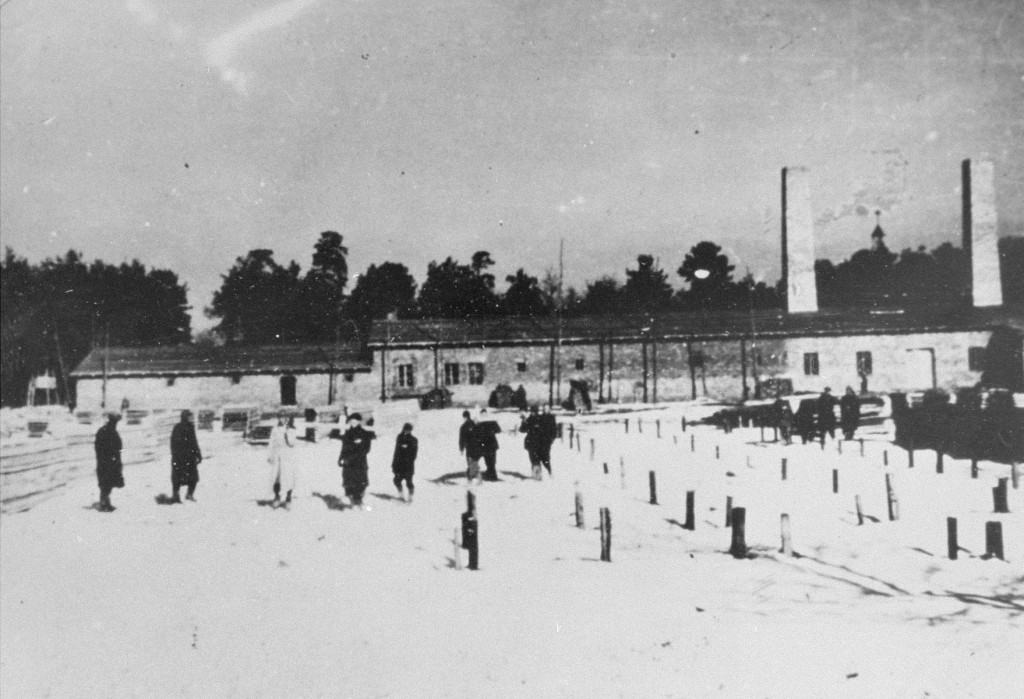
At Auschwitz, the Nazis burned the bodies of their victims in order to cover up the evidence of mass murder. They used specially built crematoria (sometimes called “ovens” or “furnaces”) and burning pits. The Nazis also buried bodies in mass graves. They later exhumed and burned most of these bodies. Prisoners assigned to the Sonderkommandos were forced to transfer bodies from the gas chambers and burn them.
Daily Life for Prisoners of Auschwitz
Between 1940 and 1945, the SS imprisoned about 400,000 men and women as registered prisoners at Auschwitz. Prisoners’ experiences in the Auschwitz concentration camp—and their chances of survival—varied based on several factors. Such factors included when they arrived at the camp, what prisoner category they were assigned to, and the type of labor they were forced to perform, among others.
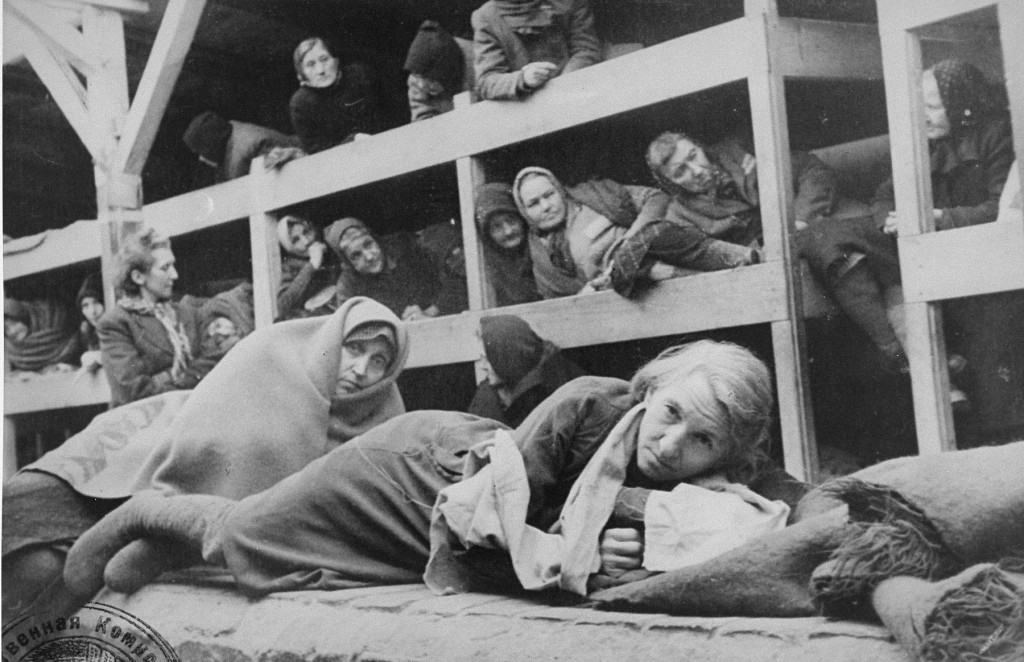
For all people imprisoned in Auschwitz, daily life in the camp was characterized by deliberate starvation, diseases and epidemics, deadly labor conditions, and physical abuse. Jewish prisoners were particularly targeted by camp authorities. Their mortality rate was the highest among all prisoner groups.
The Intake Procedure for Auschwitz Prisoners
When prisoners were registered at the Auschwitz concentration camp, they were subjected to a dehumanizing intake process. They were forced to undress and bathe in a communal shower. They were then sprayed with a chemical to remove lice from their hair and bodies. The prisoner intake process also included cutting long hair, shaving facial and body hair, and replacing their civilian clothing with prisoner uniforms. Prisoners were no longer referred to by their names, but by newly assigned prisoner registration numbers. At Auschwitz, beginning in spring 1942, these numbers were tattooed on prisoners’ bodies.
Prisoner Categories and Badges
The SS classified Auschwitz concentration camp prisoners into different categories based on why they were imprisoned. They also categorized them by ethnicity or nationality. Jewish prisoners were treated as a separate category. About half of all Auschwitz concentration camp prisoners were Jews. Prisoners were forced to wear badges that corresponded to their prisoner category and nationality.
Food at Auschwitz
The prisoners were given food three times a day. In the morning, they typically received an unsweetened coffee substitute or bitter herbal tea. Their midday food was usually a watery soup made from small amounts of root vegetables and/or grain. In the evening, bread was distributed among prisoners, along with small amounts of sausage, fat, or marmalade. The lack of adequate food quickly led to starvation, especially for prisoners assigned to heavy physical labor.
Hygiene and Diseases
Prisoners of Auschwitz lived in horrifically crowded and filthy conditions. They would generally go for weeks without a change of clothing or the opportunity to bathe. Lice infestations tortured them. These conditions, combined with starvation, led to rampant illnesses and infectious diseases, such as dysentery, typhus, and tuberculosis. Sick prisoners could find little help in the camp infirmaries, which lacked the medicines and equipment needed to treat them. The SS conducted selections of registered prisoners and murdered those who were too ill or weak to continue working as forced laborers.
Forced Labor at Auschwitz
At Auschwitz, the SS brutally exploited prisoners of all nationalities and categories as forced laborers. They used prisoner labor to carry out SS plans, support the German war effort, and run the camp. Labor assignments varied across the Auschwitz camp complex. Some prisoners were assigned to labor detachments that performed heavy labor, such as mining, factory work, construction, roadbuilding, and ditch-digging. Other assignments included farmwork, skilled labor in camp workshops, or sifting through plundered property.
The SS treated most prisoner forced laborers as expendable. They worked many prisoners to death under grueling conditions. Prisoners worked without proper clothing or equipment in all kinds of weather. The SS guards and kapos often beat prisoners for moving too slowly, failing to meet quotas, falling down, or for no reason at all. Prisoner workdays began and ended with often-torturous roll calls (Appelle). The SS forced prisoners to stand in formation and be counted. Sometimes, these roll calls lasted hours.
Some prisoners also staffed the camp kitchens, hospitals, and clerical offices. These kinds of assignments gave prisoners the chance to get extra food or items that could be bartered for other necessities, such as soap or medicine. For prisoners, the type of labor assignment could make the difference between life and death.
Selections in the Camp
In summer 1941, SS doctors began carrying out selections among prisoners registered in the camp. They identified for murder prisoners who they believed had a contagious disease or who were too emaciated or exhausted for forced labor. These selections took place across the camp complex in camp hospitals, showers, and during roll call. The prisoners selected for murder were killed with an injection of phenol (a toxic substance) to the heart or sent to the gas chambers. Beginning in mid-1943, Jews were the only Auschwitz prisoners subjected to these types of selections.
“Kanada”: Plunder of Jewish Property at Auschwitz
The SS stole the luggage and personal items that Jewish victims brought with them to Auschwitz. The Nazi regime then redistributed these items to non-Jewish Germans. At Auschwitz, the plundered belongings were stored, sorted, and packaged in warehouses. The storage warehouses were colloquially called “Kanada.” Kanada I was located midway between the Auschwitz main camp and Auschwitz-Birkenau. Kanada II was located in Auschwitz-Birkenau near one of the gas chambers. Plundered property was also stored in other buildings throughout the camp. Prisoner labor detachments were forced to sort through these belongings.
Inhumane Medical Experiments at Auschwitz
More than a dozen SS medical personnel conducted inhumane and often lethal medical experiments on people imprisoned at Auschwitz, especially Romani and Jewish prisoners. These experiments were often done in accordance with eugenics and other aspects of Nazi ideology. Among the medical professionals who conducted these experiments at Auschwitz were Eduard Wirths, Carl Clauberg, and Josef Mengele. The researchers did not seek the prisoners’ consent or inform them of the type of procedures they were undergoing or their possible effects. The experiments often permanently maimed many victims or caused them to die.
Escapes From Auschwitz
More than 900 prisoners tried to escape from the Auschwitz camp complex over the course of its operation. Of these escape attempts, 196 are known to be successful. Most of the successful escapes were from labor detachments working outside the camp or from subcamps. It was much more difficult to escape from the heavily guarded Auschwitz main camp and Auschwitz-Birkenau camp. Local civilians often helped escapees to flee. Some escapees, like Slovak Jews Rudolf Vrba and Alfréd Wetzler, helped bring international attention to the mass murder of Jews and other crimes being committed at Auschwitz.
The SS retaliated for escapes in the most brutal manner. Escapees who were captured were typically brought back to Auschwitz, beaten and tortured, then hanged in front of the prisoners. After successful escapes, the SS would sometimes lock groups of other prisoners in a cell and starve them to death. Sometimes, civilians suspected of helping escapees were arrested and imprisoned. The SS even put relatives of some escapees into the camp.
Resistance in Auschwitz
Resistance in Auschwitz took many forms, from individual acts of defiance to organized group resistance. Some prisoners—under the threat of death—secretly drew, photographed, or wrote about the horrors of camp life. Others practiced their religion, sang songs, or did other things in violation of camp rules.
Organized resistance groups tried to pass information and photographs about the camp to the outside world, including about the crimes being committed and the perpetrators. They also tried to inform prisoners in the camp about the course of the war and help prisoners secretly secure medicine, food, and clothing. These networks were often organized by nationality. Because of Auschwitz’s location, the Polish resistance groups were the most sophisticated and successful at maintaining contact with resistance networks on the outside.
At Auschwitz, Jews attempted to resist in the face of mass murder. There were multiple examples of groups of Jews attempting to escape the gas chambers. Most famously, Jewish Sonderkommando prisoners revolted against the SS in October 1944.
The SS Evacuation of Auschwitz, January 1945
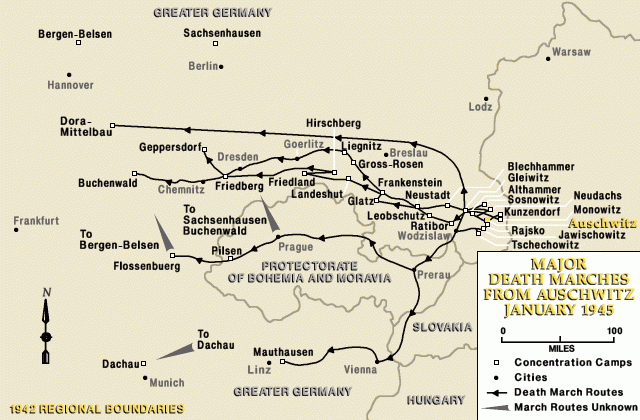
On January 12, 1945, Soviet forces began a military offensive threatening the German position at and around Auschwitz. The SS was placed on high alert but continued to operate the camp for several more days. The last prisoner roll call at Auschwitz took place on the evening of January 17. That day, the SS accounted for about 67,000 prisoners in all camps and subcamps. On the same day, the SS began evacuating the Auschwitz camp complex. The SS forced tens of thousands of prisoners, mostly Jews, on death marches. Prisoners who were physically unable to walk were left behind or shot. Many of these prisoners were eventually put on unheated freight trains and transported to concentration camps in Germany.
During the evacuation of Auschwitz, SS men burned camp records. They were attempting to hide evidence of their crimes and wanted to prevent the records from falling into Soviet hands. On January 26, they blew up Crematorium V. This was the last remaining crematorium at Birkenau. The others had already been dismantled and demolished.
The Liberation of Auschwitz
On January 27, 1945, Soviet troops liberated approximately 7,000 prisoners from Auschwitz, Auschwitz-Birkenau, and Monowitz. Today, this date is commemorated as International Holocaust Remembrance Day.
Caring for the Liberated Prisoners
Many of the prisoners liberated from Auschwitz were starving, ill, and on the verge of death. These prisoners, including more than 200 children, received initial medical care from Soviet military medical personnel in two field hospitals and from local Polish volunteers. In addition, the Polish Red Cross set up a separate hospital on the site of the former concentration camp.
Soviet Film Footage of Liberated Auschwitz
Shortly after liberation, a Soviet film crew took footage of the camp. This film footage includes an aerial shot of Auschwitz-Birkenau, prisoners in barracks, children being escorted through the camps, and prisoners standing behind barbed wire. It also shows piles of belongings stolen from the Nazis’ victims. The Soviet film footage of Auschwitz was shown at the International Military Tribunal at Nuremberg in 1946. In the following decades, moving and still images from this footage became iconic visuals of the Holocaust.
Bringing Auschwitz Perpetrators to Justice
After World War II, Nazi perpetrators from Auschwitz were held accountable in various war crimes trials.
In the 1940s and early 1950s, hundreds of Auschwitz perpetrators were tried by postwar Polish courts. In 1947, former Auschwitz commandant Rudolf Höss was tried in Warsaw, Poland. He was executed by hanging at Auschwitz. That same year, a tribunal in Kraków tried 40 Auschwitz perpetrators. Among those tried were the second commandant of Auschwitz, Arthur Liebehenschel, and the female overseer Maria Mandl.
In the 1960s, there were two major trials of perpetrators responsible for crimes at Auschwitz: the trial of Adolf Eichmann in Israel and the Frankfurt Auschwitz Trials in West Germany. Trials continued into the late 20th and early 21st centuries. Still, many Nazi perpetrators escaped justice. One of them was the notorious Nazi doctor Josef Mengele.
Auschwitz as a Symbol of the Holocaust
Auschwitz’s notoriety is the result of two main factors: the camp’s organizational structure and the role it played in the Holocaust.
Auschwitz as Concentration Camp and Killing Center
Auschwitz’s dual function as both a concentration camp and a killing center shaped the history and memory of the camp. The presence of a concentration camp infrastructure meant that the mass murder of Jews at Auschwitz-Birkenau was less isolated and hidden than at the other four killing centers. As a result, there were more non-Jewish witnesses, more Nazi perpetrators, and more people who escaped (both Jewish and non-Jewish). There were far more Jewish survivors of Auschwitz than of all of the other killing centers combined.
Because of this, there is a significant amount of information about the mass murder of Jews at Auschwitz. Information about Auschwitz comes from a variety of sources. During the war, Nazi crimes at Auschwitz became public thanks to intelligence reports created by resistance groups and escapees. One of these reports is called the Auschwitz Protocols.
After the war, many other sources of information have come to light, including Nazi documents and confessions from Nazi perpetrators. In addition, hundreds of photographs related to Auschwitz have survived, including photos of victims from the Auschwitz Album (also called the Lili Jacob Album) and of perpetrators from the Höcker Album.
The accounts of survivors are particularly important. Auschwitz survivors testified in postwar trials, wrote memoirs, gave interviews, and recorded oral histories. Survivor accounts reveal the extent of Nazi dehumanization at Auschwitz. Elie Wiesel’s Night and Primo Levi’s Survival in Auschwitz have been among the most influential.
Auschwitz’s Role in the Holocaust
One million Jewish people were murdered at Auschwitz. These Jewish victims came from all across Europe. At Auschwitz, the Nazis murdered Jews from Austria, Belgium, Croatia, the Czech lands (Protectorate of Bohemia and Moravia), France, Germany, Greece, Hungary, Italy, the Netherlands, Norway, Poland, and Slovakia. Auschwitz is an important part of the history of the Holocaust for all of these countries.
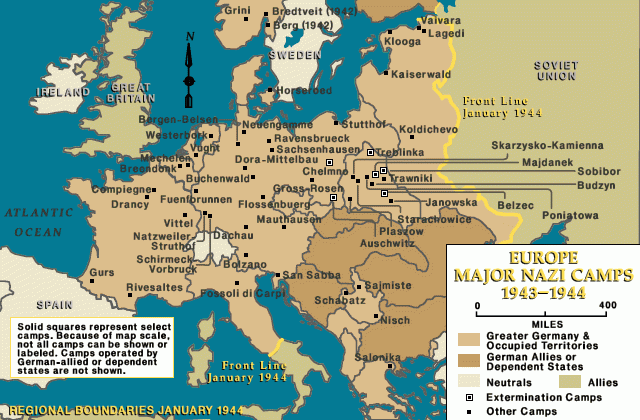
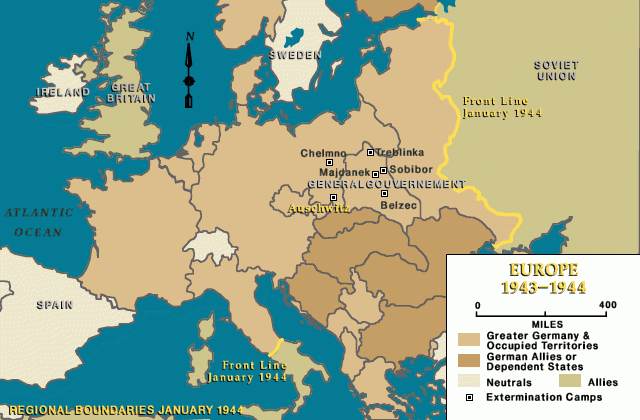
However, Auschwitz was not the only place where the Nazis murdered European Jews. They also murdered Jews in gas chambers at four other killing centers: Chełmno, Treblinka, Sobibor, and Belzec. The Nazis and their collaborators killed millions of Jewish people in mass shooting operations; during pogroms; and at ghettos, labor camps, and other sites of detention. In many, but not all, cases, the demographics of Jewish people murdered at these other sites were more homogenous. Most of the victims typically came from the same location or region. This is especially the case for killing sites in occupied eastern Europe.
How Many People Died in Auschwitz?
Between 1940 and 1945, the Nazis deported at least 1.3 million people to the Auschwitz camp complex. Of these, approximately 1.1 million people were murdered. The victims included:
- about one million Jews, most of whom were murdered in gas chambers;
- 70,000–75,000 ethnic Poles;
- about 21,000 Roma (derogatorily called “Gypsies”);
- more than 14,000 Soviet prisoners of war; and
- 10,000–15,000 prisoners of other nationalities and/or prisoner groups.
Footnotes
-
Footnote reference1.
This number does not include those people deported to Auschwitz and murdered upon arrival. Most of those people immediately murdered were Jews, but some were Roma and Soviet POWs.
Critical Thinking Questions
Why has the Auschwitz complex become a symbol of the Holocaust?
Besides the SS, what organizations or professions were involved in the design, construction, and operation of the camp?
Were the German and Polish populations aware of Auschwitz, its purposes, and the conditions within? How would you begin to research this question?