During World War II, the Nazis used poisonous gas to murder millions of people in gas chambers. Mass gassings were one of the Nazis’ main methods of mass murder. They murdered Jews, people with disabilities, Roma, Soviet prisoners of war, and others in this way. In the Nazi gas chambers, victims suffered inhumane, terrifying, and often painful deaths.
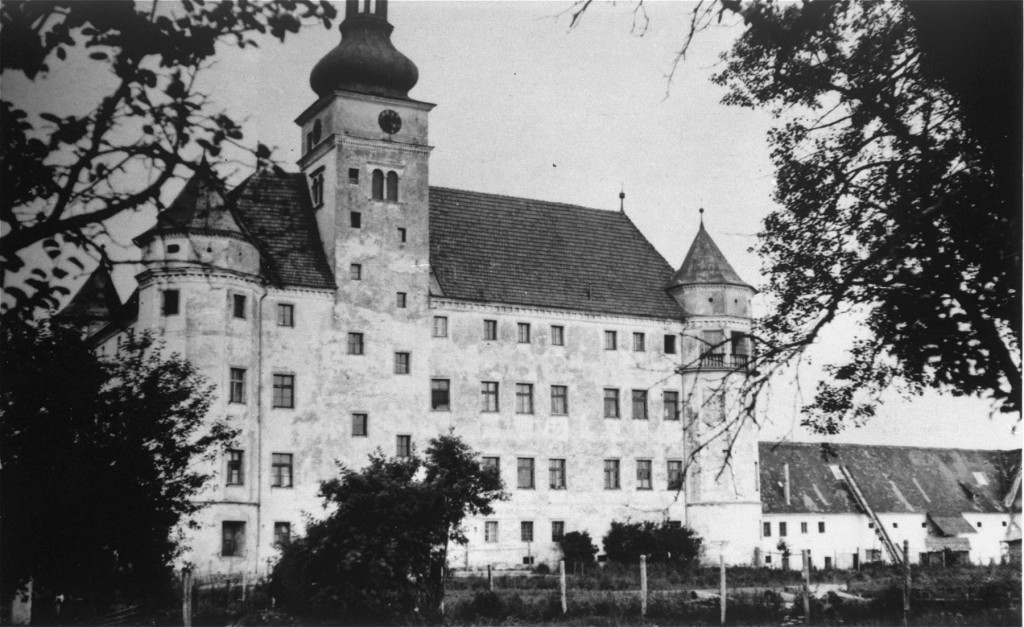
Hartheim castle, a “euthanasia” killing center where people with physical and mental disabilities were killed by gassing and lethal injection. Hartheim, Austria, date uncertain.
Item View![Buses that transported patients from a public hospital near Wiesbaden to the Hadamar euthanasia center, where the patients were gassed ... [LCID: 77167]](https://encyclopedia.ushmm.org/images/large/0b38b312-fb9b-4827-8874-257e4696e70c.jpeg "Buses that transported patients from a public hospital near Wiesbaden to the Hadamar euthanasia center, where the patients were gassed ... [LCID: 77167]")
Buses that transported patients from the Eichberg hospital near Wiesbaden to the Hadamar euthanasia center, where the patients were gassed or killed by lethal injection. Germany, between May and September 1941.
Item View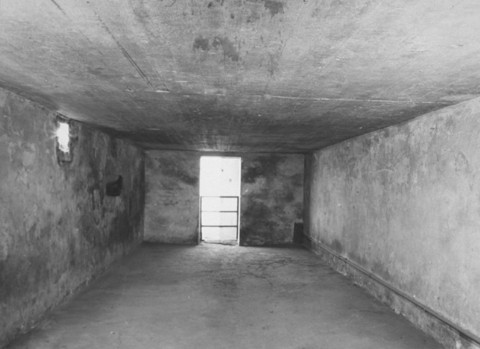
Interior of a gas chamber at the Majdanek camp. Lublin, Poland, after July 24, 1944.
Item View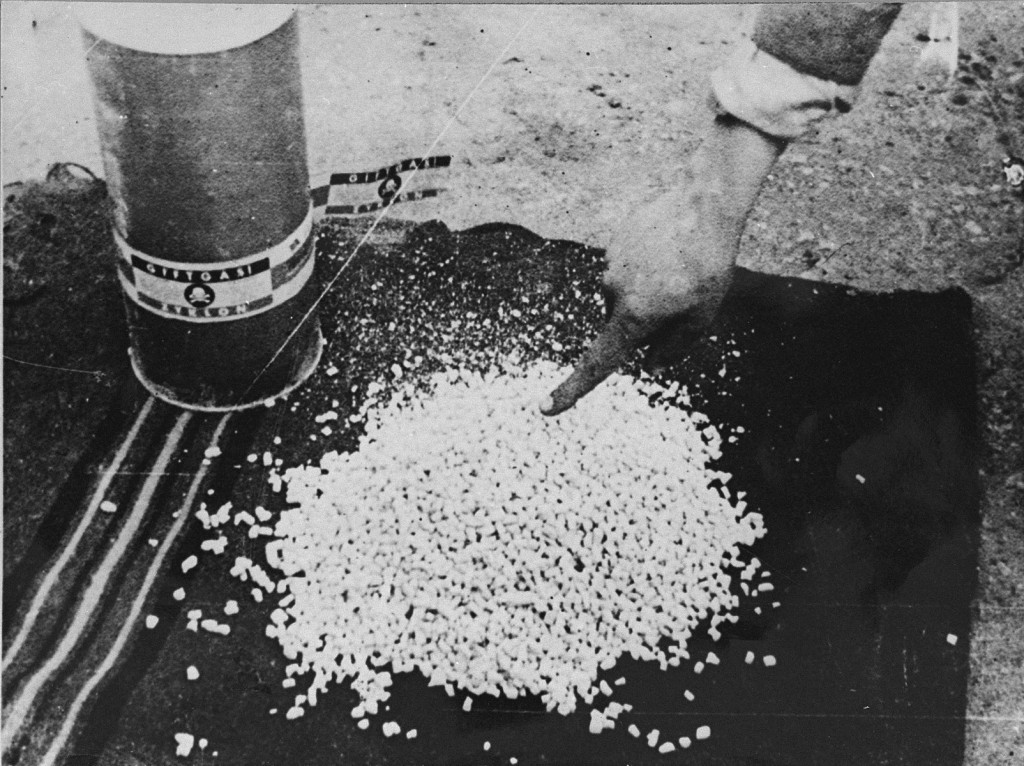
Zyklon B pellets found after Soviet forces liberated the Lublin concentration camp (called Majdanek) in late July 1944. The Nazis used Zyklon B to murder Jews in the gas chambers of the Auschwitz-Birkenau killing center and at other sites, including Majdanek.
Zyklon B is the brand name of a pesticide and disinfectant distributed by the Degesch company (Deutsche Gesellschaft für Schädlingsbekämpfung mbH), a subsidiary of the German chemical company Degussa. Zyklon B is produced as pellets infused with hydrogen cyanide, a poisonous gas. When these pellets are exposed to air, the hydrogen cyanide is released. Before World War II, Zyklon B was commonly used for fumigation (killing bugs and pests). It was also an effective disinfectant. The Nazis used Zyklon B not only for its intended purpose as a disinfectant, but also to murder people in gas chambers.
Item View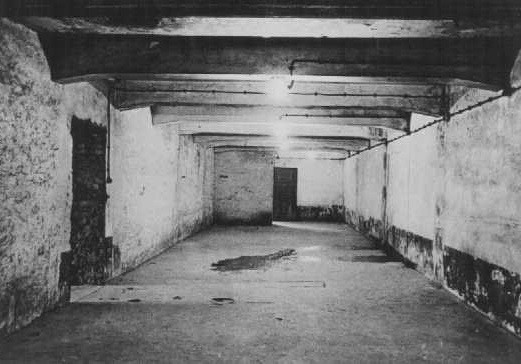
Postwar photograph of gas chamber for mass murder in the Auschwitz main camp. Poland, ca. 1947.
In mid-August 1940, Auschwitz concentration camp authorities put into operation a crematorium adjacent to a morgue. This building was located just outside the boundaries of the Auschwitz main camp. In September 1941, the morgue was converted to a gas chamber for mass murder where several hundred people could be killed at a time. This gas chamber was used until December 1942, though the crematorium remained in operation as late as July 1943. In 1944, camp authorities dismantled the crematory furnaces and transformed the building into an air raid shelter for the SS hospital and for SS officers working in camp administration buildings nearby. During the creation of the Auschwitz-Birkenau State Museum in 1947, two crematory furnaces were reconstructed using original parts and the crematory chimney was rebuilt. Around this time, the air raid shelter walls were demolished to allow visitors to the museum and memorial to view the reconstructed gas chamber and crematorium space.
Item ViewWe would like to thank Crown Family Philanthropies, Abe and Ida Cooper Foundation, the Claims Conference, and BMF for supporting the ongoing work to create content and resources for the Holocaust Encyclopedia. View the list of all donors.

![Personal effects taken from the prisoners at Auschwitz before they were taken to the gas chamber. [LCID: 14877]](https://encyclopedia.ushmm.org/images/thumb/54298492-3a93-46ac-a80a-8ff9cedeef62.jpeg)