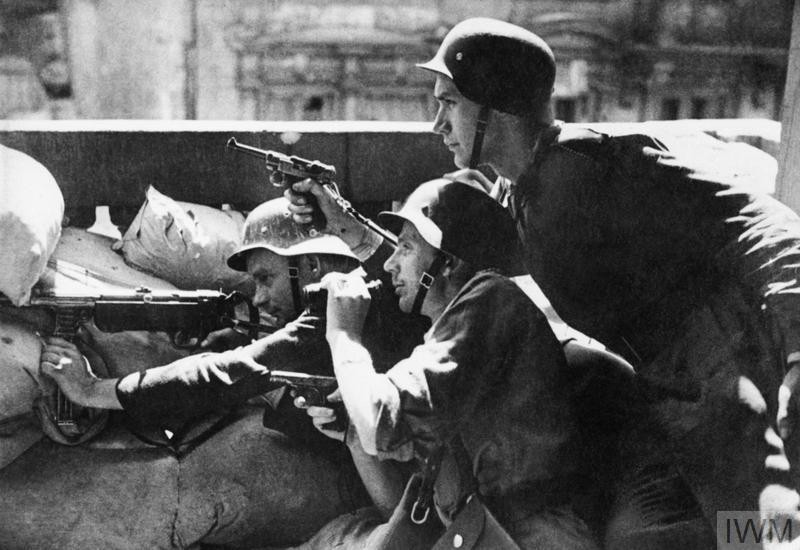
Soldiers of the Polish Home Army (Armia Krajowa) take cover behind a barricade during the Warsaw Polish uprising. During the uprising, the Home Army was supported by 2,500 soldiers from other resistance movements, such as the National Armed Forces (Narodowe Siły Zbrojne, NSZ) and the communist People's Army (Armia Ludowa, AL). Only a quarter of the partisans had access to weapons, fighting against 25,000 German soldiers equipped with artillery, tanks, and air forces. Two of the three soldiers shown here have only small handguns. August 1944. IWM (HU 39146)
Item View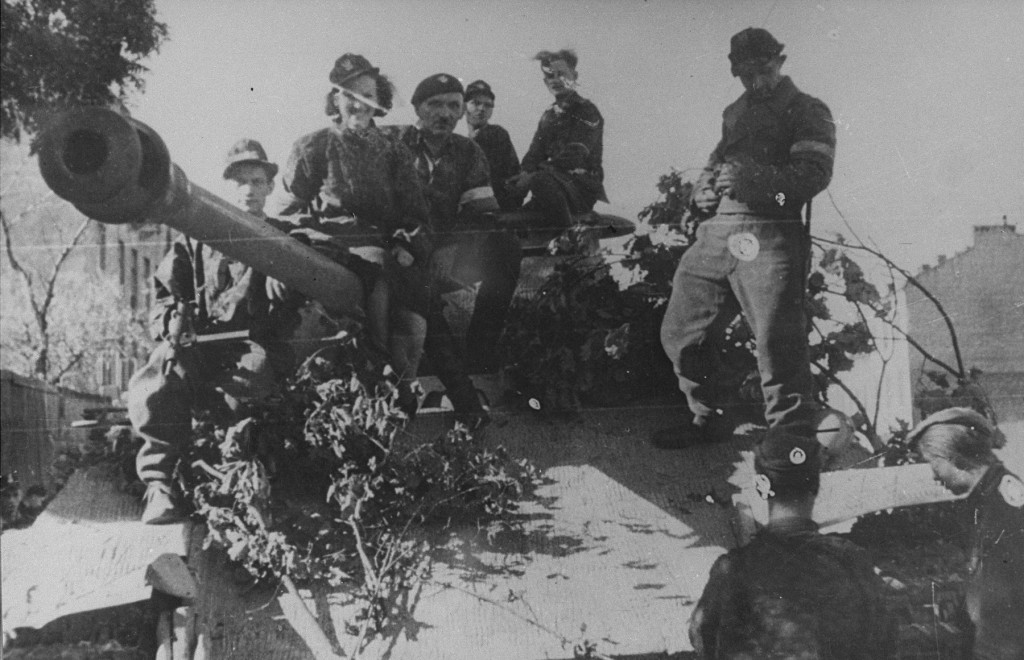
Members of the Zoska battalion of the Armia Krajowa stand atop a German tank captured during the 1944 Warsaw uprising. The tank was used by the battalion during its capture of the Gesiowka concentration camp. Warsaw, August 2, 1944.
Item View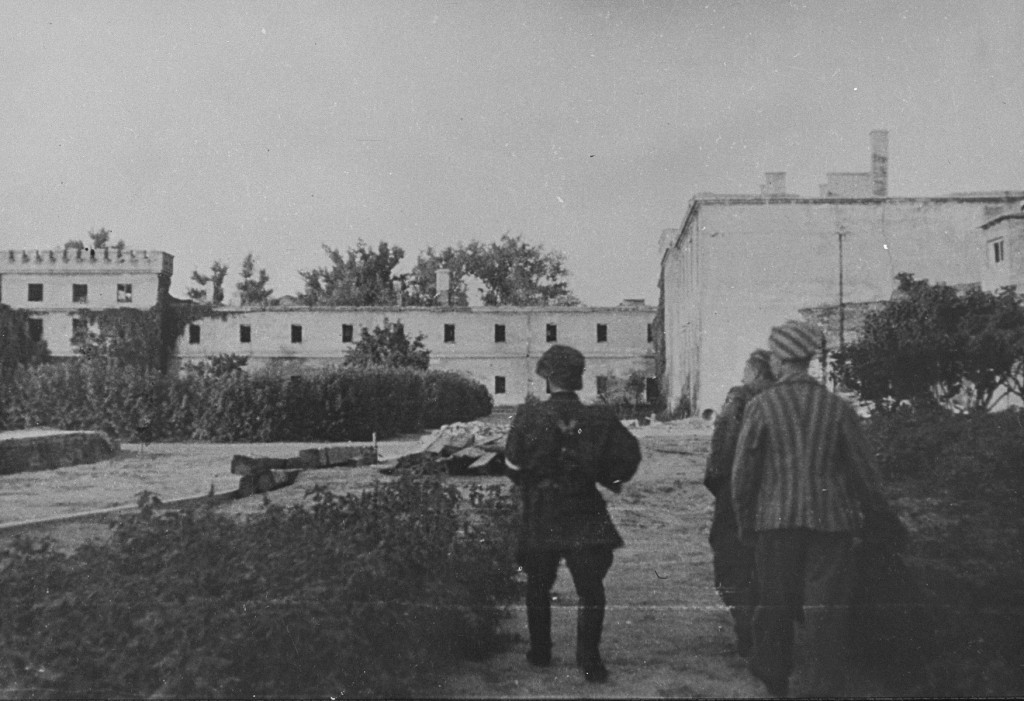
A member of the Zoska battalion of the Armia Krajowa escorts two of 348 Jews liberated from the Gęsiówka concentration camp during the Warsaw Polish uprising. August 5, 1944.
Item View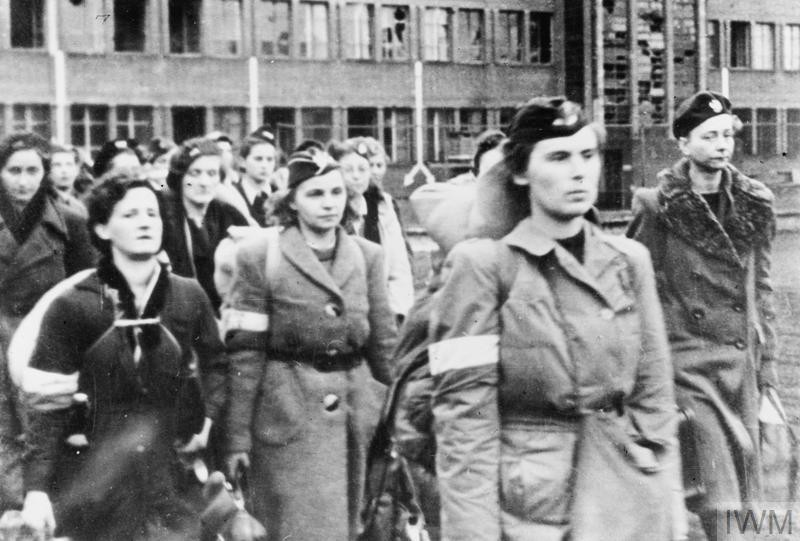
Soldiers of the Polish Home Army Women's Auxiliary Services, taken captive by the Germans in October 1944 as a result of the Warsaw Polish uprising. After the uprising ended on October 2, the Germans took as prisoners of war more than 11,000 soldiers of the Polish Home Army.
Item View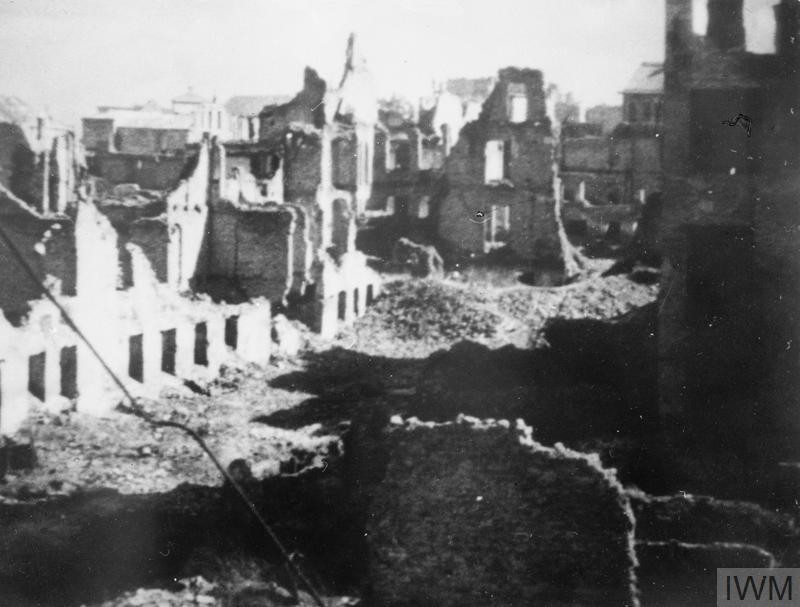
Planned as a short military revolt, the Warsaw Polish uprising lasted 63 days, from August to October 1944. In the end, German troops destroyed the majority of Warsaw during and immediately after the uprising. Photo dated January 17, 1945.
Item ViewWe would like to thank Crown Family Philanthropies, Abe and Ida Cooper Foundation, the Claims Conference, and BMF for supporting the ongoing work to create content and resources for the Holocaust Encyclopedia. View the list of all donors.