
America First Committee (1940–1941)
Numerous groups advocated against US involvement in World War II. The largest and most influential isolationist group of the time was the America First Committee.
Key Facts
-
1
The America First Committee (AFC) advocated that the United States stay out of World War II while building up its defenses at home.
-
2
The AFC strongly opposed President Franklin D. Roosevelt and his policies. It claimed that he wanted to lead the nation to war and that he was not being honest with the American people.
-
3
Over time, the America First Committee became known as an antisemitic organization. In September 1941, aviator Charles Lindbergh, AFC’s most famous spokesperson, repeated antisemitic stereotypes and accused Jews of leading the United States to war.
From 1939 to 1941, during the first two years of World War II, the United States remained neutral. Americans debated whether or not to provide economic and military assistance to Great Britain and others fighting against Nazi Germany and its Axis partners. Some American groups advocated for US intervention in World War II. Other groups—like the America First Committee—were against the United States’ involvement in the war and supported isolationism.
The America First Committee (AFC) was an isolationist organization in the United States founded in June 1940. The AFC entered into many public disagreements with President Franklin D. Roosevelt about whether the United States should enter World War II. It also faced accusations that it was an antisemitic organization and that its actions were helping Nazi Germany. As soon as the United States was attacked by Japan and entered World War II in December 1941, the America First Committee shut down.
Founding of the America First Committee
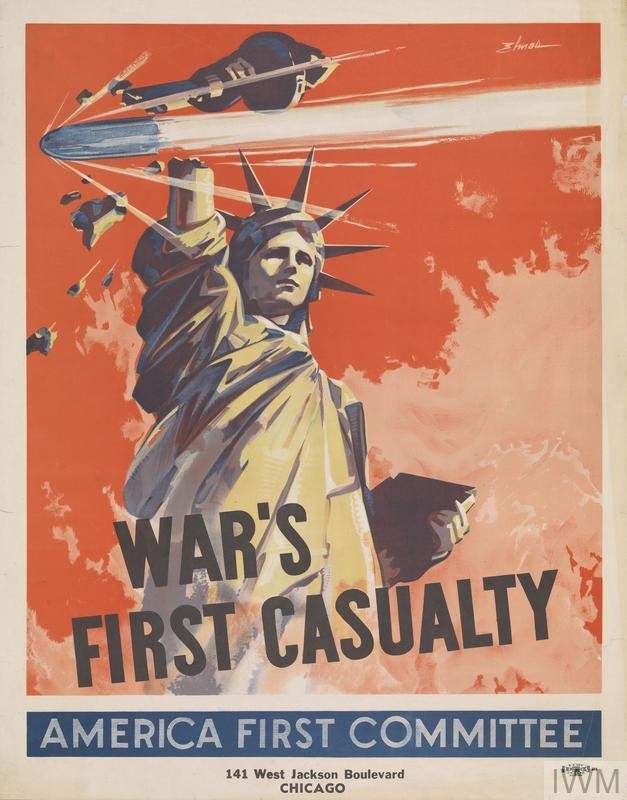
When World War II began in Europe in September 1939, an overwhelming majority of Americans hoped the United States would stay out of the war. Many adopted an isolationist stance, seeing World War II as a foreign war. They also remembered the atrocities of World War I (1914–1918), which had resulted in the deaths of more than 116,000 US soldiers.
By 1940, organizations such as the Committee to Defend America by Aiding the Allies began to encourage Americans to aid other countries’ war efforts against Nazi Germany. Offering a different point of view, a group of law school students at Yale University in New Haven, Connecticut, formed the America First Committee in June 1940. The committee encouraged the United States to build a strong defense at home but to stay out of the fighting in Europe.
The America First Committee publicly announced its formation on September 4, 1940. It quickly became the country’s most influential organization to advocate against entering the war. The AFC claimed that entering the war would lead to the demise of democracy in the United States. Its members insisted that trying to keep America out of war was patriotic and democratic. The AFC emphasized that it was not a pacifist organization. Leaders of the AFC also made it clear that the group did not support Nazi Germany.
The phrase “America first” had been used to support other political causes before the AFC adopted it in 1940. Organizations promoting US international trade interests, immigrants’ assimilation, and the US effort in World War I had used the phrase. During the 1920s, the Ku Klux Klan used the phrase “America first” as part of its anti-immigrant and antisemitic crusades. The America First Committee did not align itself with any of these causes or consider itself to be the inheritor of earlier efforts that had used the phrase.
America First Committee Principles
The AFC established a number of principles when it was founded. These included:
- building “an impregnable defense for America”;
- staying prepared for an attack by a foreign power;
- staying out of war in Europe; and
- not sending weapons or aid to warring nations abroad.
Over time, the AFC expressed additional ideas that guided their work, including:
- claiming that the United States should provide humanitarian aid for Britain while remaining neutral in the war;
- advocating that the American public should vote on whether to go to war; and
- urging that the US government respect the “will of the people” to stay out of war.
America First Committee Leadership and Spokesmen
Although it was founded at Yale University, the America First Committee established its headquarters in Chicago, Illinois. The Midwest was a center of isolationist sentiment in the United States. In addition, R. Douglas Stuart Jr., one of the students who founded the AFC, had been raised in the Chicago suburbs.
Stuart convinced Brigadier General Robert E. Wood, chairman of Sears, Roebuck and Co., in Chicago, to join the AFC’s Board of Directors. General Wood would chair the America First Committee’s board of directors for its entire, short existence. However, he did not play a high-profile role as a spokesperson.
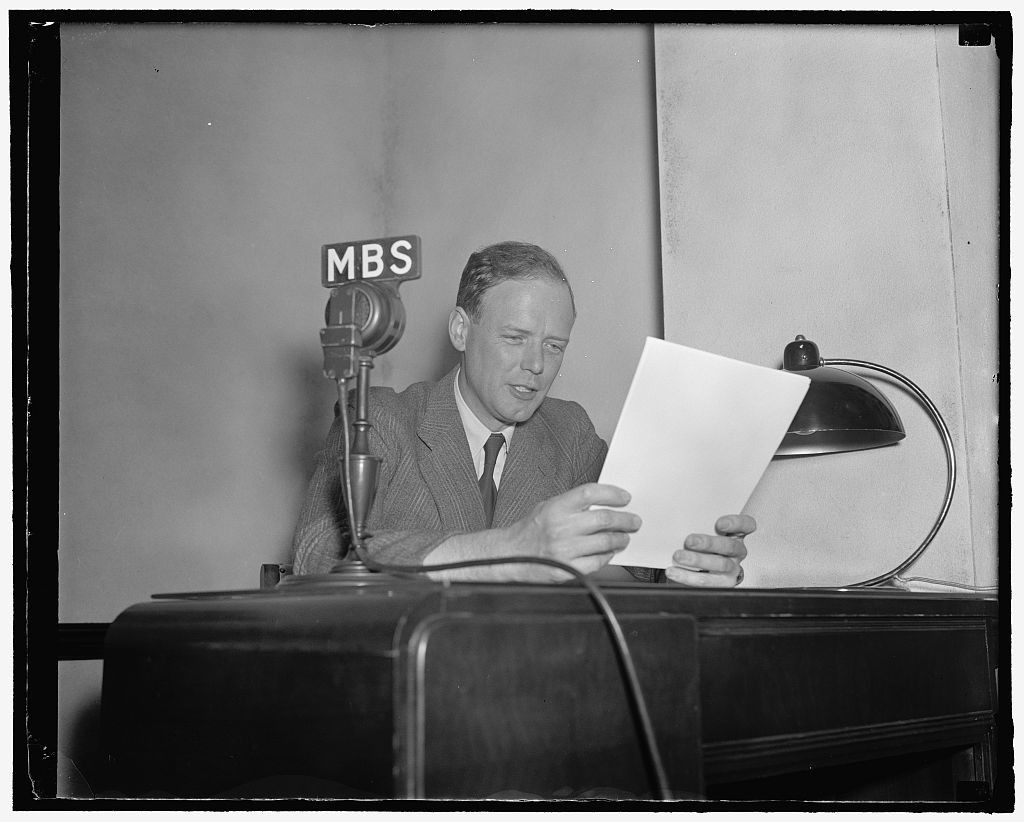
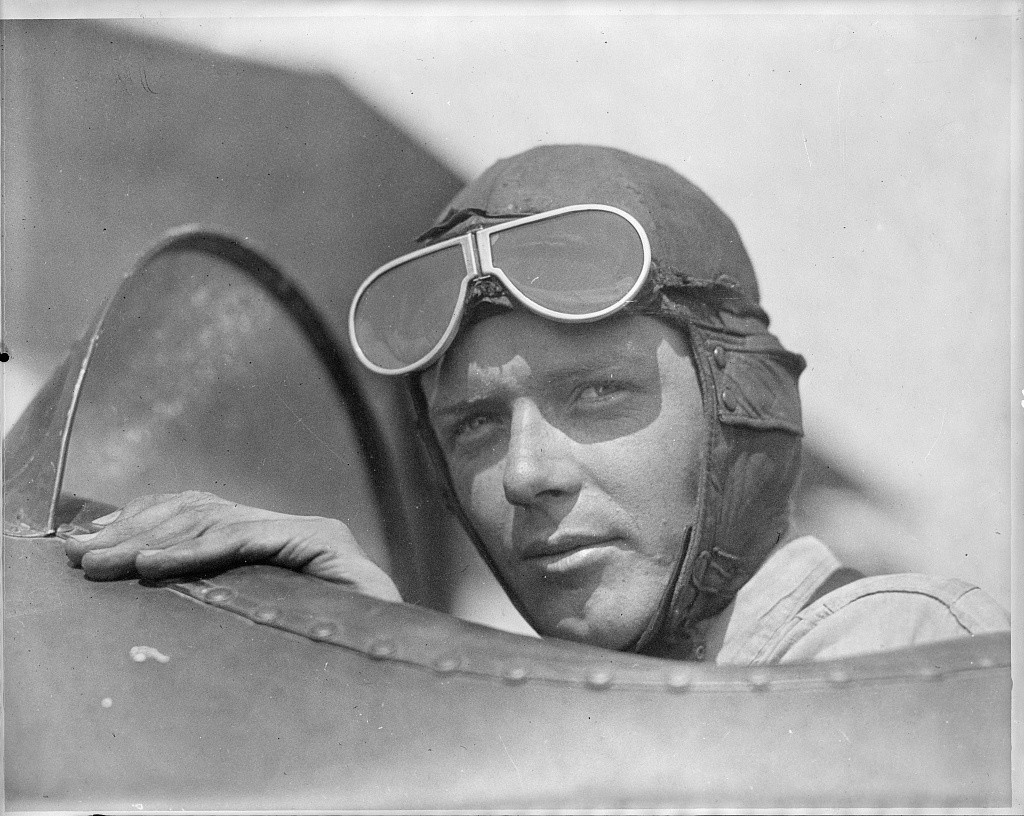
The most well-known spokesperson for and member of the America First Committee was Charles Lindbergh. Lindbergh was an aviation hero and one of the most famous Americans of his time.
Three US senators—Republican Senators Gerald R. Nye (ND), Robert Taft (OH), and Democratic Senator Burton K. Wheeler (MT)—often spoke at AFC events. However, they did not become AFC members.
America First Committee Membership
The AFC grew quickly to more than 450 chapters and some 850,000 members. About two-thirds of its members lived in the Midwest. Membership was weakest in the southern United States.
The AFC officially prohibited Fascists, Nazis, Communists, members of the German American Bund, and pacifists from becoming members. But this policy was not always followed. The AFC made many efforts to sever ties with the extreme right wing of American politics, but struggled to do so.
Many rank-and-file members of the America First Committee were politically conservative opponents of the Roosevelt administration. Its most prominent members were influential American business leaders. Some leading AFC members argued that US entrance into the war would result in the collapse of American capitalism and free enterprise. They claimed that the best way to fight the dangers of fascism and communism in the United States was to prevent poverty, depression, and unemployment—rather than to fight wars abroad.
Because the AFC had such strong backing from business leaders, most labor unions and farm workers’ groups did not support it.
America First Committee Activities
The America First Committee established a department of research and a speakers’ bureau to support and publicize its cause. The AFC held rallies and published materials to educate readers. It placed ads in local newspapers and sponsored radio broadcasts. The AFC also focused on organizing local chapters and cultivating local leadership, which often proved challenging.
Opposition to the America First Committee
Both the US government and non-government organizations criticized the America First Committee in several ways. Some critics claimed that the AFC helped garner support for Nazi Germany. Others accused AFC members of antisemitism and suggested that the AFC accepted funding from questionable sources.
Government Opposition
The US government paid close attention to the America First Committee from its founding. The Roosevelt administration secretly ordered the FBI to monitor AFC activities. Although the FBI could not prove that the AFC was subversive, it reported that there may have been fascist sympathizers who infiltrated it.
In September 1941, Democratic Congressman Samuel Dickstein (NY) called for a congressional investigation of the America First Committee. Dickstein claimed that the AFC supported Fascists. The US House of Representatives Un-American Activities Committee began investigating the AFC in November 1941. The investigation, however, did not get very far. The America First Committee dissolved the next month, after the United States entered World War II.
Non-Governmental Opposition
Some critics outside of the federal government claimed that the America First Committee either indirectly supported Nazism or was even working for Nazi Germany. Organizations—such as the Committee to Defend America by Aiding the Allies and the Fight for Freedom Committee—opposed the AFC. These groups favored supporting countries fighting against the Nazis or even intervening in the war.
One of the most influential attacks against the AFC occurred when the Friends of Democracy, an organization that countered Fascist and Communist propaganda, published a pamphlet called The Nazi Transmission Belt. The pamphlet accused the AFC of secretly supporting Nazism and spreading Nazi propaganda on behalf of Hitler.
The AFC’s leadership rejected every accusation. They emphasized that the AFC prohibited supporters of Nazism from becoming members.
Support from Antisemitic Groups in the United States
The America First Committee had trouble countering claims that it was an antisemitic organization. This was because some openly antisemitic speakers and groups supported it. For example:
- Both the Ku Klux Klan and the Silver Legion of America (a pro-Nazi American organization also known as the “Silver Shirts”) endorsed the AFC.
- Father Charles E. Coughlin, the popular and antisemitic “radio priest” from Royal Oak, Michigan, urged his millions of listeners to join the America First Committee.
- In May 1941, a newspaper published by the German American Bund told its members to join the AFC. The Bund was the most influential pro-Nazi organization in the United States.
Some America First Committee members had also engaged in antisemitic activities. For example, American automaker Henry Ford agreed to be listed as a member of the national committee leading the AFC. Ford had circulated antisemitic lies and conspiracy theories about Jews in his Dearborn Independent newspaper during the 1920s. However, Ford did not support the AFC financially or otherwise. His name was dropped from the national committee after just a few months.
Praise from Nazi Germany
Nazi Party leaders in Germany took note of the America First Committee. A Nazi short-wave radio address broadcast to the United States on January 22, 1941, described the AFC as a “truly American and truly patriotic” organization. This broadcast was part of Nazi Germany’s propaganda efforts to encourage isolationism in America and to keep the United States out of World War II. While much of the Nazi regime’s propaganda focused on spreading hatred of Jews, it also tried to influence American opinion about entering the war. For example, it promoted the idea that isolationists were true American patriots.
The Fight Against the Lend-Lease Act (1941)
The America First Committee’s most intense political battle resulted from its opposition to the Lend-Lease Act. In January 1941, President Roosevelt proposed a bill that would allow the United States to provide assistance to nations whose defense was considered vital to the nation’s security.
The AFC claimed that the Lend-Lease Act effectively would repeal American neutrality. It stressed that the act gave the president too much power to legislate foreign policy without the consent of Congress. Some who spoke out against Lend-Lease on behalf of the AFC suggested that it was an undemocratic measure that would give Roosevelt dictatorial powers.
The AFC tried to counter accusations that it was working against the British. It emphasized that it only opposed the United States entering World War II and claimed that the passage of Lend-Lease would be tantamount to joining the war.
Despite opposition from the AFC and other less influential isolationist groups, the Lend-Lease Act passed overwhelmingly in March 1941.
New Messages with War Approaching the United States
Following the passage of the Lend-Lease Act, the America First Committee focused on opposing naval convoys that would accompany ships transferring war supplies to Europe. The AFC claimed that these convoys would drag the United States into war. Despite opposition from the AFC and other isolationists, President Roosevelt had these convoy operations move forward in September 1941. He ordered the US Navy to attack any vessel that threatened American ships.
The AFC became increasingly concerned by autumn 1941 that the United States would enter the war in Europe. Even though most Americans were still against entering the war, their sympathy for the Allies’ fight against Germany was increasing. The AFC attempted to hone its public messaging. It focused almost exclusively on asking Americans whether they wanted war or peace. The AFC suggested time and again that Roosevelt wanted war.
Charles Lindbergh and the “War Agitators” Speech
September 1941 was a turning point for the America First Committee because of an infamous speech delivered by Charles Lindbergh. Lindbergh was the organization’s most well-known spokesperson. The AFC had persuaded the world-renowned aviator to support its cause shortly after it was founded. Lindbergh’s enormous celebrity—dating to his 1927 solo, nonstop flight across the Atlantic Ocean—helped the America First Committee gain notoriety and members.
Lindbergh delivered more than a dozen speeches for the America First Committee. The most controversial of these was known as the “War Agitators” speech. It occurred at an AFC rally in Des Moines, Iowa, on September 11, 1941.
In this speech, Lindbergh claimed that three groups were agitating for the United States to enter the war: the British, Jews, and the Roosevelt administration. He acknowledged the Nazi regime’s persecution of Jews in Europe, but then repeated multiple lies about Jewish conspiracies. For example, he claimed that the “greatest danger” posed by Jews to the United States was “their large ownership and influence in our motion pictures, our press, our radio, and our Government.”
The reaction to Lindbergh’s speech outside of America First Committee circles was resoundingly negative, particularly in the press. In contrast, roughly 85 percent of letters sent to the AFC’s offices after Lindbergh’s speech expressed approval for what he said.
The America First Committee's Response to Lindbergh’s Critics
Lindbergh’s speech posed a significant problem for the America First Committee. Its most famous spokesperson was being accused of both antisemitism and support for Nazism. The AFC denied these accusations, but the criticism continued.
Even though the speech damaged the reputation of the AFC, its leadership decided not to publicly criticize Lindbergh. Instead, the AFC issued a statement saying that Lindbergh was not antisemitic and that the committee itself was the victim of a smear campaign. AFC leaders blamed its critics for pulling the country’s focus from the most important issue: staying out of war.
The AFC made an effort to redirect attention to President Roosevelt. It claimed that Roosevelt was trying to usurp the power to declare war from the US Congress. It also falsely accused him of being at the head of a conspiracy to lead the nation to war.
Amid the controversy, requests for Lindbergh to speak at AFC rallies dropped significantly. It also became more difficult for the AFC to book radio time from networks.
The End of the America First Committee
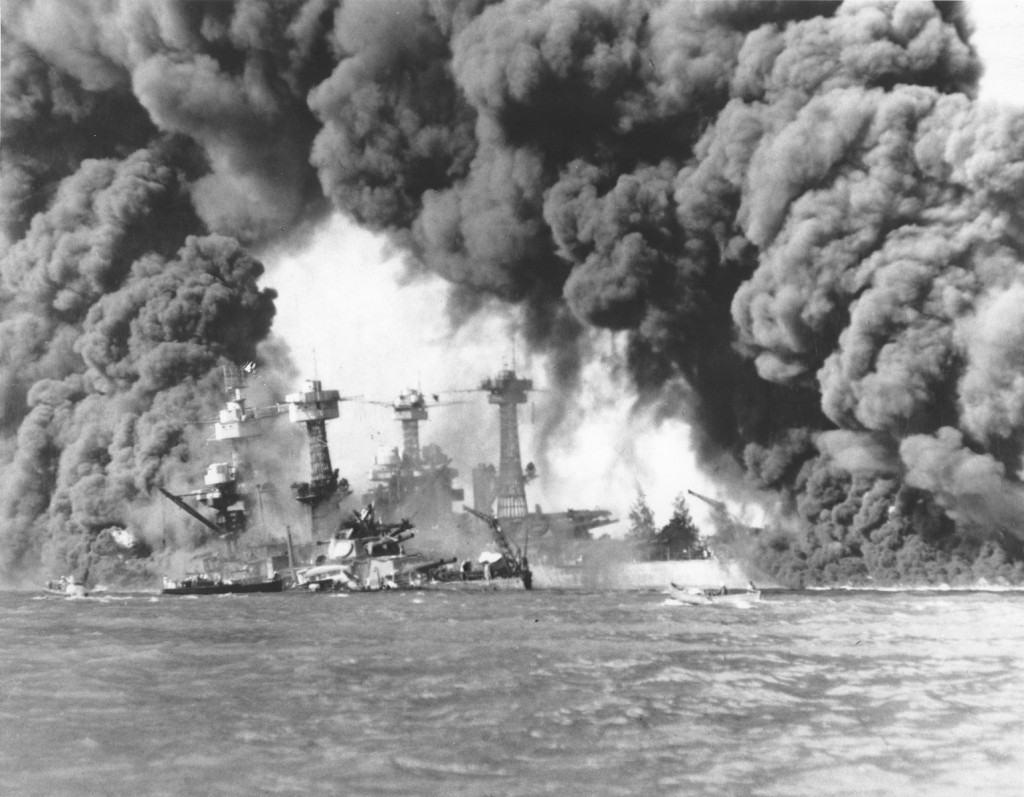
Japan’s attack on the United States spelled the end of the America First Committee.
On December 7, 1941, the Imperial Japanese Navy launched a surprise attack on the US Pacific Fleet stationed at Pearl Harbor. The United States declared war on Japan the next day. On December 11, Germany declared war on the United States.
As soon as the United States entered World War II, the AFC pledged its support for President Roosevelt. The AFC also stopped circulating its literature and told its local chapters to postpone all rallies.
At a meeting in Chicago on December 11, 1941, the AFC’s national committee voted to dissolve the organization. The AFC urged all Americans to meet the coming war “united,” no matter what they had thought before the attack on Pearl Harbor.
Footnotes
-
Footnote reference1.
Walter Johnson, The Battle Against Isolation (University of Chicago Press, 1944), 164–165.
-
Footnote reference2.
A. Scott Berg, Lindbergh (Penguin Group, 1998), 427.