

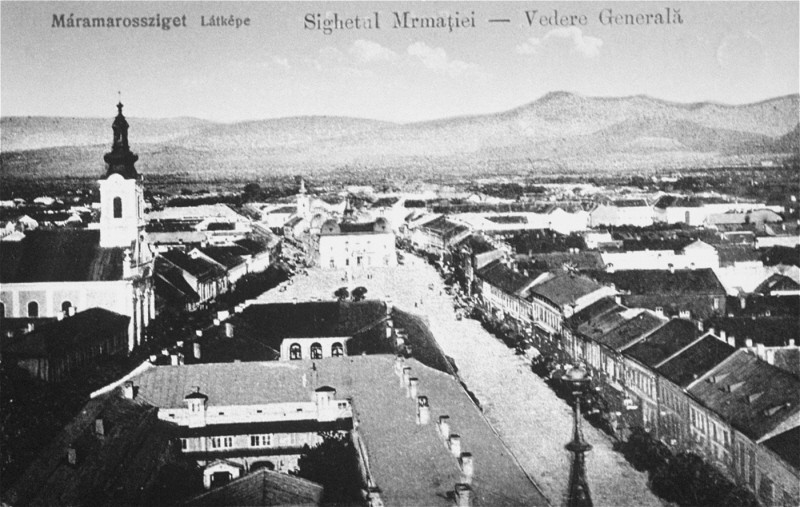
The Holocaust in Sighet
The Holocaust in the town of Sighet (Sighetu Marmației) is part of the history of the Holocaust in Hungary. From 1940 to 1944, Sighet was occupied by Hungary, which subjected Sighet’s Jewish population to antisemitic measures. In 1944, Hungarian and German authorities deported about 13,000 Jews from Sighet to Auschwitz. Among the few survivors were Elie Wiesel and Gisella Perl.
Key Facts
-
1
Sighet is the birthplace of noted Holocaust survivors Elie Wiesel and Gisella Perl.
-
2
Hungarian authorities established two ghettos in Sighet in April 1944, after the German occupation of Hungary. Approximately 13,000 Jews from Sighet and surrounding villages were crowded into the ghettos.
-
3
The Jewish population of Sighet was deported to Auschwitz from May 16 to May 22, 1944. Most of the deportees were murdered in the gas chambers upon arrival.
The Holocaust in the town of Sighet (Sighetu Marmației) is part of the history of the Holocaust in Hungary. Sighet’s historical relationship with Hungary is complicated. The town is located in the Maramureș (Máramaros in Hungarian) region of eastern Europe. Before World War I (1914–1918), this region was part of the Kingdom of Hungary and the Austro-Hungarian Empire. The Hungarian name for Sighet is Máramarossziget. Following the dissolution of the Austro-Hungarian Empire at the end of the war in 1918, the region became part of Czechoslovakia and Romania. Maramureș (including Sighet) was located in Romania before the start of World War II.
The Jewish Community of Sighet Before the Holocaust
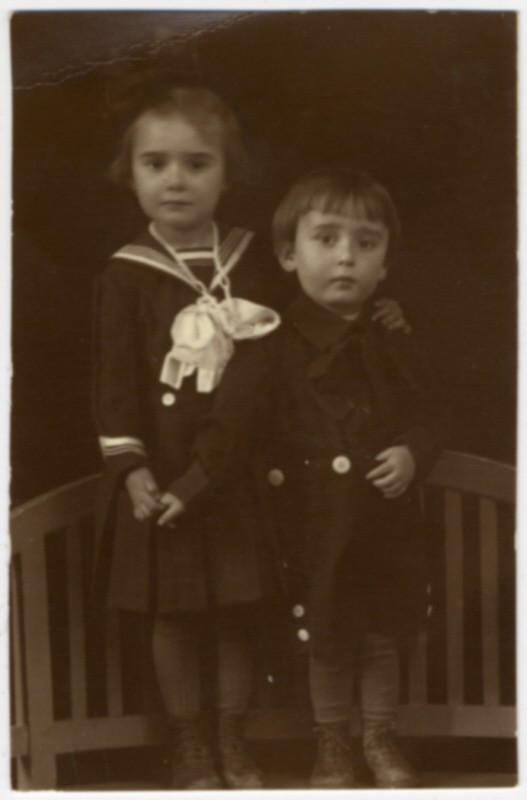
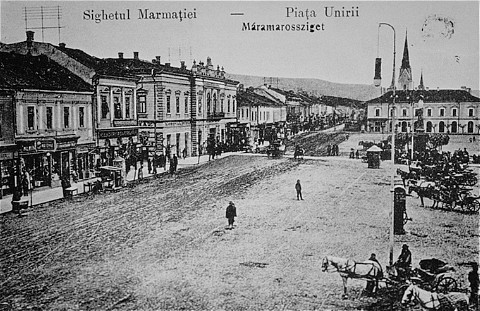
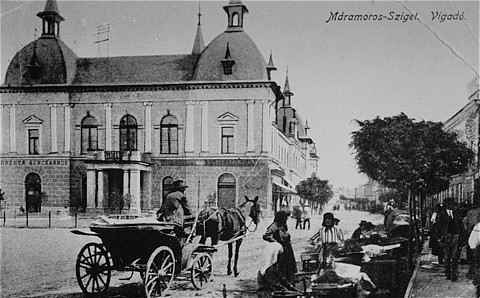
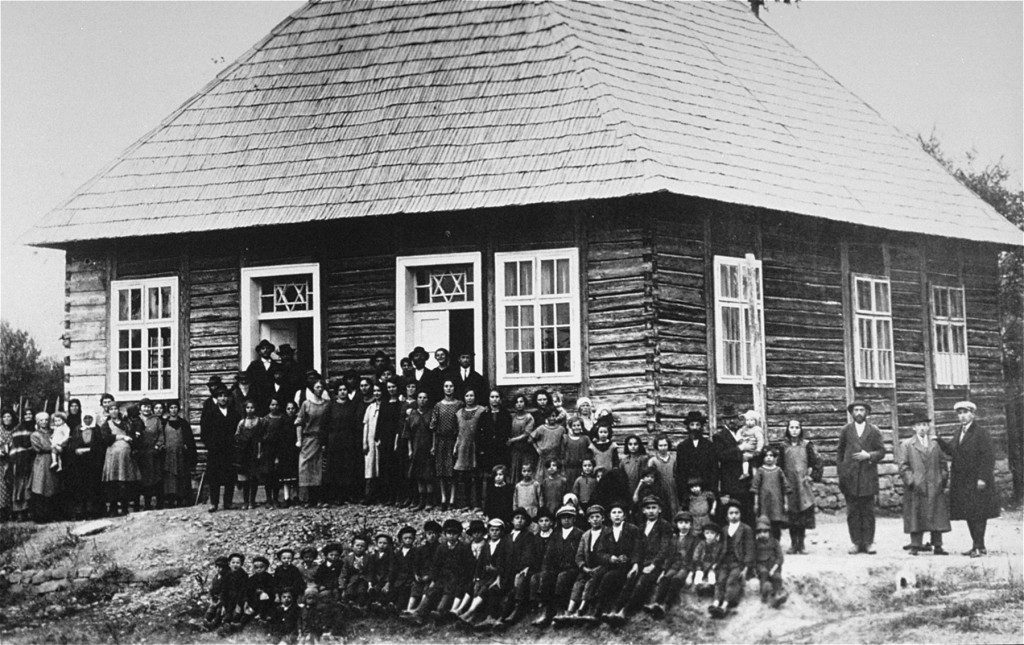
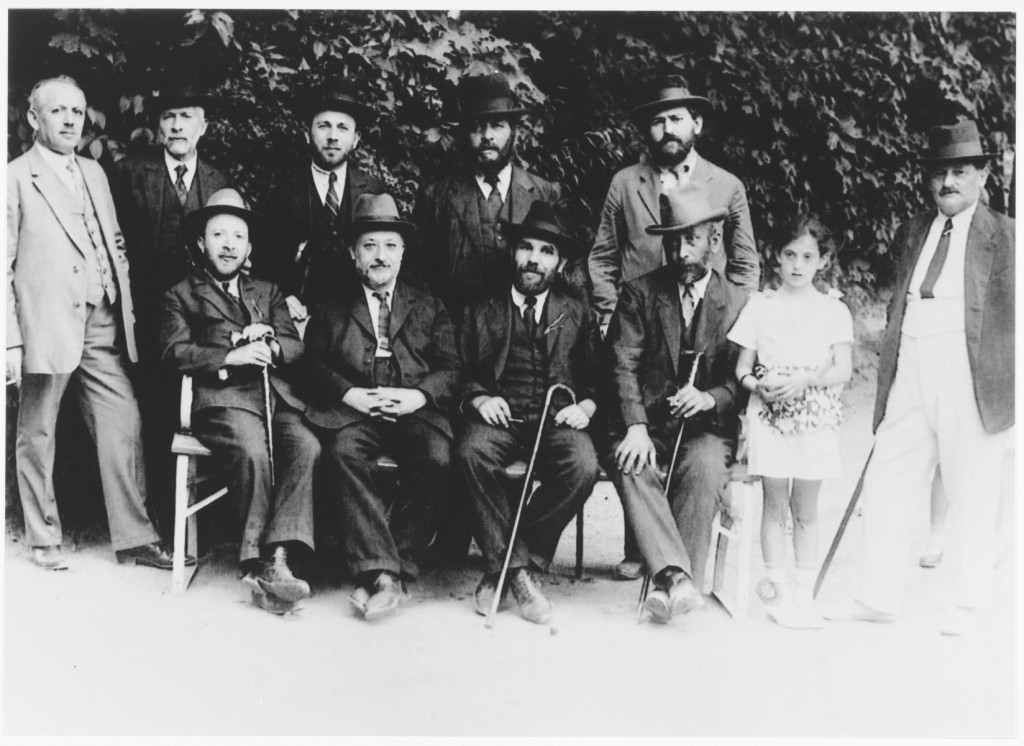
Before the Holocaust, Jews had lived in Sighet and the surrounding Maramureș region for about 200 years.
Demographics
In the late 18th century, the Jewish community of Sighet numbered only about 150 people, but it had a synagogue and a school. Over the course of the 19th and 20th centuries, the Jewish population grew, along with the rest of the town. By 1920, some 11,000 Jews lived there. They made up roughly 40% of Sighet’s population. Jews in this region lived alongside Hungarians, Ruthenians, Romanians, Germans, and Russians.
Economic Life
The region of Maramureș was poorer than many neighboring regions. The poverty of this region influenced the growing Jewish community of Sighet. Like their non-Jewish neighbors, Sighet Jews experienced economic hardship and high rates of illiteracy. And unlike Jews in neighboring regions who engaged in trade and commerce, many Jews in Maramureș (among them Sighet Jews) worked in agriculture and manual labor. To care for those in dire need, Sighet Jews established a range of social welfare institutions.
Cultural and Religious Life
In the early 20th century, Jews who lived in the Sighet region predominantly used Yiddish as their first language. In Maramureș, most Jewish newspapers were printed in Yiddish rather than Hungarian, the official language of the Kingdom of Hungary. The use of Yiddish among the Jews in this region reflected their isolation and limited exposure to Hungarian language and culture.
The majority of Sighet Jews were orthodox and strictly adhered to Jewish law. There were dozens of synagogues and study houses in the town. Hundreds of rabbis and scholars, many of whom published books on the Torah and Jewish law, called this region home.
Hasidism in Sighet
In Sighet, most Orthodox Jews were Hasidic. This meant that they belonged to a popular movement of spiritual revival known as Hasidism. One of the most influential proponents of Hasidism in the region was Yehuda Teitelbaum. Teitelbaum became the rabbi of Sighet in 1858. He founded the first Hasidic yeshiva (Jewish religious seminary) in Hungary. Under his leadership, the Sighet Jewish community grew more insular and more devout. Over time, new Hasidic groups, each representing a different Hasidic dynasty (familial line of rabbis), sprang up in the town.
Zionism and the Mizrachi Movement in Sighet After World War I
After World War I, the region of Maramureș became part of Romania. In Sighet, many Jews continued to practice Orthodox Judaism. At the same time, the landscape of the Sighet Jewish community changed after the war. Zionist youth movements dedicated to the promotion of Hebrew culture became increasingly popular. In particular, Sighet emerged as an important center of the Mizrachi movement (often known as Religious Zionism). As a result of this change, more and more Sighet Jews learned Hebrew. Increasingly, they also adopted Hungarian and Romanian.
The Start of the Holocaust in Sighet, 1940
Life for Sighet’s Jews changed significantly in 1940, when Hungary annexed the Maramureș region from Romania. After the annexation, Sighet was once again under Hungarian rule. The Hungarian government was a right-wing and authoritarian regime led by Miklós Horthy. Horthy and other Hungarian leaders were nationalist, antisemitic, and anticommunist. In the months and years that followed the annexation, Hungary carried out antisemitic policies, which also affected Jews in the newly annexed territories. They enacted antisemitic laws and other measures to exclude Jewish people from various aspects of economic and social life.
In November 1940, Hungary officially joined the Axis powers. Hungarian forces participated in the attack on the Soviet Union in 1941. During World War II, thousands of Jews from the Maramureș region were drafted into Hungarian forced labor battalions. Many died due to the inhumane treatment and harsh conditions they experienced.
According to the Hungarian census, 10,144 Jews lived in Sighet in 1941. They made up almost 40 percent of the town’s population.
Deportation of Jews from Sighet and the Massacre at Kamenets-Podolsk, 1941
In July–August 1941, hundreds of Jews from Sighet were deported from Hungary. Their deportation was part of a larger action targeting Jews. That summer, Hungarian officials rounded up and deported more than 20,000 Jewish people whom they deemed “unsuitable aliens and foreign citizens” into Axis-occupied Galicia (then Poland, today Ukraine). The deportations were speedy, haphazard, chaotic, and inhumane. Jews from Sighet were among the deportees.
One of the best known descriptions of this deportation is in the opening pages of Elie Wiesel’s Night. Wiesel describes his childhood mentor Moshe Lieberman, whom he refers to as “Moishe the Beadle.” Wiesel describes the importance of Lieberman to the local community as a “beadle” (שמשׂ [shames] in Yiddish) or a caretaker (sexton) responsible for the maintenance and upkeep of the synagogue. But Wiesel’s description of Lieberman is interrupted by the sudden deportation of Jews from Sighet:
And then, one day all the foreign Jews were expelled from Sighet. And Moishe the Beadle was a foreigner. Crammed into cattle cars by the Hungarian police, they cried silently. Standing on the station platform, we too were crying. The train disappeared over the horizon; all that was left was thick, dirty smoke.
Eventually, most of the Jews deported from Hungary at this time were taken to the town of Kamenets-Podolsk in German-occupied Ukraine. There, they were imprisoned in a ghetto. On August 26–28, 1941, thousands were shot by Nazi German SS and police units, and their local Ukrainian collaborators, in a mass shooting operation.
Perhaps as many as 2,000 of the deported Jews managed to return to Hungary. Among them was Moshe Lieberman. As described by Wiesel, Lieberman tried to inform the Jews of Sighet about what he had witnessed. According to Wiesel, “People not only refused to believe his tales, they refused to listen.”
Sighet as Temporary Refuge, 1942–1944
From 1942 until March 1944, conditions for Jews in Hungary were safer in comparison to most places in German-occupied Europe. In 1942, the Nazi German government began to pressure the Hungarian government to deport all Jews from Hungary to German-controlled territory. However, Horthy and Prime Minister Miklós Kállay (in office March 1942–March 1944) refused. This refusal to cooperate meant that hundreds of thousands of Jews remained alive in Hungary during the peak years of Nazi mass killing.
Still, in this period, Jews in Sighet faced significant hardships because of Hungary’s antisemitic laws and the forced labor service system. But, unlike Jews under direct Nazi occupation elsewhere, most Jews in Sighet remained in their own homes with access to enough food and other resources. Hungary even attracted Jewish refugees fleeing Nazi mass murder in neighboring countries. In Sighet, the local Jewish community helped care for some of these refugees.
The German Occupation of Hungary, 1944
The situation for Sighet’s Jews changed in early 1944. In March, Nazi Germany decided to occupy their ally Hungary for military reasons related to Hungary’s role in the ongoing war effort.
After the German invasion on March 19, the Hungarian government enacted dozens of antisemitic decrees. In Sighet, Hungarian authorities imposed a curfew and did not allow Jews to leave town. They marked Jewish-owned shops with the Star of David. In early April, the Hungarian government required all Jews aged 6 and older to wear a yellow star on their clothing. Other new decrees ordered the confiscation of Jews’ private property and cut them off from sources of information. In a matter of weeks, the Jews of Sighet were isolated, stigmatized, and impoverished.
After the war, survivor Dr. Gisella Perl described the German occupation of Sighet in her Holocaust memoir:
Quickly, quickly, so as to squeeze their whole beastly program into a short time they began bombarding us with order after order. First we had to sew on the yellow Star of David… then came the curfew… travel was prohibited… homes were searched… people interned… stores, businesses, requisitioned… an endless succession of sudden alarms. Then there came an order forbidding us to leave our houses for three days. We cowered in our apartments, sick with fear, waiting for the next blow. Official burglary. Police broke into house after house, demanding gold, silver, jewels, valuables, money. They opened cupboards, drawers, closets, took everything they fancied, unmindful of our presence as though we were already dead.
The Sighet Ghettos
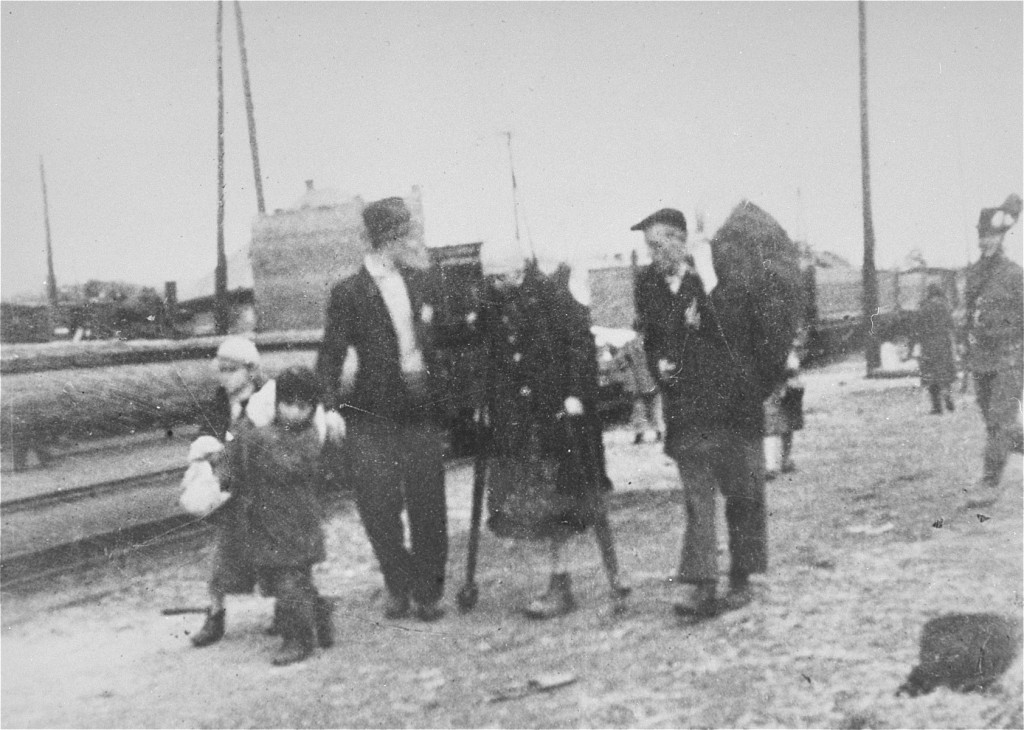
On April 20, 1944, the Hungarian authorities established two ghettos in Sighet. This took place just one month after the German occupation of Hungary. The creation of the Sighet ghettos was part of a larger wave of ghettoization in Hungary in the spring of 1944. Hungarian and German authorities organized and planned the ghettoization process. To do so, they divided Hungary into six operational zones. In each zone, the creation of ghettos preceded deportation. Sighet was located in Zone I. This meant that the Jewish community of Sighet was one of the first targeted with ghettoization and deportation.
Organization of the Sighet Ghettos
In April 1944, Hungarian officials forced Jews to move into ghettos in Sighet. There were two ghettos in Sighet: a large ghetto and a small ghetto. The large ghetto was located within the town and consisted of four streets where the Jews lived. It imprisoned about 10,000 Jews from the town. The small ghetto was established in an impoverished area of town containing several tiny alleys. Jews from rural areas were placed in Sighet's small ghetto. The smaller ghetto imprisoned about 3,000 Jews.
These neighbors who used to pinch my cheek when I was a little girl, they stood and watched stony-faced as we were driven to this town with the Hungarian gendarme using two truncheons on old people who couldn't walk fast enough. It was so shameful, so humiliating. But I know now that the shame was theirs, not ours. But I didn't know it then.
—Barbara Fischman Traub
Conditions in the Ghettos
The Sighet ghettos were extremely crowded. The Hungarian officials who administered the ghettos forced Jews to abide by various edicts and to hand over their valuables. Hungarian gendarmes (members of a type of law enforcement) and other police officials tortured Jews into revealing the location of hidden valuables. Internally, the ghettos were administered by a Jewish council (Judenrat). The council attempted to improve the appalling conditions by establishing a communal kitchen and some organized religious and cultural activities.
Deportations from Sighet to Auschwitz-Birkenau
In mid-May, Hungarian collaborators working with German authorities deported Jews from the Sighet ghettos to Auschwitz-Birkenau. The first transport, which left Sighet on May 16, 1944, included 3,007 Jews from the small ghetto. This was one of the earliest deportations of Jews from a ghetto in Hungary. Jews from the large Sighet ghetto were deported several days later on May 18, 20, and 22. Records indicate that 9,842 Jews were deported to Auschwitz on these three transports.
Prior to deportation, the Jews from the large ghetto were held overnight in a synagogue. In Night, Wiesel describes his family's deportation from the town:
We walked [from the synagogue] toward the station, where a convoy of cattle cars was waiting. The Hungarian police made us climb into the cars, eighty persons in each one. They handed us some bread, a few pails of water. They checked the bars on the windows to make sure they would not come loose. The cars were sealed. One person was placed in charge of every car: if someone managed to escape, that person would be shot.
The nearly 13,000 Jews deported from Sighet in May 1944 were among the 430,000 Jews from Hungary who were sent to the Auschwitz-Birkenau killing center in 1944. Very few of these people survived.
Footnotes
-
Footnote reference1.
Zoltán Vági, László Csősz, and Gábor Kádár, The Holocaust in Hungary: Evolution of a Genocide (AltaMira Press, 2013), 37.
-
Footnote reference2.
Elie Wiesel, Night, trans. Marion Wiesel (Hill and Wang, 2006), 6.
-
Footnote reference3.
Wiesel, Night, 7.
-
Footnote reference4.
Gisella Perl, I Was a Doctor in Auschwitz (Yale Garber, 1987), 16–17.
-
Footnote reference5.
Barbara Fischman Traub, interview by Amy Friedman, March 27, 1995, New York, NY, interview code 4361, segment 78, transcript and recording, Visual History Archive, USC Shoah Foundation.
-
Footnote reference6.
Wiesel, Night, 22.
Critical Thinking Questions
What pressures and motivations may have influenced the actions of the Hungarian authorities?
How can societies, communities, and individuals reinforce and strengthen the willingness to stand up for others?
Learn about the lives of the Jews in the community of Sighet before 1939.
Read Night by Elie Wiesel. How does the author portray the town and its inhabitants?