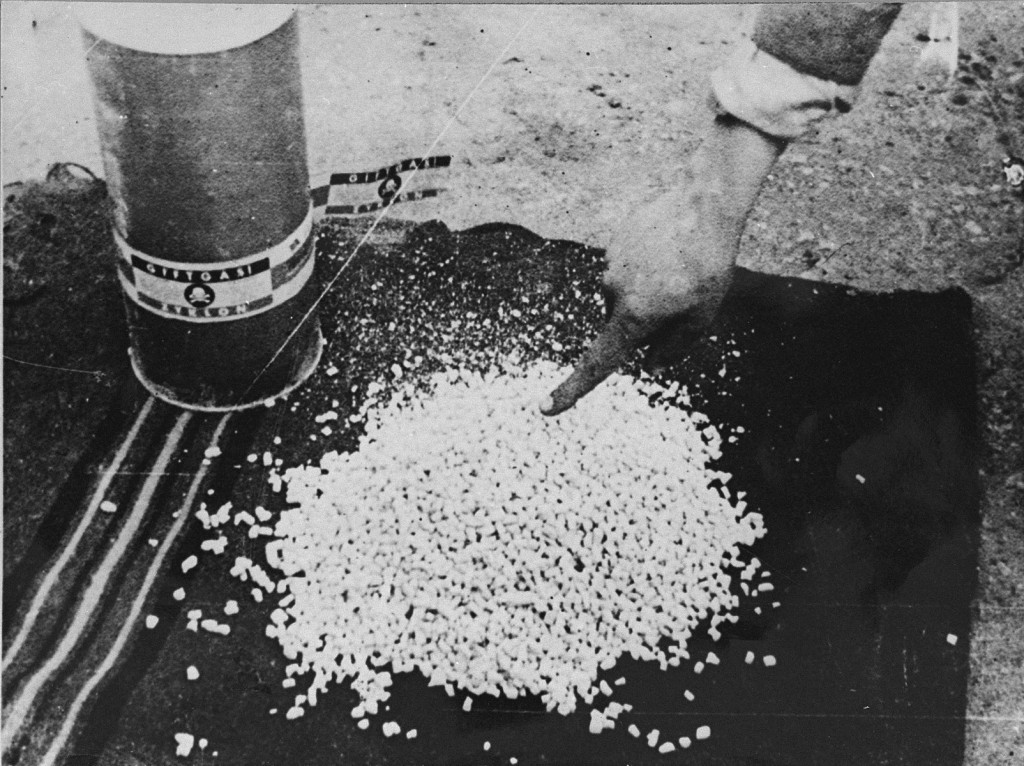
Zyklon B pellets found after Soviet forces liberated the Lublin concentration camp (called Majdanek) in late July 1944. The Nazis used Zyklon B to murder Jews in the gas chambers of the Auschwitz-Birkenau killing center and at other sites, including Majdanek.
Zyklon B is the brand name of a pesticide and disinfectant distributed by the Degesch company (Deutsche Gesellschaft für Schädlingsbekämpfung mbH), a subsidiary of the German chemical company Degussa. Zyklon B is produced as pellets infused with hydrogen cyanide, a poisonous gas. When these pellets are exposed to air, the hydrogen cyanide is released. Before World War II, Zyklon B was commonly used for fumigation (killing bugs and pests). It was also an effective disinfectant. The Nazis used Zyklon B not only for its intended purpose as a disinfectant, but also to murder people in gas chambers.
Item View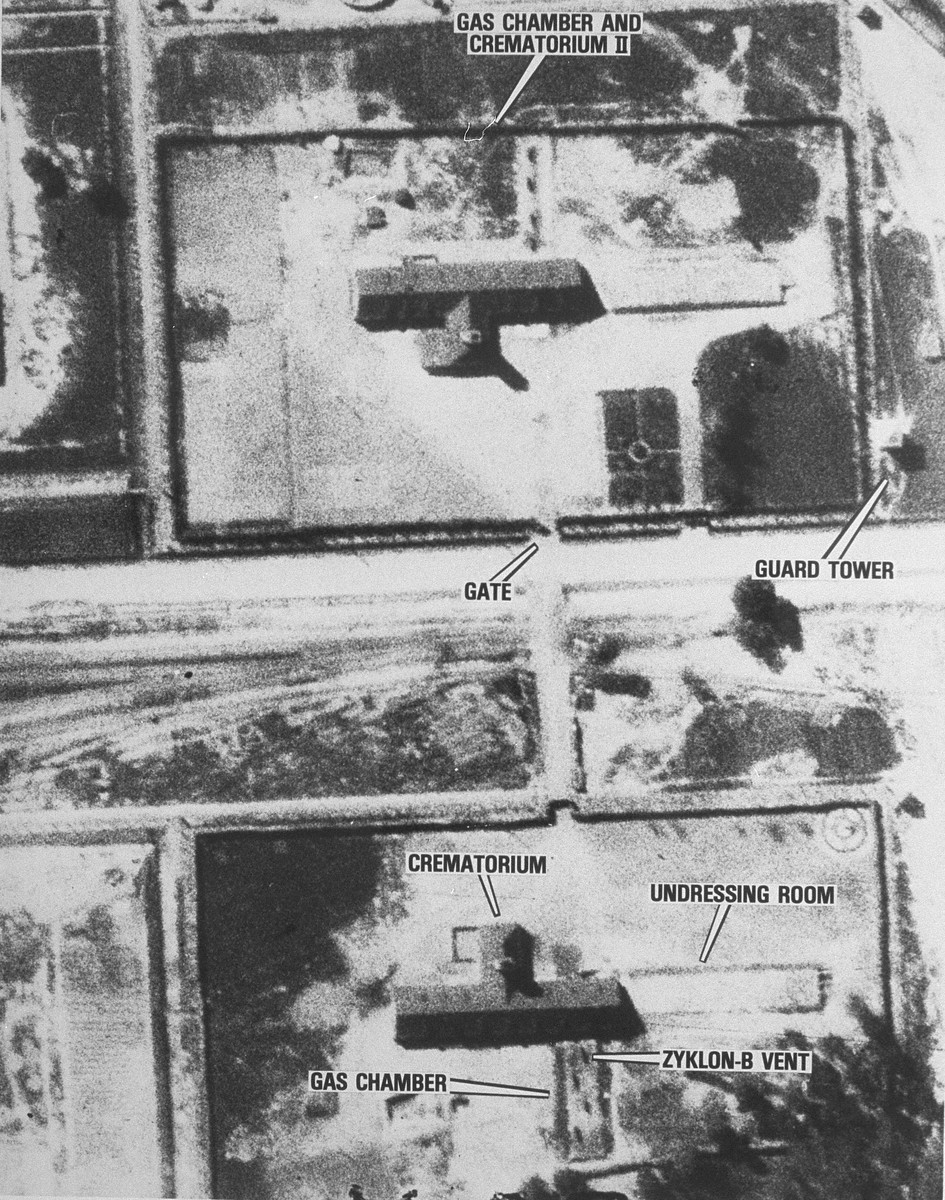
Aerial photograph of Auschwitz-Birkenau taken by Allied planes on August 25, 1944, during a reconnaissance mission. Decades after World War II, this and other images taken that day were rediscovered in American records. The English language labels were added in the 1970s.
This image shows two of the gas chamber and crematorium complexes at the Auschwitz-Birkenau killing center. Specifically, it shows crematorium II and crematorium III, both of which had underground gas chambers and above ground crematoria. The Nazis started murdering Jewish people in these gas chambers in 1943. They dismantled and demolished them in the winter of 1944–1945.
Item View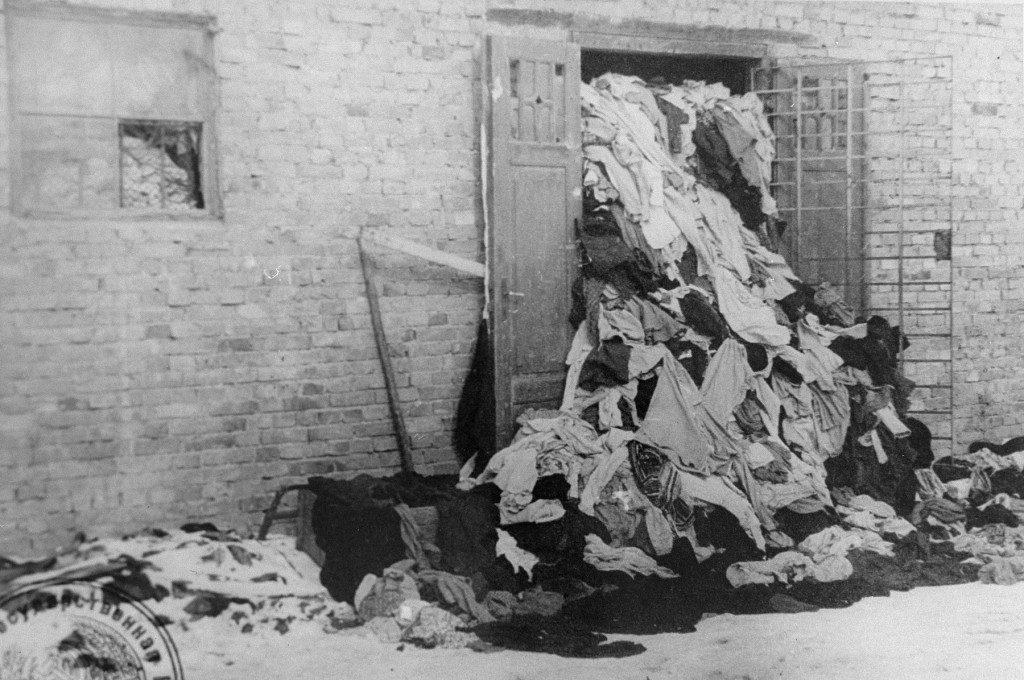
One of many warehouses at Auschwitz in which the SS stored clothing taken from victims of the camp. This photograph was taken by Soviet forces after they liberated the camp complex on January 27, 1945.
In total, Nazi German authorities deported 1.1 million Jews to Auschwitz from all over Europe. Most were murdered upon arrival in the gas chambers. In addition to committing mass murder at Auschwitz, the SS also carried out the mass plunder of Jewish-owned property. They stole the luggage and personal belongings that Jewish victims brought with them to the camp. When Soviet forces liberated the Auschwitz camp complex, they found piles of these stolen items.
Item View
A column of prisoners arrives at the Belzec killing center. Belzec, Poland, ca. 1942.
In early 1940 the Germans set up a forced-labor camp for Jewish prisoners in Belzec. The inmates were forced to build fortifications and dig anti-tank ditches along the demarcation line between Germany and Soviet-occupied Poland. The camp was closed down at the end of 1940. The following year, in November 1941, construction began on the Belzec killing center.
Item ViewWe would like to thank Crown Family Philanthropies, Abe and Ida Cooper Foundation, the Claims Conference, and BMF for supporting the ongoing work to create content and resources for the Holocaust Encyclopedia. View the list of all donors.