![Postcard of a pension in Le Chambon which served as a refugee home for children sheltered from the Nazis. [LCID: 86054]](https://encyclopedia.ushmm.org/images/large/4b5a28f2-d0fb-425f-9565-4e3a0cddeca7.jpeg "Postcard of a pension in Le Chambon which served as a refugee home for children sheltered from the Nazis. [LCID: 86054]")
Postcard of a pension (a small hotel) in Le Chambon which served as a refugee home for children sheltered from the Nazis. Le Chambon-sur-Lignon, France, date uncertain.
Item View![A group of children who were sheltered in Le Chambon-sur-Lignon, a town in southern France. [LCID: 08745]](https://encyclopedia.ushmm.org/images/large/d7030ee0-2e0c-469d-9b36-88f4b0c18c1c.jpeg "A group of children who were sheltered in Le Chambon-sur-Lignon, a town in southern France. [LCID: 08745]")
A group of children who were sheltered in Le Chambon-sur-Lignon, a town in southern France. Le Chambon-sur-Lignon, France, August 1942.
Item View![Hermine Orsi sheltered a number of Jews in her home and helped others reach refuge in Le Chambon-sur-Lignon. [LCID: 01106]](https://encyclopedia.ushmm.org/images/large/c18f7364-a536-4734-a75d-844f700ba351.jpeg "Hermine Orsi sheltered a number of Jews in her home and helped others reach refuge in Le Chambon-sur-Lignon. [LCID: 01106]")
Hermine Orsi sheltered a number of Jews in her home and helped others reach refuge in Le Chambon-sur-Lignon. Yad Vashem recognized her as "Righteous Among the Nations." Marseille, France, 1940.
Item View![Jewish children sheltered by the Protestant population of the village of Le Chambon-sur-Lignon. [LCID: 83599]](https://encyclopedia.ushmm.org/images/large/b1629ab1-87ce-4e81-a6f9-3a5fced26a0f.jpeg "Jewish children sheltered by the Protestant population of the village of Le Chambon-sur-Lignon. [LCID: 83599]")
Jewish children sheltered by the Protestant population of the village of Le Chambon-sur-Lignon. France, 1941–44.
Item View![Jewish children sheltered by the Protestant population of the village of Le Chambon-sur-Lignon. [LCID: 83598]](https://encyclopedia.ushmm.org/images/large/b09d41ec-598d-4396-9923-9cb2eccaab42.jpeg "Jewish children sheltered by the Protestant population of the village of Le Chambon-sur-Lignon. [LCID: 83598]")
Jewish children sheltered by the Protestant population of the village of Le Chambon-sur-Lignon. France, 1941.
Item ViewHanne Hirsch Liebmann (1924–2026) grew up in Karlsruhe, Germany. She was raised by her mother, Ella, who was widowed in 1925. In January 1933, when Hanne was 8 years old, the Nazis came to power in Germany. Nazis targeted the family's photo studio during the April 1933 anti-Jewish boycott. In November 1938, Hanne experienced the violence and terror of Kristallnacht. Then, in October 1940, the Nazi regime deported Hanne and her family to France, where they were imprisoned in the Gurs internment camp. In Gurs, Hanne met Max Liebmann, who had also been deported from Germany. In September 1941, the Children's Aid Society (OSE) rescued Hanne and placed her in a children's home in Le Chambon-sur-Lignon. In 1943, Hanne obtained false papers and crossed into Switzerland. There, she reunited with Max. They married and had a daughter. In 1948, the family immigrated to the United States. Hanne's mother was deported from France to Auschwitz in 1942. She did not survive the Holocaust.
Item View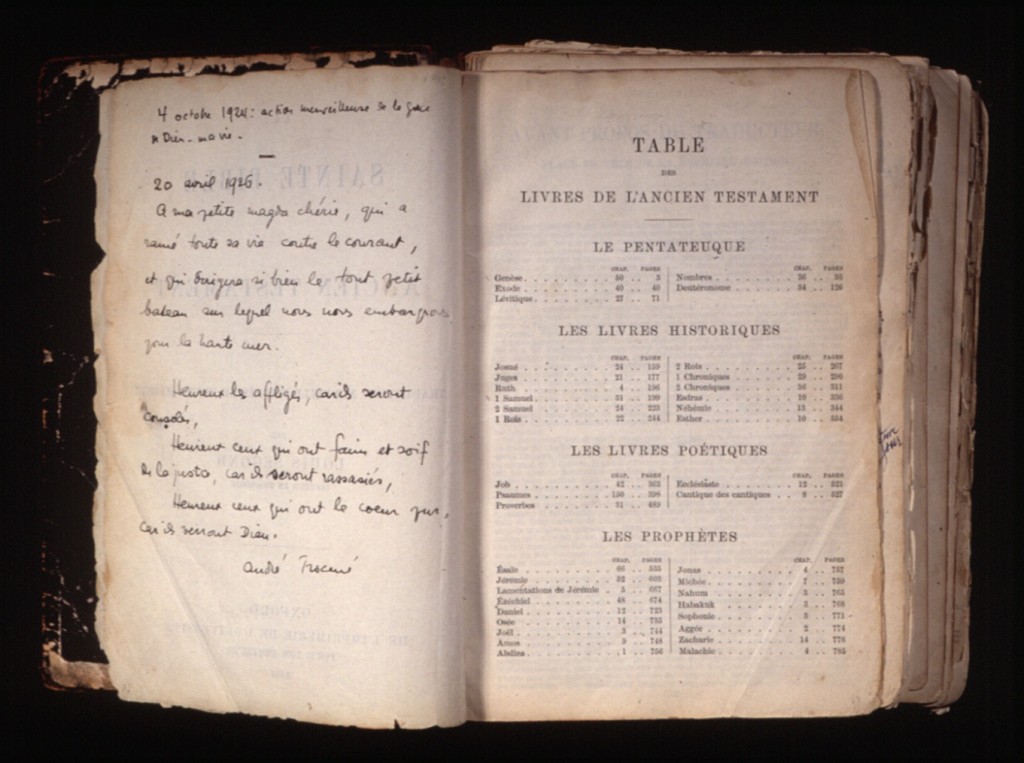
The family bible shown here belonged to Andre Trocme and contains annotations he made in preparation for his sermons. Trocme was a Protestant pastor in Le Chambon-sur-Lignon, France. During the war, he and the town's residents helped shield Jews, especially Jewish children, and others from the Germans. The operation saved thousands of refugees, including about 5,000 Jews. His handwritten inscription in French reads, in part, "Happy are those hungry and thirsty of justice; for they will be satisfied."
Item View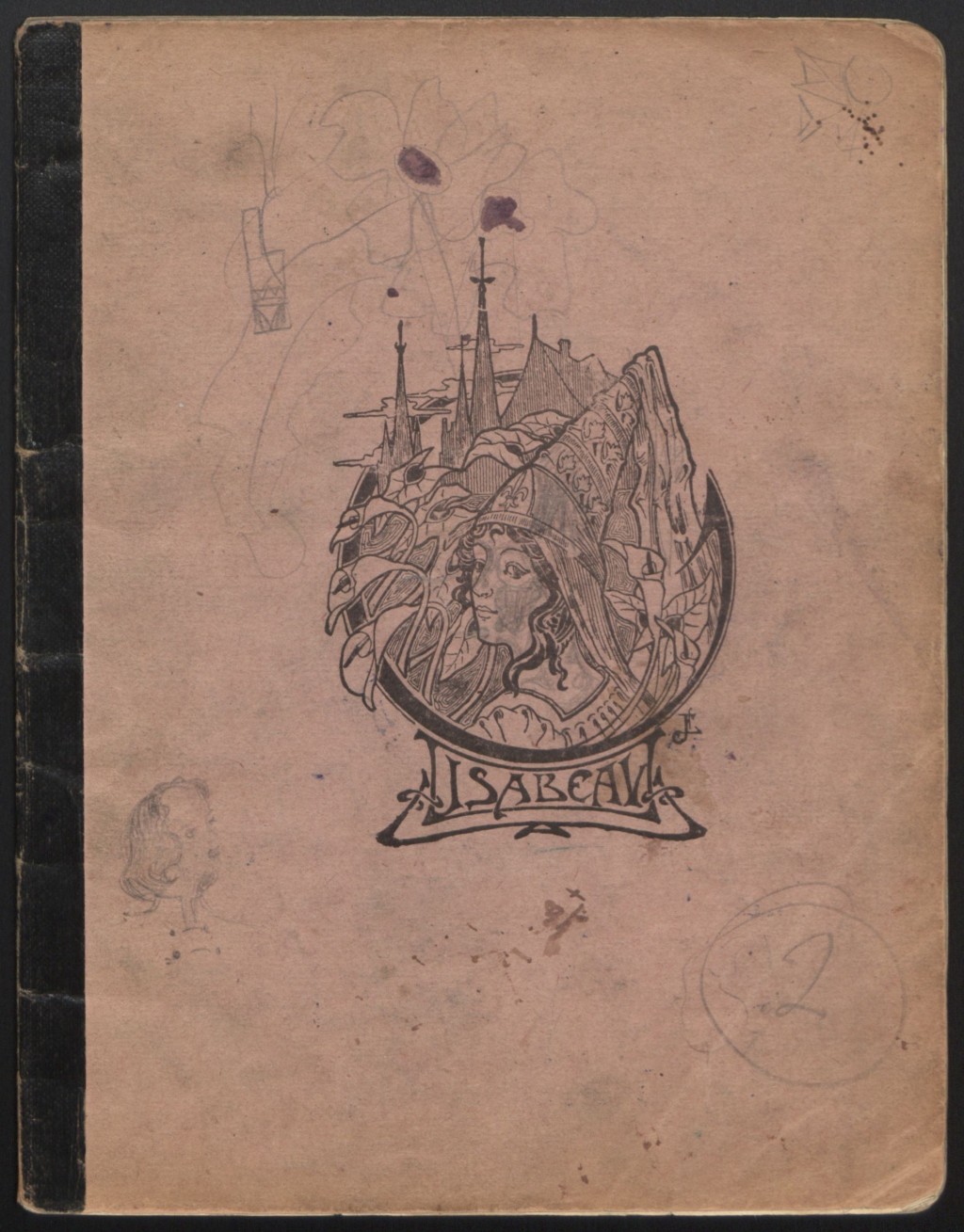
The cover of a diary written by Elizabeth Kaufmann while living with the family of Pastor André Trocmé in Le Chambon-sur-Lignon. Le Chambon-sur-Lignon, France, 1940–41.
Item View![Page from a diary written by Elizabeth Kaufmann while living with the family of Pastor André Trocmé in Le Chambon-sur-Lignon. [LCID: n06970]](https://encyclopedia.ushmm.org/images/large/81ac3a94-86d2-41cb-b35b-5dcc154c6501.jpeg "Page from a diary written by Elizabeth Kaufmann while living with the family of Pastor André Trocmé in Le Chambon-sur-Lignon. [LCID: n06970]")
Page from a diary written by Elizabeth Kaufmann while living with the family of Pastor André Trocmé in Le Chambon-sur-Lignon. Le Chambon-sur-Lignon, France, 1940–41.
Item View![Photo of Peter Feigl, a Jewish child hidden in the Protestant village le Chambon-sur-Lignon. [LCID: 86064]](https://encyclopedia.ushmm.org/images/large/53991657-1012-4d7a-8a4e-c456b684d3b8.jpeg "Photo of Peter Feigl, a Jewish child hidden in the Protestant village le Chambon-sur-Lignon. [LCID: 86064]")
Photo of Peter Feigl, a Jewish child hidden in the Protestant village Le Chambon-sur-Lignon. Le Chambon, France, August 9, 1943.
Item View![Page from the diary of Peter Feigl, a Jewish child hidden in the Protestant village of le Chambon-sur-Lignon. [LCID: 86061]](https://encyclopedia.ushmm.org/images/large/13de0778-74b3-434e-81e4-2c94ede5dd38.jpeg "Page from the diary of Peter Feigl, a Jewish child hidden in the Protestant village of le Chambon-sur-Lignon. [LCID: 86061]")
Page from the diary of Peter Feigl, a Jewish child hidden in the Protestant village of Le Chambon-sur-Lignon. The photos show his parents, who perished in a concentration camp. The text is in French and German. Le Chambon-sur-Lignon, France, 1942-1943.
Item ViewWe would like to thank Crown Family Philanthropies, Abe and Ida Cooper Foundation, the Claims Conference, and BMF for supporting the ongoing work to create content and resources for the Holocaust Encyclopedia. View the list of all donors.