During the Holocaust, the Theresienstadt (Terezín) ghetto was a site of imprisonment for more than 140,000 Jews. Theresienstadt played several important roles in the Nazis’ persecution and murder of Jews. It simultaneously served as a transit ghetto and an old-age ghetto. In 1944, the Nazis used Theresienstadt as a propaganda tool to trick international observers.
![Children's painting showing of Jews celebrating Hannukah. [LCID: 29507]](https://encyclopedia.ushmm.org/images/large/c0be073b-7348-4c7b-9cf7-53a8039544df.jpeg "Children's painting showing of Jews celebrating Hannukah. [LCID: 29507]")
Children's painting from the Theresienstadt ghetto showing Jews celebrating Hannukah. This painting was pasted into a scrapbook by Margarethe Grünbaum shortly after she and her children, Marietta and Michael, were liberated from the ghetto in 1945.
Item View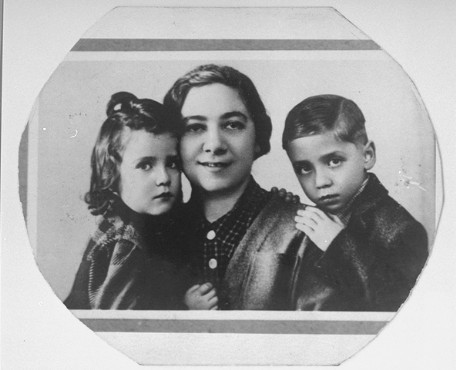
1942 portrait of Ita Guttman with her twin children René and Renate. In September 1942, Ita and the twins were sent to the Theresienstadt ghetto. They remained there until December 1943, when they were deported to Auschwitz. At Auschwitz, the twins and their mother were imprisoned in the Theresienstadt family camp (“Section BIIb”). Eventually, the twins were separated from their mother and each other. At Auschwitz, the six-year-old children were subjected to the notorious experiments run by SS doctor Josef Mengele. The twins survived the Holocaust, but Ita did not.
Item View![Standing room ticket for an opera performed on April 21, 1945, in the Theresienstadt ghetto. [LCID: 42026]](https://encyclopedia.ushmm.org/images/large/e5644f40-ff24-4cf5-9a3e-733a87c1436b.jpeg "Standing room ticket for an opera performed on April 21, 1945, in the Theresienstadt ghetto. [LCID: 42026]")
Standing room ticket for an opera performed on April 21, 1945, in the Theresienstadt (Terezín) ghetto.
Item View![Dutch Jews who have recently arrived in the Theresienstadt ghetto. [LCID: 61699r]](https://encyclopedia.ushmm.org/images/large/c34df304-f0c7-41e3-8a5a-274f43c1e0b9.jpeg "Dutch Jews who have recently arrived in the Theresienstadt ghetto. [LCID: 61699r]")
On January 20, 1944, a Czech film crew took footage of a transport of Jews arriving in the Theresienstadt ghetto. The transport had left the Westerbork transit camp two days earlier. On board the train were 870 people, including Dutch Jews and Jewish refugees from Germany and beyond. The train arrived in the vicinity of Theresienstadt on January 19, but Nazi authorities held the train overnight at the nearby Bauschowitz train station. They wanted to film the arrival of the deportees at Theresienstadt the following morning. This is a still shot from the January 20 footage. It shows prisoners of Theresienstadt wearing white aprons distributing food to the new arrivals.
Item View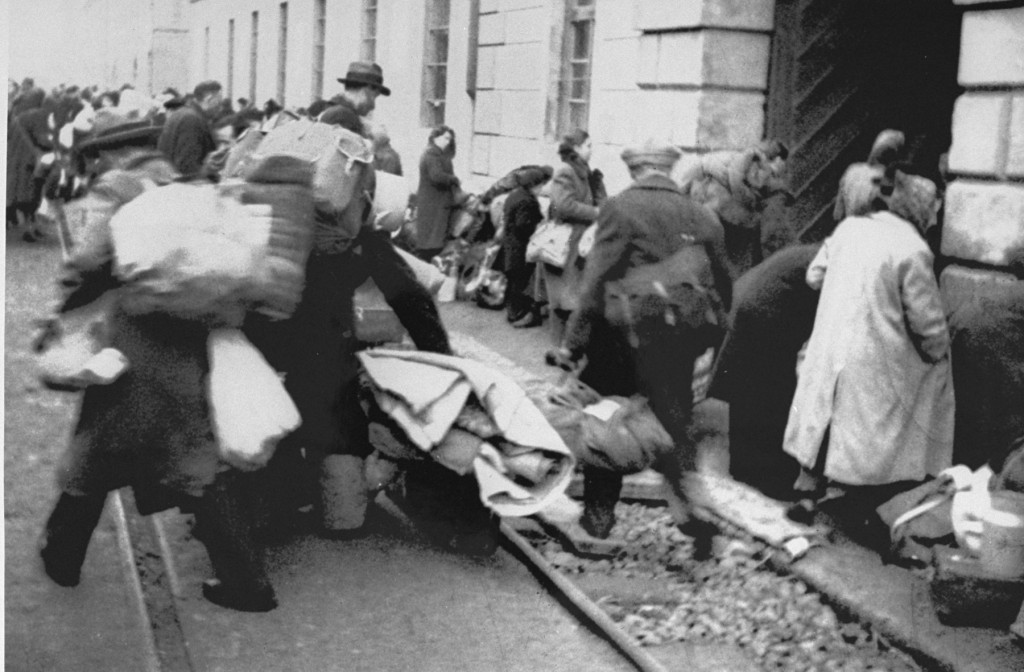
On January 20, 1944, a film crew took footage of a transport of Jews arriving in the Theresienstadt ghetto. The transport had left the Westerbork transit camp two days earlier. On board the train were 870 people, including Dutch Jews and Jewish refugees from Germany and beyond. The train arrived in the vicinity of Theresienstadt on January 19, but Nazi authorities held the train overnight at the nearby Bauschowitz train station. They wanted to film the arrival of the deportees at Theresienstadt the following morning. This is a still shot from the January 20 footage. It shows the Jewish deportees with their luggage crossing the railroad tracks at the ghetto.
Item View![A transport of Jewish prisoners marches through the snow from the Bauschovitz train station to Theresienstadt. [LCID: 69720]](https://encyclopedia.ushmm.org/images/large/781755a6-1ba5-4d8e-8b2b-9f25bdf3687f.jpeg "A transport of Jewish prisoners marches through the snow from the Bauschovitz train station to Theresienstadt. [LCID: 69720]")
A transport of Jewish prisoners forced to march through the snow from the Bauschowitz train station to the Theresienstadt ghetto. A guard is visible at the back of the group. This photograph was likely taken in the winter of 1942–1943.
Item View![Women prisoners lie on thin mattresses on the floor of a barracks in the women's camp in the Theresienstadt ghetto. [LCID: 40228]](https://encyclopedia.ushmm.org/images/large/47a3b6f4-49c1-4aa0-bda7-a169db03a6fa.jpeg "Women prisoners lie on thin mattresses on the floor of a barracks in the women's camp in the Theresienstadt ghetto. [LCID: 40228]")
View of a barracks in the Theresienstadt ghetto. It is unclear whether this photograph was taken before or after the ghetto's liberation in May 1945. Czechoslovakia, between 1941 and 1945.
Item View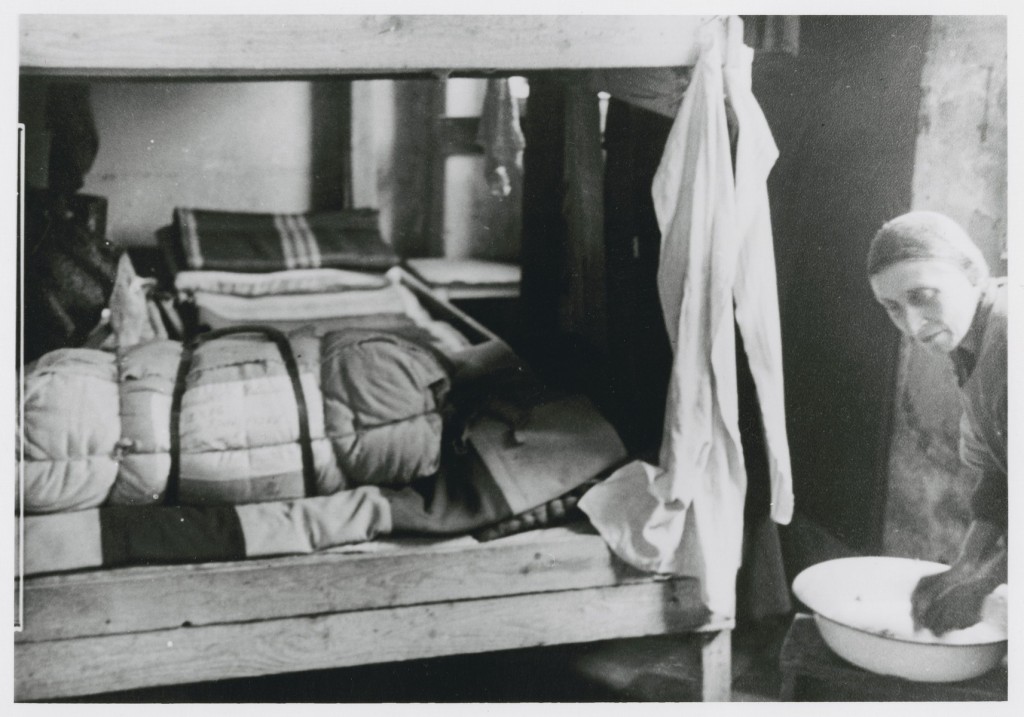
Living quarters in the Theresienstadt ghetto. Theresienstadt, Czechoslovakia, between 1941 and 1945.
Item View![Women prepare food outdoors in the Theresienstadt ghetto. [LCID: 41221]](https://encyclopedia.ushmm.org/images/large/e6a688ab-ef96-4809-a02f-5d8368932dfc.jpeg "Women prepare food outdoors in the Theresienstadt ghetto. [LCID: 41221]")
Women prepare food outdoors in the Theresienstadt ghetto. Theresienstadt, Czechoslovakia, between 1941 and 1945.
Item View![Preparation of food in the Theresienstadt ghetto. [LCID: 40210]](https://encyclopedia.ushmm.org/images/large/7aa3fd18-ea68-436b-9cac-6144d7082ca4.jpeg "Preparation of food in the Theresienstadt ghetto. [LCID: 40210]")
Preparation of food outside a barracks in Theresienstadt. Photograph taken after liberation. Theresienstadt, Czechoslovakia, June–August 1945.
Item View![Photograph of the water tower of the Old Town Mills in Prague. [LCID: 33381]](https://encyclopedia.ushmm.org/images/large/1aa676bf-c075-46e0-be1b-3a0e5f298adf.jpeg "Photograph of the water tower of the Old Town Mills in Prague. [LCID: 33381]")
Photograph of the water tower of the Old Town Mills in Prague.
After her deportation to the Theresienstadt ghetto in Czechoslovakia, Helene Reik yearned to record what was happening to her. This photograph was sent to Helene, who used it as paper for her diary in Theresienstadt. Helene’s makeshift diary offers wistful memories of her husband and parents who died before the war, loving thoughts of her family who had left Europe in 1939, and a firsthand account of the illness and hospitalization that ultimately led to her death.
Because resources were scarce in the Theresienstadt ghetto, Helene recorded her thoughts, recollections, and diary entries in the margins and on the backs of family pictures that she had brought with her, as well as postcards and letters she received while in the ghetto.
Item ViewWe would like to thank Crown Family Philanthropies, Abe and Ida Cooper Foundation, the Claims Conference, and BMF for supporting the ongoing work to create content and resources for the Holocaust Encyclopedia. View the list of all donors.