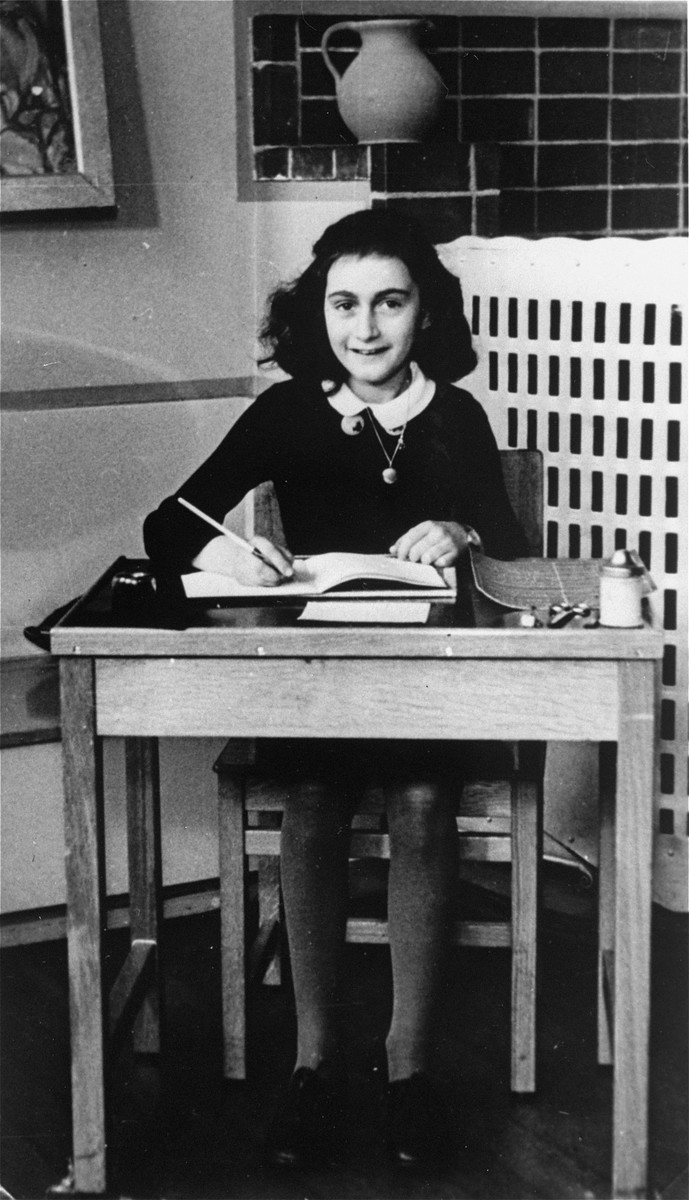
Anne Frank at 11 years of age, two years before going into hiding. Amsterdam, the Netherlands, 1940.
Item View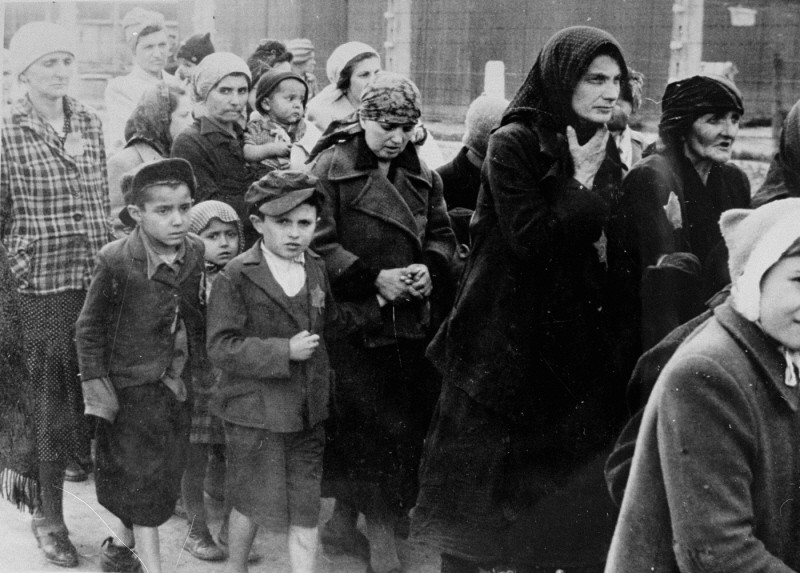
Jewish women and children who have been selected for death at the Auschwitz-Birkenau killing center walk toward the gas chambers. This photograph is one of many taken in late spring/summer 1944 as SS photographers documented the arrival, selection, and registration of transports of Jews from Hungary at Auschwitz-Birkenau.
This photograph is from the Auschwitz Album (also called the “Lili Jacob Album,” after the Holocaust survivor who found it).
Item View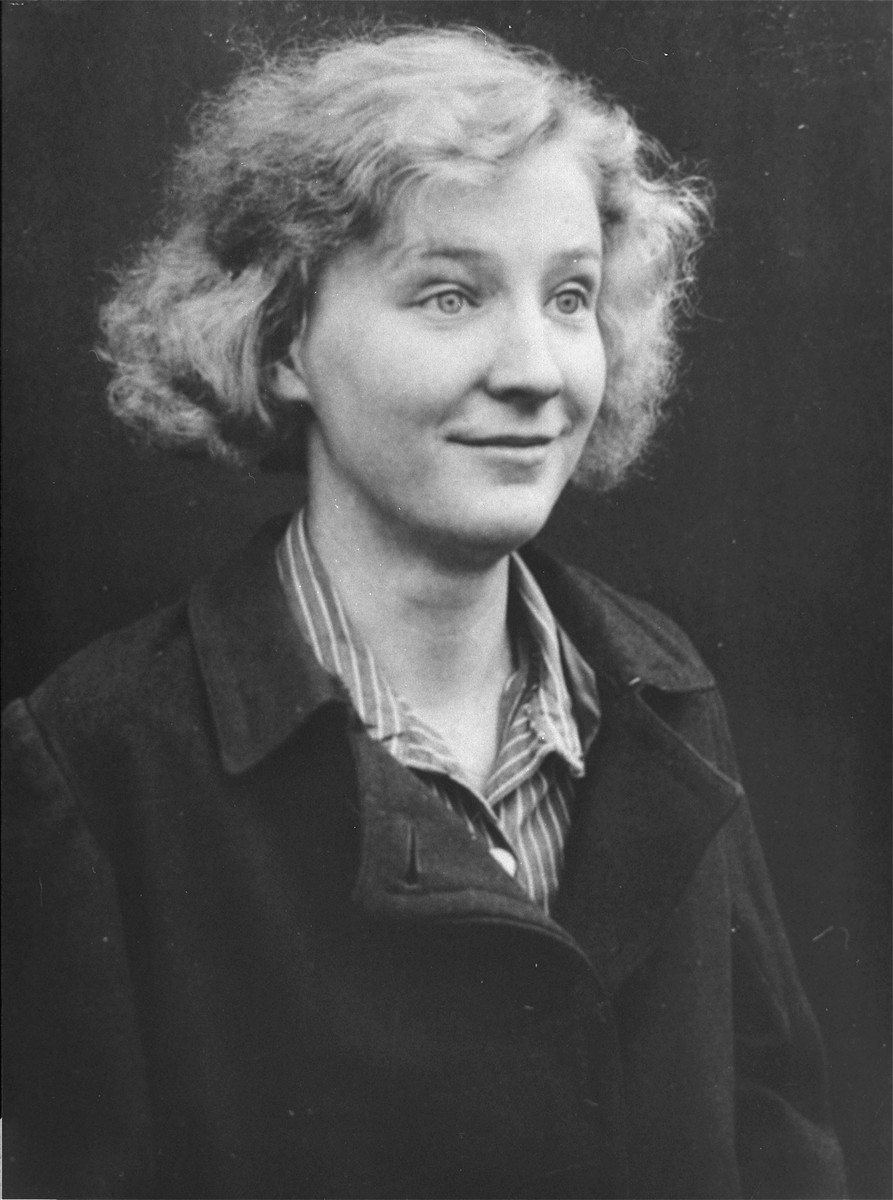
On July 14, 1933, the Nazi German regime enacted the Law for the Prevention of Offspring with Hereditary Diseases. This law mandated the forced sterilization of people identified as having certain conditions assumed to be hereditary. The nine conditions listed in the law were: “congenital feeblemindedness,” schizophrenia, “circular (manic-depressive) insanity” [today, bipolar disorder], hereditary epilepsy, “hereditary St. Vitus’ dance (Huntington’s chorea)” [today, Huntington’s disease], hereditary blindness, hereditary deafness, severe hereditary physical deformity, and “severe alcoholism.”
Gerda D., a shopworker, was one of an estimated 400,000 Germans who were forcibly sterilized under this law. She was sterilized after a disputed diagnosis of schizophrenia. Later, Nazi authorities forbade Gerda to marry because of the sterilization.
Item View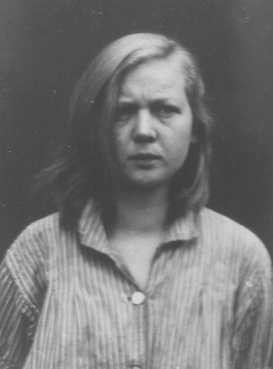
Emmi G., a 16-year-old housemaid diagnosed as schizophrenic. She was sterilized and sent to the Meseritz-Obrawalde “euthanasia” center where she was killed with an overdose of tranquilizers on December 7, 1942. Place and date uncertain.
Item View![Jewish women at forced labor in a sewing workshop. [LCID: 74528]](https://encyclopedia.ushmm.org/images/large/1a833df3-4111-46ed-9564-55a7f358f054.jpeg "Jewish women at forced labor in a sewing workshop. [LCID: 74528]")
Jewish women at forced labor in a sewing workshop in the Lodz ghetto. Lodz, Poland, between 1940 and 1944.
Item View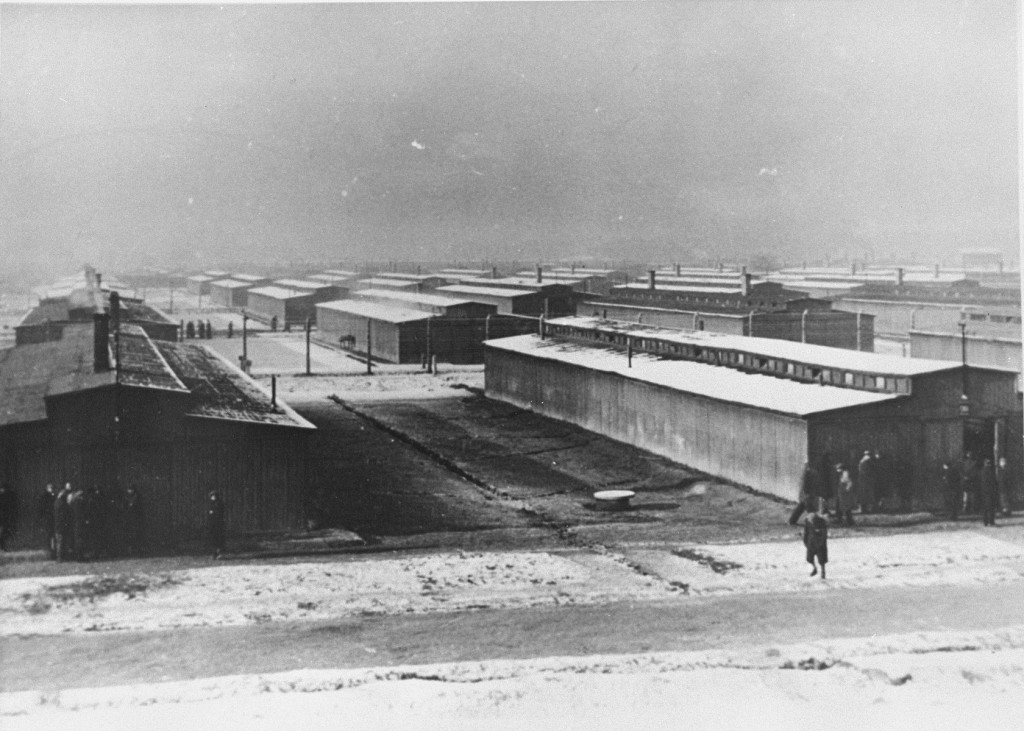
View of barracks in the women's camp in the Auschwitz-Birkenau killing center in German-occupied Poland, 1944.
Item View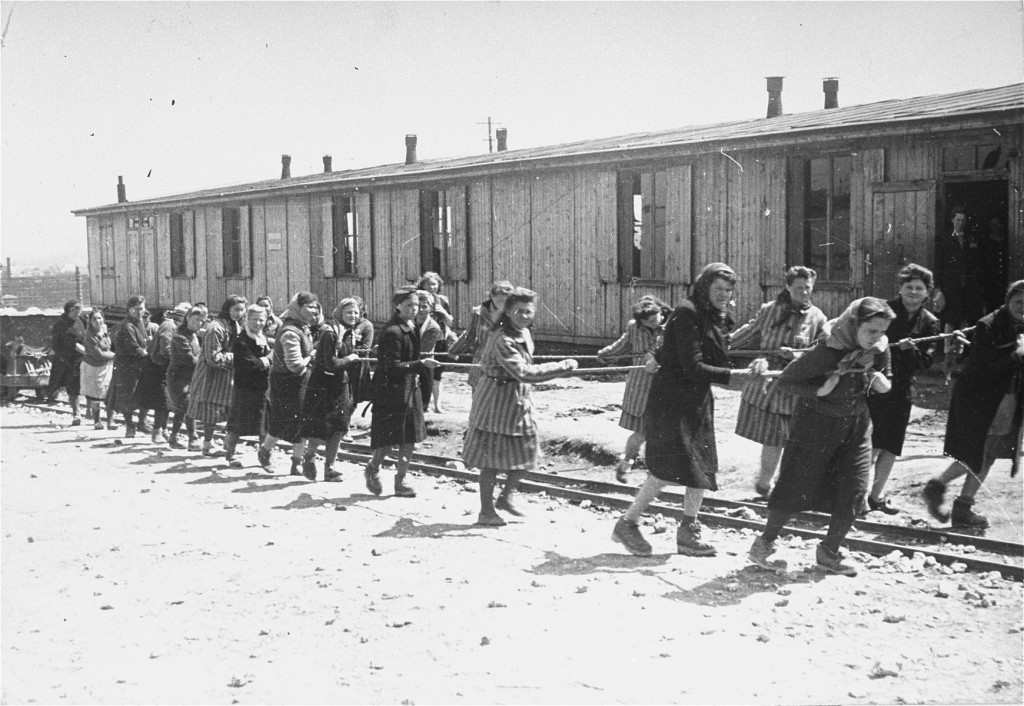
Women prisoners pull dumpcars filled with stones in the camp quarry. Plaszow camp, Poland, 1944.
Item View![Hildegard Kusserow, a Jehovah's Witness, was imprisoned for four years in several concentration camps including Ravensbrueck. [LCID: 68381]](https://encyclopedia.ushmm.org/images/large/e19525c0-21a9-478e-b63c-6d3093a3d4fa.jpeg "Hildegard Kusserow, a Jehovah's Witness, was imprisoned for four years in several concentration camps including Ravensbrueck. [LCID: 68381]")
Hildegard Kusserow, a Jehovah's Witness, was imprisoned for four years in several concentration camps including Ravensbrück. Germany, date uncertain.
Item View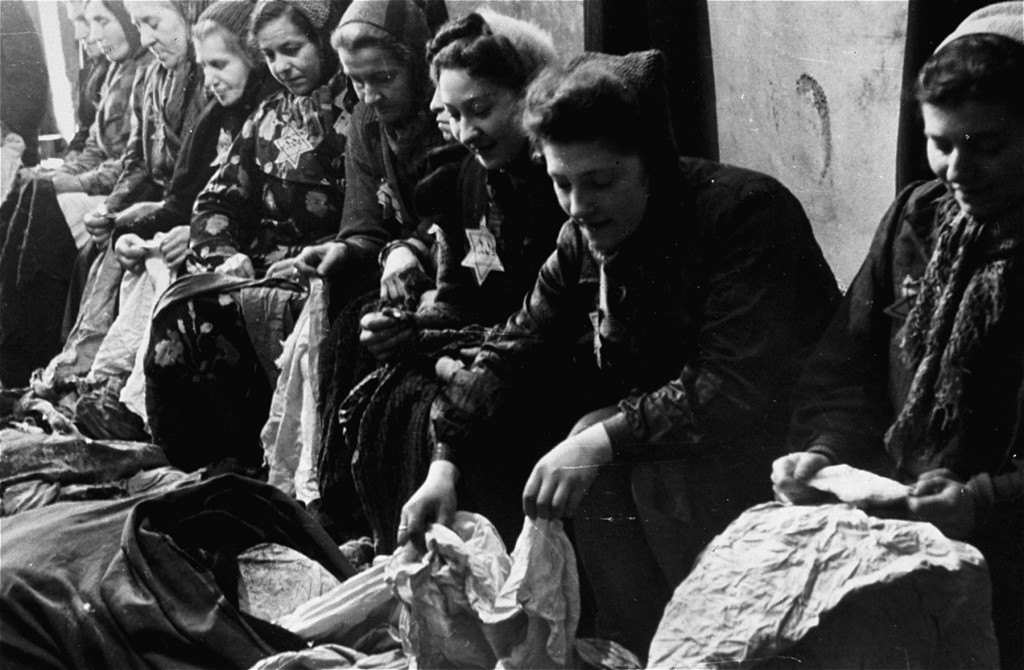
Jewish women sort confiscated clothing in the Łódź ghetto. Photograph taken by Mendel Grossman between 1941 and 1944.
Mendel Grossman photograph collection
Item View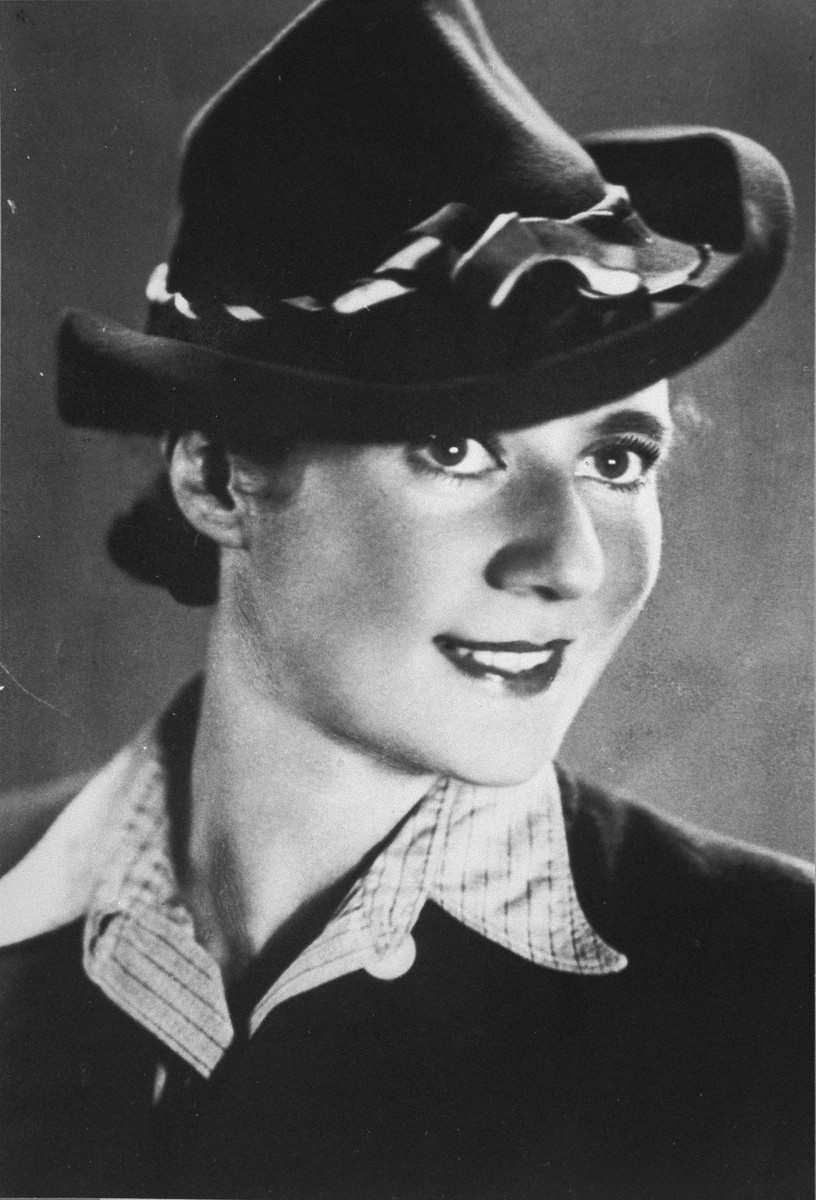
Prewar photo of Ala Gertner. Bedzin, Poland, 1930s.
After being deported to Auschwitz, Ala Gertner took fate into her own hands. Upon arrival, she was assigned to forced labor at a nearby armaments factory. After learning that they were going to be killed, Gertner, along with fellow female prisoners, began smuggling gunpowder and explosives from the factory with plans to destroy one of the crematoriums.
During the uprising in October 1944, the prisoners killed three guards. They also set fire to Crematorium 4, making it inoperable.
The guards crushed the revolt and killed almost all of the prisoners involved in the rebellion. The Jewish women, including Gertner, who had smuggled the explosives into the camp were publicly hanged in early January 1945.
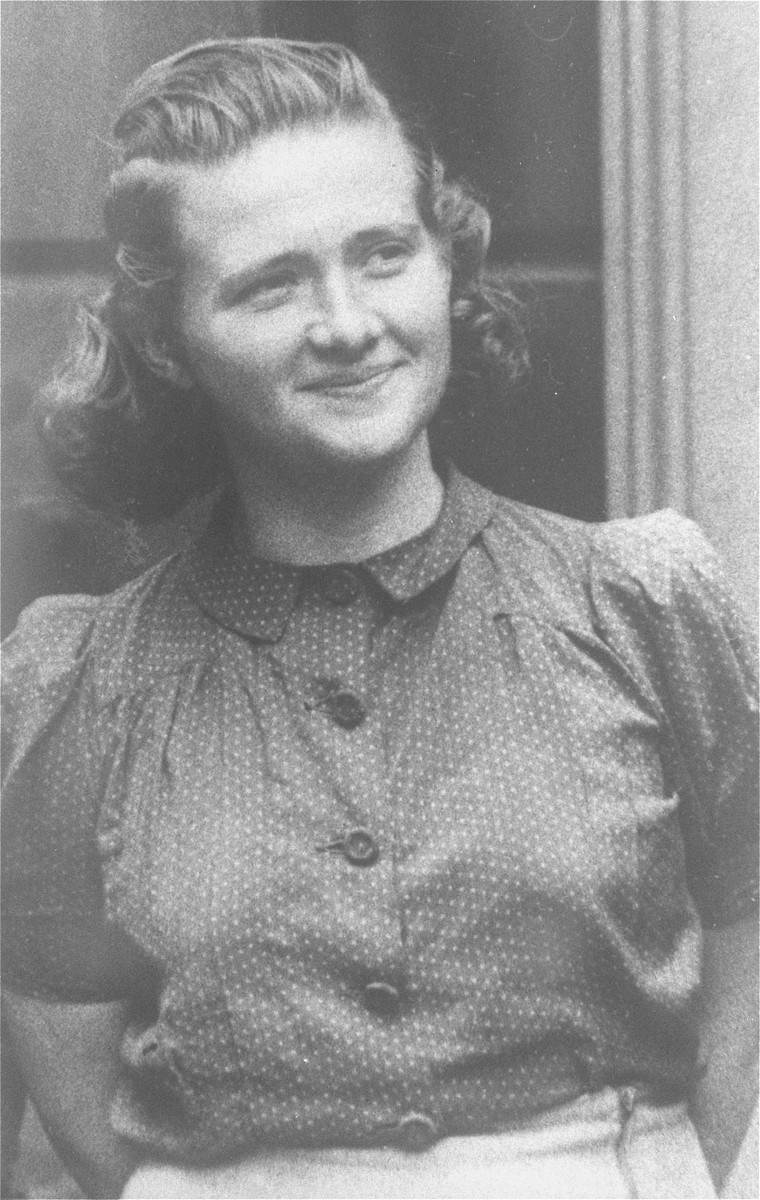
Haika Grosman, one of the organizers of the Bialystok ghetto underground and participant in the Bialystok ghetto revolt. Poland, 1945.
Item View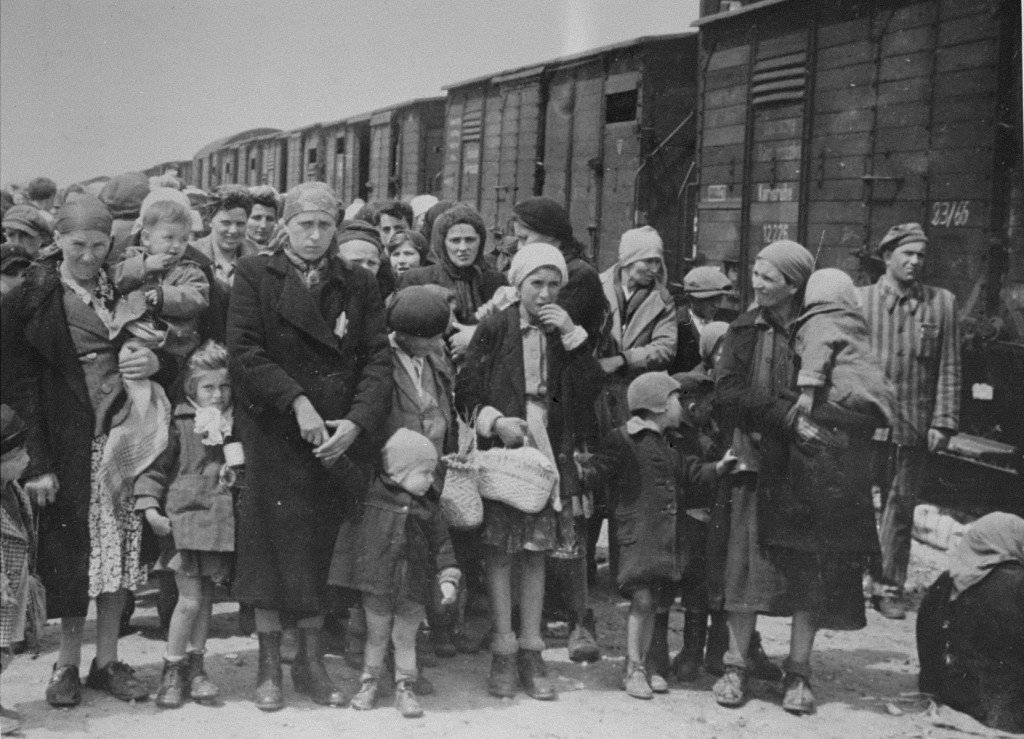
A photograph of Jewish women and children from Hungary who have just arrived at the Auschwitz-Birkenau killing center in 1944. They have been separated from the men and teenage boys who arrived with them and are lined up in an area of Birkenau known as "the ramp" before undergoing the selection process. The Nazis murdered most of the women and children pictured here in the gas chambers. An Auschwitz prisoner wearing a striped camp uniform is visible on the right side of the image. He was most likely part of a work detail responsible for facilitating the arrival of deportation transports at Auschwitz.
This photograph is from the Auschwitz Album (also called the “Lili Jacob Album,” after the Holocaust survivor who found it).
Item ViewWe would like to thank Crown Family Philanthropies, Abe and Ida Cooper Foundation, the Claims Conference, and BMF for supporting the ongoing work to create content and resources for the Holocaust Encyclopedia. View the list of all donors.