
Deceiving the Public
The Nazis frequently used propaganda to disguise their political aims and deceive the German and international public. They depicted Germany as the victim of Allied and Jewish aggression to hide their true ideological goals and to justify war and violence against innocent civilians.
Key Facts
-
1
Hitler and the Nazi leadership engineered a phony Polish attack on a German radio station to mask and justify their invasion of Poland.
-
2
To deflect criticism of its actions, Nazi Germany’s leadership accused the Allies and the “Jews” of spreading malicious lies and “atrocity stories.”
-
3
Nazi propagandists disguised the regime’s genocidal policies against Europe’s Jews, claiming that the Jewish population was being “resettled.”
Propaganda was used as an important tool to win over the majority of the German public who had not supported Adolf Hitler. It served to push forward the Nazis' radical program, which required the acquiescence, support, or participation of broad sectors of the population.
Combined with terror to intimidate those who did not comply, a new state propaganda apparatus headed by Joseph Goebbels manipulated and deceived the German population and the outside world. Propagandists preached an appealing message of national unity and a utopian future that resonated with millions of Germans. They also waged campaigns that facilitated the persecution of Jews and others excluded from the Nazi vision of the “National Community.”
Propaganda, Foreign Policy, and Conspiring to Wage War
Rearmament was a key element of German national policy after the Nazi takeover in early 1933, as it was under the democratic Weimar government. German leaders hoped to achieve this goal without causing preventive military intervention by France, Great Britain, or the states on Germany's eastern borders, Poland and Czechoslovakia. The regime also did not want to frighten a German population anxious about another European war. The specter of World War I and the deaths of 2 million German soldiers in that conflict still haunted popular memory.
Throughout the 1930s, Hitler portrayed Germany as a victimized nation, held in bondage by the chains of the post-World War I Versailles Treaty and denied the right of national self-determination.

Throughout World War II, Nazi propagandists disguised military aggression aimed at territorial conquest as righteous and necessary acts of self-defense. They cast Germany as a victim or potential victim of foreign aggressors, as a peace-loving nation forced to take up arms to protect its populace or defend European civilization against Communism.
The war aims professed at each stage of the hostilities almost always disguised Nazi intentions of territorial expansion and racial warfare. This was propaganda of deception, designed to fool or misdirect the populations in Germany, German-occupied lands, and the neutral countries.
Using Propaganda to Justify the Invasion of Poland, 1939
In summer 1939, as Adolf Hitler and his aides finalized plans for the invasion of Poland, the public mood in Germany was tense and fearful. Germans were emboldened by the recent dramatic extension of Germany's borders into neighboring Austria and Czechoslovakia without having fired a shot; but they did not line the streets calling for war, as the generation of 1914 had done.
Before the German attack on Poland on September 1, 1939, the Nazi regime launched an aggressive media campaign to build public support for a war that few Germans desired. To present the invasion as a morally justifiable, defensive action, the German press played up “Polish atrocities,” referring to real or alleged discrimination and physical violence directed against ethnic Germans living in Poland. The press deplored Polish “warmongering” and “chauvinism,” and also attacked the British for encouraging war by promising to defend Poland in the event of German invasion.
The Nazi regime even staged a border incident designed to make it appear that Poland initiated hostilities. On August 31, 1939, SS men dressed in Polish army uniforms “attacked” a German radio station at Gleiwitz (Gliwice). The next day, Hitler announced to the German nation and the world his decision to send troops into Poland in response to Polish “incursions” into the Reich. The Nazi Party Reich Press Office instructed the press to avoid the use of the word war. They were to report that German troops had simply beaten back Polish attacks, a tactic designed to define Germany as the victim of aggression. The responsibility for declaring war would be left to the British and French.
In an effort to shape public opinion at home and abroad, the Nazi propaganda machine played up stories of new “Polish atrocities” once the war began. They publicized attacks on ethnic Germans in towns such as Bromberg (Bydgoszcz). There, fleeing Polish civilians and military personnel killed between 5,000 and 6,000 ethnic Germans, whom they had perceived, in the heat of the invasion, to be fifth column traitors, spies, Nazis, or snipers. By exaggerating the actual number of ethnic German victims killed in Bromberg and other towns to 58,000, Nazi propaganda enflamed passions, providing “justification” for the numbers of civilians that the Germans intended to kill.
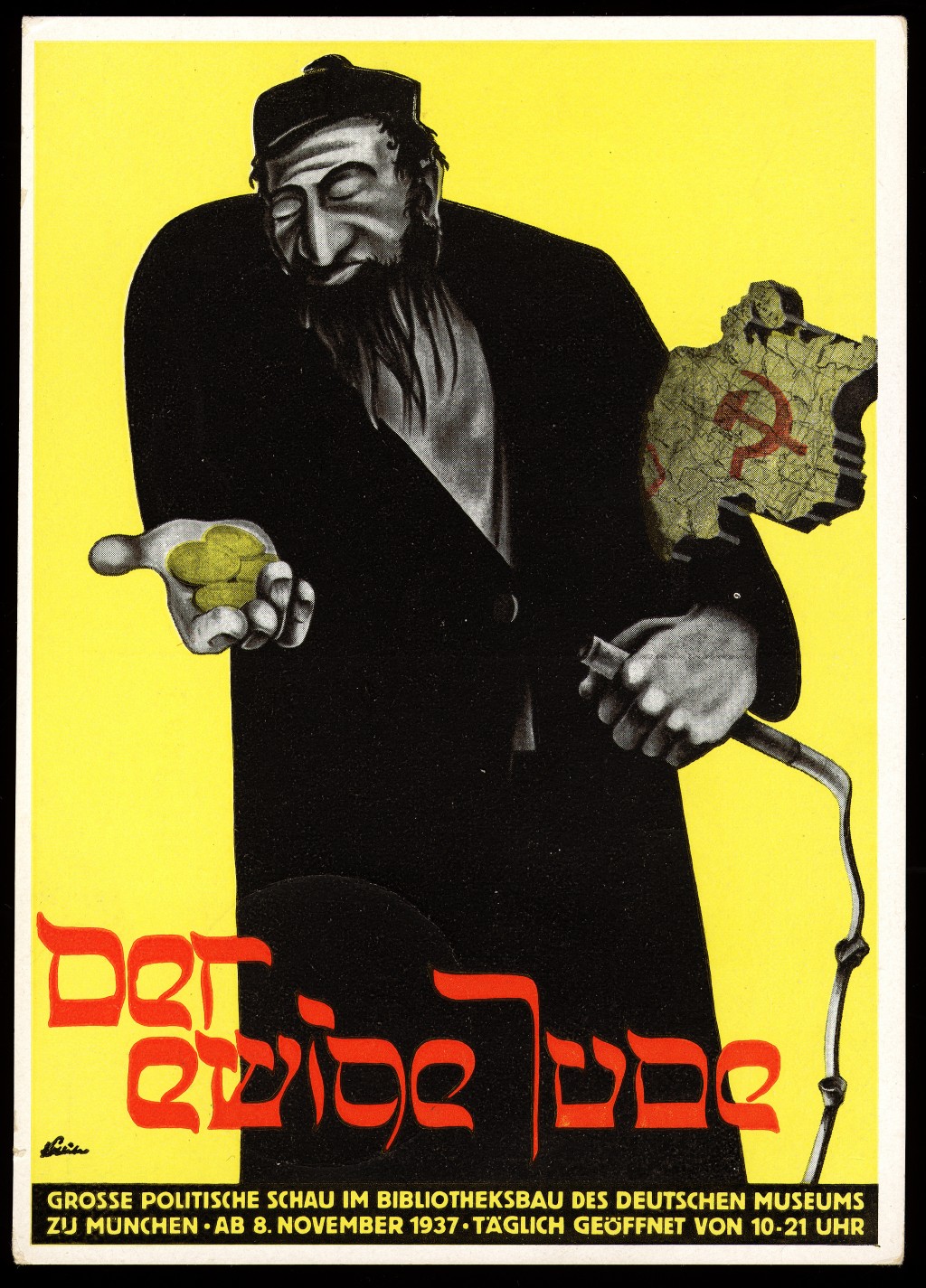
Nazi propagandists convinced some Germans that the invasion of Poland and subsequent occupation policies were justified. For many others, the propaganda reinforced deep-seated anti-Polish sentiment. German soldiers who served in Poland after the invasion wrote letters home, reflecting support for German military intervention to defend ethnic Germans. Some soldiers expressed their disdain and contempt for the “criminality” and “sub-humanity” of the Poles, and others viewed the resident Jewish population with disgust, comparing Polish Jews to antisemitic images they recalled from Der Stürmer or the exhibition entitled the “Eternal Jew,” and, later, from the film of the same name.
Nazi Propaganda Newsreels During World War II
Newsreels also became central to German Propaganda Minister Goebbels's efforts to form and manipulate public opinion during the war. To exercise greater control over newsreel content after the war began, the Nazi regime consolidated the country's various competing newsreel companies into one, the Deutsche Wochenschau (German Weekly Perspective). Goebbels actively helped create each newsreel installment, even editing or revising scripts. Twelve to eighteen hours of film footage shot by professional photographers and delivered to Berlin each week by courier were edited down to 20 to 40 minutes. Distribution of newsreels was greatly expanded as the number of copies of each episode increased from 400 to 2,000, and dozens of foreign language versions (including Swedish and Hungarian) were produced. Mobile cinema trucks brought the newsreels to rural areas of Germany.
The Propaganda of Deception About the Mass Murder of Jews
Nazi German authorities and their allies and collaborators began carrying out the mass murder of Jews in 1941. They shot Jews in mass shooting operations in occupied eastern Europe in summer 1941 and began murdering Jews in killing centers in late 1941 and early 1942. The Germans and their helpers transported Jewish people from all over Europe to the killing centers, usually by rail.
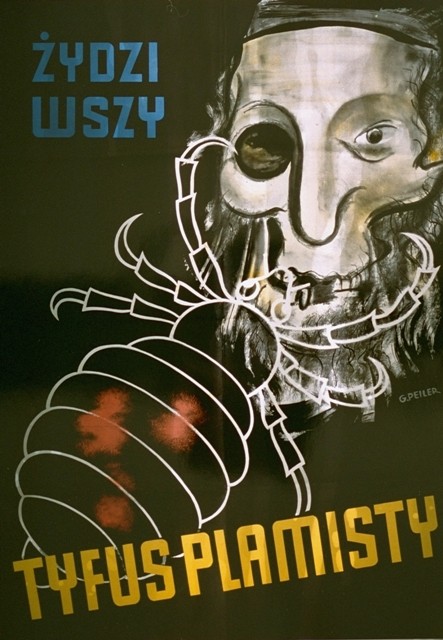
The Nazi leadership aimed to deceive the German population, the victims, and the outside world regarding their genocidal policy toward Jews. What did ordinary Germans know about the persecution and mass murder of Jews? Despite the public broadcast and publication of general statements about the goal of eliminating “the Jews,” the regime practiced a propaganda of deception by hiding specific details about the “Final Solution,” and press controls prevented Germans from reading statements by Allied and Soviet leaders condemning German crimes.
At the same time, positive stories were fabricated as part of the planned deception. One booklet printed in 1941 glowingly reported that, in occupied Poland, German authorities had put Jews to work, built clean hospitals, set up soup kitchens for Jews, and provided them with newspapers and vocational training. Posters and articles continually reminded the German population not to forget the atrocity stories that Allied propaganda spread about Germans during World War I, such as the false charge that Germans had cut off the hands of Belgian children.
Lying to the Jewish Victims
The perpetrators also hid their murderous intentions from many of the victims. Before and after the fact, the Germans used deceptive euphemisms to explain and justify deportations of Jews from their homes to ghettos or transit camps, and from the ghettos and camps to the gas chambers at Auschwitz and other killing centers. German officials stamped “evacuated,” a word with neutral connotations, on the passports of Jews deported from Germany and Austria to the old-age ghetto at Theresienstadt, near Prague, or to ghettos in the East. German bureaucrats characterized deportations from the ghettos as “resettlements,” though such “resettlement” usually ended in death.
The Red Cross Visit to the Theresienstadt Ghetto: A Propaganda Hoax
During the Holocaust, the Nazis used the Theresienstadt (Terezín) ghetto as a tool of propaganda and deception. Theresienstadt functioned both as a ghetto for elderly Jews from Germany and Austria and as a transit ghetto for Czech Jews. Theresienstadt was deadly. In total, the Nazis imprisoned about 140,000 Jews there. Of these, about 34,000 mostly elderly people died in the ghetto. Additionally, SS authorities deported about 88,000 people from Theresienstadt to other ghettos, camps, killing sites, and killing centers in German-occupied eastern Europe. Almost all of them were murdered in the Holocaust.
In 1944, the Nazis allowed members of an international Red Cross delegation to visit the ghetto. The goal was to trick the delegation into believing conditions in Theresienstadt were good and to try to hide the ongoing mass murder of Europe’s Jews. In the months leading up to the visit, Nazi authorities forced Jewish prisoners to transform the ghetto and build an elaborate, “beautified” facade. As part of the preparations, they also deported approximately 7,500 Jews from Theresienstadt to Auschwitz in May 1944. These transports were an attempt to make the ghetto appear less overcrowded.
During the visit, which took place on June 23, 1944, the Nazis ordered Jewish prisoners to stage social and cultural events for the visiting dignitaries. Each member of the visiting delegation wrote a positive report about what they saw in Theresienstadt. Through their deception, staging, and misinformation, Nazi authorities successfully tricked international observers into believing their lies about the Theresienstadt ghetto.

The 1944 Film About Theresienstadt
In 1944–1945, Nazi authorities created a propaganda film about the Theresienstadt ghetto. The 1944 film was never shown publicly and only fragments have survived.
Filming began in August 1944, following the Red Cross visit. On Nazi orders, the film deliberately misrepresented the horrific reality of deprivation, inequality, and fear that characterized daily life in Theresienstadt. The voice-over narration was in German and used a neutral, documentary tone. The script underscored the Nazi lie that life in the ghetto was productive and pleasant. Many of the scenes were filmed in parts of the ghetto that had been built or renovated during the recent beautification campaign (Verschönerungsaktion).
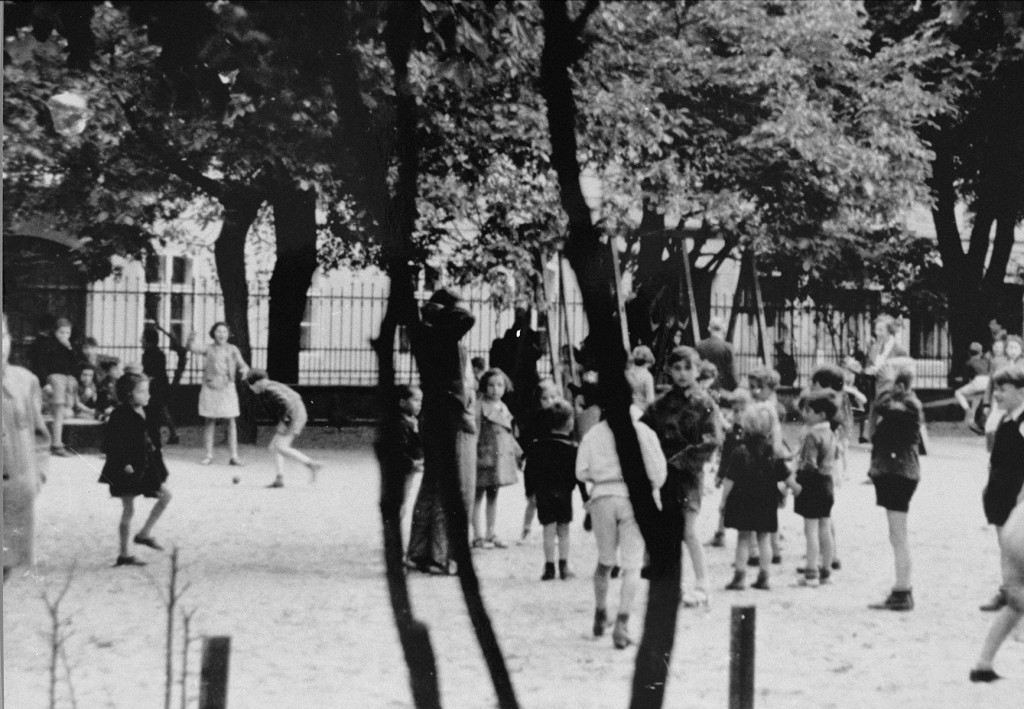
The surviving footage shows men and women of all ages (including elderly people) relaxing, reading, playing chess, knitting, doing calisthenics, and drawing. Children eat buttered bread, play in a wading pool and on a playground, rock on rocking horses, and race each other. Adults and some children work in factories and workshops welding, sewing, and assembling purses. The film includes scenes of a medical procedure and of a clean and calm hospital with nurses and doctors. One longer clip shows children performing the children’s opera Brundibár. There are also clips of an orchestra performance and a soccer match. There are no guards, walls, or fences. And there is little indication that the people who appear in the film are prisoners deprived of food, health care, and freedom.
The film was completed in March 1945 and privately screened several times for private audiences in April. The screenings of the film took place just weeks before the end of World War II in Europe. The film likely had little, if any, effect on the course of the Holocaust or the fate of the prisoners remaining in the Theresienstadt ghetto.
Propaganda to the Bitter End
As it became clear that Nazi Germany was losing World War II, the way the Germans understood propaganda changed. After the catastrophic German defeat at Stalingrad in February 1943, the challenge of maintaining popular support for the war became even more daunting for Nazi propagandists. Germans increasingly could not reconcile official news stories with reality, and many turned to foreign radio broadcasts for accurate information. With moviegoers beginning to reject the newsreels as blatant propaganda, Goebbels even ordered theaters to lock their doors before projecting the weekly episode, forcing viewers to watch it if they wanted to see the feature film.
Until the very end of the war, Nazi propagandists kept public attention focused on what would happen to Germany in the event of defeat. The Propaganda Ministry particularly exploited the leak of a postwar plan for Germany's economy developed in 1944 by Henry Morgenthau, Jr., Secretary of the Treasury in the Roosevelt administration. Morgenthau envisioned stripping Germany of its heavy industry and returning the country to an agrarian economy. Such stories, which achieved some success in stiffening resistance as Allied troops moved into Germany, were aimed at intensifying fear of capitulation, encouraging fanaticism, and urging continued destruction of the enemy.
Critical Thinking Questions
What political messages, delivered through propaganda, often occur as a nation moves toward genocide?
What techniques and approaches seemed to be the most effective for the Nazi regime? What techniques and approaches seem to be effective for modern governments?
How can citizens “protect” themselves (and their nation) from propaganda in all of its forms? What institutions in a country could be involved in this effort?