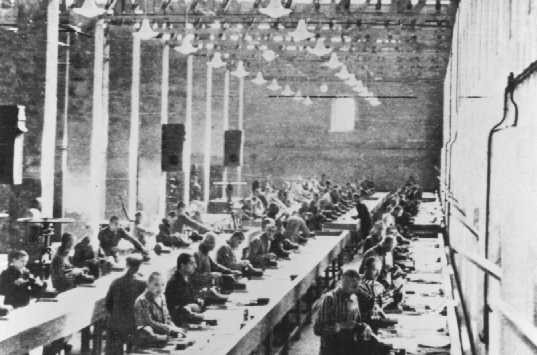
Prisoners carrying out forced labor at the Siemens-Schuckertwerke AG factory in Bobrek, a subcamp of the Auschwitz concentration camp in German-occupied Poland. The factory made electrical components for motors. The Bobrek camp existed from late 1943 until its evacuation in mid-January 1945. This photograph was likely taken at some point in 1944.
Item View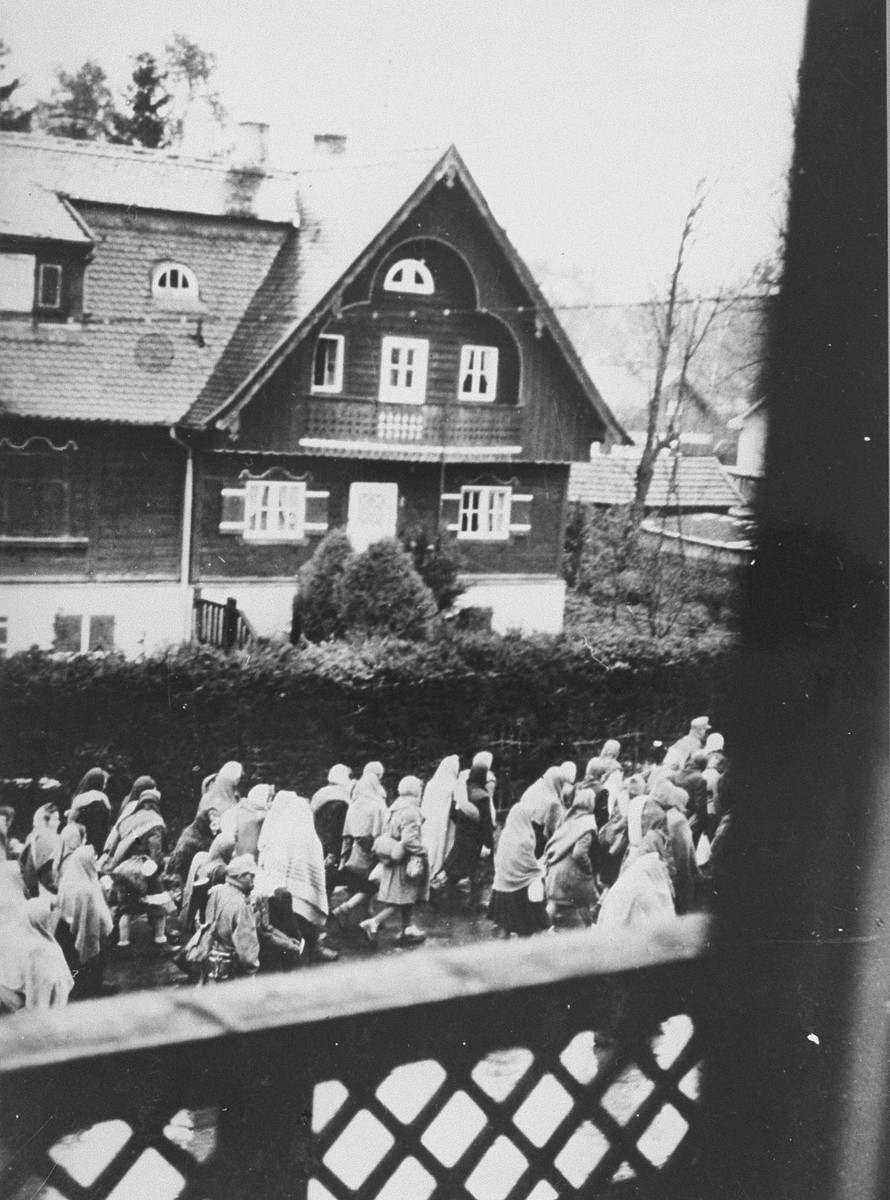
Clandestine photograph, taken by a German civilian, of Dachau concentration camp prisoners on a death march south through a village on the way to Wolfratshausen. Germany, between April 26 and 30, 1945.
Item View![Piles of prayer shawls that belonged to Jewish victims, found after the liberation of the Auschwitz camp. [LCID: 85743]](https://encyclopedia.ushmm.org/images/large/41ee9cb8-cb3a-4e13-a131-12a156440836.jpeg "Piles of prayer shawls that belonged to Jewish victims, found after the liberation of the Auschwitz camp. [LCID: 85743]")
Piles of prayer shawls that belonged to Jewish victims, found after the liberation of the Auschwitz camp. Poland, after January 1945.
Item View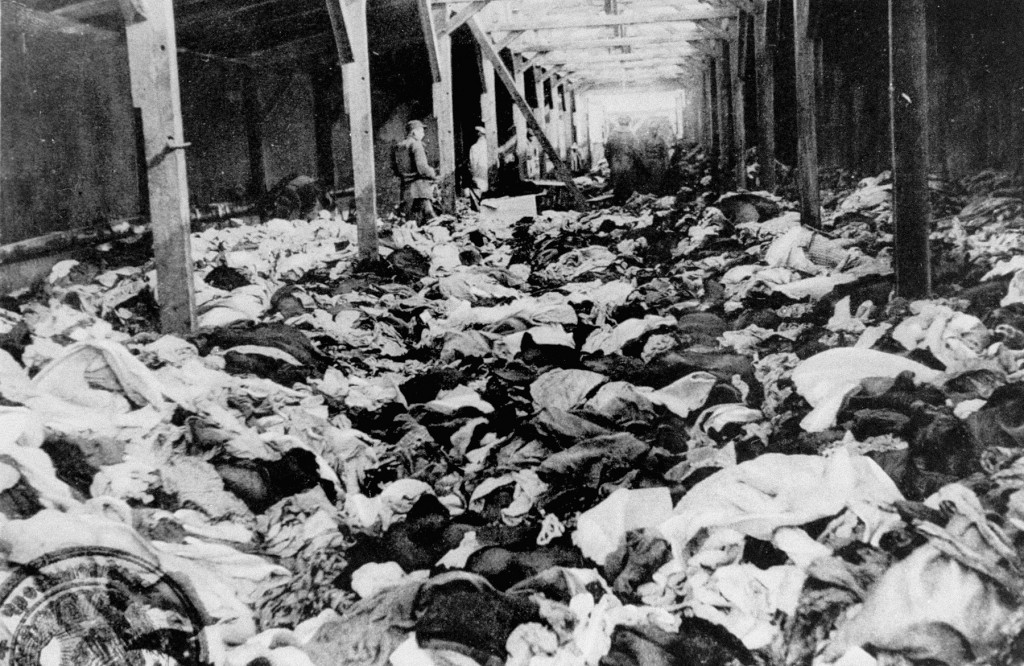
Warehouse of victims' clothing at the liberated Auschwitz camp complex. Poland, after January 1945.
When Soviet forces liberated the Auschwitz concentration camp complex in January 1945, they found evidence of the crimes committed at the camp by Nazi German authorities. This evidence included warehouses of clothes and other belongings stolen from Jews murdered in the gas chambers or imprisoned in the camp.
Item View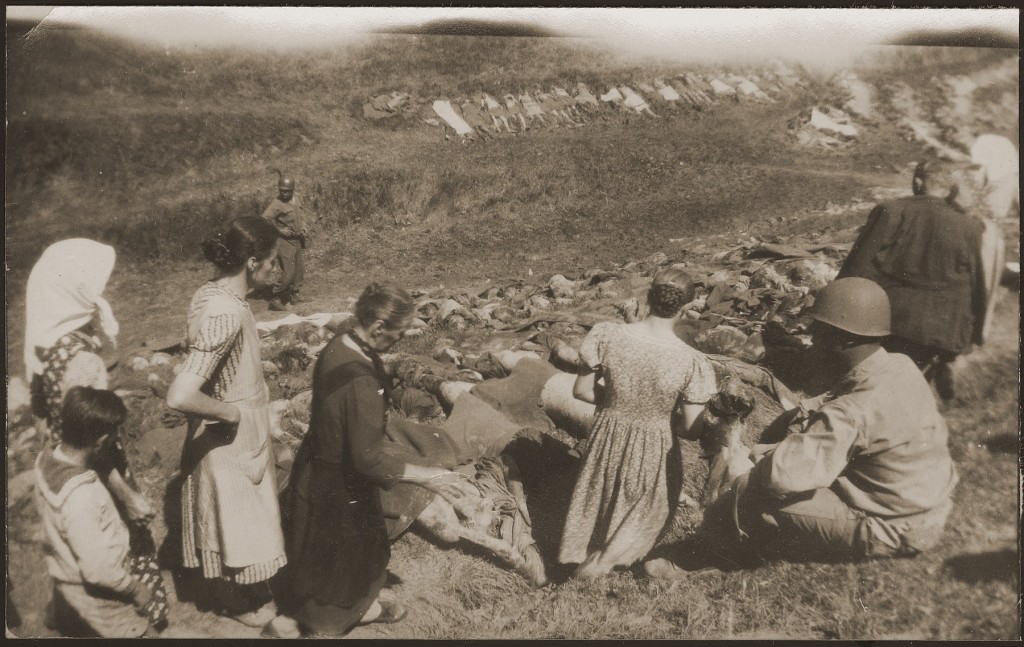
African American soldiers of the US Army escort German civilians through a site where camp prisoners were massacred during a death march from Buchenwald. Such tours forced Germans to recognize the crimes committed by the SS. Near Nammering, Germany, 1945.
Item View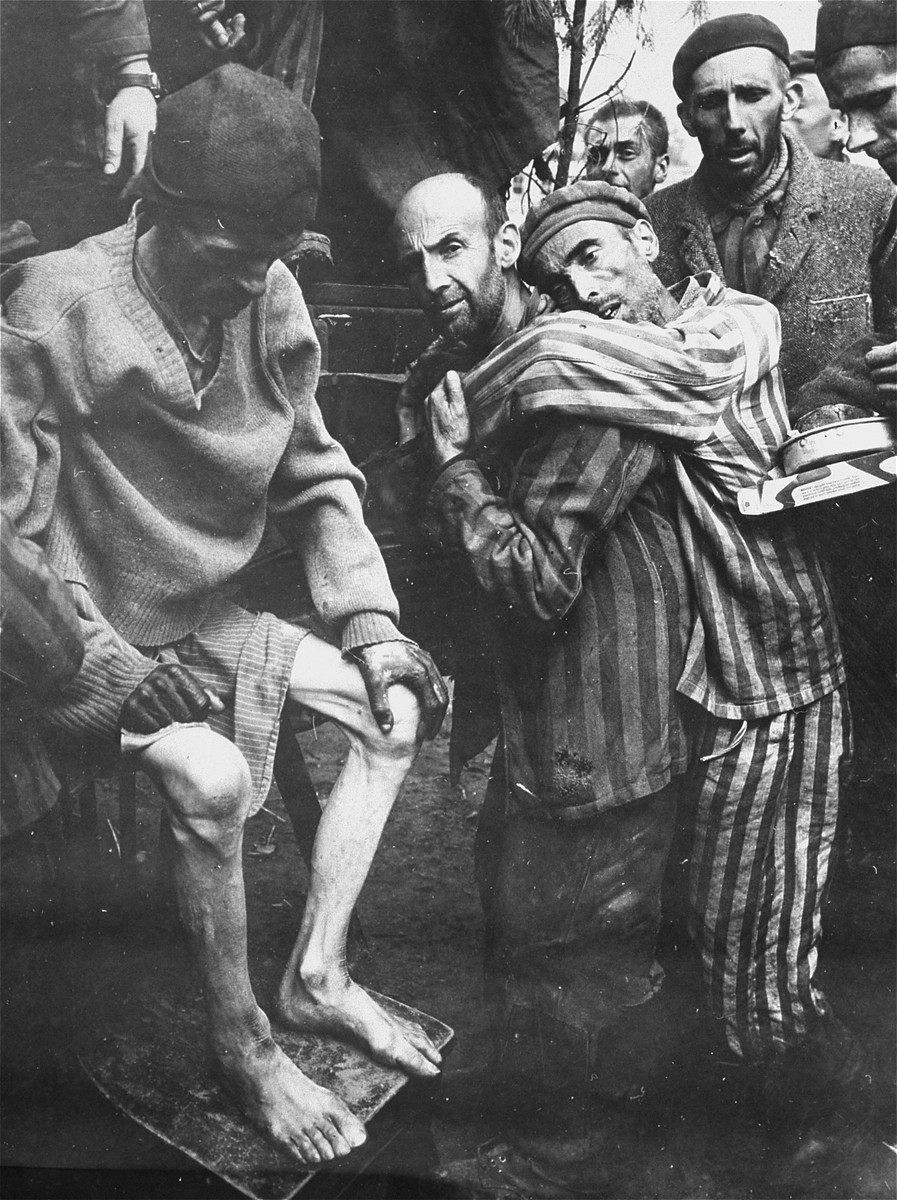
Former prisoners of Wöbbelin, a subcamp of Neuengamme, are taken to a hospital for medical attention. Germany, May 4, 1945.
Item View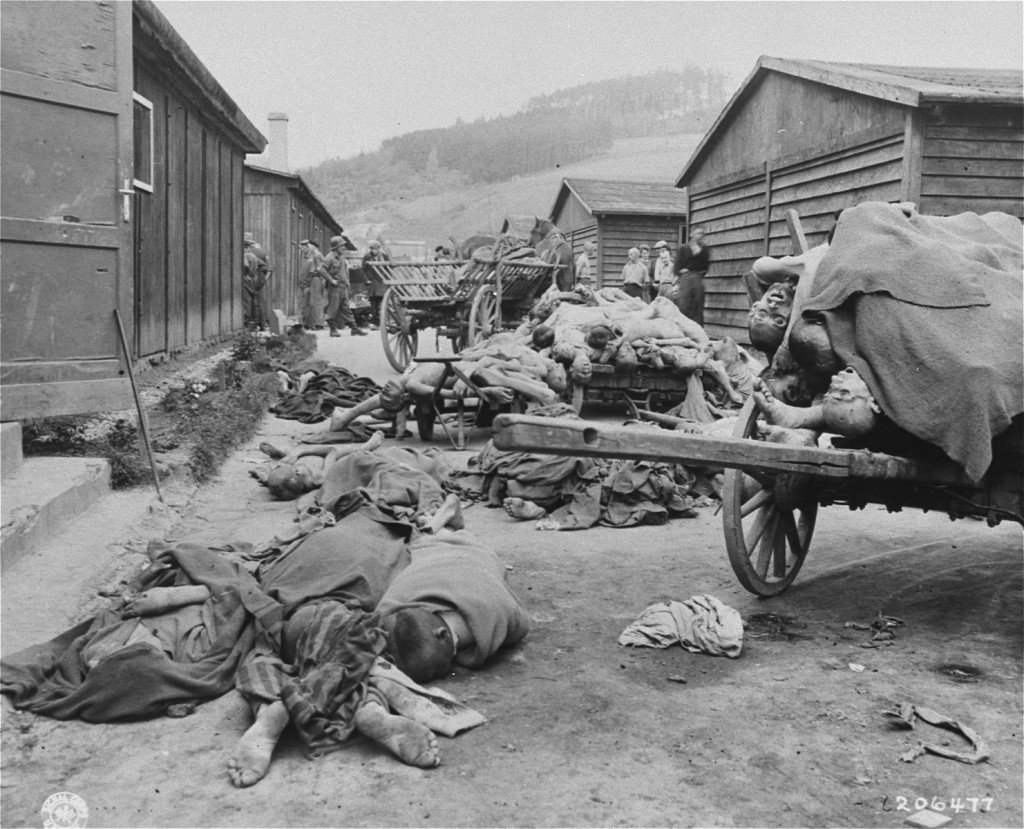
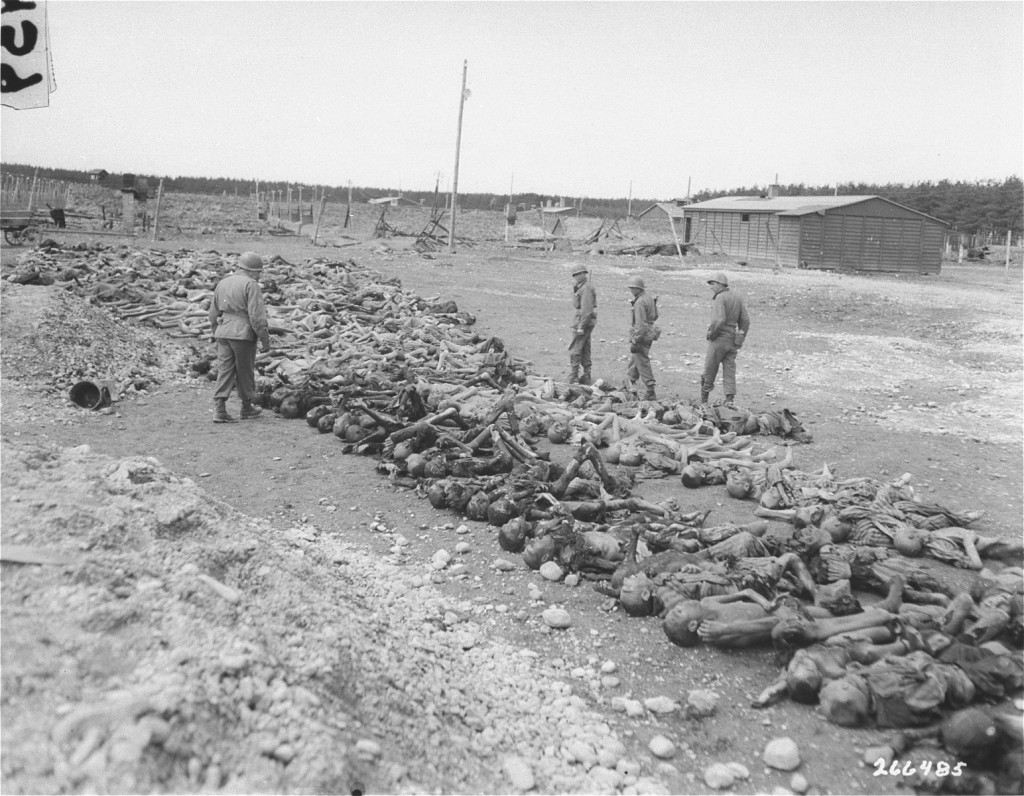
Corpses found when US troops liberated the Gusen camp, a subcamp of the Mauthausen concentration camp. Austria, after May 12, 1945.
Item View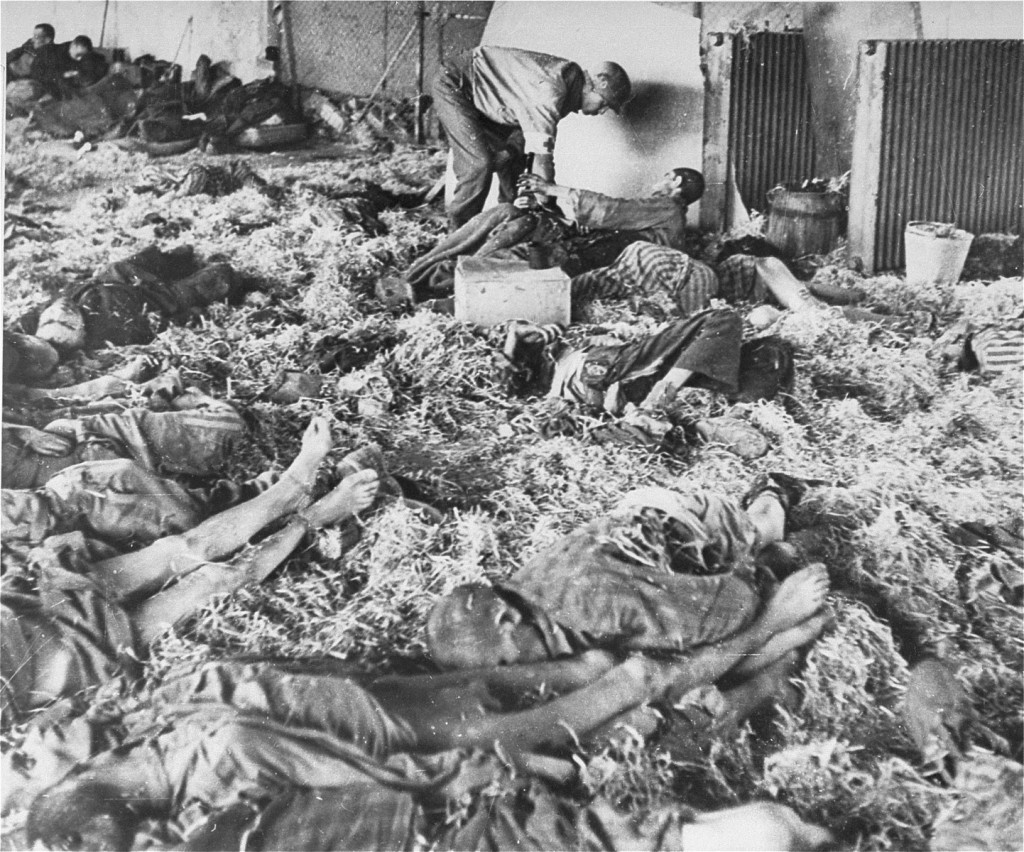
A US soldier tends to a former prisoner lying among corpses of victims at the Dora-Mittelbau concentration camp, near Nordhausen. Germany, after April 10, 1945.
Item View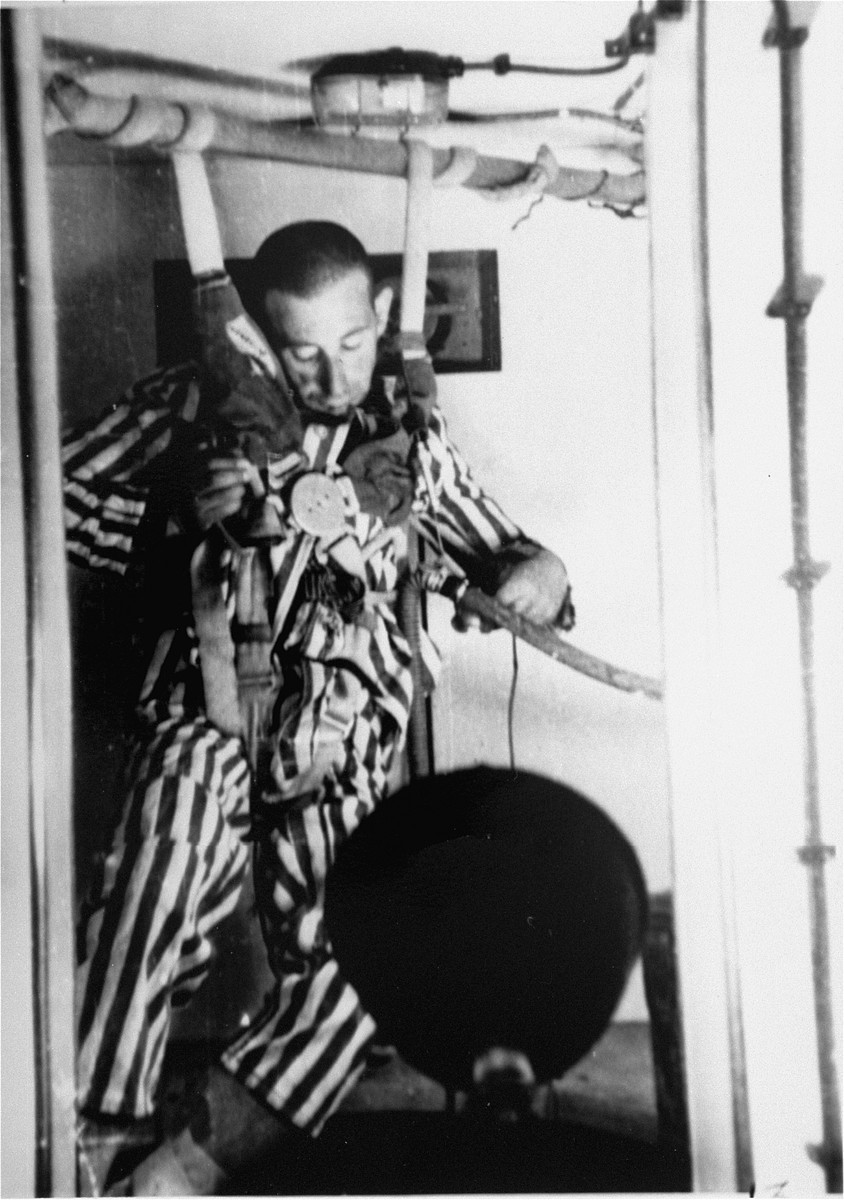
A prisoner in a compression chamber loses consciousness before dying during a medical experiment simulating high altitudes. Dachau concentration camp, Germany, 1942.
Item View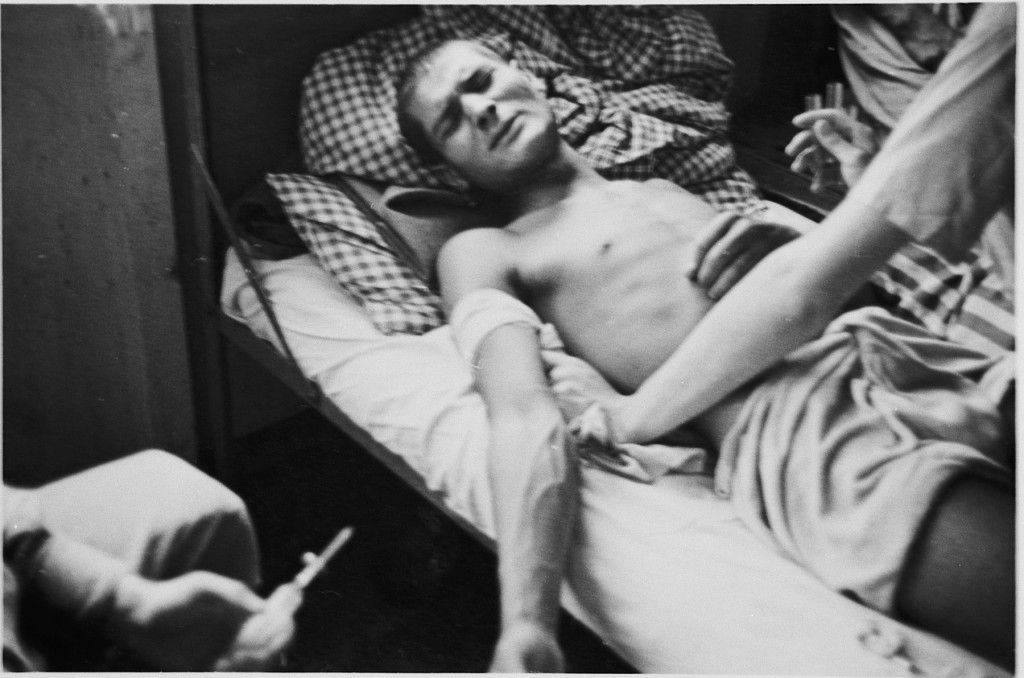
A Romani (Gypsy) victim of Nazi medical experiments to make seawater safe to drink. Dachau concentration camp, Germany, 1944.
Item View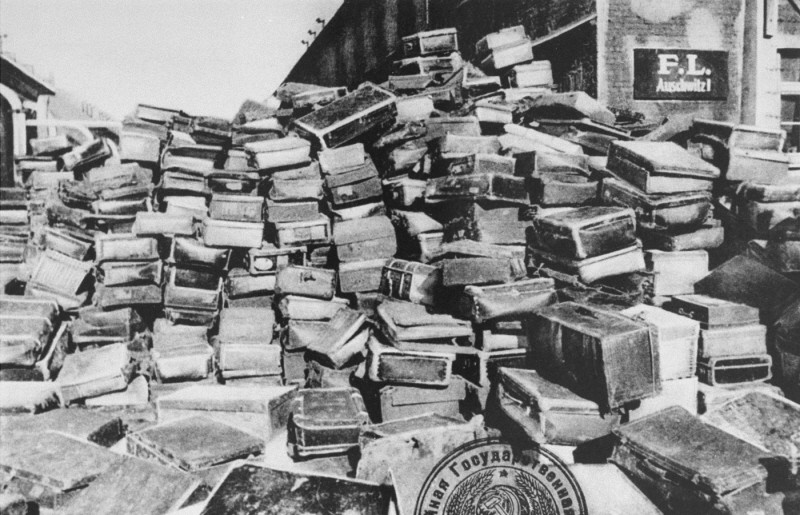
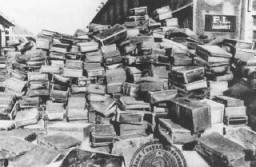
Stack of stolen suitcases found by Soviet forces at Auschwitz after they liberated the camp complex on January 27, 1945.
In total, Nazi German authorities deported 1.1 million Jews to Auschwitz from all over Europe. Most were murdered upon arrival in the gas chambers. In addition to committing mass murder at Auschwitz, the SS also carried out the mass plunder of Jewish-owned property. They stole the luggage and personal belongings that Jewish victims brought with them to the camp. When Soviet forces liberated the Auschwitz camp complex, they found piles of these stolen items.
Item View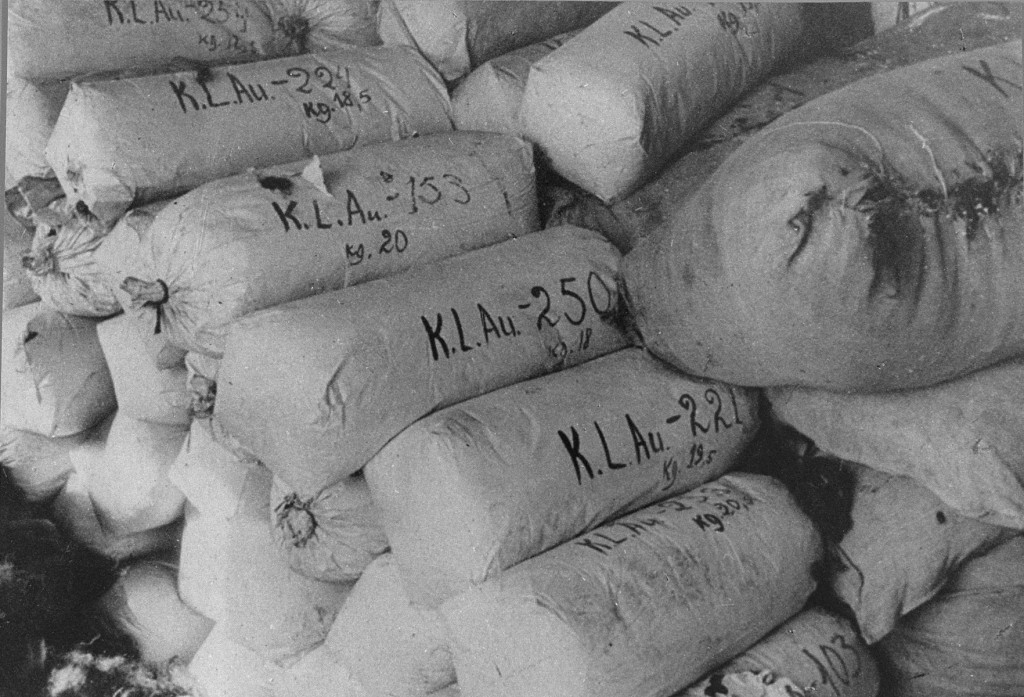
Packages of hair shorn from Auschwitz prisoners. These packages were weighed, labeled, and prepared for shipment out of the camp. This photograph was taken after Soviet forces liberated the Auschwitz camp complex in January 1945.
During World War II, Nazi German authorities collected hair shorn from concentration camp prisoners and from Jewish women murdered in the gas chambers of killing centers. Camp authorities shipped the hair to German companies, which used it to manufacture felt, yarn (thread), fabric (haircloth), stockings, and socks.
Item View![Forced labor in a workshop in the Monowitz camp. [LCID: 78607]](https://encyclopedia.ushmm.org/images/large/a9f598cc-1d6a-48f3-8882-b9e8adfca0a2.jpg "Forced labor in a workshop in the Monowitz camp. [LCID: 78607]")
Forced labor in a workshop in the Monowitz camp, part of the Auschwitz camp complex. Poland, between 1941 and January 1945.
Item View![Chart indicating the workforce of the Auschwitz-Monowitz camp by category and nationality of inmates. [LCID: 03026]](https://encyclopedia.ushmm.org/images/large/027160d0-0d13-4425-a48f-0b93e5bef0cb.jpg "Chart indicating the workforce of the Auschwitz-Monowitz camp by category and nationality of inmates. [LCID: 03026]")
Chart indicating the workforce of the Auschwitz-Monowitz camp by category and nationality of inmates. Poland, January 16, 1945.
Item View![Assembly line where forced laborers manufactured V-bombs at the Dora-Mittelbau concentration camp, near Nordhausen. [LCID: 13077]](https://encyclopedia.ushmm.org/images/large/abf8d81f-4387-46a5-b0ab-4f391b4e8d20.jpg "Assembly line where forced laborers manufactured V-bombs at the Dora-Mittelbau concentration camp, near Nordhausen. [LCID: 13077]")
Assembly line where prisoners were forced to manufacture V-bombs at the Dora-Mittelbau concentration camp, near Nordhausen. Germany, April-May 1945.
Item ViewWe would like to thank Crown Family Philanthropies, Abe and Ida Cooper Foundation, the Claims Conference, and BMF for supporting the ongoing work to create content and resources for the Holocaust Encyclopedia. View the list of all donors.