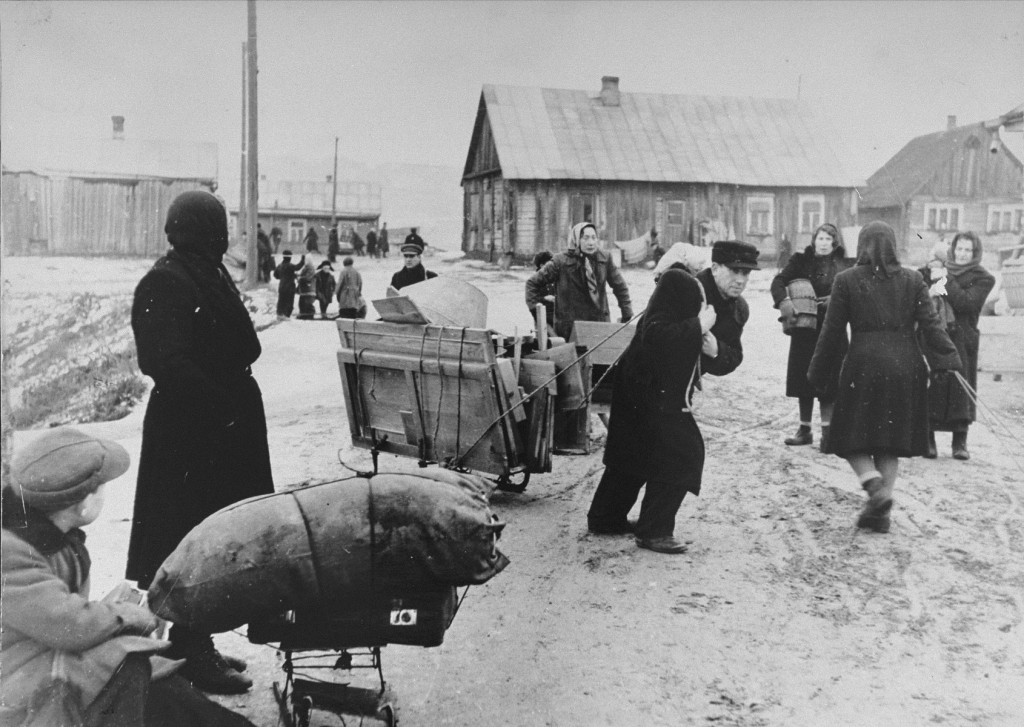
Jews move their belongings within the confines of the Kovno ghetto in 1941–1942. The German occupation authorities repeatedly modified the borders of the ghetto in Kovno (Kaunas), Lithuania. As the ghetto area was made smaller and smaller, many Jews were forced to find new living quarters. This image was likely taken by Hirsch Kadushin (later known as George Kadish), a Jewish photographer who secretly took photos in the Kovno ghetto.
Item View
Jewish women return to the Kovno ghetto after forced labor on the outside. They line up to be searched by German and Lithuanian guards. Kovno, Lithuania, between 1941 and 1944.
Item View
A group of children in the Kovno ghetto in Lithuania. This photograph was taken by George Kadish between 1941 and 1943.
Item View
Family and friends are gathered for a Jewish wedding celebration in Kovno. Among those pictured are Jona and Gita Wisgardisky (standing at the back on the right).
In the summer of 1941 soon after the German occupation of Lithuania, the Wisgardisky family was forced into the Kovno ghetto. During a roundup of children in the ghetto in 1942, Henia (Gita and Jona's daughter) was hidden in a secret room that her father built in a pantry in their apartment. Later she was smuggled out of the ghetto and placed with the Stankiewicz family. Jonas Stankiewicz had worked as the foreman in Jona Wisgardisky's chemical plant before the war, and had taken it over after the occupation.
After successfully securing a hiding place for their daughter, the Wisgardiskys fled from the ghetto. They found refuge on a potato farm, where they lived in a root cellar.
Photograph taken in Kovno, Lithuania, ca. 1938.
Item View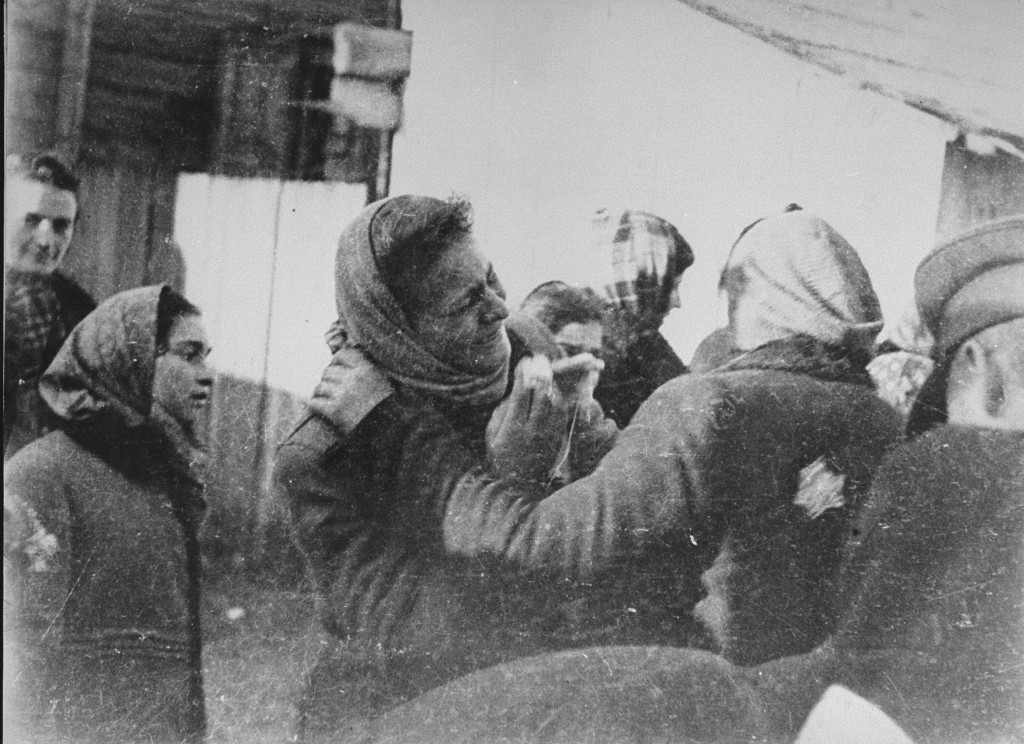
This clandestine photograph taken by George Kadish captures a scene during the deportation of Jews from the Kovno ghetto in German-occupied Lithuania in 1942.
Item View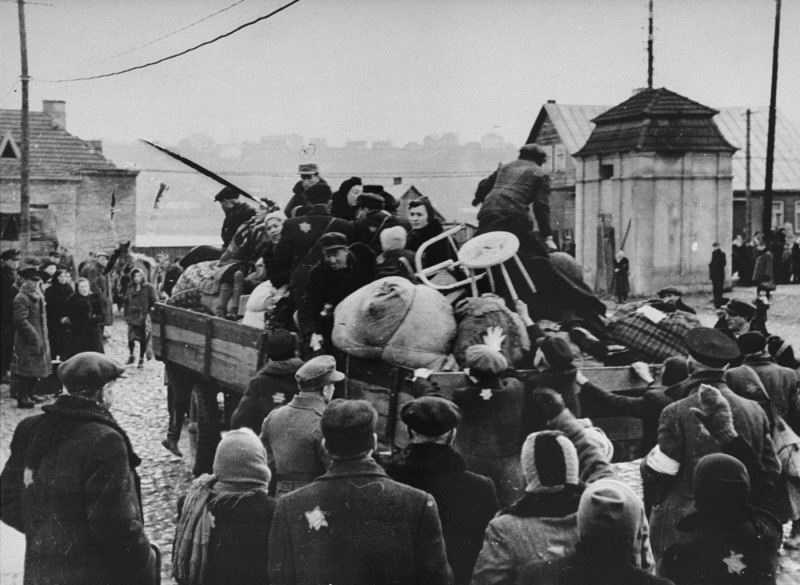
Deportation of Jews from the Kovno ghetto to a work camp. Lithuania, 1942.
Item View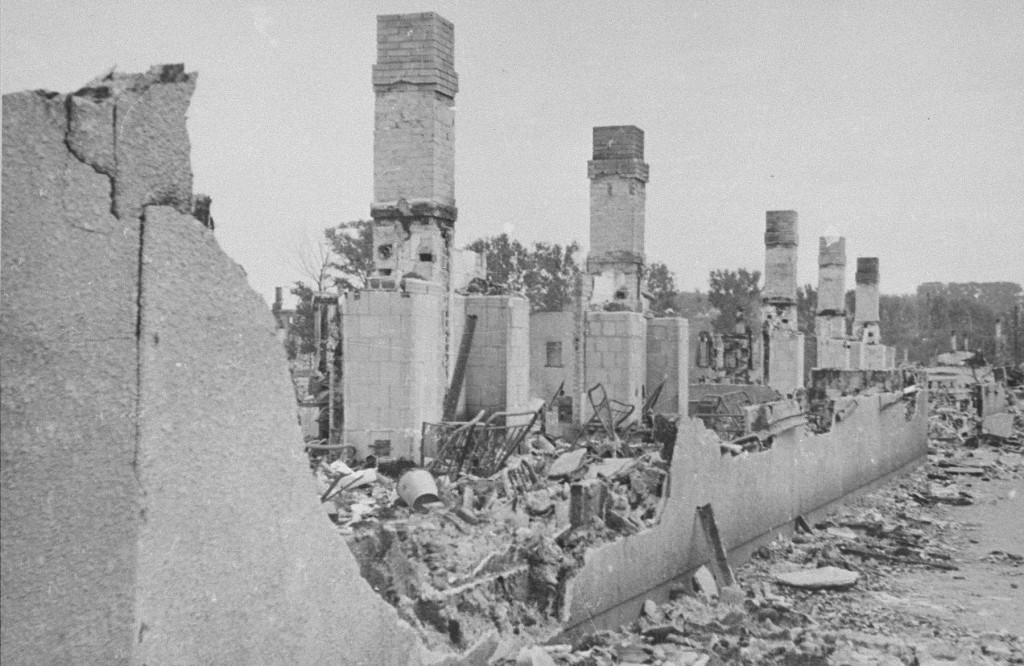
Ruins of a building in the former Kovno ghetto photographed in August 1944 after Soviet forces drove the Germans out of Kovno (Kaunas), Lithuania.
In early July 1944, as the Soviets approached, the Germans evacuated the Kauen concentration camp (formerly the Kovno ghetto). Many Jews tried to hide to avoid deportation. The Germans tried to force these people out of hiding by razing the former ghetto area to the ground using dynamite. Most of those in hiding were burned to death in the ensuing fire. This image was likely taken by Hirsch Kadushin (later known as George Kadish). Kadushin was a Jewish photographer who secretly took photos in the Kovno ghetto.
Item View
Two young brothers, seated for a family photograph in the Kovno ghetto. One month later, they were deported to the Majdanek camp. Kovno, Lithuania, February 1944.
Pictured are Avram (5 years) and Emanuel Rosenthal (2 years). Emanuel was born in the Kovno ghetto. The children, who were deported in the March 1944 "Children's Action," did not survive. Their uncle, Shraga Wainer, who had asked George Kadish to take this photograph, received a copy of it from the photographer after the war in the Landsberg displaced persons camp.
Item View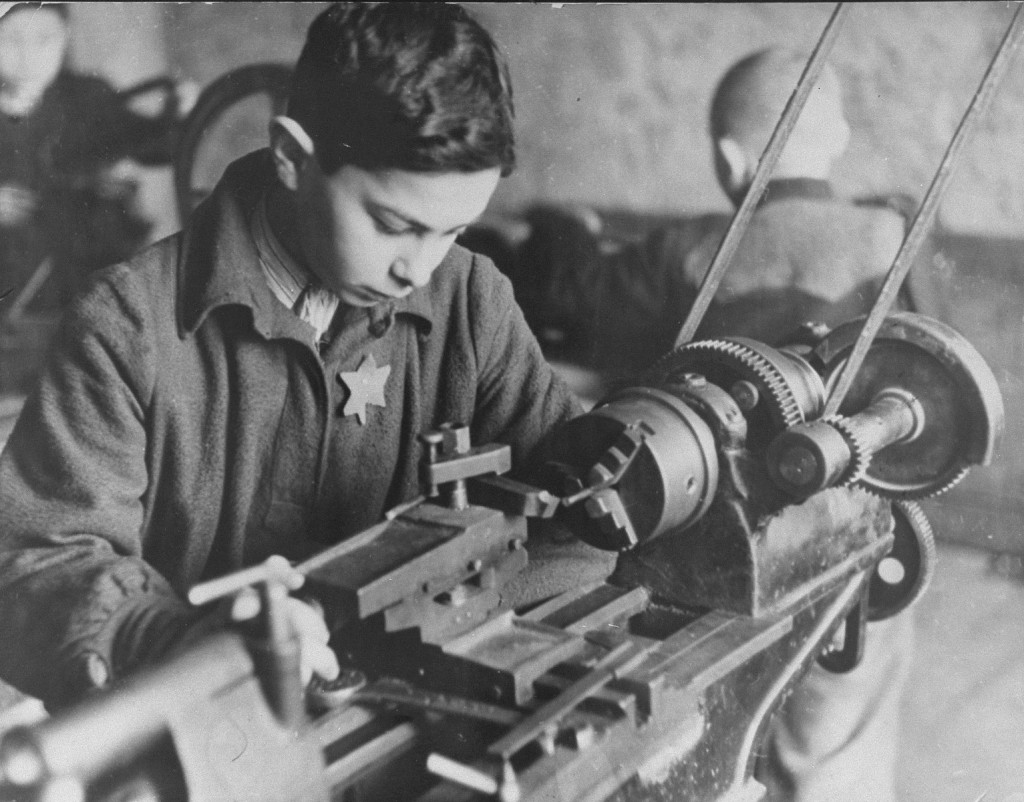
Yakob Vizgordiski works at a machine in a factory in the Kovno ghetto in German-occupied Kaunas, Lithuania, between 1941 and 1943.
Item View
Two young cousins shortly before they were smuggled out of the Kovno ghetto. A Lithuanian family hid the children and both girls survived the war. Kovno, Lithuania, August 1943.
Item View
Jewish forced laborers at work making shoes in a ghetto workshop. Kovno, Lithuania, December 1943.
Item View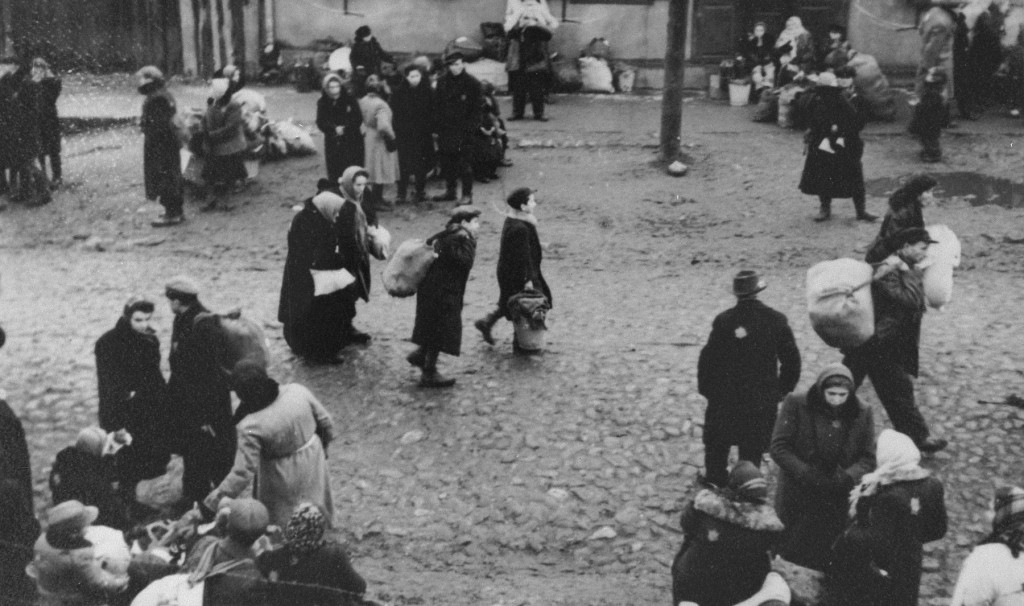
Jews in the Kovno ghetto on the street with their belongings. This image likely depicts Jews on their way to an assembly point before deportation from the ghetto in 1942. In both February and October 1942, German occupation authorities deported several hundred Jews from the Kovno ghetto to labor camps in the city of Riga in German-occupied Latvia. The photo was probably taken by Hirsch Kadushin (later known as George Kadish). Kadushin was a Jewish photographer who secretly took photos in the Kovno ghetto.
Item View
Photograph taken by George Kadish: a member of the Kovno ghetto underground hides supplies in a well used as the entrance to a hiding place in the ghetto. Kovno, Lithuania, 1942.
Item ViewWe would like to thank Crown Family Philanthropies, Abe and Ida Cooper Foundation, the Claims Conference, and BMF for supporting the ongoing work to create content and resources for the Holocaust Encyclopedia. View the list of all donors.