
What Were Ghettos During the Holocaust?
During the Holocaust, the Nazis and their allies imprisoned millions of Jews in ghettos. Ghettos were areas of cities or towns where authorities forced Jews to live in miserable conditions separated from the non-Jewish population. The creation of ghettos was a key step in the Nazi process of brutally segregating, persecuting, and ultimately destroying Europe's Jews.
Key Facts
-
1
In ghettos, German authorities and their allies deliberately created overcrowded, unsanitary, and unsafe conditions. Hundreds of thousands of Jews died in the ghettos as a result.
-
2
Beginning in 1941, the Nazis and their allies murdered the vast majority of Jews imprisoned in ghettos at killing centers and in mass shooting operations.
-
3
Jews in the ghettos sought to maintain a sense of dignity and community. They created schools, libraries, orphanages, hospitals, communal welfare services, and religious institutions.
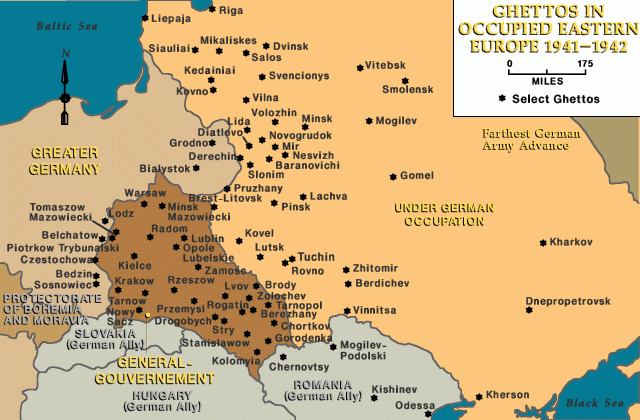
During the Holocaust, the Nazis and their allies imprisoned Jewish people in ghettos. Ghettos were a key means of isolating, controlling, and ultimately murdering millions of Jews. The Nazis and their allies established more than 1,300 ghettos. Just over half of these were located in German-occupied Poland. Most of the other ghettos were located in occupied eastern or central Europe. There were no ghettos in western Europe.
What Were Ghettos During the Holocaust?
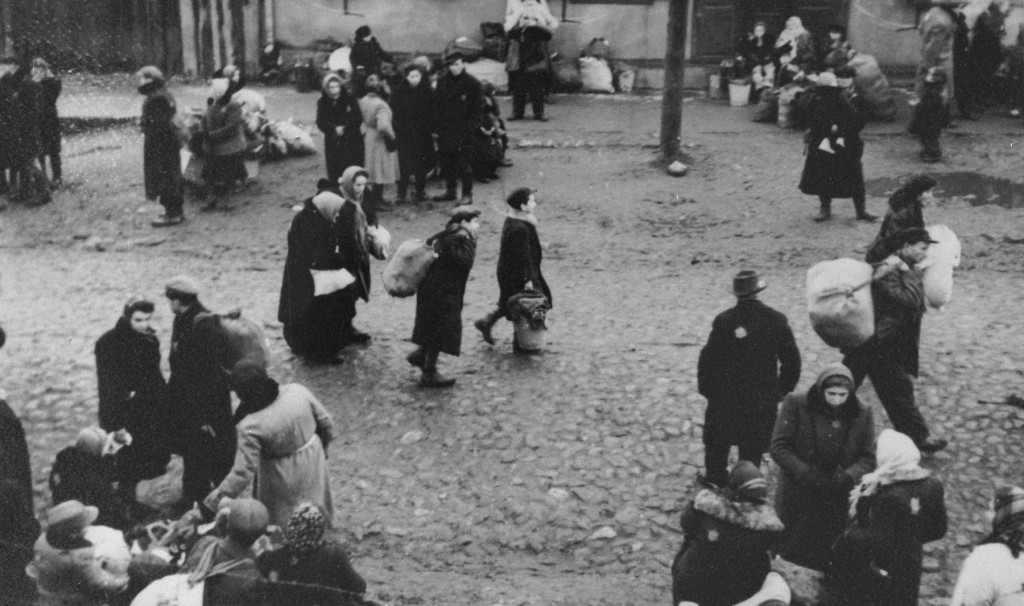
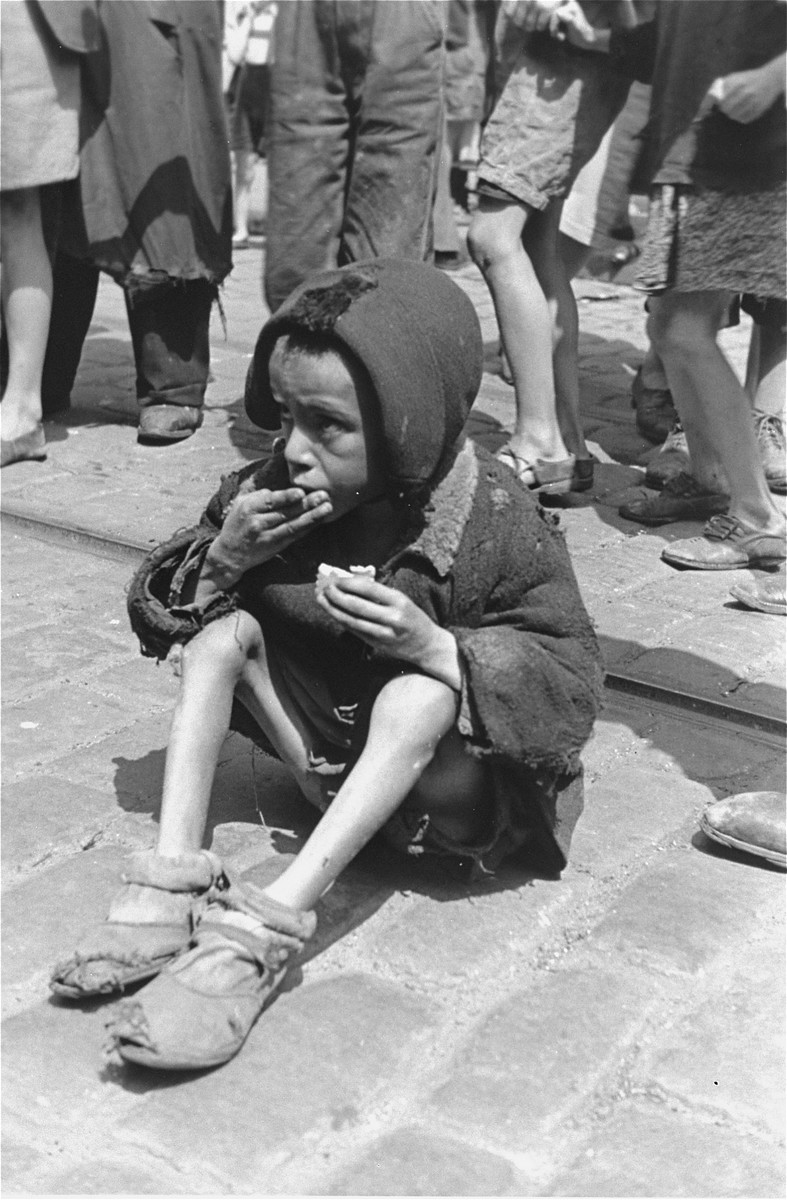
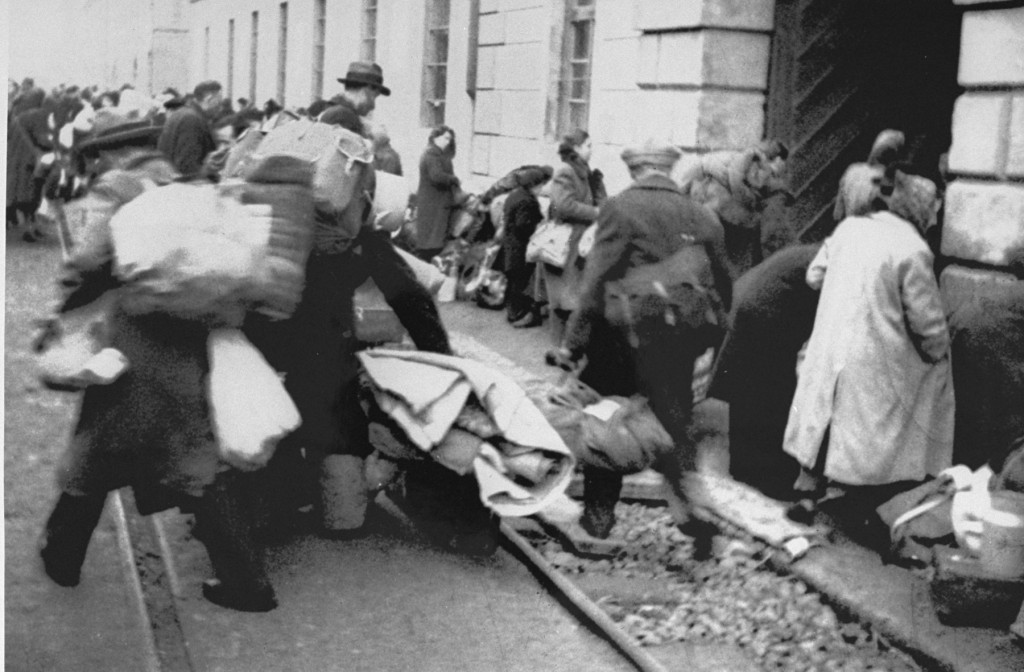
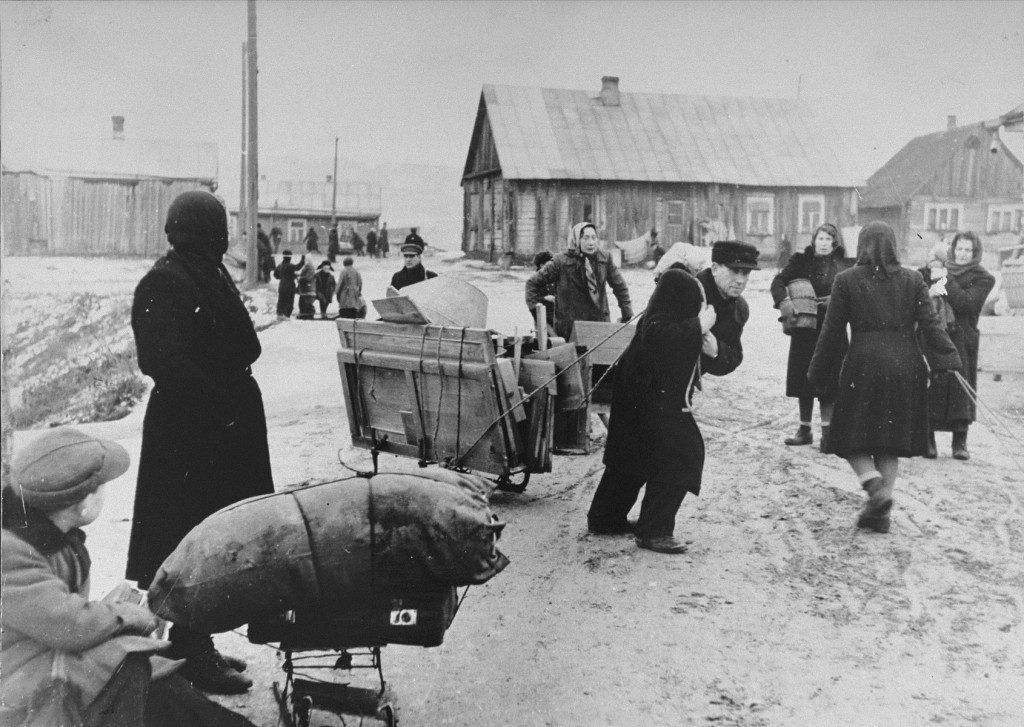
During the Holocaust, ghettos were areas of cities or towns where Jews were forced to live. Ghettos separated Jews from non-Jews and from other Jewish communities. German authorities and their allies deliberately created overcrowded, unsanitary, and unsafe conditions in these ghettos. There was not enough housing, food, or medical care. Hundreds of thousands of Jews died in the ghettos from disease, malnutrition, arbitrary violence, and exposure to extreme weather conditions.
Jews imprisoned in a ghetto often came from the same local community or nearby communities. For example, most Jews imprisoned in the Przemyśl ghetto were from the city of Przemyśl or from nearby areas. The Germans also deported Jews from other parts of Europe to certain ghettos. For instance, thousands of Jews from Germany, Austria, and Czechoslovakia were deported to the Riga ghetto in 1941 and 1942.
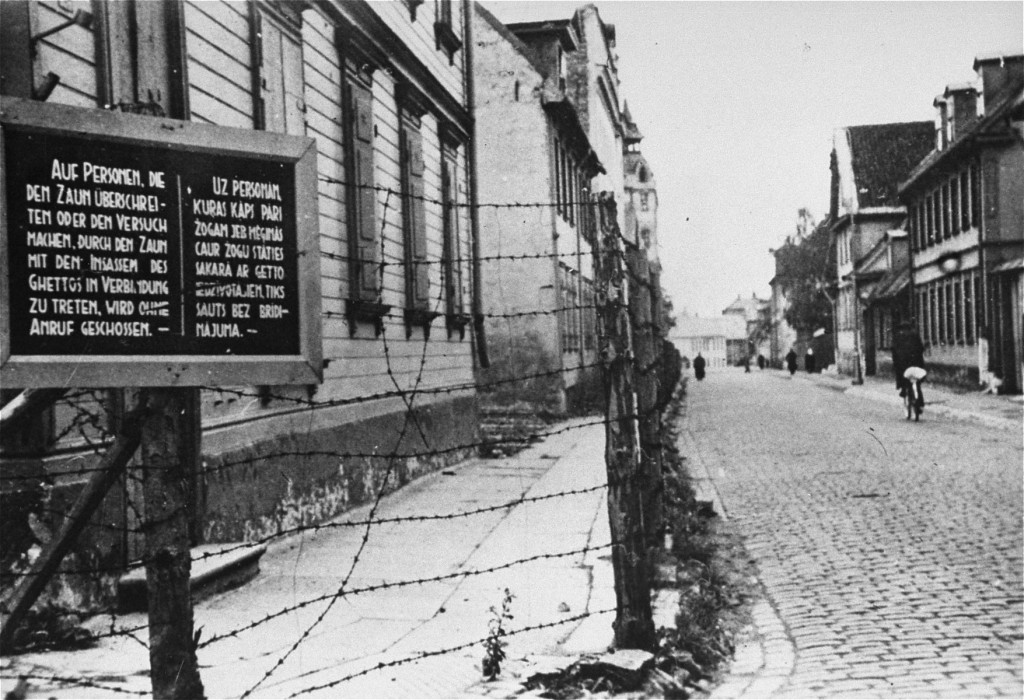
The specific structures of ghettos varied by time and place. Some ghettos existed for years. Others existed only for months, weeks, or even days. Many ghettos were enclosed by walls, fences, or other barriers. Other ghettos, called open ghettos, were unenclosed. In both cases, guards typically prevented Jews from leaving the designated area without permission.
Some ghettos were huge. Hundreds of thousands of Jewish people were imprisoned in the Warsaw and Łódź ghettos. Others were much smaller, with populations in the thousands, hundreds, or even dozens.

How Many Ghettos Were There and Where Were They Located?
In total, the Nazis and their allies established more than 1,300 ghettos. About 1,100 of these ghettos were created by the Nazi German authorities. Almost all were located in German-occupied Poland, the German-occupied Baltic states, and the occupied Soviet Union. Other notable ghettos created by the Germans included the Theresienstadt (Terezín) ghetto in the Protectorate of Bohemia and Moravia and the ghettos in Salonika (Thessaloniki) in German-occupied Greece.
Several members of the Axis alliance, who were allied with Nazi Germany, also established ghettos. Beginning in September 1941, Romanian authorities established about 150 ghettos in the Transnistria Governorate in Romanian-occupied Ukraine. In mid-1943, Bulgaria attempted to relocate and segregate Jews in certain cities. Although they did not call these areas “ghettos,” they functioned in the same way as ghettos elsewhere. In April–June 1944, Hungarian authorities created more than 60 temporary transit ghettos. These transit ghettos were created to centralize and control Jews before their deportation.
Why Did the Nazis and Their Allies Create Ghettos?
In general, the Nazis and their allies created ghettos to control Jews and segregate them from non-Jews. However, the specific timing and reasons for establishing ghettos varied greatly.
The first wave of ghettoization took place in 1939–1941 in German-occupied Poland, before the mass murder of Europe’s Jews began. During this period, Nazi leadership in Berlin debated and experimented with various anti-Jewish policies, including forced expulsions and other means of mass relocation. In occupied Poland, the Germans often created ghettos as temporary holding places. In some cases, local authorities chose to establish a ghetto in order to deal with potential epidemics or to control the black market. At other times, they created ghettos in order to facilitate the theft of Jewish-owned property or to seize Jewish housing for use by the occupation authorities. Many of the ghettos created in this first wave existed for years. They became sites of mass suffering, exploitation, and death.
The purpose of ghettos began to change in 1941, after Nazi Germany attacked the Soviet Union in June and began massacring Jews. As part of the “Final Solution,” authorities made some ghettos to facilitate mass murder. In certain places, they used ghettos to collect and gather Jews before massacring them in mass shooting operations. In other places, ghettos housed Jews before their deportation to killing centers. The Theresienstadt ghetto, the Thessaloniki ghettos, and the ghettos in Hungary were established specifically for this purpose.
Why Were These Detention Sites Called Ghettos?
The Nazis did not invent the word ghetto. Nor did they create the concept of a “ghetto” as a separate place where Jews were required to live. The origins of this word date to 1516. That year, Venetian authorities created a Jewish quarter and limited Jewish living space in the city. It is unclear why the Nazis used this term. By the time they adopted it, the word “ghetto” was part of many European languages. The Nazis’ use of the term pointed to older antisemitic practices of confining Jews to certain areas and restricting their movement.
During the Holocaust, some sites commonly understood as “ghettos” were officially known as:
- Judenwohnbezirk (“Jewish living district”);
- Wohngebiet der Juden (“living area for Jews”); and
- Jüdisches Wohnviertel (“Jewish living quarter”).
Who Created, Oversaw, and Guarded the Ghettos?
A variety of different occupation authorities created and controlled ghettos. In German-occupied territories, these included military, SS and police, or civilian administrators. In Hungary, the authorities involved in ghettoization included regional and district government officials, mayors, public health officials, policemen, and gendarmes (a type of law enforcement). In Romanian-controlled territory, Romanian soldiers, gendarmes, and civilian administrators created ghettos.
The composition of ghetto guard forces varied. It often included Germans, Hungarians, Romanians, other auxiliary forces, and local collaborators.
What Role Did Jewish Councils Play in Ghettos?
Typically, a Jewish administration governed the ghettos internally. A Jewish council (Judenrat) or Jewish Council of Elders (Ältestenrat) was at the top of this administration. Jewish councils served as liaisons between the authorities and the Jewish population. They were created by the Germans or their allies. These authorities required Jewish councils to enforce orders and decrees. They also had to meet demands for resources and services. The authorities sometimes forced Jewish councils to help deport ghetto residents to killing centers.
Jewish councils often expanded the scope of their activities to provide aid and relief to ghetto residents. They set up additional institutions, like social welfare offices, to help those in particularly dire need. Jewish councils often negotiated with the authorities to help provide ghetto residents with food, fuel for heating (usually, wood or coal), and other supplies necessary for survival. They also worked to ensure the safety of the community. For example, they enforced hygiene and cleanliness standards to prevent the spread of infectious diseases.
The Jewish council's role depended on the size and age of the ghetto. For example, the Theresienstadt ghetto existed for three and a half years. During that time, the Jewish Council of Elders oversaw a vast bureaucracy. In some cases, a ghetto police force carried out the orders of the authorities and the ordinances of the Jewish councils.
What Was Jewish Life like in the Ghettos?
For Jews, life in the ghettos was defined by restrictions, especially on movement. Guards and other authorities determined where Jews could go and when. They set curfews, built fences, and posted signs. They banned Jews from leaving the ghetto without permission. Jews were also faced with restrictions on what they could bring into the ghetto. This contributed to starvation, epidemics, and shortages of daily necessities. It made sustaining life nearly impossible. Jews imprisoned in ghettos often tried to skirt around rules to stay alive.
Housing and Living Conditions in the Ghettos
Most ghettos were located in existing cities and towns, often in prewar Jewish neighborhoods. The Germans and their allies often designated a neighborhood or set of streets as a ghetto. They used existing landmarks and street names to mark the borders. In many places, ghettos were placed in outlying, impoverished areas. For instance, the Kovno ghetto was established in a neighborhood without running water, a sewer system, or enough livable housing. In other cases, ghettos were created in large buildings like synagogues, factories, warehouses, or brickyards.
All ghettos were overcrowded. The designated areas were far too small to accommodate the number of people imprisoned in them.
The Jewish people forced to move into ghettos had to leave behind their homes, personal belongings, money, and other valuables. Jews whose homes already fell within the ghetto boundaries had to accommodate new arrivals. Multiple families had to share a single dwelling.
Food, Medical Care, and Smuggling
In the ghettos, there was little food and medical care. The sanitation systems were often not enough to deal with the dense population. In some cases, there were no sanitation systems. Access to daily items like clothing and basic hygiene supplies were also limited. For survival, Jews turned to trading, bartering, smuggling, and black market dealing. They snuck food, medicine, weapons, and goods into ghettos at enormous risk to their lives. They also created community welfare services, like soup kitchens and hospitals.
Forced Labor in the Ghettos
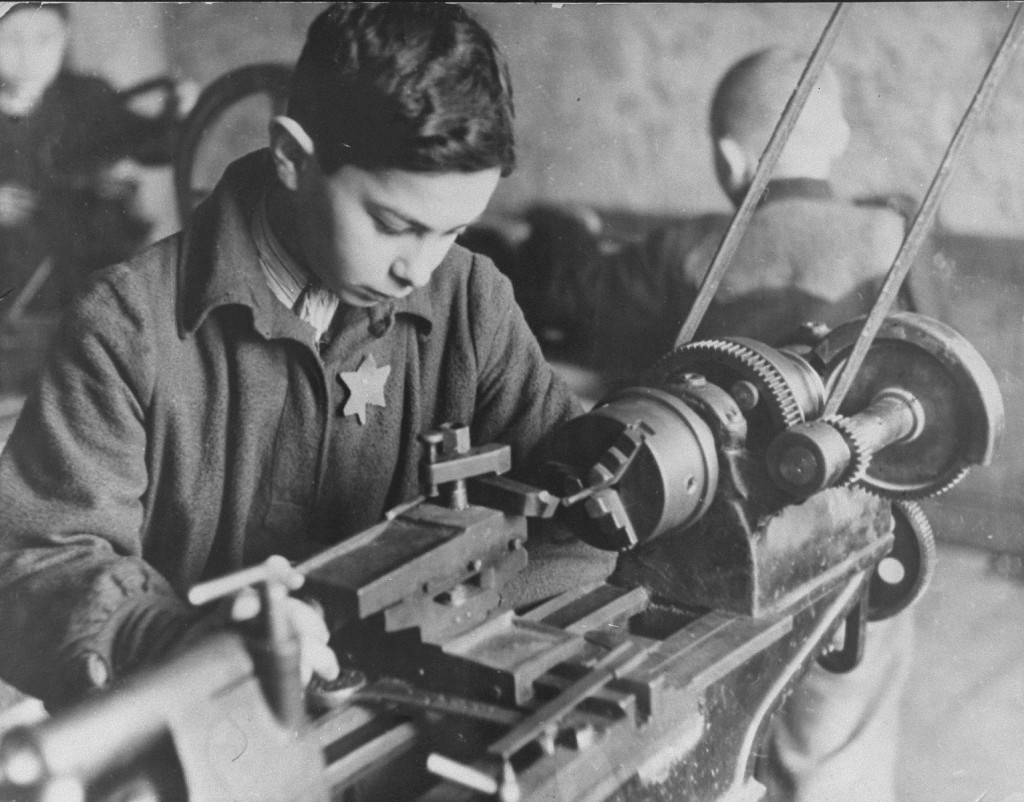
Forced labor became a central feature of life in many ghettos. German authorities exploited Jews in ghettos for forced labor in factories, workshops, and on construction sites. Some Jews were forced to clean streets, dig trenches, and repair war-damaged buildings and roads. Jews assigned to forced labor often carried a work permit or other evidence of their labor assignment. After the Nazis began to carry out the mass murder of Jews, proof of a labor assignment could mean the difference between life and death.
Jewish Communal Life in the Ghettos
Most ghettos imprisoned Jewish people from the same prewar community or region. In ghettos, Jews usually lived in family units. They were also frequently imprisoned alongside their extended families, neighbors, friends, and coworkers. This provided some social and cultural continuity of daily life before and after ghettoization. This also meant that prewar inequality, political divides, and interpersonal conflicts shaped daily life in many ghettos.
Jews in the ghettos sought to maintain a sense of dignity and community. In long-term ghettos, schools, libraries, orphanages, hospitals, communal welfare services, and religious institutions provided some measure of connection among residents. Jews in ghettos often continued to practice their religion and celebrate Jewish culture, sometimes in secret. In many ghettos, Jews attempted to document their lives. Some took clandestine photos; recorded their experiences in diaries; or created art, poetry, and songs. In some cases, they even created secret archives to document their prewar and wartime lives.
Death in the Ghettos
In the ghettos, hundreds of thousands of Jews died of starvation; rampant disease; exposure to extreme temperatures; or exhaustion from forced labor. Germans, their allies, and collaborators also murdered the imprisoned Jews through brutal beatings, torture, shootings, and other forms of arbitrary violence.
Organized and Armed Resistance in the Ghettos
Many ghettos had underground resistance movements. These groups:
- carried out attacks on German authorities;
- created and spread underground press publications;
- built bunkers and other places for Jews to hide;
- helped plan escapes;
- made contact with external resistance networks; and
- collected weapons.
Resistance groups were often organized along political lines. This often resulted in clashes between opposing ideologies.
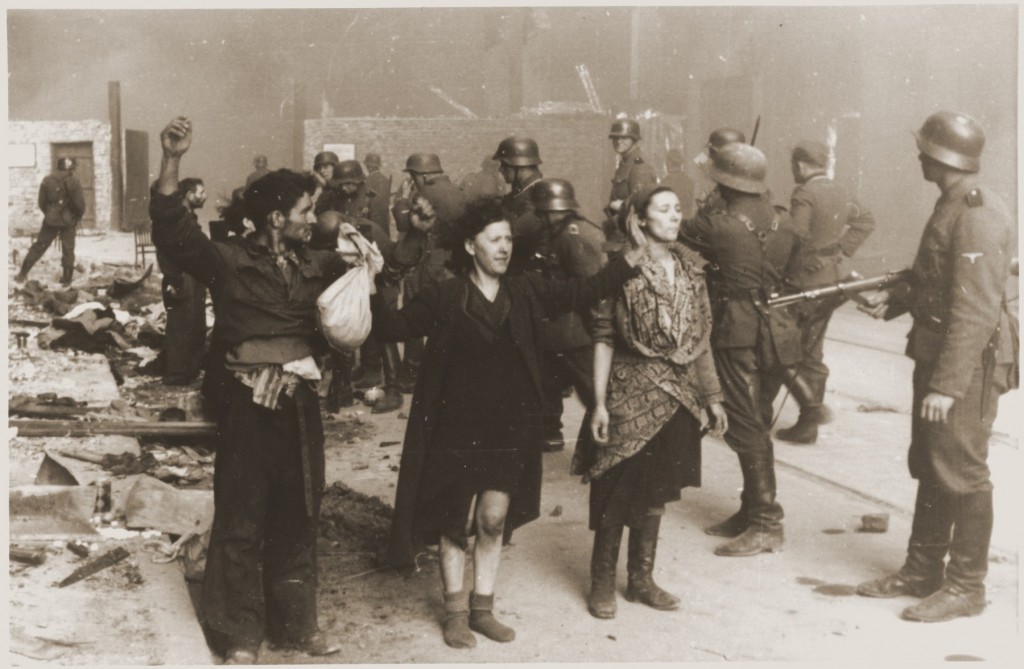
Some resistance groups planned and carried out armed revolts against German authorities. The most famous of these was the Warsaw ghetto uprising in 1943. There were also violent revolts in Białystok, Częstochowa, Minsk, and other ghettos.
Waves of Ghettoization During the Holocaust
There were multiple waves of ghettoization during the Holocaust. These waves often related to major developments in the course of World War II, as well as changing Nazi policies about the persecution and murder of Europe’s Jews.
The First Nazi Ghettos: German-Occupied Poland, 1939–1941
The Nazi German authorities began creating ghettos after the German invasion of Poland on September 1, 1939. Poland was home to a large Jewish population. The Nazi occupation of Poland was brutal. German authorities quickly targeted Polish Jews, as well as certain groups of non-Jewish Poles. Nazi leaders attempted to coordinate anti-Jewish measures. In practice, however, there was no centralized policy or even clear instructions regarding the creation of ghettos.
The German occupiers established the first ghetto in Piotrków Trybunalski in October 1939. Other ghettos soon followed. In the first two years of the German occupation of Poland, Nazi authorities established ghettos in:
This first wave of ghettoization was ad hoc and chaotic. It depended on the needs and decisions of local German administrators. Ghettoization did not occur in isolation. It was one of many policies related to the Germans’ ethnic cleansing of Polish territories. For most of the war, ghettoization in this region of German-occupied Poland continued to be shaped by local conditions and administrators.
German Creation of Ghettos After the Attack on the Soviet Union, Summer 1941–1942
After the German attack on the Soviet Union in June 1941, German authorities established ghettos in newly occupied territories. This included German-occupied eastern Poland, the occupied Baltic states, occupied Soviet Belarus, occupied Soviet Ukraine, and occupied Soviet Russia. The wave of ghettoization in 1941–1942 included the establishment of ghettos in:
- Białystok in German-occupied Poland;
- Kovno (Kaunas) in German-occupied Lithuania;
- Lwów (Lviv, Lvov) in German-occupied Poland (today Ukraine);
- Minsk in German-occupied Soviet Belarus (today Belarus);
- Riga in German-occupied Latvia;
- Stanisławów in German-occupied Poland (today Ivano-Frankivsk, Ukraine);
- Wilno (Vilna, Vilnius) in German-occupied Poland (today Lithuania);
- Zdzięcioł in German-occupied Poland (today Dzyatlava, Belarus); and
- hundreds of other cities and towns throughout these regions.
The timing and structure of these ghettos depended on the local German administration. In many cases, massacres of Jewish people accompanied the creation of ghettos during this wave. Sometimes, these ghettos were created specifically to facilitate the mass murder of Jews by collecting and confining them before their execution or deportation.
Romanian Creation of Ghettos in Transnistria
In summer 1941, Nazi Germany’s ally Romania joined in the attack on the Soviet Union. Romania occupied part of Soviet Ukraine. They created an administrative unit called the Transnistria Governorate. They forced Jews from the surrounding areas and from Bessarabia, Bukovina, and the Dorohoi district into about 150 improvised ghettos and camps. (The terms “camp” and “ghetto” were often used interchangeably.) Tens of thousands of Jews in Transnistria died from maltreatment, hunger, cold, or disease. Romanian authorities deliberately allowed epidemics to run rampant. Romanian officials and local auxiliaries terrorized Jews through random acts of violence, including beatings, rapes, and shootings.
Systematic Destruction (“Liquidation”) of Ghettos, Summer 1941–Summer 1944
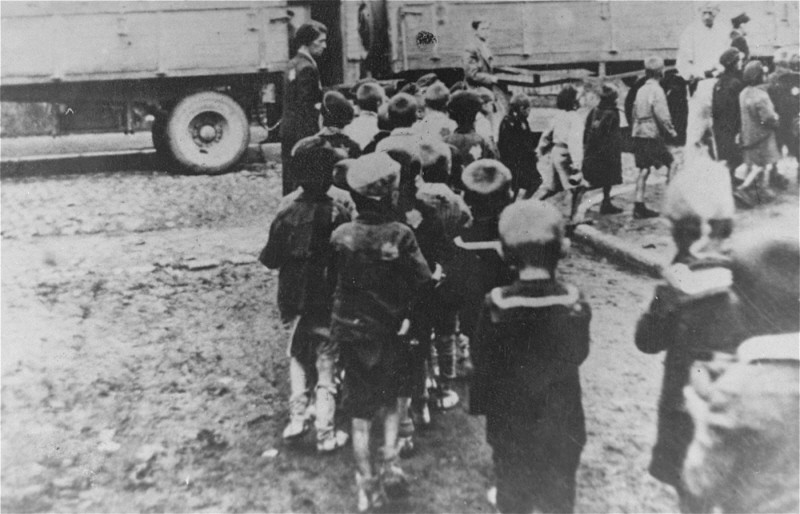
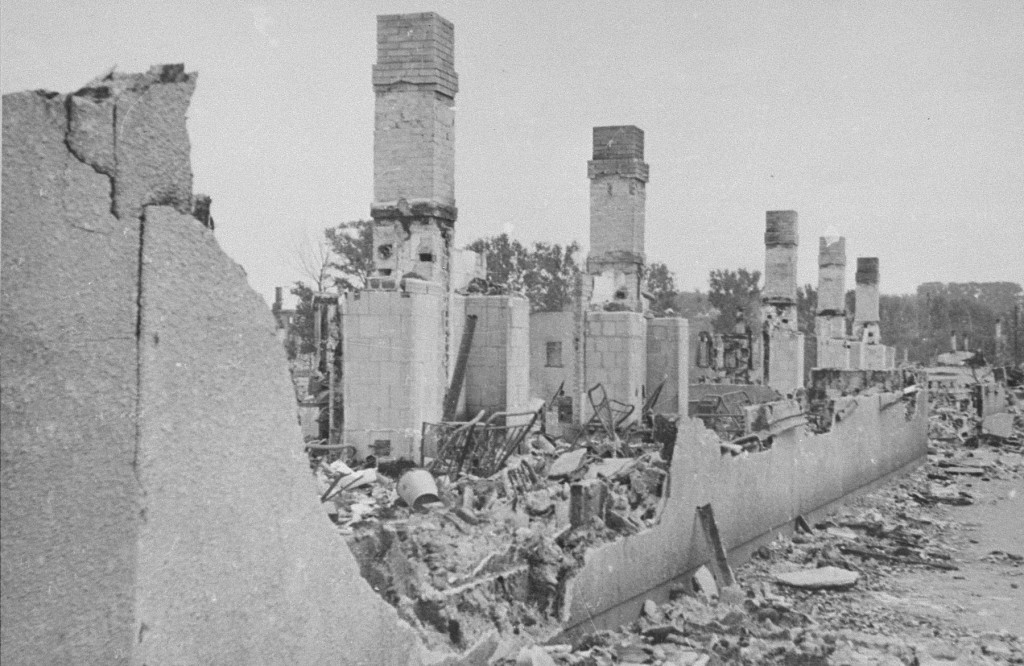
In the summer of 1941, German authorities began systematically destroying ghettos. The liquidation of ghettos was part of the Nazi mass murder of Europe's Jews (the “Final Solution“). They called this process “liquidation” (Liquidierung). Liquidation entailed murdering ghetto residents en masse; dissolving ghetto administrative structures; and, sometimes, demolishing buildings. During these operations, the majority of Jews were murdered in mass shootings at nearby killing sites or deported to killing centers and murdered in gas chambers. In some cases, German authorities temporarily kept a very small number of Jews from ghettos alive as forced laborers in camps or other ghettos.
Over the course of 1941–1944, German authorities liquidated almost every ghetto they had created. Most ghettos were destroyed in 1942–1943. The last major ghetto to be liquidated was the Łódź ghetto, which was destroyed in summer 1944.
Creation of the Theresienstadt Ghetto, November 1941
The Nazis established the Theresienstadt (Terezín) ghetto in the Protectorate of Bohemia and Moravia in November 1941. The Nazis used Theresienstadt as a transit ghetto to facilitate the mass deportation of Czech Jews to other ghettos, camps, killing sites, and killing centers. The Nazis also used Theresienstadt as a special “ghetto for the elderly” (Altersghetto). As such, Nazi German authorities deported certain groups of German and Austrian Jews to Theresienstadt. They included elderly people, decorated World War I veterans, and certain well-known figures. Theresienstadt was the last existing ghetto. It was liberated in May 1945.
Creation of Ghettos in Thessaloniki (Salonika), February 1943
In February 1943, German authorities created several ghettos in the city of Thessaloniki (Salonika) in German-occupied Greece. Ghettoization was coordinated by staff from SS officer Adolf Eichmann’s Office IV B 4 of the Reich Security Main Office (RSHA). It was part of the process of marking, segregating, robbing, deporting, and murdering Jews from the city. Between March and August 1943, German authorities deported more than 45,000 Jews from Thessaloniki to the Auschwitz-Birkenau killing center. At Auschwitz, most were murdered upon arrival.
Segregation and Relocation of Jews in Bulgaria, 1943
In mid-1943, Bulgarian authorities attempted to relocate and segregate Bulgarian Jews in parts of certain cities. Although they did not call these areas “ghettos,” they functioned in the same way as ghettos in other places. Jews were forced to live in certain places. They had to abide by curfews and other restrictions. However, in many cases segregation was incomplete.
The Last Wave of Ghettoization: Transit Ghettos in Hungary, 1944
The last wave of ghettoization during the Holocaust took place in Hungary in spring 1944, following the German invasion and occupation that March.
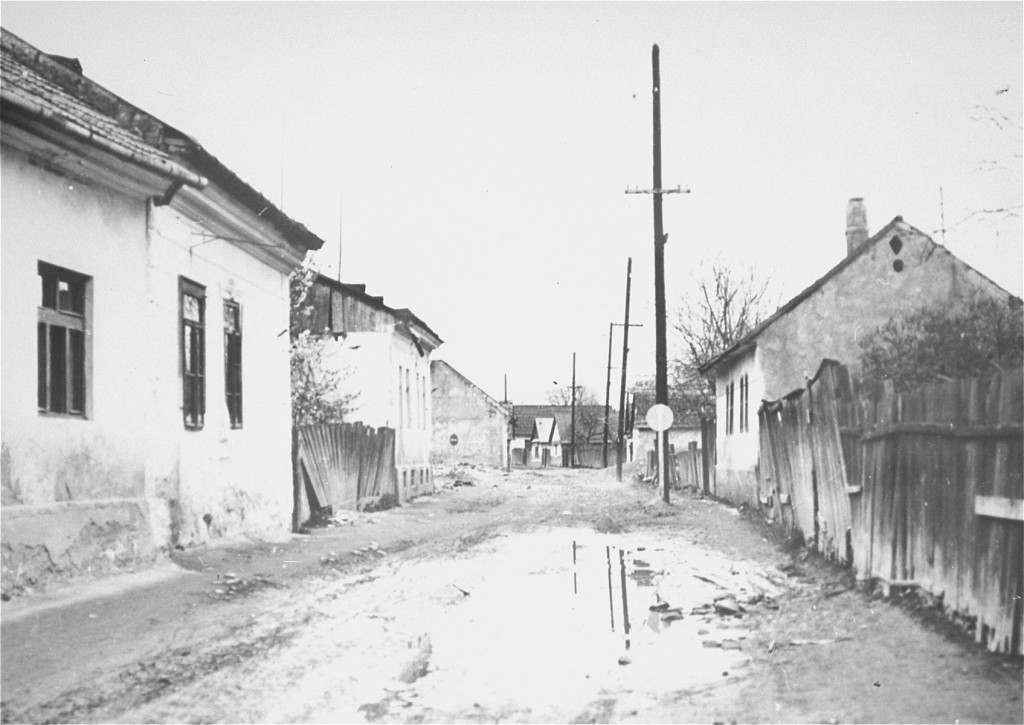
Beginning in mid-April, Hungarian and German officials set up more than 60 transit ghettos in towns and cities across the country and its annexed territories. This included ghettos in Sighet and Munkács. These transit ghettos are also sometimes called destruction ghettos. They were created to serve as a collection point to imprison Jewish communities before their deportation. All of these ghettos existed for less than three months. In mid-May, German and Hungarian authorities began systematically deporting Jews from the transit ghettos. Between May 15 and July 9, 1944, about 437,000 Jews were deported from Hungary. Most were sent to the Auschwitz-Birkenau killing center.
In November–December 1944, Hungarian authorities created a final ghetto in Budapest. There, they imprisoned about 70,000 Jews until Soviet forces liberated them in January 1945. This was the last ghetto established during the Holocaust.
Critical Thinking Questions
Why did the Nazis and their allies set up ghettos?
What were some of the biggest daily and long-term challenges for Jews who were forced to live in ghettos?
In what ways did Jews resist the Nazis while forced to live in the ghettos?