Oral History
Browse an alphabetical list of survivors’ oral histories. These interviews describe firsthand accounts and personal experiences during the Holocaust and World War II.
<< Previous | Displaying results 301-325 of 572 for "Oral History" | Next >>
-
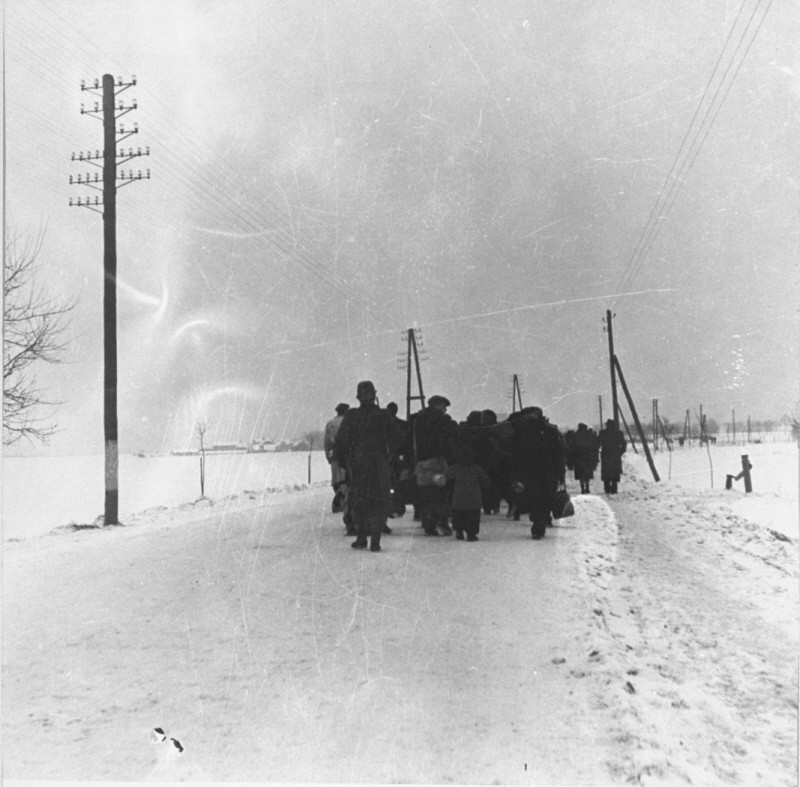
Leah Hammerstein Silverstein describes the Tarnow ghetto after a roundup
Oral HistoryLeah grew up in Praga, a suburb of Warsaw, Poland. She was active in the Ha-Shomer ha-Tsa'ir Zionist youth movement. Germany invaded Poland in September 1939. Jews were forced to live in the Warsaw ghetto, which the Germans sealed off in November 1940. In the ghetto, Leah lived with a group of Ha-Shomer ha-Tsa'ir members. In September 1941, she and other members of the youth group escaped from the ghetto to a Ha-Shomer ha-Tsa'ir farm in Zarki, near Czestochowa, Poland. In May 1942, Leah became a courier…
-
Leah Hammerstein Silverstein describes working under a false non-Jewish identity in a German hospital in Krakow
Oral HistoryLeah grew up in Praga, a suburb of Warsaw, Poland. She was active in the Ha-Shomer ha-Tsa'ir Zionist youth movement. Germany invaded Poland in September 1939. Jews were forced to live in the Warsaw ghetto, which the Germans sealed off in November 1940. In the ghetto, Leah lived with a group of Ha-Shomer ha-Tsa'ir members. In September 1941, she and other members of the youth group escaped from the ghetto to a Ha-Shomer ha-Tsa'ir farm in Zarki, near Czestochowa, Poland. In May 1942, Leah became a courier…
-
Leif Donde describes his family's escape from Denmark to Sweden
Oral HistoryThe Germans occupied Denmark in April 1940, but the Danish government remained in existence and was able to protect Danish Jews. In August 1943, the government resigned after refusing to accede to German demands. German police began to arrest Jews in early October. Leif and his family decided to flee, and were smuggled by fishing boat to safety in Sweden. In Sweden, Leif attended school and his parents worked in a garment factory. The family returned to Denmark after the end of the war.
-
Leo Bretholz describes arrival at the Drancy camp
Oral HistoryAfter the Germans annexed Austria in 1938, Leo attempted to flee. He eventually reached Belgium. In 1940 he was deported to the St.-Cyprien camp in France but escaped. In 1942 Leo was smuggled into Switzerland but was arrested and sent back to France, this time to the Rivesaltes and Drancy camps. He and a friend escaped from a train deporting them to Auschwitz in Poland. Leo joined the French underground in 1943. He arrived in the United States in 1947.
-
Leo Bretholz describes conditions in the Drancy camp
Oral HistoryAfter the Germans annexed Austria in 1938, Leo attempted to flee. He eventually reached Belgium. In 1940 he was deported to the St.-Cyprien camp in France but escaped. In 1942 Leo was smuggled into Switzerland but was arrested and sent back to France, this time to the Rivesaltes and Drancy camps. He and a friend escaped from a train deporting them to Auschwitz in Poland. Leo joined the French underground in 1943. He arrived in the United States in 1947.
-
Leo Bretholz describes his escape from a train during deportation from the Drancy camp
Oral HistoryAfter the Germans annexed Austria in 1938, Leo attempted to flee. He eventually reached Belgium. In 1940 he was deported to the St.-Cyprien camp in France but escaped. In 1942 Leo was smuggled into Switzerland but was arrested and sent back to France, this time to the Rivesaltes and Drancy camps. He and a friend escaped from a train deporting them to Auschwitz in Poland. Leo joined the French underground in 1943. He arrived in the United States in 1947.
-
Leo Bretholz describes resistance training and activities in a French underground group he joined in 1943
Oral HistoryAfter the Germans annexed Austria in 1938, Leo attempted to flee. He eventually reached Belgium. In 1940 he was deported to the St.-Cyprien camp in France but escaped. In 1942 Leo was smuggled into Switzerland but was arrested and sent back to France, this time to the Rivesaltes and Drancy camps. He and a friend escaped from a train deporting them to Auschwitz in Poland. Leo joined the French underground in 1943. He arrived in the United States in 1947.
-
Leo Diamantstein describes Nazi marches and the Hitler Youth
Oral HistoryJoseph Leo Diamantstein was born in Heidelberg, Germany, on December 1, 1924, to Jewish parents. He was the youngest of four children. His family experienced antisemitism in Frankfurt, and ultimately decided to leave Germany. Beginning in 1933, the Hitler Youth and the League of German Girls had an important role to play in the new Nazi regime. Through these organizations, the Nazi regime planned to indoctrinate young people with Nazi ideology. This was part of the process of Nazifying German…
-
Leo Kutner describes forced labor in Stutthof
Oral HistoryLeo was arrested on the first day of the war, and assigned to forced labor in a shipyard, then on a farm. In 1940, like other Jews, he was deported to Stutthof. There, he upholstered furniture for the SS. The following year, he was sent to Auschwitz, where he cleaned the streets and dug ditches. As the Allies neared, Leo was evacuated to a series of camps. On a death march from Flossenbürg, the Nazis dispersed, allowing Leo and other prisoners to get away. He was liberated by US forces in April 1945.
-
Leo Melamed describes fear after German occupation of Bialystok
Oral HistoryLeo was seven years old when Germany invaded Poland in September 1939. Before the war, Leo's father was a mathematics teacher and member of the Bialystok City Council. Fearing arrest, Leo's father fled Bialystok for Vilna just before the German occupation. Leo and his mother eventually joined his father in Vilna. After the Soviets occupied Vilna, Leo's father obtained transit visas to Japan. The family left Vilna in December 1940, traveled across the Soviet Union on the Trans-Siberian Express, and arrived…
-
Leo Melamed describes fleeing by train from Bialystok to Vilna
Oral HistoryLeo was seven years old when Germany invaded Poland in September 1939. Before the war, Leo's father was a mathematics teacher and member of the Bialystok City Council. Fearing arrest, Leo's father fled Bialystok for Vilna just before the German occupation. Leo and his mother eventually joined his father in Vilna. After the Soviets occupied Vilna, Leo's father obtained transit visas to Japan. The family left Vilna in December 1940, traveled across the Soviet Union on the Trans-Siberian Express, and arrived…
-
Leo Melamed describes going to school in prewar Bialystok
Oral HistoryLeo was seven years old when Germany invaded Poland in September 1939. Before the war, Leo's father was a mathematics teacher and member of the Bialystok City Council. Fearing arrest, Leo's father fled Bialystok for Vilna just before the German occupation. Leo and his mother eventually joined his father in Vilna. After the Soviets occupied Vilna, Leo's father obtained transit visas to Japan. The family left Vilna in December 1940, traveled across the Soviet Union on the Trans-Siberian Express, and arrived…
-
Leo Melamed describes life as a refugee
Oral HistoryLeo was seven years old when Germany invaded Poland in September 1939. Before the war, Leo's father was a mathematics teacher and member of the Bialystok City Council. Fearing arrest, Leo's father fled Bialystok for Vilna just before the German occupation. Leo and his mother eventually joined his father in Vilna. After the Soviets occupied Vilna, Leo's father obtained transit visas to Japan. The family left Vilna in December 1940, traveled across the Soviet Union on the Trans-Siberian Express, and arrived…
-
Leo Melamed describes saying goodbye to father as he fled Bialystok
Oral HistoryLeo was seven years old when Germany invaded Poland in September 1939. Before the war, Leo's father was a mathematics teacher and member of the Bialystok City Council. Fearing arrest, Leo's father fled Bialystok for Vilna just before the German occupation. Leo and his mother eventually joined his father in Vilna. After the Soviets occupied Vilna, Leo's father obtained transit visas to Japan. The family left Vilna in December 1940, traveled across the Soviet Union on the Trans-Siberian Express, and arrived…
-
Leo Melamed describes speaking several languages as a child in prewar Bialystok
Oral HistoryLeo was seven years old when Germany invaded Poland in September 1939. Before the war, Leo's father was a mathematics teacher and member of the Bialystok City Council. Fearing arrest, Leo's father fled Bialystok for Vilna just before the German occupation. Leo and his mother eventually joined his father in Vilna. After the Soviets occupied Vilna, Leo's father obtained transit visas to Japan. The family left Vilna in December 1940, traveled across the Soviet Union on the Trans-Siberian Express, and arrived…
-
Leo Melamed describes the German occupation of Bialystok
Oral HistoryLeo was seven years old when Germany invaded Poland in September 1939. Before the war, Leo's father was a mathematics teacher and member of the Bialystok City Council. Fearing arrest, Leo's father fled Bialystok for Vilna just before the German occupation. Leo and his mother eventually joined his father in Vilna. After the Soviets occupied Vilna, Leo's father obtained transit visas to Japan. The family left Vilna in December 1940, traveled across the Soviet Union on the Trans-Siberian Express, and arrived…
-
Leo Melamed describes train ride across the Soviet Union
Oral HistoryLeo was seven years old when Germany invaded Poland in September 1939. Before the war, Leo's father was a mathematics teacher and member of the Bialystok City Council. Fearing arrest, Leo's father fled Bialystok for Vilna just before the German occupation. Leo and his mother eventually joined his father in Vilna. After the Soviets occupied Vilna, Leo's father obtained transit visas to Japan. The family left Vilna in December 1940, traveled across the Soviet Union on the Trans-Siberian Express, and arrived…
-
Leo Schneiderman describes arrival at Auschwitz, selection, and separation from his family
Oral HistoryThe Germans invaded Poland in September 1939. Leo and his family were confined to a ghetto in Lodz. Leo was forced to work as a tailor in a uniform factory. The Lodz ghetto was liquidated in 1944, and Leo was deported to Auschwitz. He was then sent to the Gross-Rosen camp system for forced labor. As the Soviet army advanced, the prisoners were transferred to the Ebensee camp in Austria. The Ebensee camp was liberated in 1945.
-
Leo Schneiderman describes conditions in the Lodz ghetto
Oral HistoryThe Germans invaded Poland in September 1939. Leo and his family were confined to a ghetto in Lodz. Leo was forced to work as a tailor in a uniform factory. The Lodz ghetto was liquidated in 1944, and Leo was deported to Auschwitz. He was then sent to the Gross-Rosen camp system for forced labor. As the Soviet army advanced, the prisoners were transferred to the Ebensee camp in Austria. The Ebensee camp was liberated in 1945.
-
Leo Schneiderman describes conditions on a freight car during deportation from Lodz to Auschwitz
Oral HistoryThe Germans invaded Poland in September 1939. Leo and his family were confined to a ghetto in Lodz. Leo was forced to work as a tailor in a uniform factory. The Lodz ghetto was liquidated in 1944, and Leo was deported to Auschwitz. He was then sent to the Gross-Rosen camp system for forced labor. As the Soviet army advanced, the prisoners were transferred to the Ebensee camp in Austria. The Ebensee camp was liberated in 1945.
-
Leo Schneiderman describes routine at the Ebensee camp
Oral HistoryThe Germans invaded Poland in September 1939. Leo and his family were confined to a ghetto in Lodz. Leo was forced to work as a tailor in a uniform factory. The Lodz ghetto was liquidated in 1944, and Leo was deported to Auschwitz. He was then sent to the Gross-Rosen camp system for forced labor. As the Soviet army advanced, the prisoners were transferred to the Ebensee camp in Austria. The Ebensee camp was liberated in 1945.
-
Leon Bass describes his experience as a Black soldier
Oral HistoryLeon Bass was born in Philadelphia, PA in 1925. He joined the US Army in 1943 and served as a member of the all-Black 183rd Engineer Combat Battalion attached to General Patton's Third Army. Leon's unit was involved in the Battle of the Bulge as well as the liberation of Buchenwald. After the war, Leon went on to receive his doctorate, teach, and speak about the Holocaust and racism. In this interview, Leon describes the his frustration with the discord between the United State's condemnation of Nazi…
-
Leon Bass describes his feelings about joining the US Army
Oral HistoryLeon Bass was born in Philadelphia, PA in 1925. He joined the US Army in 1943 and served as a member of the all-Black 183rd Engineer Combat Battalion attached to General Patton's Third Army. Leon's unit was involved in the Battle of the Bulge as well as the liberation of Buchenwald. After the war, Leon went on to receive his doctorate, teach, and speak about the Holocaust and racism. In this interview, Leon describes the racism and segregation he faced in the United States during the 1940s and how it…
-
Leon Bass describes his knowledge of Nazi camps during and after World War II
Oral HistoryLeon Bass was born in Philadelphia, PA in 1925. He joined the US Army in 1943 and served as a member of the all-Black 183rd Engineer Combat Battalion attached to General Patton's Third Army. Leon's unit was involved in the Battle of the Bulge as well as the liberation of Buchenwald. After the war, Leon went on to receive his doctorate, teach, and speak about the Holocaust and racism. In this interview, Leon describes what he knew about Nazi concentration camps and the Holocaust during and after…
-
Leon Bass describes his movements during the Battle of the Bulge
Oral HistoryLeon Bass was born in Philadelphia, PA in 1925. He joined the US Army in 1943 and served as a member of the all-Black 183rd Engineer Combat Battalion attached to General Patton's Third Army. Leon's unit was involved in the Battle of the Bulge as well as the liberation of Buchenwald. After the war, Leon went on to receive his doctorate, teach, and speak about the Holocaust and racism. In this interview, Leon discusses his unit's movements during the Battle of the Bulge. He describes their path from…