
The Auschwitz Album (The Lili Jacob Album)
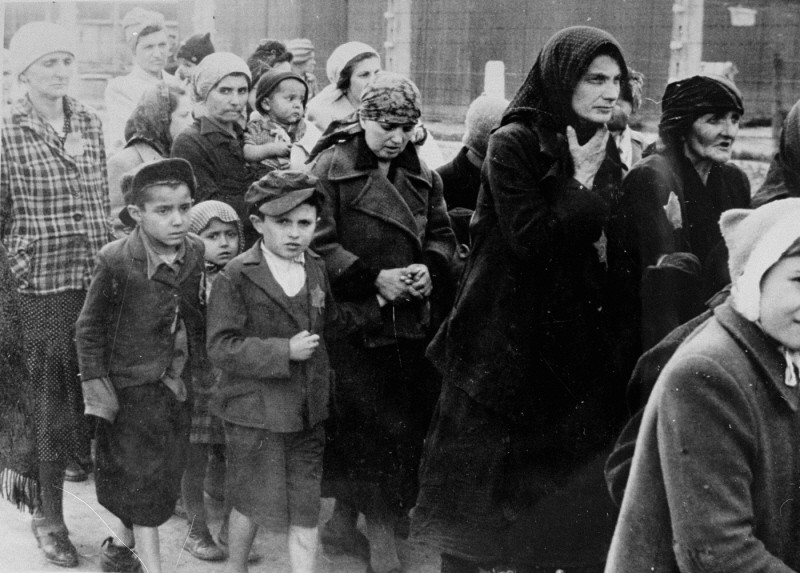
In late spring–summer 1944, SS photographers took photos of the arrival, selection, and registration of Jews at the Auschwitz-Birkenau killing center. The photographs were then collected in a photo album entitled “Resettlement of the Jews from Hungary.” After the war, Holocaust survivor Lili Jacob found the album. It is commonly called the “Lili Jacob Album” or the “Auschwitz Album.”
Key Facts
-
1
The photographs in the Auschwitz Album are among the best-known images of the Auschwitz-Birkenau killing center.
-
2
The Jewish people in the photographs are some of the approximately 430,000 Jews whom Nazi German authorities and their Hungarian collaborators deported to Auschwitz from Hungary in 1944.
-
3
Survivor Lili Jacob discovered the album at the Dora-Mittelbau concentration camp after liberation. She also appears in the album.
In late spring–summer 1944, SS photographers documented the arrival, selection, and registration of Jews at the Auschwitz-Birkenau killing center. Some of the photographs were collected in a photo album, originally titled “Resettlement of the Jews from Hungary” (“Umsiedlung der Juden aus Ungarn”). The Nazis used the word “resettlement” as a code word for the deportation of Jews to their deaths.
After the war, Holocaust survivor Lili Jacob found the album and recognized herself and her family in some of the photos. The album is commonly called the “Lili Jacob Album” or the “Auschwitz Album.”
The photographs in the Auschwitz Album are among the most well-known images of the Auschwitz-Birkenau killing center. These iconic images are remarkable sources of evidence about the Holocaust. However, they are limited in what they portray. The photos do not show the violence, terror, and mass death that Jews suffered at Auschwitz-Birkenau. They do not depict starvation, corpses, or mass gassings. They do not reveal the wide expanse of the camp itself. The photos capture a specific moment in time and give an important—but limited—glimpse into the arrival and selection of Jews from Hungary at Auschwitz-Birkenau in 1944.
Deportation of Jews from Hungary to Auschwitz
The photographs in the Auschwitz Album were taken during the deportation of Jews from Hungary to Auschwitz in spring and summer 1944. This was one of the last major killing actions that the Nazis carried out during the Holocaust.
When Nazi Germany occupied Hungary in March 1944, there were between 760,000 and 780,000 Jews living there. This was the largest Jewish community still alive in Europe. With German help, Hungarian authorities quickly targeted Jews using discriminatory laws and measures. They stole Jewish-owned property, forced Jewish people to live in ghettos, and deported entire Jewish communities. In total, German and Hungarian authorities deported about 430,000 Jews from Hungary to Auschwitz. Most were deported in the eight weeks between May 15 and July 9, 1944.
Taking the Photographs and Creating the Album
SS authorities at the Auschwitz concentration camp created the Auschwitz Album, likely on orders from SS officer Rudolf Höss. At the time, Höss served as the SS garrison commander for Auschwitz. In May 1944, Höss’s main task was to oversee the mass murder of hundreds of thousands of Jews from Hungary at the Auschwitz-Birkenau killing center.
The SS Photographers
SS photographers Bernhard Walter and Ernst Hofmann took the Auschwitz Album photographs. Walter was the head of the Erkennungsdienst (Identification Office) at the Auschwitz concentration camp complex, and Hofmann was his deputy. Neither man was a trained photographer. At Auschwitz, they oversaw a small group of prisoners, who took prisoner mugshots and other photos. Walter and Hofmann also photographed important events around the camp complex.
Photographing Transports
Beginning in May 1944, Walter and Hofmann photographed transports of Jews arriving from Hungary. Scholars and survivors have identified several of the transports:
- a transport of Jews from the Ungvár ghetto, photographed on May 19;
- a transport of Jews from the Beregszász ghetto, photographed on May 26; and
- a transport of Jews from the Técső ghetto, photographed on May 29 or May 30.
Walter and Hofmann also photographed transports and prisoners on other days, but the exact dates are unknown or unconfirmed. The Auschwitz Album also includes photographs of personal belongings taken in the same period.
Creating the Album
In summer 1944, the SS staff and prisoners of the Erkennungsdienst created the Auschwitz Album. It originally included 197 photographs displayed on 28 pages, front and back. The photos were divided into six sections with handwritten headings and, in some cases, subheadings. Tadeusz Myszkowski, a Polish prisoner who worked as a clerk in the Erkennungsdienst, wrote the titles.
According to Wilhelm Brasse, one of the prisoner photographers at Auschwitz, the staff of the Erkennungsdienst originally created about 15 copies of the album. There is only one known copy still in existence. Scholars have determined that it was likely Walter’s private copy.
Organization of Photos in the Auschwitz Album
The SS men who created the album organized the photographs to demonstrate the process of arrival, selection, and registration of Jews from Hungary at the camp. The photos were not organized by the time and date that they were taken. Instead, the SS men grouped the photographs by stages of this process. The photos were not individually captioned, but each stage or group of photographs was given a heading.
The Title Page: “Umsiedlung der Juden aus Ungarn”
The photo album’s title page reads “Resettlement of the Jews from Hungary” (“Umsiedlung der Juden aus Ungarn”). The word “resettlement” was a code word used by the Nazis to refer to the deportation of Jews to their deaths.
There are two photographs on this first page showing portraits of older Jewish men with beards.
Arrival of a Transport Train: “Ankunft eines Transportzuges”
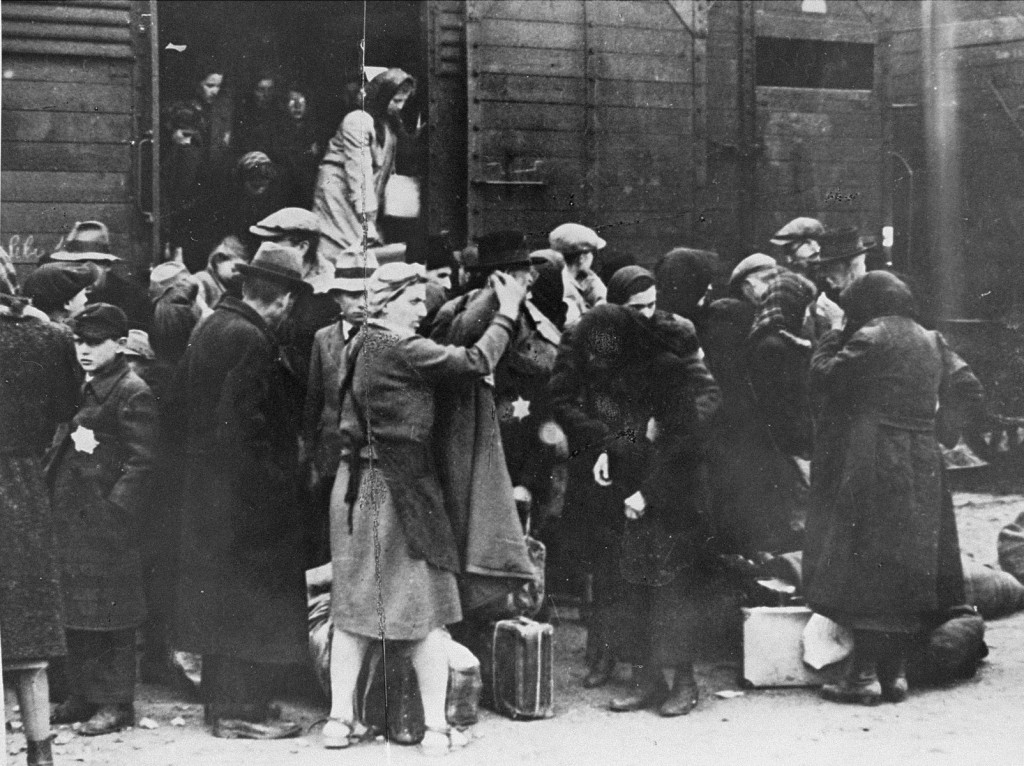
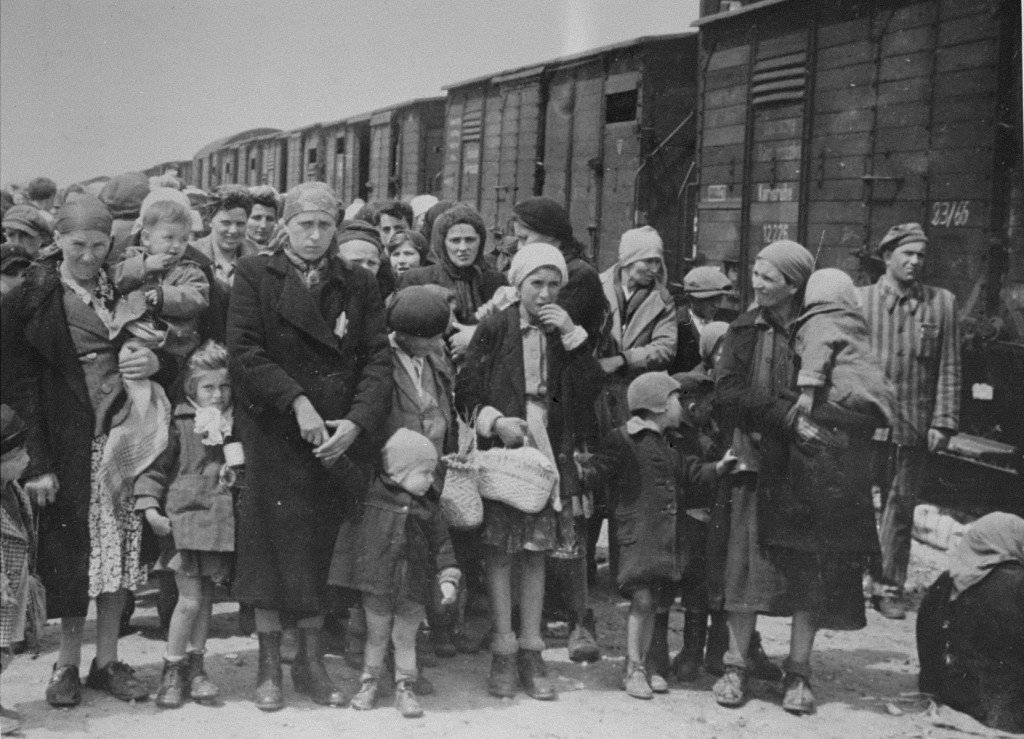
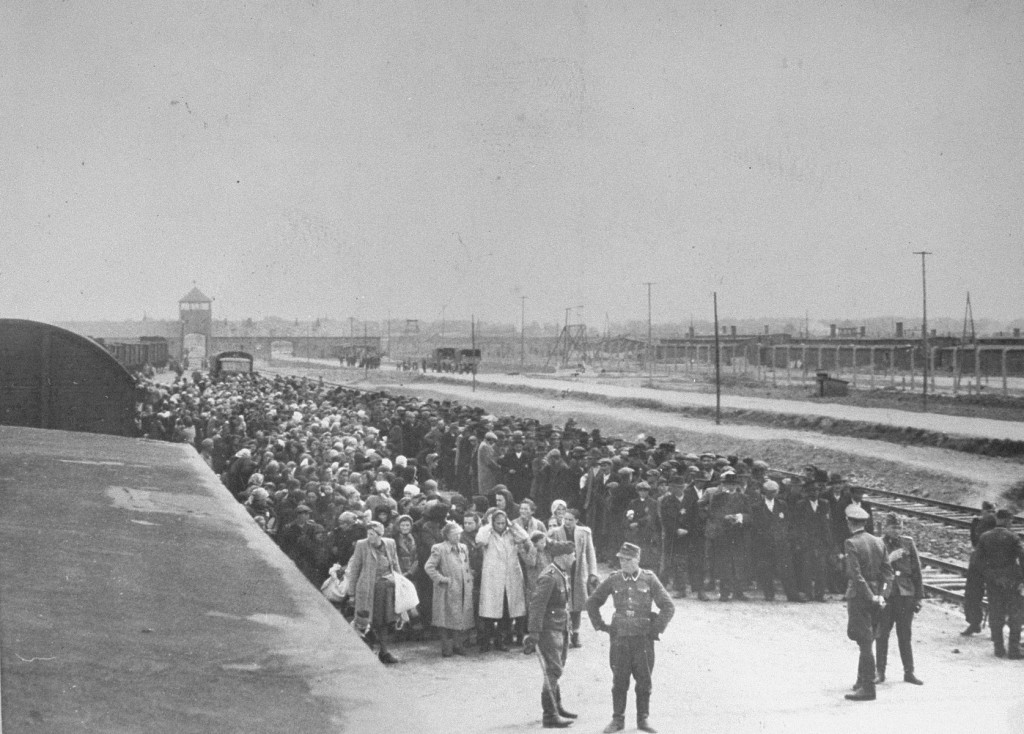
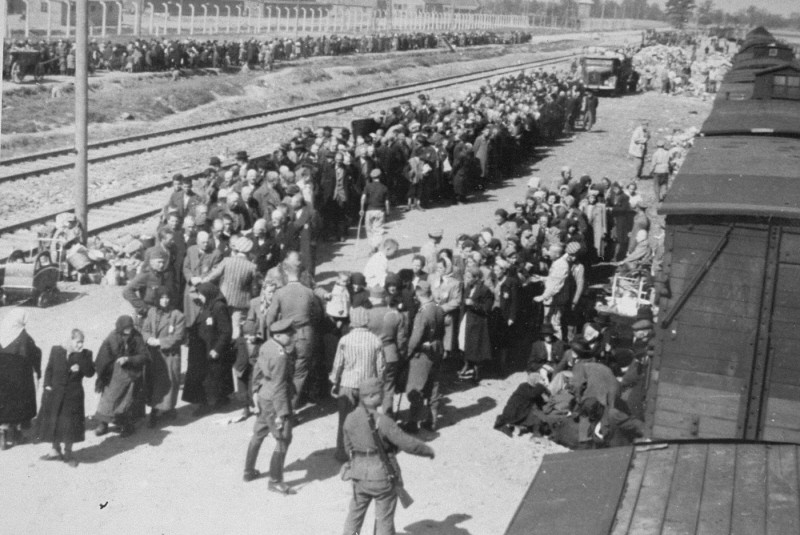
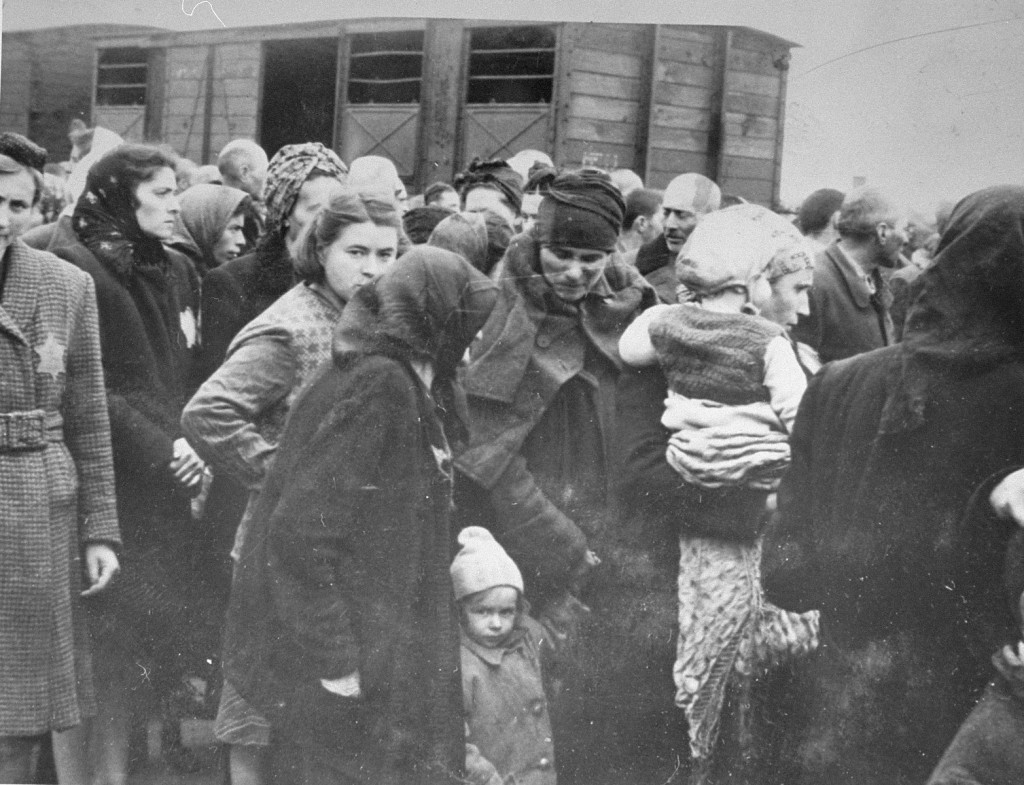
The first group of images is labeled “Arrival of a Transport Train” (“Ankunft eines Transportzuges”). This collection includes images taken on the train platform at Auschwitz-Birkenau (called “the ramp”). The SS began using this unloading ramp in mid-May 1944. Previously, transports had arrived at train platforms located outside of Birkenau.
Many photos in this section show crowds of people of all ages in civilian clothing. In some photos, uniformed SS men and prisoners in striped uniforms also appear. The freight trains that transported these Jewish people to Auschwitz are often visible in the background.
Selection: “Aussortierung”
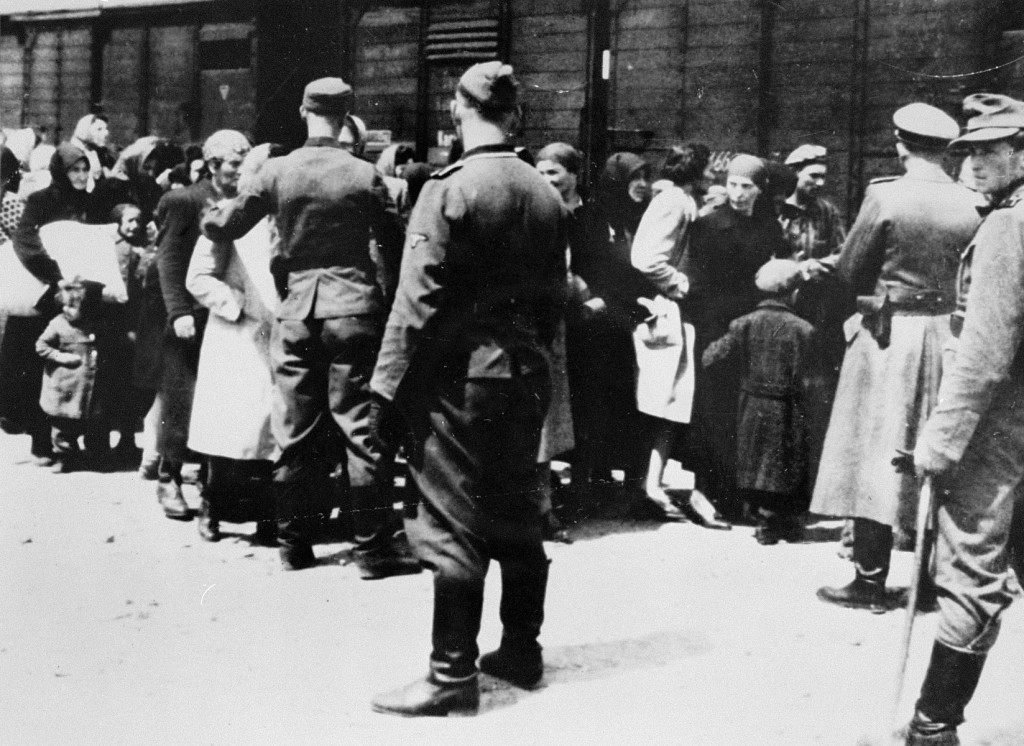
The second section of photographs is labeled “Selection” (“Aussortierung,” literally “sorting out”). When transports of Jews arrived at Auschwitz, SS officials usually carried out a selection process. The purpose was to identify physically fit, young, and healthy people for forced labor at Auschwitz or other camps. People who were considered incapable of physical labor were murdered in the gas chambers.
This section of photographs also includes two subsections: “Men upon arrival” (“Männer bei der Ankunft”) and “Women upon arrival” (“Frauen bei der Ankunft”).
Most of the images in this section show Jews lined up in two groups. One group includes women and children. The other group includes men and teenage boys. This division was typical of the selection process conducted by the SS. Some of these photographs show the SS officers who carried out the selection process, and some also show prisoners in striped uniforms.
After Selection: “Nach der Aussortierung”
The third section is titled “After Selection” (“Nach der Aussortierung”) and is divided into four subsections:
- “Men who are still fit to work” (“Noch einsatzfähige Männer”);
- “Women who are still fit to work” (“Noch einsatzfähige Frauen”);
- “Men who are no longer fit to work” (“Nicht Mehr einsatzfähige Männer”); and
- “Women and children who are no longer fit to work” (“Nicht Mehr einsatzfähige Frauen und Kinder”).
The first two subsections show men, women, and teenagers who were selected for forced labor. Following Nazi criteria, most were teenagers or in their 20s or 30s. In the photographs, they appear to be in good physical shape without visible health conditions, pregnancies, or disabilities.
The last two subsections show images of men, women, and children whom the Nazis decided were unfit for work. These people were murdered in the gas chambers shortly after the photos were taken. From the Hungarian transports to Auschwitz, about 75 percent of the people were murdered in the gas chambers upon arrival. The photographs include elderly people, people with disabilities, and young children, including infants and toddlers. There are also a number of young and seemingly fit women in these photographs. Most likely, these women were the mothers of the children in this group. At Auschwitz, the SS often murdered mothers and their children together.
After the Delousing: “Nach der Entlausung”
The fourth section is titled “After the Delousing” (“Nach der Entlausung”). Delousing was part of the intake process at Auschwitz. The intake process at concentration camps was dehumanizing. It entailed spraying the prisoners with a chemical to remove lice from the hair and body. It also included cutting long hair, shaving facial and body hair, and replacing civilian clothing with prisoner uniforms.
The photos show prisoners with their hair and beards shorn. In several photos, men appear in striped uniforms or in their underclothing. In other photos, women are in solid-colored prisoner uniforms. The photographs of the men were taken on May 29 or May 30, and show the men from the Técső transport. The photographs of the women were taken later, likely in August 1944.
Assignment to a Labor Camp: “Einweisung ins Arbeitslager”
The fifth section is titled “Assignment to a Labor Camp” (“Einweisung ins Arbeitslager”). At Auschwitz, Jews who were not murdered in the gas chambers became prisoners and were required to perform forced labor. During the transports from Hungary, Jews chosen for labor were often not registered in the Auschwitz camp system right away. They remained in separate sectors of Auschwitz-Birkenau until they were either registered at Auschwitz or sent to another camp.
The photos in this section show groups of female prisoners who are being registered for forced labor. Their hair has been shorn. In some images the women wear civilian clothes; in others they wear prisoner uniforms. Some of the women carry blankets, one of the few items issued to them in the camp. Lili Jacob from the Beregszász transport appears in one of these images.
Personal Belongings: “Effekten”
The sixth and final section of the Auschwitz Album is titled “Personal Belongings” (“Effekten”). At Auschwitz, the SS stole Jews’ personal belongings. They stored these plundered items in a number of barracks, colloquially called “Kanada.”
The images show piles of personal belongings on the ramp near the freight cars, loaded into trucks, and near warehouses. The album includes photographs of the Kanada I warehouses (located between the Auschwitz main camp and Auschwitz-Birkenau) and Kanada II warehouses (located in Auschwitz-Birkenau). Prisoners from the Kanada work units are shown sorting through belongings. The photos of Kanada I were likely taken on May 16 or May 17. Labels on some pieces of luggage indicate that these items were stolen from prisoners deported from the Theresienstadt ghetto to Auschwitz.
Lili Jacob and the Discovery of the Album at Dora-Mittelbau in 1945
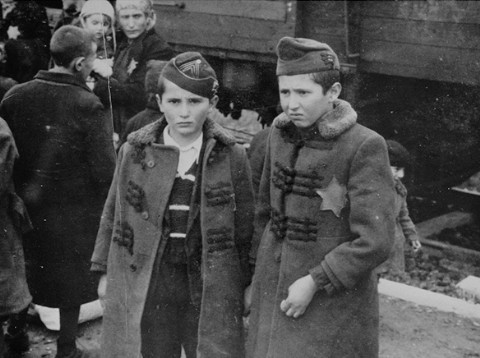
Auschwitz survivor Lili Jacob discovered the photo album in April 1945. She appears in some of the photos.
Lili Jacob (later, Lili Zelmanovic Meier) was born on January 16, 1926, in Bílky, Czechoslovakia (today Bilky, Ukraine; in Hungarian, Bilke). Bílky was in a region referred to at the time as Subcarpathian Rus (today Transcarpathia, Ukraine). Hungary annexed this region in 1938–1939 as part of the Nazi-led dismemberment of Czechoslovakia.
After the German occupation of Hungary in March 1944, the situation for Jews in Hungary and its annexed areas worsened quickly. In April, Lili Jacob and her family were forced to leave their home. Along with other Jews from their town, they were imprisoned in the Beregszász transit ghetto. This ghetto was located in the town of Berehovo (today Berehove, Ukraine). Beregszász was the Hungarian name for the town. About a month later, German and Hungarian authorities deported Jews from the Beregszász ghetto to the Auschwitz-Birkenau killing center. The Jacob family and other Jews from Bílky were deported on May 24. They arrived at Auschwitz on May 26, 1944, a day when SS photographers were taking photos.
At Auschwitz, eighteen-year-old Lili Jacob was selected for forced labor. She was later registered as a prisoner in the camp. Her prisoner number was A-10862. After more than six months in Auschwitz-Birkenau, Lili was transferred to Zillerthal-Erdmannsdorf, a subcamp of the Gross-Rosen concentration camp. She was later transferred to Morchenstern, another Gross-Rosen subcamp, and then to the Dora-Mittelbau concentration camp. She was liberated at Dora-Mittelbau on April 11, 1945.
Shortly after her liberation, Lili Jacob discovered a photo album in a nightstand in an abandoned SS barrack. Upon looking through the album, she first saw a photograph of her rabbi. She then recognized herself, her family members, and other members of her community in the photographs. Among the photos is a now famous image of her two younger brothers, Yisrael and Zelig Jacob.
Postwar Identification of People in the Photographs
Survivors, curators, and scholars have identified some of the people photographed in the Auschwitz Album. Among the images are recognizable SS perpetrators and Jewish victims.
Identification of Victims
Some of the victims and survivors whose photographs appear in the album have been identified. For instance, Lili Jacob from the Beregszász transport identified herself, her rabbi, members of her family, and other Jews from Bílky. Esther Goldstein from the Técső transport also identified herself, her sisters, and others. In some cases, identifications are contested.
Identification of Perpetrators
Scholars have identified some of the perpetrators in the photos by analyzing insignia on uniforms, paperwork, and a different album, called the Höcker Album. Among the perpetrators who have been identified in the Auschwitz Album are:
- SS officer Richard Baer, who was the commandant of the Auschwitz main camp (Auschwitz I) in 1944;
- SS officer Walter Schmidetzki, who was on the ramp during the selection of the transport from Técső;
- SS officer and physician Heinz Thilo, who was carrying out the selection of Jews from Beregszász;
- SS officer and dentist Willi Schatz, who was also carrying out the selection of Jews from Beregszász; and
- SS man Stefan Baretzki, who served as a block leader (Blockführer) at Auschwitz-Birkenau.
All of these men appear in photographs of the ramp during the selection of Jews.
The Auschwitz Album: Evidence of the Holocaust
Lili Jacob kept the Auschwitz Album for decades. She brought it with her to the United States when she immigrated in 1948. Before she left for the United States, she allowed the Jewish Museum in Prague to make copies of the photographs for their archive. The archive, in turn, made copies for other memorials and museums, including the Auschwitz-Birkenau Memorial Museum.
The Auschwitz Album in the Courtroom
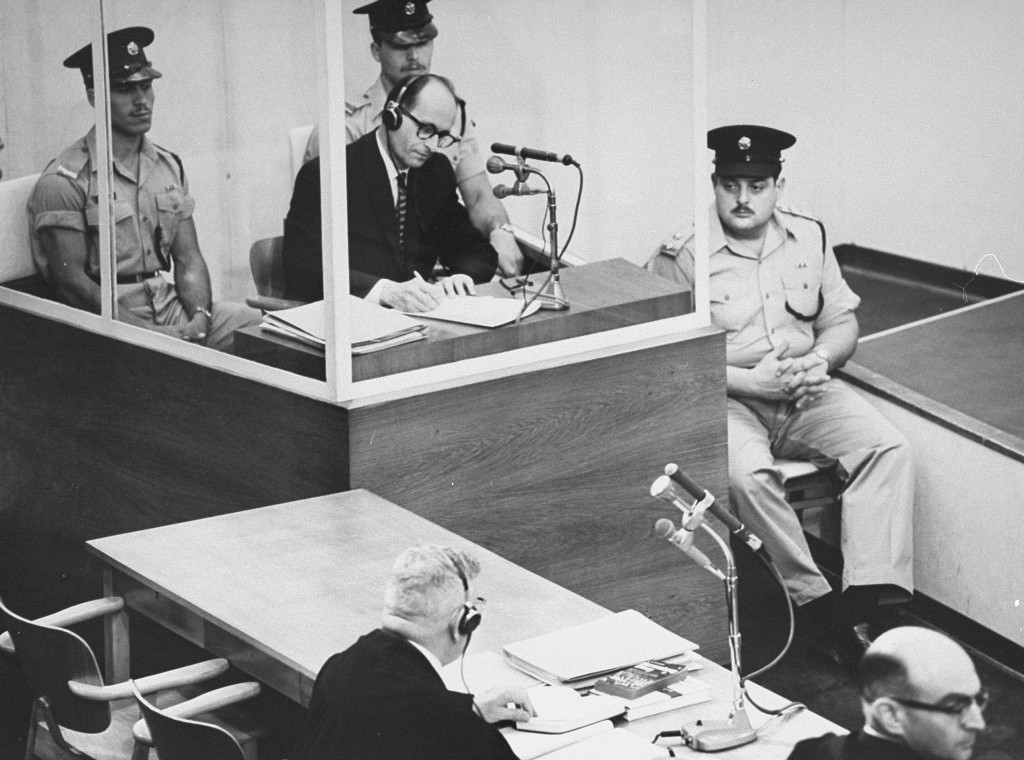
In the decades after World War II, numerous authorities tried Nazi perpetrators for crimes they had committed at Auschwitz. The photographs from the Auschwitz Album were part of court proceedings on several occasions. In 1961, Esther Goldstein testified at the Eichmann Trial in Jerusalem. Copies of some of the photographs were entered into evidence as trial exhibits. A few years later, in 1964, Lili Jacob testified at the Frankfurt Auschwitz Trial. She brought the original photo album with her and answered questions about it and her arrival at the camp. The court identified one of the defendants, Stefan Baretzki, in the photographs. This helped convict him.
Donating the Album to Yad Vashem
In 1980, Serge Klarsfeld, a Holocaust survivor, researcher, and Nazi hunter, convinced Lili Jacob to donate the album to Yad Vashem, Israel’s national memorial to Holocaust memory. That same year, the photo album was published in full for the first time.
Legacy of the Auschwitz Album
The photographs in the Auschwitz Album are among the best-known images of the Auschwitz-Birkenau killing center. They have become iconic images of the Holocaust. Although the SS took these photographs to document mass murder and dehumanization, the images serve as a reminder of the personhood of the victims of the Holocaust. The Jewish men, women, and children who appear in these photographs often represent the six million Jews murdered by the Nazis and their allies and collaborators.
Footnotes
-
Footnote reference1.
Rudolf Höss was the first commandant of Auschwitz from May 1940 to November 1943. He returned to Auschwitz in May 1944 as SS garrison commander. In this role, Höss oversaw the commandants of Auschwitz I (the main camp), Auschwitz II (Auschwitz-Birkenau), and Auschwitz III (Monowitz). He served in this position in May–July 1944.
Critical Thinking Questions
Why do militaries and individuals document their activities?
To what degree was the local population aware of this camp, its purpose, and the conditions within? How would you begin to research this question?
Did the outside world have any knowledge about these camps? If so, what, if any, actions were taken by other governments and their officials?
How does the example of this camp demonstrate the complexity and the systematic nature of the German efforts to abuse and kill the Jews?