
Auschwitz: Key Dates
This timeline includes key events in the history of the Auschwitz concentration camp and killing center.
Key Facts
-
1
German authorities established the Auschwitz concentration camp in 1940 to imprison Polish political prisoners.
-
2
Over the course of several years, beginning in spring 1941, the camp underwent a significant expansion and transformation, becoming a sprawling camp complex.
-
3
In spring 1942, the Nazi German SS began operating a killing center at Auschwitz-Birkenau where they deported and murdered Jewish people from all over Europe.
Auschwitz is the most infamous Nazi camp. It often serves as a symbol of the Holocaust.
The SS established Auschwitz in spring 1940 as a concentration camp intended for Polish political prisoners. Over the next several years, the camp was expanded and transformed into a sprawling camp complex. In March 1942, the SS began operating a killing center at Auschwitz-Birkenau, where they murdered Jewish people from all over Europe.
At Auschwitz, the Germans killed about 1.1 million people, including approximately 1,000,000 Jews; 70,000 Poles; 21,000 Roma and Sinti; and 15,000 Soviet prisoners of war.
This timeline includes key events in the history of the Auschwitz concentration camp and killing center. Specifically, it includes:
- major developments in the establishment, administration, and expansion of the camp complex;
- select deportations of Jewish people from various parts of Europe to the Auschwitz-Birkenau killing center;
- significant escape attempts and resistance activities; and
- the arrival of well-known victims and survivors.
This timeline is not an exhaustive list of all events at the Auschwitz camp complex.
1940: Auschwitz is Established
Spring 1940: The SS Decides to Open a Concentration Camp at Auschwitz
In spring 1940, the SS decides to open a concentration camp near the city of Oświęcim (called Auschwitz in German) in German-occupied Poland. The purpose is to imprison Polish political prisoners arrested by the German occupation authorities.
May 4, 1940: Rudolf Höss is Named the First Commandant of the Auschwitz Concentration Camp
Rudolf Höss, a high-ranking SS officer, is officially named commandant of the Auschwitz concentration camp. He serves in this role until November 1943.
May 20, 1940: German Inmates Arrive at Auschwitz to Serve as Prisoner Functionaries
SS authorities transfer 30 German concentration camp inmates to Auschwitz from the Sachsenhausen concentration camp. These German prisoners, who were categorized as “professional criminals,” are to serve as prisoner functionaries at Auschwitz.
June 14, 1940: First Transport of Polish Prisoners Arrives and First Roll Call
The first transport of Polish political prisoners arrives at Auschwitz. German authorities in occupied Poland transport 728 prisoners who were being held in a prison in Tarnów to Auschwitz. This is the first of many transports of Poles to the Auschwitz camp. The first prisoner roll call (Appell) at Auschwitz takes place that day.
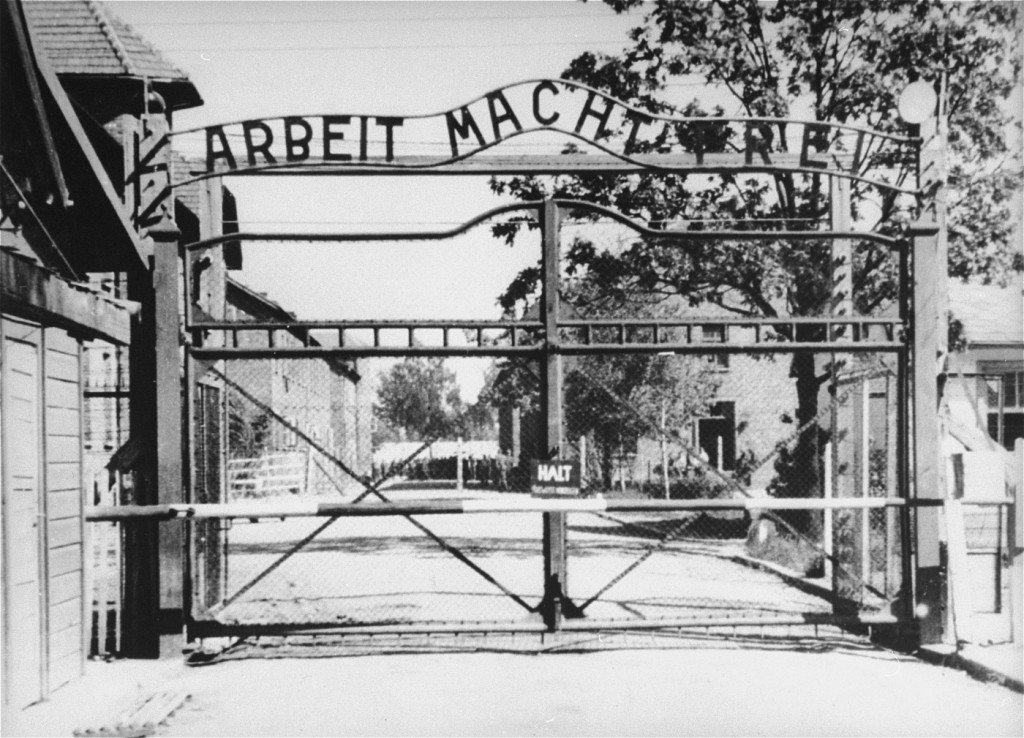
Mid-1940: Prisoners Make the Arbeit Macht Frei Sign
Prisoners in the Auschwitz metal workshop make a sign that says Arbeit Macht Frei (“work will set you free”). This sign is installed over the main gate to the Auschwitz main camp. Prisoners housed in the Auschwitz main camp march beneath this inscription on their way to and from grueling and often murderous work assignments.
July 6, 1940: First Successful Escape from Auschwitz and First Prisoner Death
Polish prisoner Tadeusz Wiejowski successfully escapes from Auschwitz. Upon discovering Wiejowski is missing, the SS forces the other prisoners to stand for 20 hours. Dawid Wongczewski, a Polish Jewish prisoner, dies on the night of July 6–7 during this roll call. He is the first fatality in Auschwitz.
August 1940: The SS Begins Burning Bodies in Crematorium I
The SS begins to use Crematorium I to burn the bodies of prisoners who died or were killed at the camp. Crematorium I is the first of several crematoria that will be built at Auschwitz. The engineering firm Topf und Söhne designed, installed, maintained, and repaired the crematoria at Auschwitz.
October 1940: Witold Pilecki Sets up a Clandestine Resistance Network in Auschwitz
Witold Pilecki, with the help of Władysław Dering, establishes the first cell of a clandestine military network in the Auschwitz camp. The goals of this network include: getting information about the camp to the outside world; informing prisoners in the camp about the course of the war; and trying to help prisoners secure medicine, food, and clothing.
1941: The Expansion of Auschwitz
February 26, 1941: Heinrich Himmler Orders the Expulsion of Jews from the Town of Oświęcim
Authorities order the expulsion of Jews from the town of Oświęcim. The goal of the expulsion is to provide housing for future workers at the nearby I. G. Farben factory.
March 1, 1941: Himmler Inspects Auschwitz and Approves its Expansion
Reichsführer SS and Chief of German Police Heinrich Himmler inspects the Auschwitz camp and surrounding area. During his visit, Himmler reiterates his support for the expansion of existing camp facilities. As part of the expansion, the SS establishes an area called the Interest Zone (Interessengebiet des KL Auschwitz). This area measures about 15.5 square miles (40 km2) and is meant to ensure the security of the Auschwitz camp.
March 1941: Camp Orchestra Begins to Perform
The first camp orchestra begins to play at the Auschwitz concentration camp. The musicians are prisoners. The main purpose of the camp orchestras is to play marching music and set the pace as prisoner work commandos leave for and return from work. Camp orchestras were also forced to play for and entertain the SS.
Mid-April 1941: Forced Expulsion of Poles from Villages Around Auschwitz is Completed
The SS completes the forced expulsion of Poles from the city of Oświęcim and other villages located within the Interest Zone. The residents’ property is confiscated by the SS and taken over by the Auschwitz concentration camp. Some Polish residents deemed fit for labor by the SS remain in the area.
June 6, 1941: First Non-Polish Political Prisoners Arrive at Auschwitz
A transport of 60 prisoners from the Protectorate of Bohemia and Moravia arrives at Auschwitz. This transport includes Czech and Jewish prisoners.
August 14, 1941: Polish Priest Maximilian Kolbe is Executed
Maximilian Kolbe, a 47-year-old Polish priest imprisoned in Auschwitz as a political prisoner, is executed by phenol injection. Two weeks earlier, on July 29, Kolbe had voluntarily replaced another prisoner selected by the SS to be starved to death as a collective punishment for a prisoner escape.
September 3, 1941: Mass Murder of Soviet POWs and Polish Prisoners Using Zyklon B
At Auschwitz, the SS uses Zyklon B to murder 600 Soviet prisoners of war and 250 ill or weak prisoners, mostly Polish. This gassing takes place in a makeshift gas chamber in the cellar of Block 11 in the Auschwitz main camp. Shortly afterwards, the SS creates a gas chamber at the main camp. This gas chamber is built in a morgue and is located in the same building as Crematorium I.
Fall 1941: Tattooing of Prisoner Registration Numbers Begins in Auschwitz
Soviet POWs are the first Auschwitz prisoners to be tattooed with their prisoner registration numbers. The tattoos are stamped on the left side of the chest. Later, prisoner numbers are tattooed on the left forearms of registered Auschwitz prisoners. Auschwitz is the only Nazi camp where prisoners' registration numbers were tattooed.
October 1941: Soviet POWs Begin Construction on the Auschwitz-Birkenau Camp
Construction starts on a second camp located in the Polish village of Brzezinka (called Birkenau in German). This camp is meant to accommodate a large increase in the number of Soviet POWs at Auschwitz. But the purpose of the camp changes in January 1942.
December 1941: One of the First Auschwitz Subcamps is Established
An Auschwitz subcamp is established near a poultry and fish farm in the village of Harmęże (in German, Harmense). This is one of almost 50 Auschwitz subcamps that will be established by the end of 1944. At the subcamps, prisoners are forced to work in farming, animal husbandry, and industrial complexes.
1942: Mass Murder of Jews Begins at Auschwitz
January 25, 1942: Heinrich Himmler Changes Purpose of Auschwitz-Birkenau
Himmler informs Richard Glücks, the Inspector of Concentration Camps, that instead of housing Soviet POWS, Auschwitz-Birkenau will house Jews deported from Germany. This decision begins the transformation of Auschwitz-Birkenau into a killing center for the mass murder of Jews.
Around March 23, 1942: The First Gas Chamber at Auschwitz-Birkenau Begins Operation
The SS uses a gas chamber, known as Bunker I or the “little red house,” for the first time at Auschwitz-Birkenau. The victims are Polish Jews from Silesia. Bunker I is located outside the Birkenau camp in a converted farmhouse. The SS continues to use this gas chamber to murder Jews until 1943 when it is dismantled.
March 26, 1942: First Female Prisoners Arrive at Auschwitz
The first transport of 999 women arrives at the Auschwitz camp. These German women are brought from the Ravensbrück concentration camp. Most of them are German criminal or “asocial” prisoners. They are meant to serve as prisoner functionaries in the women’s camp.
March 26, 1942: First Transport of Jews from Slovakia Arrives at Auschwitz
The first transport of Jews from Slovakia arrives at Auschwitz. The transport consists of teenage girls and young women. They are all registered as prisoners in the camp. This is the first transport sent to Auschwitz by Office IV B 4 of the Reich Security Main Office (RSHA). This office, led by Adolf Eichmann, is responsible for coordinating the deportation of Jews from much of Europe to killing centers.
March 30, 1942: First Transport of Jews from France Arrives at Auschwitz
The first transport of Jews deported from France arrives at Auschwitz. There are more than 1,000 Jewish men and teenage boys on board. Upon arrival, they are all registered as prisoners in the camp. Very few survive the Holocaust.
April 1942: Budy Becomes a Subcamp of Auschwitz
In April 1942, the SS transfers 40 male prisoners from the Auschwitz main camp to a subcamp in the village of Budy. Budy prisoners perform forced labor related to farming and animal husbandry.
May 4, 1942: First Selection of Birkenau Prisoners for the Gas Chamber
The SS murders registered prisoners of Auschwitz-Birkenau in the gas chamber, following a selection. From this point forward, the SS conducts regular selections of registered prisoners. They specifically murder prisoners deemed too ill or weak to continue to work as forced laborers.
May 5–11, 1942: Polish Jews from Upper Silesia are Murdered in Gas Chambers at Auschwitz-Birkenau
In early May, 5,200 Polish Jews sent to Auschwitz-Birkenau from Upper Silesia are gassed in Bunker I (the “little red house”).
July 4, 1942: Routine Selections of Jewish Transports Begin
SS authorities at Auschwitz carry out the first selection of Jews on a transport from Slovakia. Selection means that the SS divides the prisoners into groups. Those people the SS deems capable of work are registered in the camp. Those they deem incapable of physical labor are murdered in the gas chambers. The process of selection becomes routine. From July 1942 until mid-May 1944, the SS carries out selections on a train platform (often referred to as a ramp, from the German Rampe) at a freight station between the Auschwitz main camp and the Auschwitz-Birkenau camp.
Early July 1942: The Gas Chamber Known as “Bunker II” or the “Little White House” Begins to Operate
SS authorities finish constructing another gas chamber near the Birkenau camp. Referred to as Bunker II, or the “little white house,” it is set up in a converted farmhouse. By mid-July, the SS uses this gas chamber to murder Jews.
July 17, 1942: First Transports of Jews from the Netherlands Arrive at Auschwitz
The first two transports of Jews deported from the Netherlands arrive at Auschwitz. The approximately 2,000 deportees had left the Westerbork transit camp on July 15 and 16. Himmler, who was at Auschwitz for a two-day inspection of the camp, witnessed the gassing of more than 400 Jews from these transports. The mass murder of these Jewish people took place in Bunker II.
July 18, 1942: A Transport of Jews from Vienna Arrives in Auschwitz.
A transport of Jews from Vienna arrives at Auschwitz. It is likely that most of the people on board are murdered upon arrival.
August 5, 1942: First Transport of Jews from Belgium Arrives at Auschwitz
The first transport of Jews from Belgium arrives at Auschwitz. The transport train had left the Mechelen transit camp with almost 1,000 Jewish people on board on August 4. Of these, more than 250 were killed upon arrival.
August 18, 1942: A Transport of Jews from Croatia Arrives at Auschwitz
A transport of Jews from Croatia arrives at the killing center and undergoes a selection. 156 men and women are registered as prisoners; the remainder are killed.
October 6, 1942: Seweryna Szmaglewska Arrives at Auschwitz
Seweryna Szmaglewska, a Polish woman, arrives at Auschwitz in a transport of 47 women from Radom. Almost immediately after the war, she writes Smoke Over Birkenau, documenting her time in the camp. The prosecution of the International Military Tribunal (IMT) at Nuremberg includes her book as evidence in the trial against leading Nazi officials. Szmaglewska also testifies at the IMT.
Late October 1942: The Auschwitz-Monowitz Subcamp is Established
The SS establish a large subcamp, known as Auschwitz-Monowitz, in the Polish village of Monowice in October 1942. It is near the site of the future I. G. Farben synthetic rubber and fuel plant (also referred to as the “Buna” factory). The subcamp is established to house Auschwitz prisoners assigned to forced labor at I. G. Farben.
December 1, 1942: A Transport of Jews from Norway Arrives at Auschwitz
A transport of more than 500 Jews deported from Norway arrives at Auschwitz. The majority of people are gassed upon arrival.
December 13, 1942: First Transport of Polish Civilians from Zamość Arrives at Auschwitz
The first transport of 644 Polish civilians expelled by German authorities from the Zamość region arrives at Auschwitz. In total, 1,301 Polish civilians from this region are sent to the camp, including men, women, and children. They are among the over 41,000 Polish people whom the Nazis expel during their ethnic cleansing of the Zamość region.
1943: Expanding Auschwitz’s Killing Capacity
January 13, 1943: A Transport of Jews from Berlin Arrives at Auschwitz
A transport of Jews arrives at Auschwitz-Birkenau killing center from Berlin, Germany. Among the prisoners is the 66-year-old Else Ury, a well-known German Jewish author of children’s books. She is murdered in the gas chambers upon arrival.
January 27, 1943: Charlotte Delbo Arrives at Auschwitz
A transport of female political prisoners arrives at Auschwitz from France. Among the non-Jewish French prisoners is Charlotte Delbo, a member of the French resistance. She survives and later authors a memoir entitled Auschwitz and After.
January 29, 1943: Nazi Authorities Order Deportation of Roma to Auschwitz
The Reich Security Main Office instructs various police forces under its command to prepare to deport Roma and Sinti to Auschwitz. This clarifies Himmler’s order from December 16, 1942, which stated that Roma would be deported to concentration camps.
February 26, 1943: First Transport of Roma Arrives at Auschwitz
The first transport of Roma (derogatorily called “Gypsies”) arrives at Auschwitz. Without separating families or conducting a selection, the SS authorities imprison them in the camp. They house the Romani prisoners in Section BIIe of Auschwitz-Birkenau, which becomes known as the Zigeunerlager (literally, “Gypsy camp”).
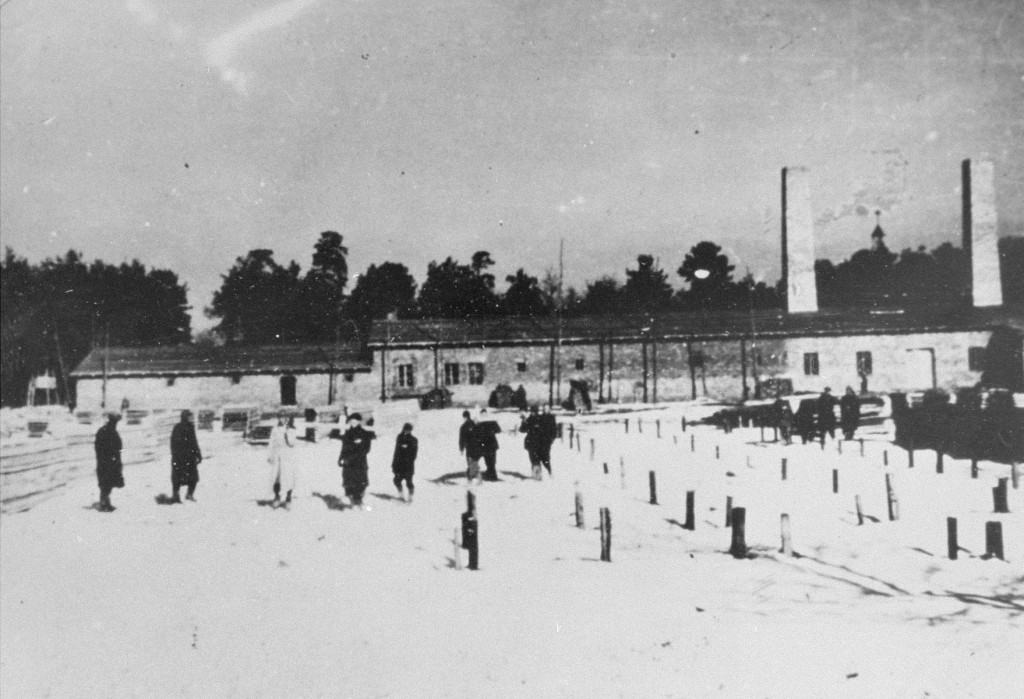
March–June 1943: New Gas Chambers and Crematoria Begin Operation at Auschwitz-Birkenau
SS authorities expand the capacity of the Auschwitz-Birkenau killing center by constructing new gas chambers and crematoria buildings. These building complexes are numbered II through V. They are referred to as “crematoria.” Crematorium IV is the first to begin operation in March, followed by Crematorium II (later that month); Crematorium V (in April); and Crematorium III (in June).

March 20, 1943: First Transport of Jews from Thessaloniki (Salonika), Greece Arrives at Auschwitz
The first of 19 transports from Thessaloniki, Greece arrives at Auschwitz. Most of the Jews on board are murdered in gas chambers upon arrival.
April 29, 1943: Tadeusz Borowski Arrives at Auschwitz
22-year-old Polish writer Tadeusz Borowski arrives at Auschwitz after being rounded up on a city street in Warsaw. He survives his time in the camp. After the war, Borowski writes a series of short stories based on his experiences in the camp. Some of these are translated into English and published in 1967 as This Way for the Gas, Ladies and Gentlemen.
May 25, 1943: Roma from Białystok and Austria are Murdered to Prevent an Epidemic
As a measure to prevent the spread of typhus, 1,035 Roma from the Zigeunerlager are murdered. Among them are Polish Roma from Białystok and Roma from Austria who had arrived on a transport about two weeks earlier.
May 30, 1943: Josef Mengele Arrives at Auschwitz
SS officer Dr. Josef Mengele arrives at Auschwitz. At the camp, Mengele conducts infamous medical experiments. He is one of many SS doctors who conduct selections of Jewish transports.
September 8, 1943: Theresienstadt Family Camp (Section BIIb) Established in Auschwitz-Birkenau
Two transports of mostly Czech Jews from the Theresienstadt ghetto arrive at Auschwitz. They do not undergo selection. Instead, prisoners of all ages are registered in the camp. They live in a separate area of Auschwitz-Birkenau designated Section BIIb. It is commonly called the Czech family camp. Most of these prisoners are murdered in March 1944.
October 23, 1943: First Transport of Jews from Italy Arrives in Auschwitz
A transport of Jews from Rome, Italy arrives at Auschwitz. The vast majority are murdered in the gas chambers.
November 11, 1943: New Commandant of Auschwitz is Appointed
SS Lieutenant Colonel Arthur Liebehenschel replaces Rudolf Höss as commandant of the Auschwitz camp. Höss is assigned to a new position in Berlin.
November 22, 1943: Camp Reorganization is Announced
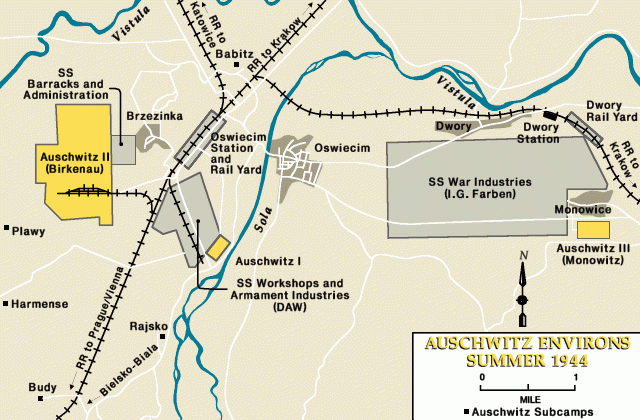
Commandant Liebehenschel announces the administrative reorganization of the Auschwitz concentration camp complex. The Auschwitz main camp is designated Auschwitz I; Auschwitz-Birkenau is designated Auschwitz II; and Auschwitz-Monowitz is designated Auschwitz III. Each camp is assigned its own commandant. As the commandant of the main camp, Liebehenschel serves as the senior officer of the Auschwitz camp system.
1944: The Last Year of Mass Killing
February 26, 1944: Primo Levi Arrives at Auschwitz
Italian Jewish chemist Primo Levi arrives as a prisoner at Auschwitz. He survives the Holocaust and goes on to write several famous books about his experiences. This includes his 1947 work Se questo è un uomo (If This is a Man, also published in English as Survival in Auschwitz). One of Levi’s famous essays discusses the concept of “the grey zone” and the morally ambiguous position of prisoner functionaries.
March 22, 1944: Reports About Nazi Atrocities at Auschwitz Appear in American Newspapers
American newspaper outlets write about Nazi atrocities at the Auschwitz concentration camp. The news is based on a report issued by the Polish government-in-exile in London. The report states that in Auschwitz over 500,000 people, mostly Jews, have been killed by means of gas and then cremated.
April 1, 1944: The Blechhammer Camp Becomes an Auschwitz Subcamp
Blechhammer, a Jewish forced labor camp, becomes one of the largest Auschwitz subcamps. Prisoners assigned to Blechammer work on construction projects for a synthetic fuel plant.
April 7, 1944: Wetzler and Vrba Escape Auschwitz
Slovak Jews Alfréd Wetzler and Rudolf Vrba begin their escape from Auschwitz. They arrive in Žilina, Slovakia by the end of the month. There, they give oral and written reports about what they experienced and witnessed at Auschwitz. Wetzler and Vrba’s firsthand report is distributed worldwide in summer 1944.
May 8, 1944: Former Camp Commandant Rudolf Höss Returns to Auschwitz
Höss returns to Auschwitz in May 1944 as the SS garrison commander. In this position, he oversees the commandants of Auschwitz I (the main camp), Auschwitz II (Auschwitz-Birkenau), and Auschwitz III (Monowitz). Commandant Arthur Liebehenschel is transferred to the Lublin concentration camp (referred to as Majdanek). Höss is brought back to Auschwitz specifically to oversee the murder of hundreds of thousands of Jews from Hungary. The next day, May 9, Höss issues orders to prepare Auschwitz-Birkenau for their arrival.
May 11, 1944: Richard Baer Becomes the Commandant of the Auschwitz Main Camp
SS officer Richard Baer replaces Liebehenschel as the commandant of the Auschwitz main camp (called Auschwitz I at the time).
Mid-May 1944: New Train Platform Inside Auschwitz-Birkenau Goes into Use
The SS begins unloading transports of Jewish prisoners at a new train platform located within the boundaries of Auschwitz-Birkenau (Auschwitz II).
May 16, 1944: Systematic Mass Transports of Jews from Hungary Begin to Arrive at Auschwitz
More than 6,000 Jews from Hungary arrive at Auschwitz-Birkenau on two transports. Of these, 5,500 are murdered in the gas chambers. These transports are the first in a large wave of systematic, mass deportations from Hungary. This begins the deadliest period at the Auschwitz-Birkenau killing center.
Late May 1944: Elie Wiesel and Gisella Perl Arrive at Auschwitz
On May 16, 18, 20, and 22, transports of Jews to Auschwitz leave Sighet (today Sighetu Marmației) in Hungarian-annexed Romania. Among the Jews of Sighet who arrive at Auschwitz in late May are Dr. Gisella Perl (a respected gynecologist) and 15-year-old Elie Wiesel. Wiesel and Perl both survive the Holocaust. After the war, they go on to write about their experiences.
May 26, 1944: SS Photographers Take Photos of Arriving Transport of Jews from Hungary
SS photographers document the arrival, selection, and registration of Jews from Hungary. After liberation, Holocaust survivor Lili Jacob discovers these photos in an album. She recognizes herself, her family members, and other members of her community. This photo album is commonly called the Lili Jacob Album or the Auschwitz Album.
July 10–11, 1944: Murder of Jews During the Liquidation of the Theresienstadt Family Camp
The SS murders the Jewish women and children remaining in the Theresienstadt family camp. A few days earlier, the SS had carried out a number of selections, choosing certain prisoners from the family camp for forced labor. On July 11, knowing she and her son will soon be murdered, Vilma Grunwald writes a farewell letter to her husband, Kurt, who had been selected for labor with their other son.
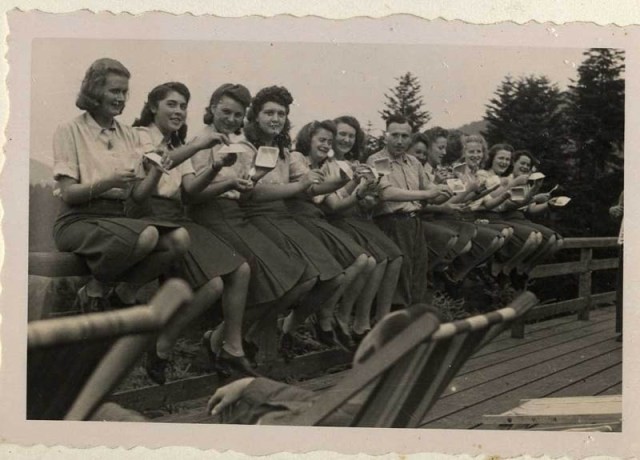
July 22, 1944: Photographs Taken of SS Officer Karl Höcker and Female Staff Relaxing
SS officer Karl Höcker (Commandant Baer’s adjutant) and female staff from the Auschwitz camp complex are photographed as they enjoy time off at the Solahütte (an SS-owned recreation center). The photographs depict the women eating blueberries, relaxing on lounge chairs, and posing for pictures.
July 30, 1944: Jews from the Starachowice Labor Camp Arrive at Auschwitz
A transport of Jews from the Starachowice labor camp in the Radom district of the General Government arrives at Auschwitz. Unlike most transports, this one does not undergo a selection. All prisoners, including children under the age of ten, are registered in the camp.
August 2, 1944: Murder of Romani Prisoners During the Liquidation of the Zigeunerlager
SS camp authorities murder the last Romani prisoners—about 4,200—of the Zigeunerlager in the gas chamber of Crematorium V at Auschwitz-Birkenau. By this time, thousands of other Roma and Sinti imprisoned at Auschwitz have died of typhus.
August 9, 1944: First Transports of Jews from the Łódź Ghetto Arrive at Auschwitz
In August–September 1944, German authorities deport about 67,000 Jews to Auschwitz-Birkenau from the Łódź ghetto. About two-thirds are murdered in the gas chambers upon arrival. The first transport from Łódź arrives on August 9.
August 11, 1944: Polish Civilians from Warsaw Arrive at Auschwitz
A transport of Polish civilians arrested during the Warsaw Uprising arrives in Auschwitz. In total, German authorities send about 13,000 civilians arrested during the uprising to the camp. Among these are 1,500 children.
September 5, 1944: Anne Frank Arrives at Auschwitz
Anne Frank and her family arrive at Auschwitz on the last transport from the Westerbork transit camp to Auschwitz. Anne and her family are selected for forced labor.
October 7, 1944: The Sonderkommando Revolt at Crematorium IV
A Jewish Sonderkommando (literally, special commando) prisoner attacks an SS guard during an ad hoc assembly of prisoners at Crematorium IV. This triggers a revolt among other Jewish prisoners assigned to the Sonderkommando. They set fire to Crematorium IV. Some attempt to flee. The SS suppresses the revolt. During the uprising, about 450 Sonderkommando prisoners die. In Auschwitz, the Sonderkommando were units made up of forced laborers. Their job was to remove bodies from the gas chambers and operate the crematoria.
October–November 1944: The Last Gassing at Auschwitz
The last mass gassing at Auschwitz-Birkenau takes place in October–November 1944.
November 26, 1944: Himmler Orders the Destruction of the Crematoria Complexes at Auschwitz
As Soviet forces drive the Germans back and get closer to Auschwitz, Himmler orders the destruction of the crematoria complexes at Auschwitz-Birkenau.
1945: The Evacuation and Liberation of Auschwitz
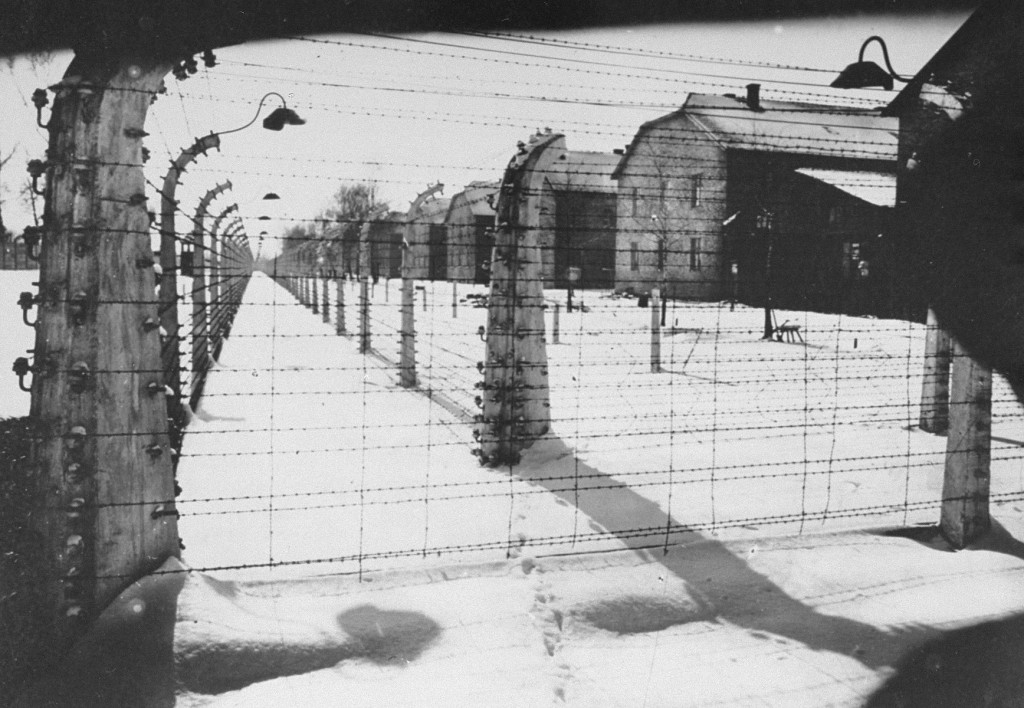
January 6, 1945: SS Executes Four Female Prisoners
The SS hangs four Jewish prisoners: Ala (Ella) Gertner, Róża Robota, Regina Safirsztajn, and Ester Wajcblum. These women had smuggled explosives stolen from a work detail to Sonderkommando prisoners prior to the October 7 revolt.
January 12, 1945: Soviet Vistula Offensive Begins
Soviet forces begin the Vistula offensive, threatening the German position at Auschwitz. Subsequently, the SS is placed on high alert. Despite the Soviet military successes in the region, the rhythm and structure of camp life continues for several more days.
January 17, 1945: Final Roll Call at Auschwitz
The last prisoner roll call at Auschwitz takes place on the evening of January 17, 1945. The SS accounts for about 67,000 prisoners in all camps and subcamps. Almost two-thirds of the prisoners are men. The evacuation of prisoners from some Auschwitz subcamps begins the same day.
January 17–18, 1945: SS Men Burn Camp Records
During the evacuation of Auschwitz, SS men burn camp records. This is an attempt to hide evidence of their crimes and prevent the records from falling into Soviet hands.
January 18, 1945: Last Auschwitz Prisoner Number is Issued
The last prisoner registration number is issued to an Austrian man imprisoned as a professional criminal. He was transferred to Auschwitz from the Mauthausen concentration camp.
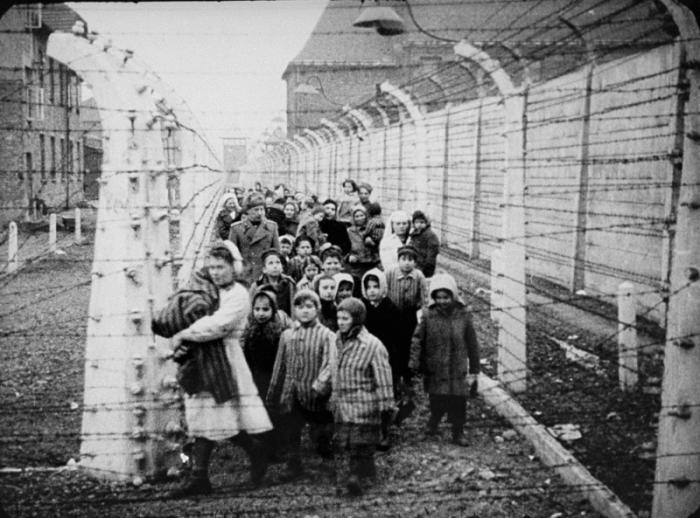
January 18, 1945: Evacuation of Prisoners from the Auschwitz Main Camp, Monowitz, and Birkenau Begins
As Soviet units approach, the SS evacuates the prisoners of the Auschwitz camp complex. The SS forces tens of thousands of prisoners, mostly Jews, on death marches. Prisoners who are physically unable to march are left behind or shot.
January 18–19, 1945: Soviet Forces Take over the City of Kraków
Soviet forces take over the city of Kraków after driving the Germans out. Kraków is approximately 33 miles east of the Auschwitz main camp.
January 26, 1945: SS Blows up the Last Crematorium at Auschwitz-Birkenau
As fighting rages around Oświęcim, an SS unit blows up Crematorium V, the last remaining crematorium at Birkenau. This is part of German efforts to cover up evidence of their crimes.
January 27, 1945: Liberation of Auschwitz
Soviet troops liberate approximately 7,000 prisoners from the Auschwitz-Monowitz, Auschwitz-Birkenau, and Auschwitz main camps. This date is later commemorated as International Holocaust Remembrance Day.
Critical Thinking Questions
How and why did the function of Auschwitz change as the war progressed?
Where were the camps located? How might the German population and the local community in Poland have been aware of this camp, its purpose, and the conditions within?
Did the outside world have any knowledge about these camps? If so, what actions were taken by other countries and their officials? What choices do other countries have in the face of mistreatment of civilians?
How does the example of this camp demonstrate the complexity and the systematic nature of the German efforts to abuse and kill the Jews?