
The Holocaust and World War II: Key Dates
The mass murder of Europe’s Jews took place in the context of World War II. As German troops invaded and occupied more and more territory in Europe, the Soviet Union, and North Africa, the regime’s racial and antisemitic policies became more radical, moving from persecution to genocide. Explore a timeline of key events during the Holocaust and World War II. This timeline covers the period of January 1933 through May 1945.
1933
- January 30, 1933: President Hindenburg appoints Adolf Hitler Chancellor of Germany.
- March 20, 1933: SS opens the Dachau concentration camp outside of Munich.
- April 1, 1933: Boycott of Jewish-owned shops and businesses in Germany.
- April 7, 1933: Law for the Restoration of the Professional Civil Service.
- July 14, 1933: Law for the Prevention of Offspring with Hereditary Diseases.
1935
- March 16, 1935: Germany introduces military conscription.
- September 15, 1935: Nuremberg Race Laws.
1936
- March 7, 1936: German troops march unopposed into the Rhineland.
- August 1, 1936: Summer Olympics begin in Berlin.
1938
- March 11–13, 1938: Germany incorporates Austria in the Anschluss (Union).
- September 29, 1938: Munich Agreement. Germany, Italy, Great Britain, and France sign the Munich agreement, by which Czechoslovakia must surrender its border regions and defenses (the so-called Sudeten region) to Nazi Germany.
- November 9–10, 1938: Kristallnacht (violent nationwide anti-Jewish riot in Germany and its annexed territories).
1939
- May 13, 1939: The St. Louis sails from Hamburg, Germany.
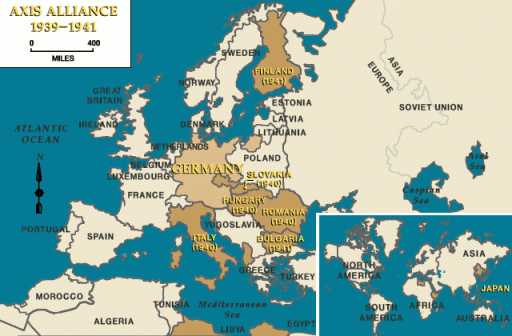
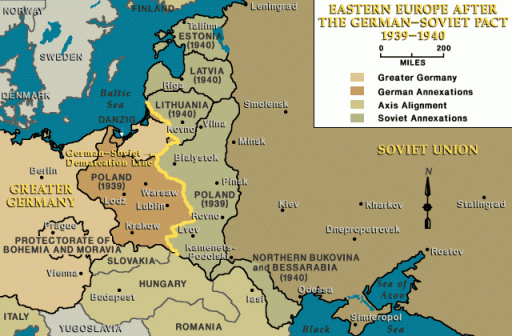
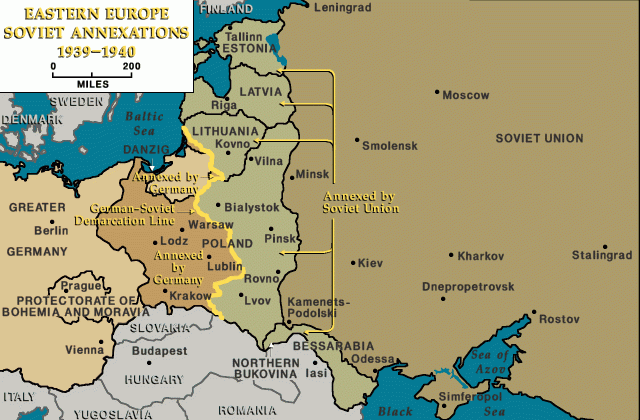


- August 23, 1939: Nazi-Soviet Nonaggression Agreement.
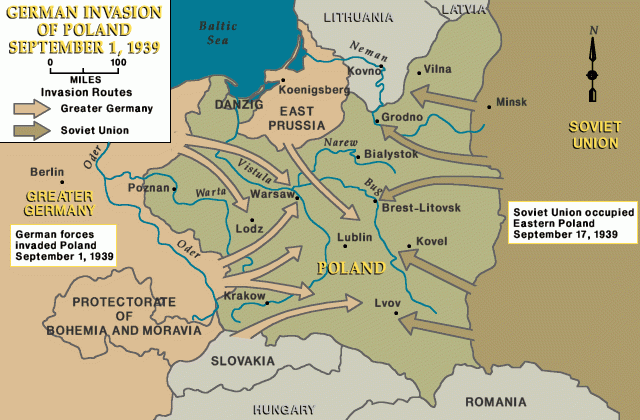
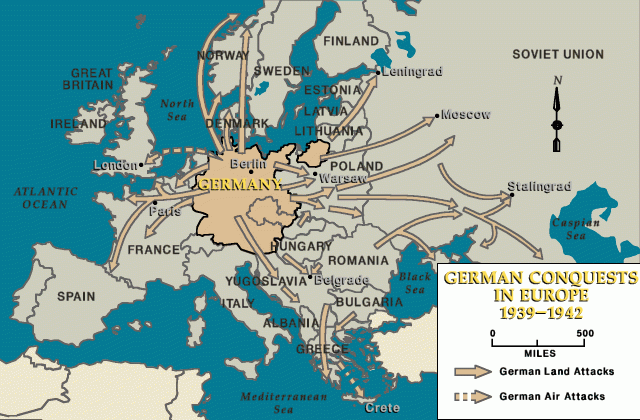
- September 1, 1939: Germany invades Poland, starting World War II in Europe.
- September 17, 1939: The Soviet Union occupies Poland from the east.
- October 8, 1939: German officials establish what is likely the first Nazi ghetto in Piotrków Trybunalski, Poland.
1940
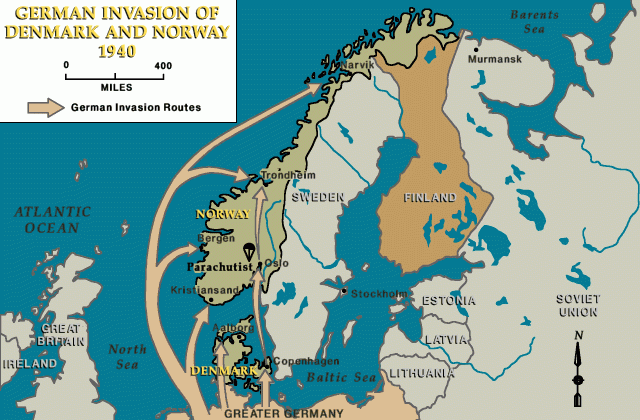
- April 9, 1940: German forces invade Denmark and Norway.
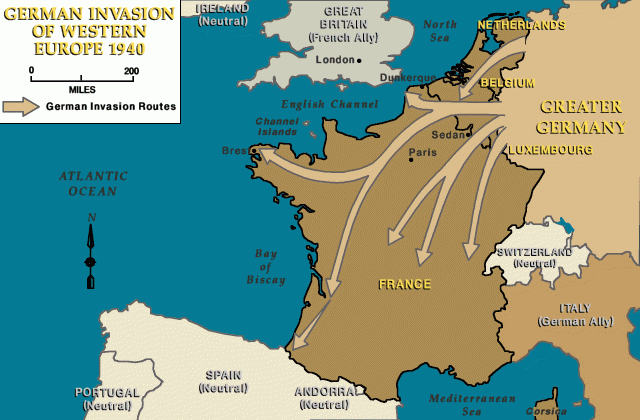
- May 10, 1940: Germany attacks western Europe (France and the Low Countries).
- July 10, 1940: The Battle of Britain begins.
1941
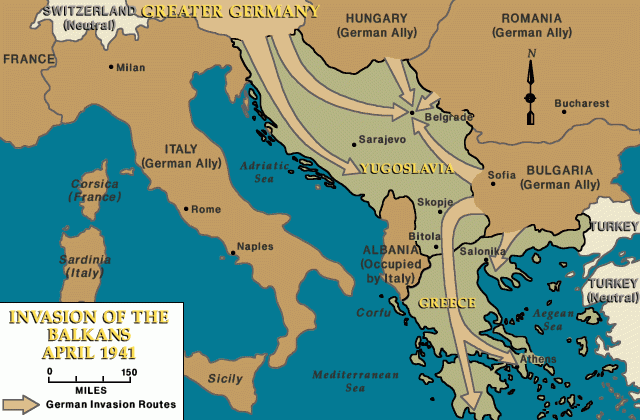
- April 6, 1941: German forces invade Yugoslavia and Greece.
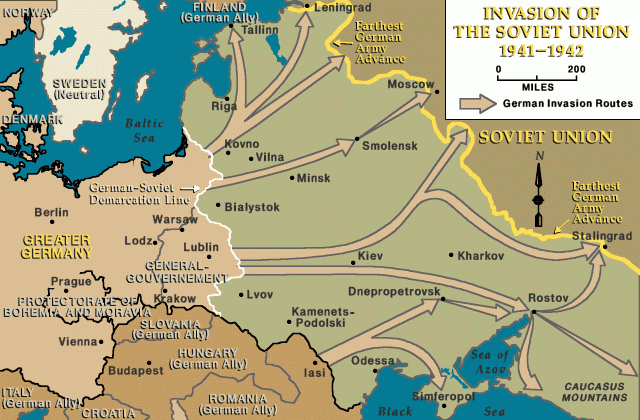
- June 22, 1941: Germany invades the Soviet Union.
- July 6, 1941: Einsatzgruppen (so-called mobile killing units) shoot nearly 3,000 Jews at the Seventh Fort (Fort VII), one of the 19th-century fortifications surrounding Kovno.
- August 3, 1941: Bishop Clemens August Graf von Galen of Muenster denounces the “euthanasia” killing program in a public sermon.
- September 29–30, 1941: Einsatzgruppen shoot about 34,000 Jews at Babyn Yar, outside Kyiv (Kiev).
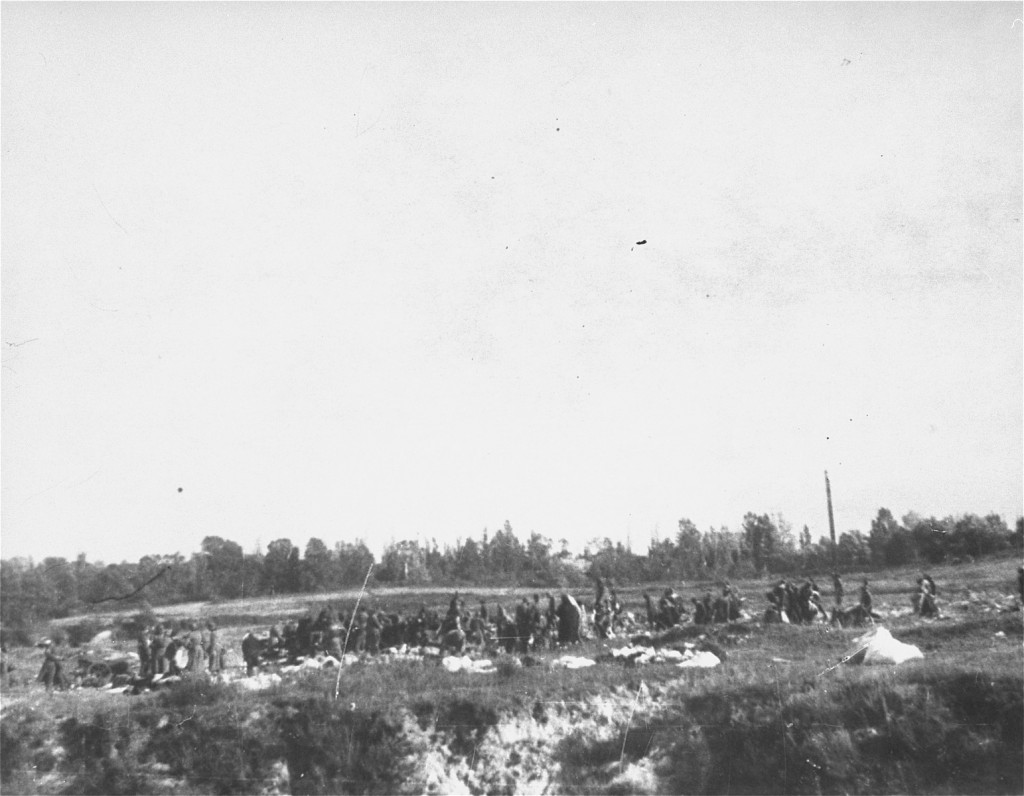
- November 7, 1941: Einsatzgruppen round up 13,000 Jews from the Minsk ghetto and kill them in nearby Tuchinki (Tuchinka).
- November 30, 1941: Einsatzgruppen shoot at least 11,000 Jews from the Riga ghetto in the Rumbula Forest. The massacre continues on December 8–9. In total, at least 25,000 Jews are killed.
- December 6, 1941: Soviet winter counteroffensive.
- December 7, 1941: Japan bombs Pearl Harbor and the United States declares war on Japan the next day.
- December 8, 1941: The first killing operations begin at Chełmno in occupied Poland.
- December 11, 1941: Nazi Germany declares war on the United States.
1942
- January 16, 1942: Germans begin the mass deportation of Jews from Łódź to the Chełmno killing center.
- January 20, 1942: The Wannsee Conference is held near Berlin, Germany.
- March 27, 1942: German officials begin the deportation of more than 65,000 Jews from Drancy, outside Paris, to the east (primarily to Auschwitz).
- June 28, 1942: Germany launches a new offensive towards the city of Stalingrad.
- July 15, 1942: Germans begin mass deportations of nearly 100,000 Jews from the occupied Netherlands to the east (primarily to Auschwitz).
- July 22, 1942: Germans begin the mass deportation of over 300,000 Jews from the Warsaw ghetto to the Treblinka killing center.
- September 21, 1942: Germans complete the mass deportation of about 265,000 Jews from Warsaw to Treblinka.
- November 23, 1942: Soviet troops counterattack at Stalingrad, trapping the German Sixth Army in the city.
1943
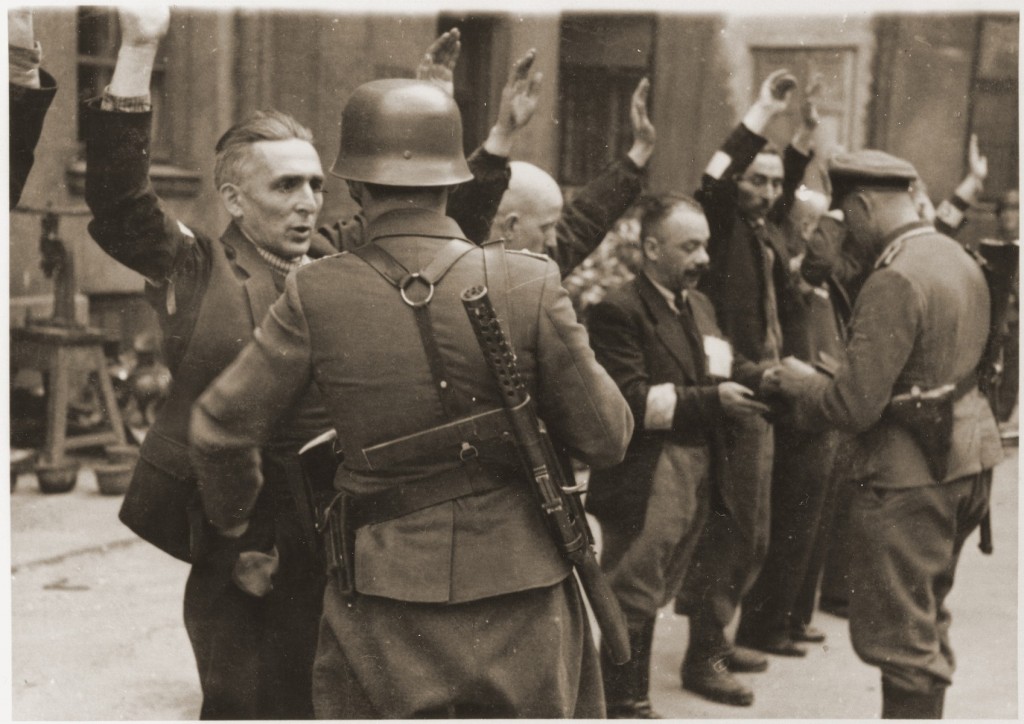
- April 19, 1943: The Jews of the Warsaw ghetto initiate their final act of armed resistance against the Germans. The Warsaw ghetto uprising begins.
- July 5, 1943: Battle of Kursk.
- October 1, 1943: Danish citizens initiate the mass rescue of Denmark's Jews.
- November 6, 1943: Soviet troops liberate Kyiv.
1944
- March 19, 1944: German forces occupy Hungary.
- May 15, 1944: Germans begin the mass deportation of about 440,000 Jews from Hungary.
- June 6, 1944: D-Day: Allied forces invade Normandy, France.
- June 22, 1944: The Soviets launch an offensive in eastern Belorussia (Belarus).
- July 25, 1944: Anglo-American forces break out of Normandy.
- August 1, 1944: The Polish Home Army initiates the Warsaw uprising.
- August 15, 1944: Allied forces land in southern France.
- August 25, 1944: Liberation of Paris.
- December 16, 1944: Battle of the Bulge.
1945
- January 12, 1945: Soviet winter offensive is launched.
- January 18, 1945: Death march of nearly 60,000 prisoners begins from the Auschwitz camp system in the southern part of German-annexed Poland.
- January 25, 1945: Death march of nearly 50,000 prisoners begins from the Stutthof camp system in the northern part of German-annexed Poland.
- January 27, 1945: Soviet troops liberate the Auschwitz camp complex.
- March 7, 1945: US troops cross the Rhine River at Remagen.
- April 16, 1945: The Soviets launch their final offensive, encircling Berlin.
- April 29, 1945: American forces liberate the Dachau concentration camp.
- April 30, 1945: Adolf Hitler kills himself.
- May 7–8, 1945: Germany signs an unconditional surrender at the headquarters of US General Dwight D. Eisenhower, Commander of Allied forces in northwest Europe, at Reims on May 7. The surrender takes effect on May 8 at 11:01 p.m. Central European Time (CET).
- May 8, 1945: Germany signs a second, very similar, document of surrender in Berlin. It also comes into effect on May 8 at 11:01 p.m. CET. In Moscow, this was already after midnight on May 9.
Critical Thinking Questions
Consider the choices the Allies made in response to German policies and military operations. What motivations and pressures might have influenced their actions?
What was the role of the German military in the Holocaust?
What was the relationship between the progress of the war and the mass murder of Europe’s Jews?
How did the course of the war affect the possibility of rescue of the endangered Jews by the Allies and other nations?