

The United States: Public Opinion on Isolation and Neutrality between World War I and World War II
During the years before World War II (1939–1945), polling organizations often asked Americans for their opinions on international affairs. These polls provided insights into what Americans thought about conflicts abroad. They also revealed Americans’ opinions about whether the United States should enter the war against Nazi Germany.
Key Facts
-
1
In the years between World War I and World War II, public opinion polls showed that most Americans thought the United States should stay out of wars abroad.
-
2
According to public opinion polls, most Americans opposed Nazism and the persecution of Jews by the Nazi regime. But most Americans did not support admitting Jewish immigrants into the United States or want to see the United States enter World War II.
-
3
In 1940, American public opinion began to shift toward supporting Great Britain’s war efforts against Nazi Germany. After the Japanese Empire bombed Pearl Harbor in December 1941, most Americans supported entering the war.
During the 1930s and 1940s, polling organizations often asked Americans for their opinions on international affairs. Public opinion polls showed that most Americans hoped the United States would stay out of conflicts abroad. This remained the case even after World War II broke out in Europe in September 1939. Americans consistently expressed their opposition to the Nazi regime (1933–1945), but they hoped the United States would not have to fight a war in Europe against Nazi Germany.
Public Opinion Polling: Origin and Approach
Modern public opinion polling began during the early 20th century. Marketers and advertisers who wanted to reach consumers were the first to use polling. By the 1930s, scholars also began to survey Americans’ opinions. They asked about a range of topics, including politics and foreign policy.
One of the most influential polling organizations, the American Institute of Public Opinion (AIPO), was founded by George Gallup in 1935. AIPO representatives posed questions to thousands of American voters. AIPO would then infer from this sample. This approach is known as “quota sampling.”
Each interviewer was instructed to ask a variety of people, taking into account such factors as class, geography, and gender. Nonetheless, Black Americans were significantly underrepresented in these interviews.
Below is a sampling of American public opinion surveys from the 1930s and 1940s about politics and foreign policy related to Nazi Germany and war in Europe.
American Opinion on Intervention in World War I
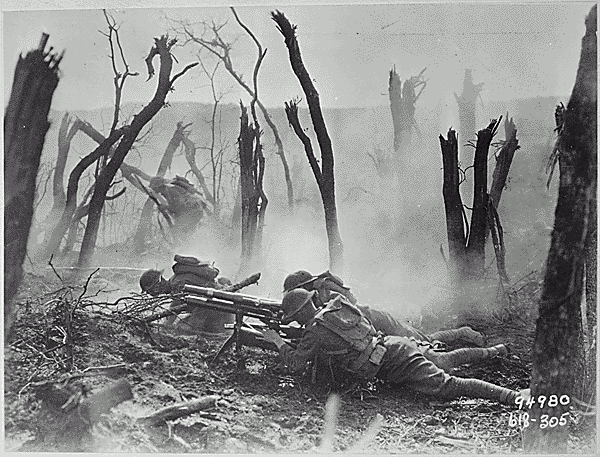
During the 1930s, polling organizations often asked about whether US involvement in World War I (1914–1918) was a mistake. They presumed that opinions about past wars could indicate Americans’ willingness to intervene in future foreign conflicts. Throughout the 1930s, many Americans were concerned that another world war might break out. Before World War II began, Americans tended to think US participation in World War I had been a mistake. But after the outbreak of World War II, this opinion began to shift.
Table 1. Did Americans believe entering World War I was a mistake?
| Date | Poll question | Response |
|---|---|---|
| January 1937 | Do you think it was a mistake for the United States to enter World War I? |
|
| November 1940 | Do you think it was a mistake for the United States to enter the last World War? |
|
| April 1941 | Do you think it was a mistake for the United States to enter the last war? |
|
| Source: Data compiled from American Institute of Public Opinion polls, retrieved from the Roper Center for Public Opinion Research. |
||
American Opinion on US Neutrality and Presidential Power
The US Congress passed a series of laws in 1935, 1937, and 1939 known as “Neutrality Acts.” These acts adopted several measures that were designed to keep the United States from entering potential wars.
In March 1938, Nazi Germany annexed Austria. Two weeks later, Americans were asked whether the Neutrality Acts should be repealed to give President Franklin D. Roosevelt more power to deal with foreign nations. The responses revealed Americans’ continued strong support of neutrality.
Table 2. What did Americans think about neutrality in 1938?
| Date | Poll question | Response |
|---|---|---|
| March 1938 | Would you favor the repeal of the Neutrality Law in order to give the President a freer hand in dealing with foreign nations? |
|
| Source: Data compiled from American Institute of Public Opinion polls, retrieved from the Roper Center for Public Opinion Research. |
||
American Opinion on Hitler’s Territorial Ambitions and Europe’s Response
As Americans continued to strongly support US neutrality, Nazi Germany pursued an aggressive foreign policy. It violated the conditions of peace treaties signed after World War I and sought to expand its territory. This expansion included the March 1938 annexation of Austria. The other European powers did not punish the Nazis for violating international treaties.
In September 1938, a conference among Great Britain, France, Germany, and Italy took place in Munich, Germany. The conference was called in response to a threat made by German Chancellor Adolf Hitler. Hitler said Germany would start a war unless it was given the Sudetenland, a border area of Czechoslovakia. The other conference participants agreed to allow Nazi Germany to take over the Sudetenland. In exchange, Hitler renounced any claims to the rest of Czechoslovakia.
Following the Munich conference, a large majority of Americans indicated that they believed Hitler wanted to conquer more territory in Europe. At the same time, a narrow majority of Americans agreed with Great Britain’s and France’s diplomatic efforts to avoid war in Europe by appeasing Hitler.
Table 3. What did Americans think about Hitler’s territorial ambitions and Europe’s response?
| Date | Poll question | Response |
|---|---|---|
| October 1938 | Chancellor Hitler says that he has no more territorial ambitions in Europe. Do you believe him? |
|
| October 1938 | Do you believe that England and France did the best thing in giving in to Germany instead of going to war? |
|
| Source: Data compiled from American Institute of Public Opinion polls, retrieved from the Roper Center for Public Opinion Research. | ||
American Opinion on Kristallnacht
On the night of November 9–10, 1938, Nazi German leaders unleashed a nationwide anti-Jewish riot. The violence included state-sponsored vandalism, arson, and terror. This event came to be called Kristallnacht (Night of Broken Glass).
Americans’ responses to two questions in November 1938 revealed a large gap. They strongly disapproved of the Nazi regime’s policies toward Jews. Yet, they were not willing to let the Jewish victims of Nazism enter the United States.
Table 4. What did Americans think about the Nazi regime’s violence against Jews on Kristallnacht?
| Date | Poll question | Response |
|---|---|---|
| November 1938 | Do you approve or disapprove of the Nazi treatment of Jews in Germany? |
|
| November 1938 | Should we allow a larger number of Jewish exiles from Germany to come to the United States to live? |
|
| Source: Data compiled from American Institute of Public Opinion polls, retrieved from the Roper Center for Public Opinion Research. | ||
American Opinion on Staying Out of War and Other Priorities
World War II began on September 1, 1939, when Nazi Germany invaded Poland. Great Britain and France declared war on Germany two days later. On September 3, President Roosevelt gave a radio address declaring that the United States would remain neutral.
In late April 1939, about 4 months before war began in Europe, Americans were as concerned about staying out of war as they were about addressing unemployment in the United States. Nearly 9.5 million Americans, or 17 percent of the workforce, were unemployed in 1939.
After war began in Europe, public opinion started to change. By November 1939, more Americans said that keeping out of war was the most important problem for the United States.
Table 5. What did Americans think was the most important problem they faced?
| Date | Poll question | Response |
|---|---|---|
| April 1939 | What do you regard as the most important problem before the American people today? |
|
| November 1939 | What do you think is the most important problem before the American people today? |
|
| Source: Data compiled from American Institute of Public Opinion polls, retrieved from the Roper Center for Public Opinion Research. |
||
American Opinion on Military Readiness and Intervention
During the first week of the war, Americans hoped that US troops would not be sent abroad to intervene. Eight months later, Americans expressed concerns about the United States’ ability to defend against an attack at home.
In May 1940, Nazi Germany invaded France, the Netherlands, and Belgium. Great Britain became the last line of defense in western Europe against the advance of Nazism. Polling showed that many Americans thought the US military should prepare for, but not declare, war.
After May 1940, Americans favored increasing the size of the US military. However, they were still against sending troops abroad to fight.
Table 6. What did Americans think about US military intervention in Europe?
| Date | Poll question | Response |
|---|---|---|
| September 1939 | Should we send our Army and Navy abroad to fight against Germany? |
|
| May 1940 | Do you think our country's army, navy, and air forces are strong enough so that the United States is safe from attack by any foreign nation? |
|
| May 1940 | Do you think the United States should increase the size of its armed forces? |
|
| May 1940 | Do you think the United States should declare war on Germany and send our army and navy abroad to fight? |
|
|
Sources: Data compiled from American Institute of Public Opinion polls, retrieved from RJ Reinhart, “Gallup Vault: US Opinion and the Start of World War II,” Gallup, August 29, 2019, https://news.gallup.com/vault/265865/gallup-vault-opinion-start-world-war.aspx; the Roper Center for Public Opinion Research; and “Gallup Polls January 1940-January 1941,” Teaching American History, accessed July 6, 2026, https://teachingamericanhistory.org/document/gallup-polls-january-1940-january-1941/.
Note: The percentages in some responses add up to 101 because the results have been rounded to the nearest whole number. |
||
American Opinion on Preparing for War
Between 1940 and 1941, President Roosevelt and the US government took multiple steps to support Great Britain’s war effort against Nazi Germany, as well as to prepare the United States in the event of war. These included instituting the first peacetime draft in US history and finding new ways to provide weapons to Great Britain.
Peacetime Military Draft
In September 1940, the US Congress passed the Selective Training and Service Act. This act led to the first peacetime military draft in US history. Both before and after the passage of the act, the majority of Americans supported the draft.
Table 7. What did Americans think about the military draft?
| Date | Poll question | Response |
|---|---|---|
| August 1940 | Do you favor increasing the size of our army and navy now by drafting men between the ages of 21 and 31 to serve in the armed forces for one year? |
|
| December 1940 | Do you think the draft is a good thing? |
|
| Source: Data compiled from American Institute of Public Opinion polls, retrieved from the Roper Center for Public Opinion Research. |
||
Lend-Lease Act
In January 1941, the US Congress introduced the Lend-Lease Act. This bill granted the president the power to extend material aid to Great Britain and others fighting against Nazi Germany and its Axis partners. More than two-thirds of Americans approved of the bill when it was introduced. It became law in March 1941.
Table 8. What did Americans think about the Lend-Lease Act?
| Date | Poll question | Response |
|---|---|---|
| January 1941 | If the British are unable to pay cash for war materials bought in this country, should our Government lend or lease war materials to the British, to be paid back in the same materials and other goods after the war is over? |
|
| Source: Data compiled from American Institute of Public Opinion polls, retrieved from the Roper Center for Public Opinion Research. | ||
American Opinion on Staying out of the War vs. Fighting Germany
By November 1941, war in Europe had been ongoing for more than two years. American public opinion about what the United States’ priorities should be began to change. It shifted away from staying out of the war and toward defeating Nazi Germany.
Table 9. What did Americans think was more important: staying out of war or defeating Nazi Germany?
| Date | Poll question | Response |
|---|---|---|
| November 1941 | Which of these two things do you think is the more important–that this country keep out of war, or that Germany be defeated? |
|
|
Source: Data compiled from Office of Public Opinion Research, retrieved from the Roper Center for Public Opinion Research.
Note: The percentages in this response add up to 101 because the results have been rounded to the nearest whole number. |
||
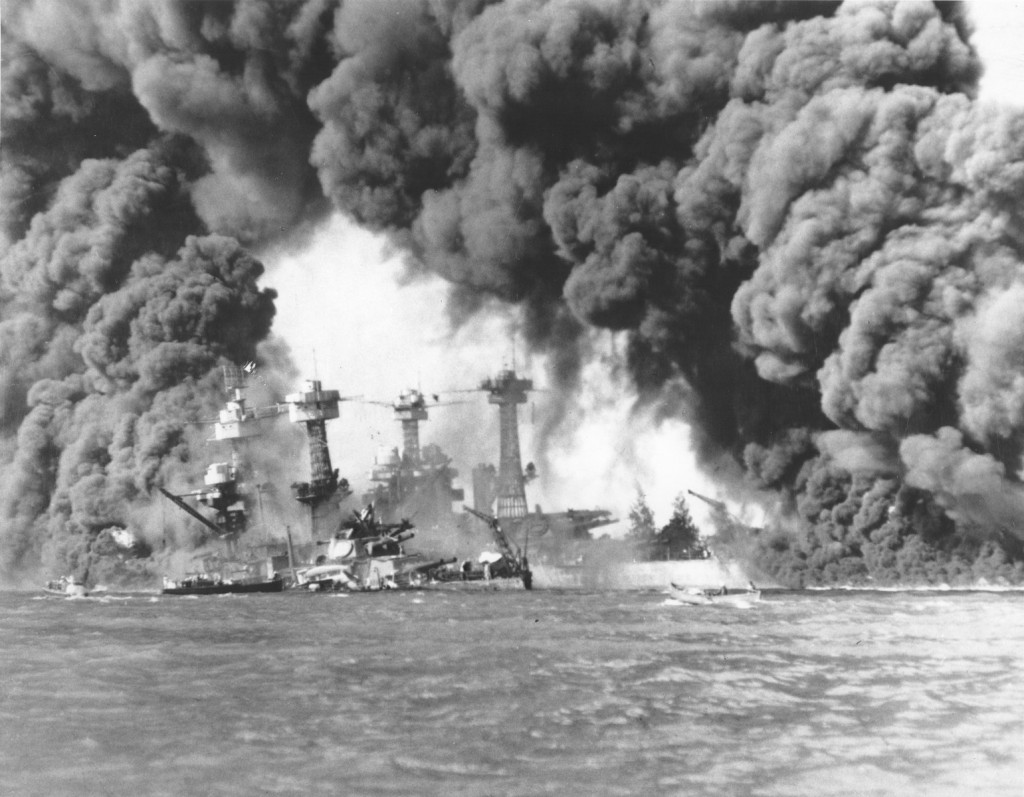
American Opinion on Entering World War II After the Attack on Pearl Harbor
On December 7, 1941, the Imperial Japanese Navy launched a surprise aerial assault on multiple US territories, including Pearl Harbor, Hawaii. The next day, the United States declared war on Japan. On December 11, Germany declared war on the United States. The United States declared war on Germany that same day.
As soon as the United States was attacked, Americans’ public support for entering the war effort rose dramatically.
Table 10. What did Americans think about declaring war against Japan and Germany?
| Date | Poll question | Response |
|---|---|---|
| December 1941 | Do you approve, or disapprove of Congress declaring war against Japan? |
|
| December 1941 | Should President Roosevelt have asked Congress to declare war on Germany, as well as on Japan? |
|
|
Sources: Data compiled from American Institute of Public Opinion polls, Lydia Saad, “Gallup Vault: A Country Unified After Pearl Harbor,” Gallup, December 5, 2016, https://news.gallup.com/vault/199049/gallup-vault-country-unified-pearl-harbor.aspx; Hadley Cantril, Public Opinion: 1935-1946 (Princeton, NJ: Princeton University Press, 1951), 1173.
Note: The percentages in some responses add up to 101 because the results have been rounded to the nearest whole number. |
||