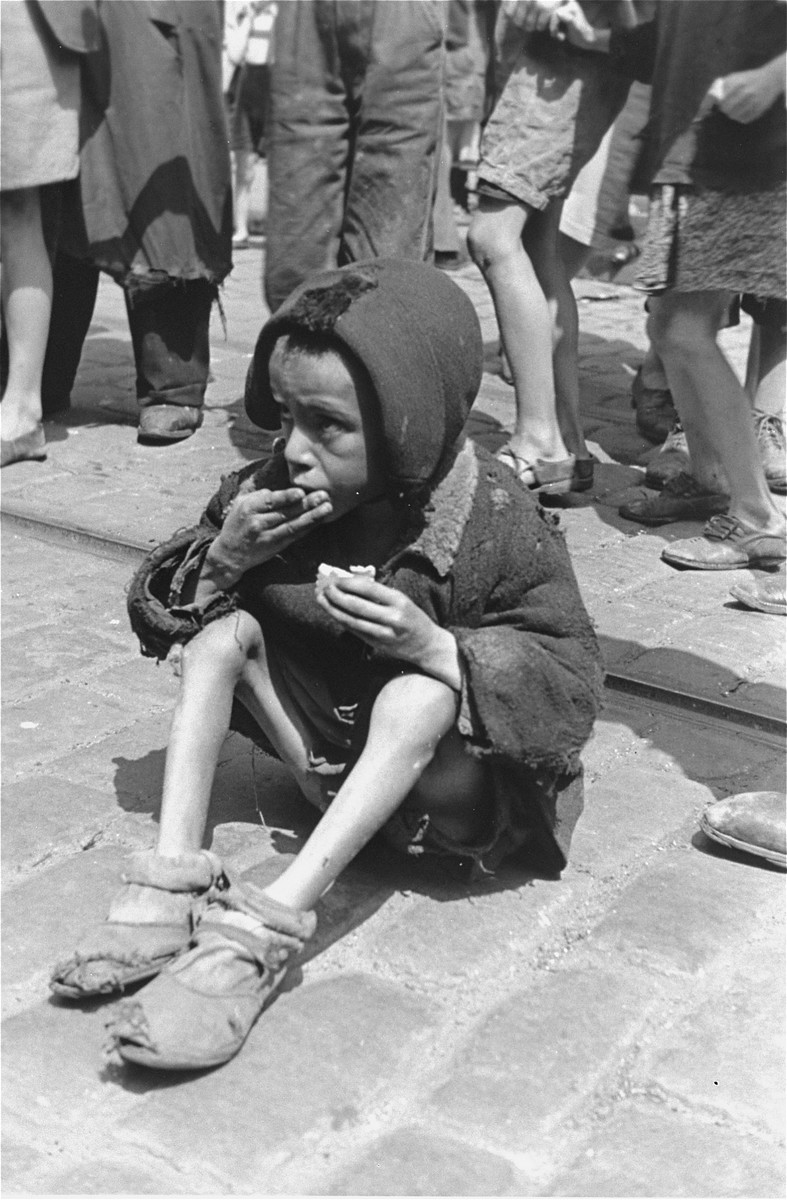
An emaciated child eats on a street in the Warsaw ghetto in German-occupied Poland. This was photograph was taken by German soldier Willy Georg in summer 1941.
Item View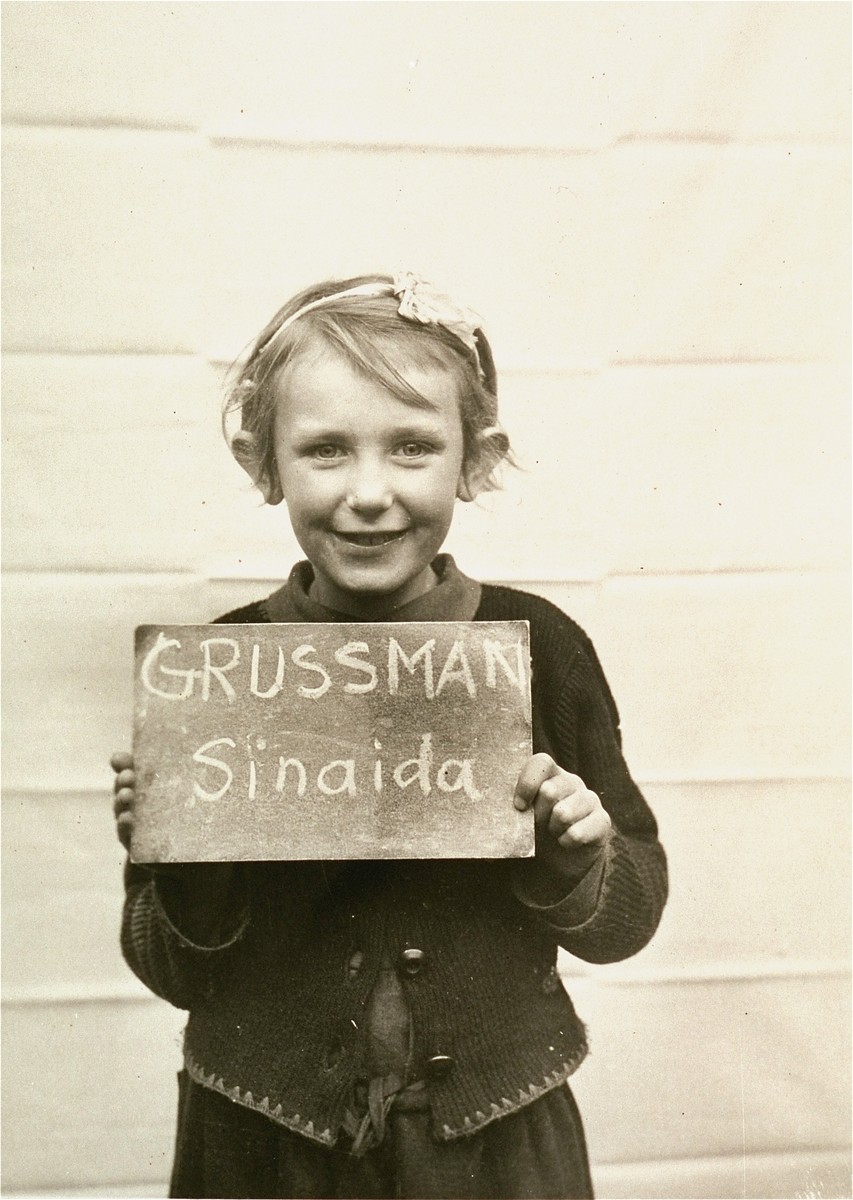
Sinaida Grussman was photographed in the Kloster Indersdorf children's center after the war. The picture was taken in an attempt to help locate surviving relatives. Such photographs of both Jewish and non-Jewish children were published in newspapers to facilitate the reunification of families. Germany, after May 1945.
Item View
At the Neu Freimann displaced persons camp, a boy displays the tattooed number on his arm to a photographer. Other children look on. Neu Freimann, Munich, Germany, between 1945 and 1949.
Item View
Children in the Warsaw ghetto in German-occupied Poland. This was photograph was taken by German soldier Willy Georg in summer 1941.
Item View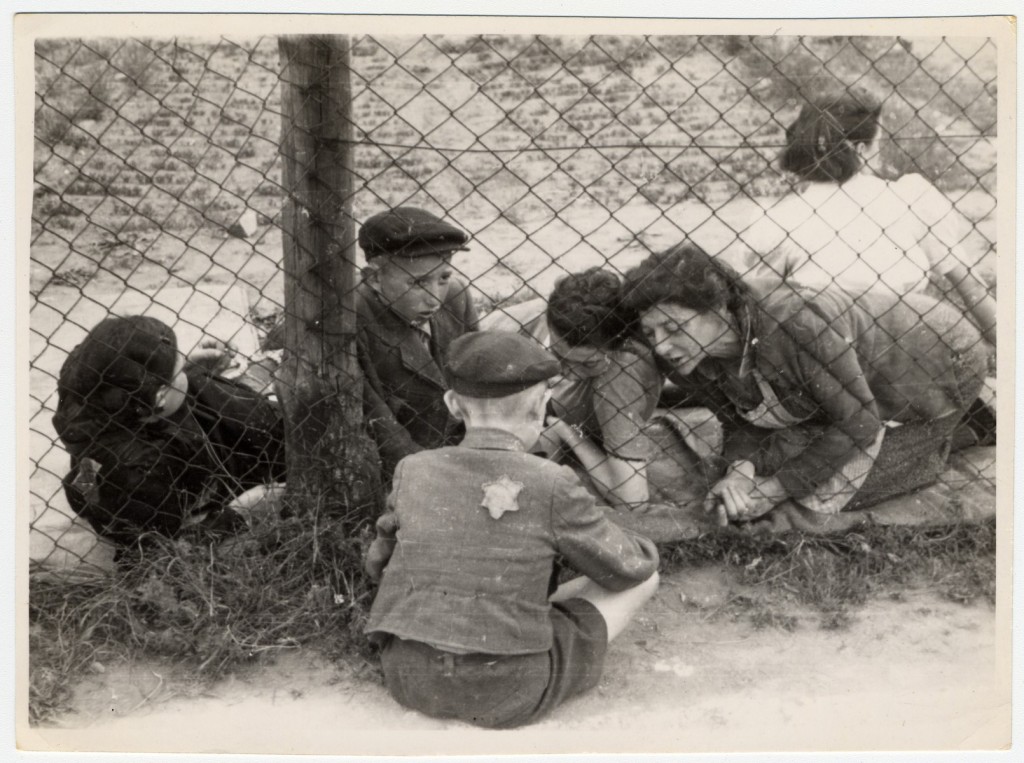
Family members say goodbye to a child through a fence at the ghetto's central prison where children, the sick, and the elderly were held before deportation to the Chełmno killing center. Łódź, Poland, September 1942.
In September 1942, German authorities rounded up and deported about 15,000 Jews from the Łódź ghetto to the Chełmno killing center. During this action, they specifically targeted the sick, the elderly, and young children under age ten. On September 4, Chaim Rumkowski, head of the Łódź Jewish Council, called on ghetto residents to cooperate and give up their young children. The following day, the Germans imposed a curfew that confined Jews to their homes while the roundup took place. This roundup became known as the Gehsperre action, named for the German phrase "allgemeine Gehsperre," meaning "general curfew."
Item View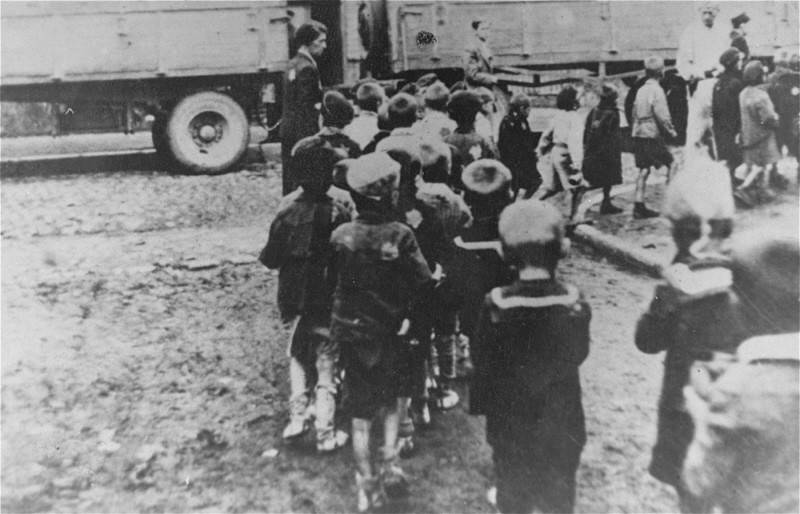
Deportation of Jewish children from the Łódź ghetto in German-occupied Poland during the "Gehsperre" Aktion, September 1942.
In September 1942, German authorities rounded up and deported about 15,000 Jews from the Łódź ghetto to the Chełmno killing center. During this action, they specifically targeted the sick, the elderly, and young children under age ten. On September 4, Chaim Rumkowski, head of the Łódź Jewish Council, called on ghetto residents to cooperate and give up their young children. The following day, the Germans imposed a curfew that confined Jews to their homes while the roundup took place. This roundup became known as the Gehsperre action, named for the German phrase "allgemeine Gehsperre," meaning "general curfew."
Item View
Two young brothers, seated for a family photograph in the Kovno ghetto. One month later, they were deported to the Majdanek camp. Kovno, Lithuania, February 1944.
Pictured are Avram (5 years) and Emanuel Rosenthal (2 years). Emanuel was born in the Kovno ghetto. The children, who were deported in the March 1944 "Children's Action," did not survive. Their uncle, Shraga Wainer, who had asked George Kadish to take this photograph, received a copy of it from the photographer after the war in the Landsberg displaced persons camp.
Item View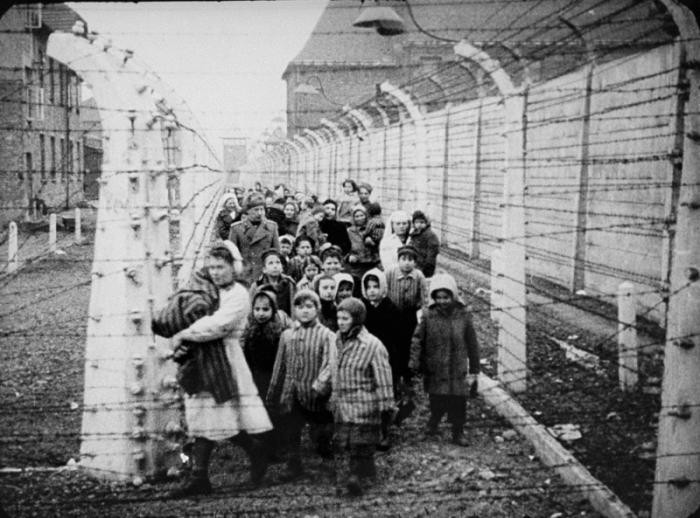
This photograph is a still from Soviet film footage of the liberation of Auschwitz. The film was made by the film unit of the First Ukrainian Front.
Relief workers and Soviet soldiers lead child survivors of Auschwitz through a narrow passage between two barbed-wire fences. Standing next to the nurse and behind them (wearing white hats) are two sets of twin sisters. During the camp's operation, many children in Auschwitz were subjected to medical experiments by Nazi physician and SS officer Josef Mengele.
Item View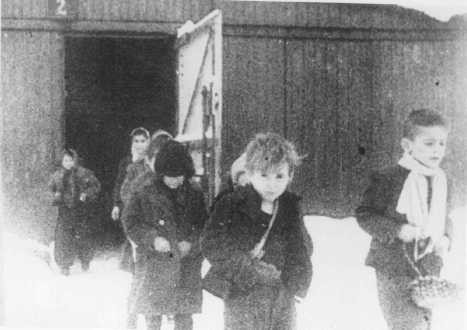
Child survivors of the Auschwitz camp walk out of a barrack. This photograph was taken shortly after Soviet forces liberated the Auschwitz concentration camp on January 27, 1945.
Item View
This photograph taken soon after liberation shows young camp survivors from Buchenwald's "Children's Block 66"—a special barracks for children. Germany, after April 11, 1945.
Item View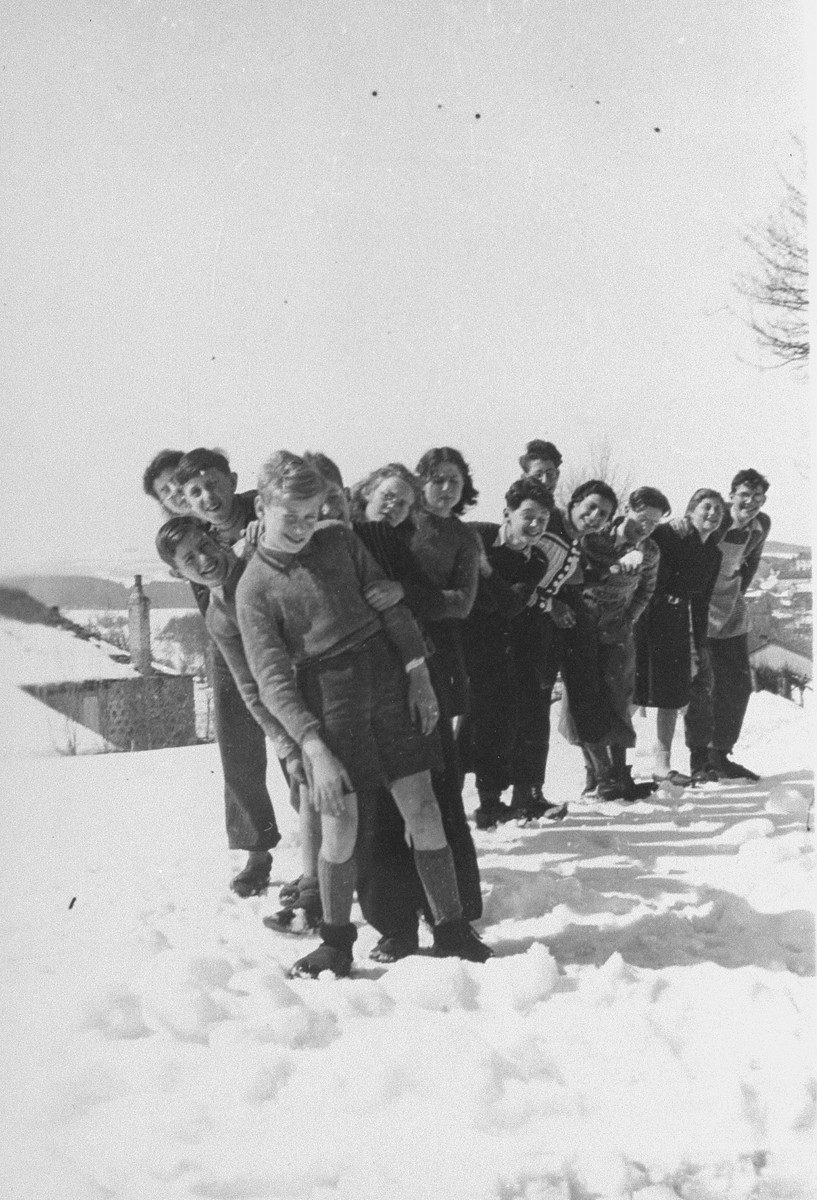
Jewish children sheltered by the Protestant population of the village of Le Chambon-sur-Lignon. France, 1941–44.
Item View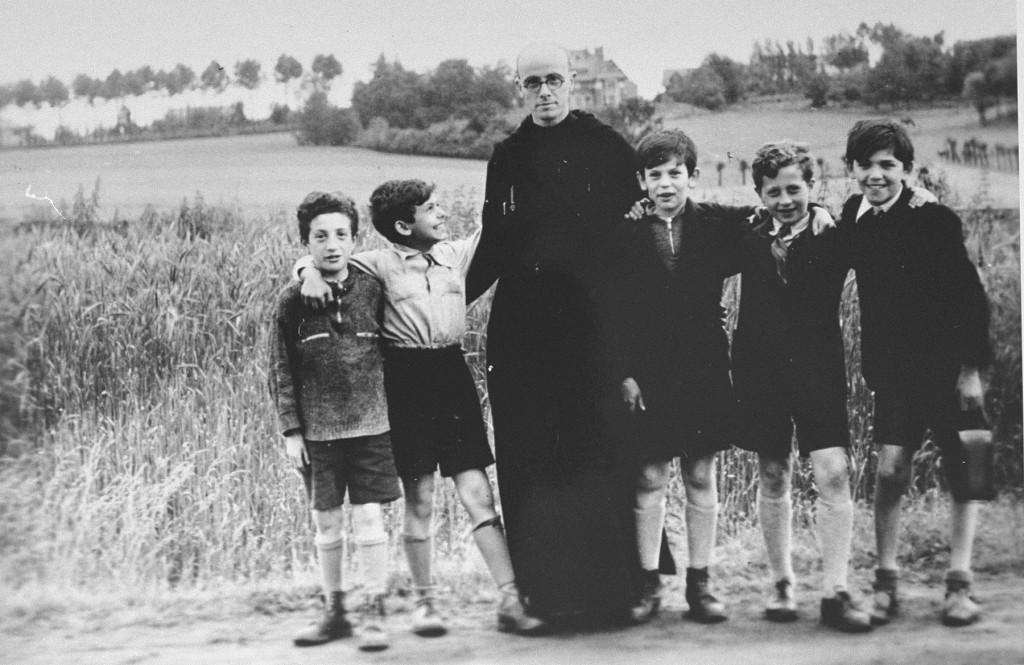
Father Bruno with Jewish children he hid from the Germans. Yad Vashem recognized Father Bruno as "Righteous Among the Nations." Belgium, wartime.
Item View
Two young cousins shortly before they were smuggled out of the Kovno ghetto. A Lithuanian family hid the children and both girls survived the war. Kovno, Lithuania, August 1943.
Item View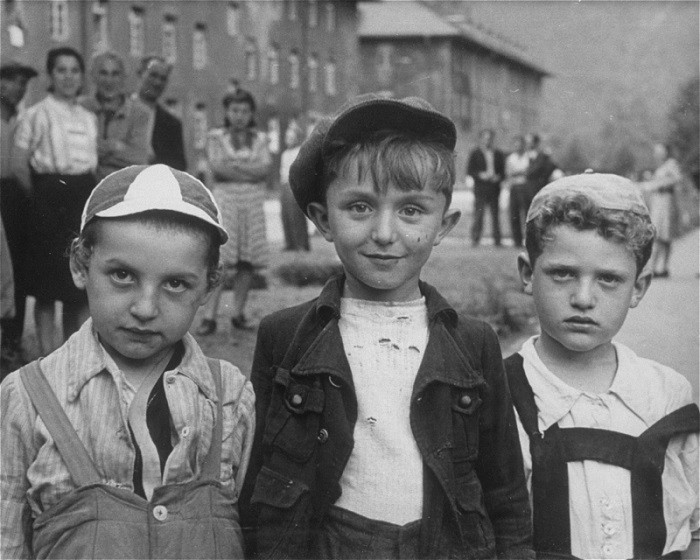
Children in the Bad Reichenhall displaced persons camp. Germany, 1945.
Item View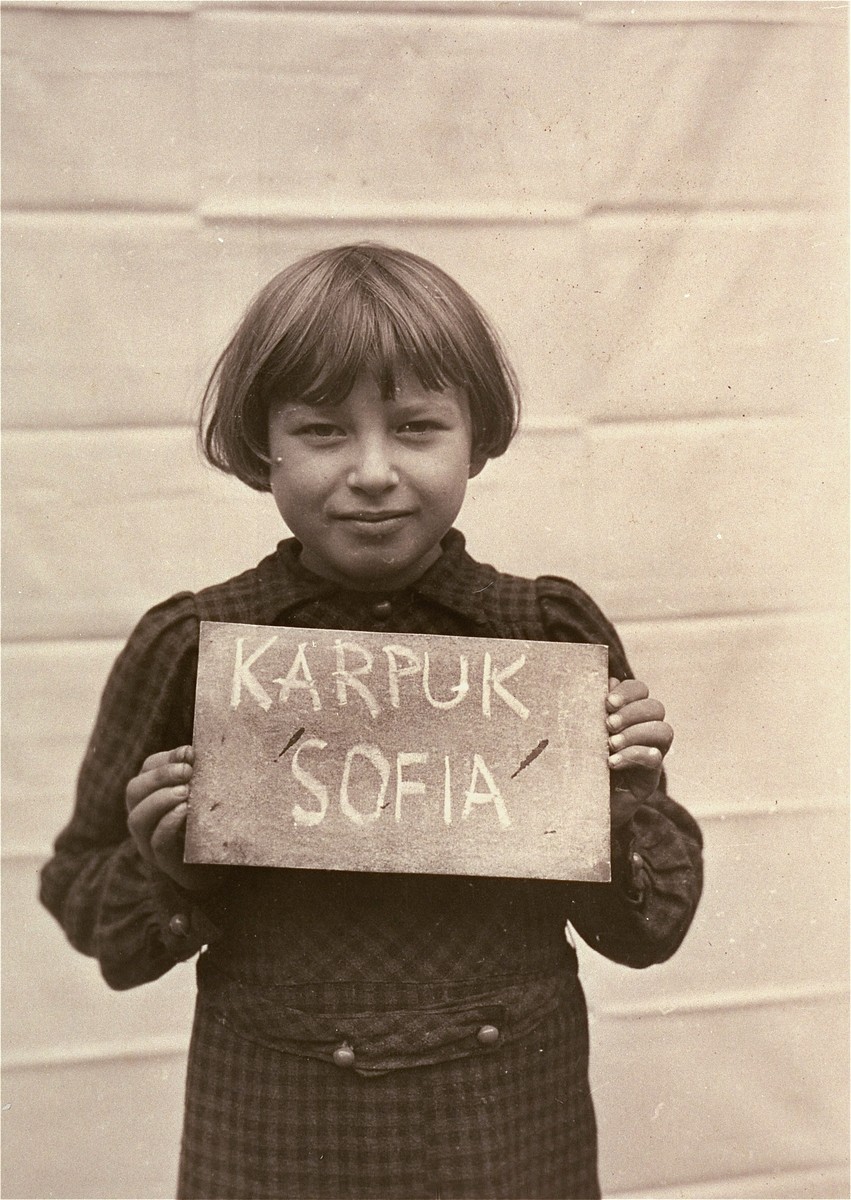
Sofia Karpuk holds a name card intended to help any of her surviving family members locate her at the Kloster Indersdorf displaced persons camp. This photograph was published in newspapers to facilitate reuniting the family. Kloster Indersdorf, Germany, October-November 1945.
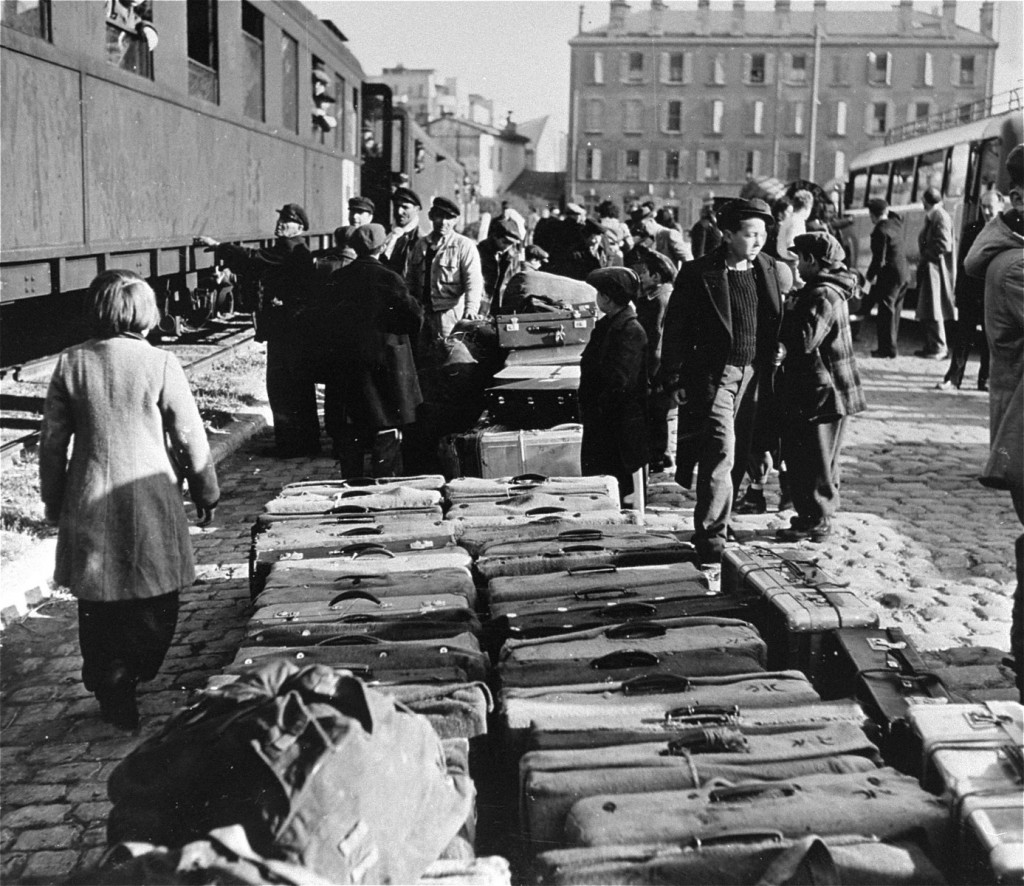
Jewish orphans arrive at the Marseille railroad station, en route to Palestine as part of postwar Brihah movement. Marseille, France, March 25, 1948.
Item View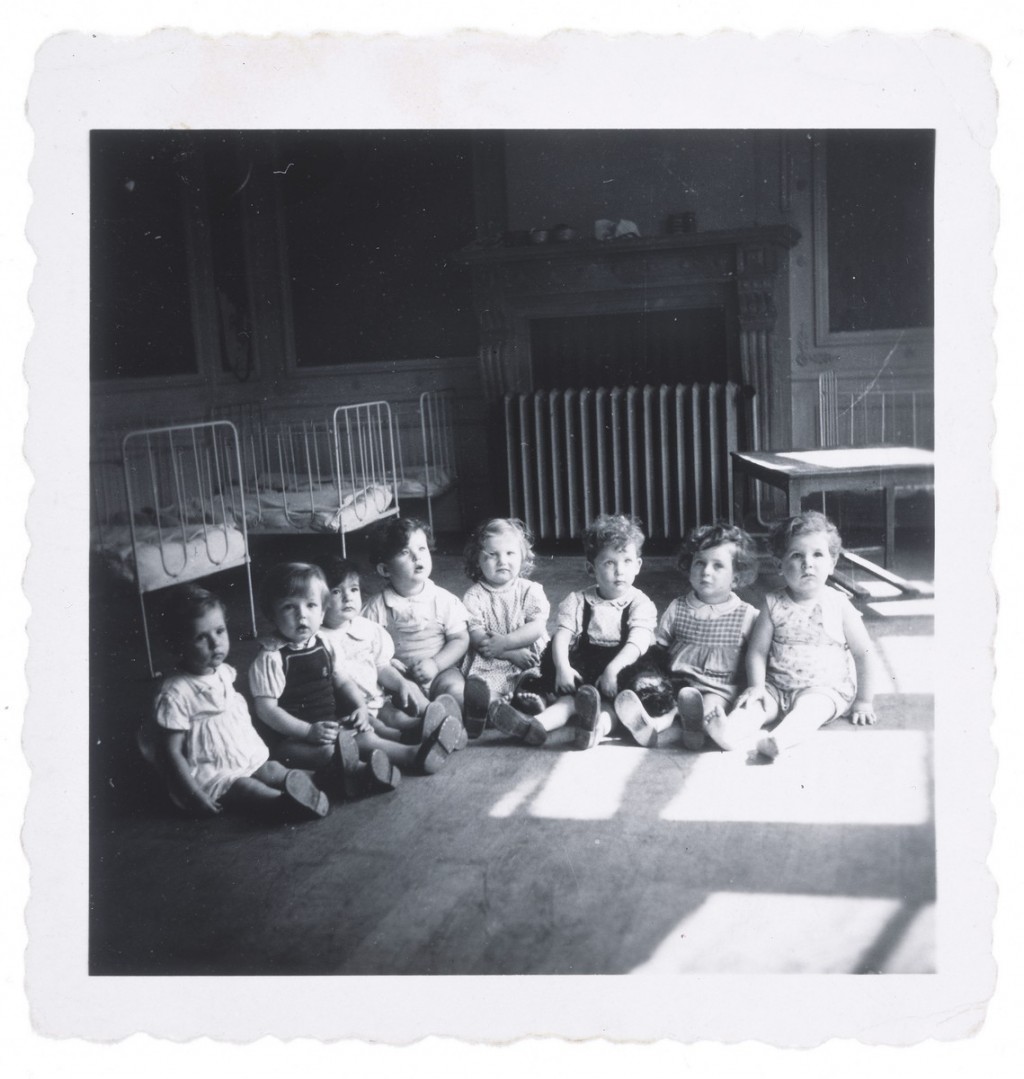
After the war, thousands of Jewish children ended up in orphanages all over Europe as a result of the Holocaust. The toddlers in this children's home in Etterbeek, Belgium, survived in hiding, but their parents had been deported to Auschwitz.
Item View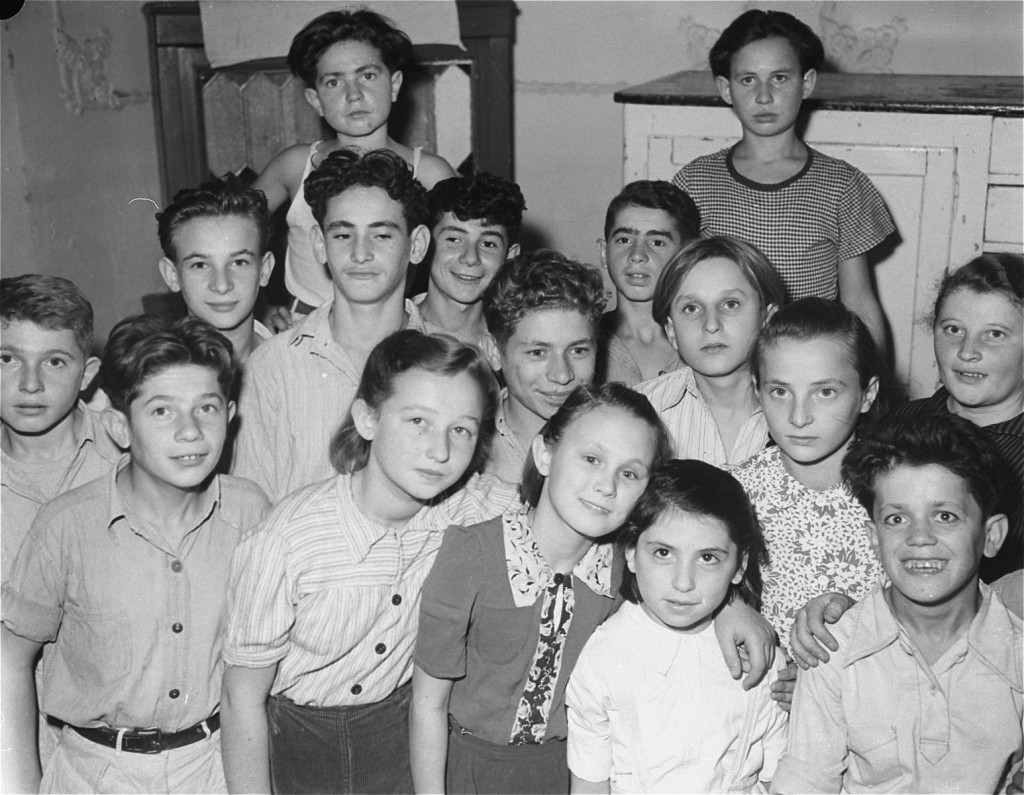
Jewish orphans in a displaced persons center in the Allied occupation zone. Lindenfels, Germany, October 16, 1947.
Item View
A dress worn by hidden child in Baarn, the Netherlands. The dress was donated to the United States Holocaust Memorial Museum in 2002 by Vera Waisvisz-Reiss.
Item ViewWe would like to thank Crown Family Philanthropies, Abe and Ida Cooper Foundation, the Claims Conference, and BMF for supporting the ongoing work to create content and resources for the Holocaust Encyclopedia. View the list of all donors.