![A transport of Jewish prisoners marches through the snow from the Bauschovitz train station to Theresienstadt. [LCID: 69720]](https://encyclopedia.ushmm.org/images/large/781755a6-1ba5-4d8e-8b2b-9f25bdf3687f.jpg)
Browse an alphabetical list of photographs. These historical images portray people, places, and events before, during, and after World War II and the Holocaust.
<< Previous | Displaying results 2601-2625 of 2697 for "Photo" | Next >>
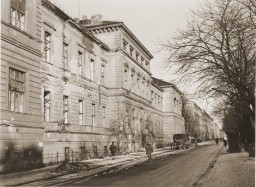
After World War II, the Rothschild hospital in Austria was primarily concerned with the rehabilitation of sick displaced persons. It also served as a lager for political prisoners and as a hostel for 600 refugees.
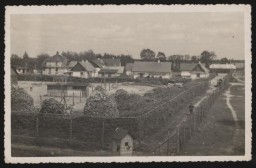
View of the Sobibor camp gate in the spring of 1943. Jews deported to the Sobibor killing center were driven through the gate into the camp on foot, by truck or horse-drawn cart. The train track led through a separate entrance to the right onto the site. Pine branches were braided into the fence to make it difficult to see in from the outside.This image comes from an album and collection kept by Johann Niemann, who became deputy commandant of the Sobibor killing center after holding positions in the…
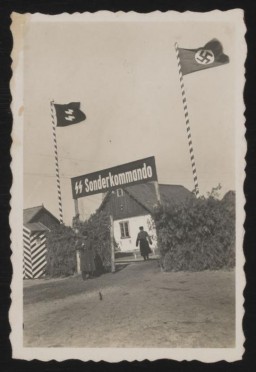
Rare image of the Sobibor killing center, taken from an album of photos belonging to Sobibor deputy camp commandant Johann Niemann.
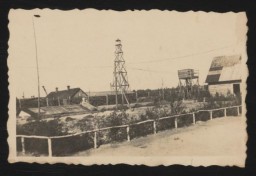
Rare image of the site of the Sobibor killing center, taken from an album of photos belonging to Sobibor deputy camp commandant Johann Niemann.
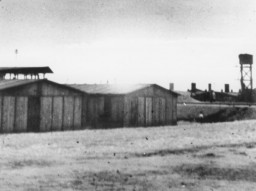
View of the Trawniki training camp showing two barracks and a watch tower. Trawniki, Poland, between 1941 and 1944.
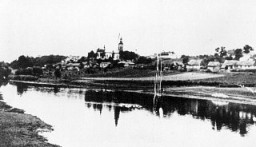
In fall 1941, Nazi German authorities took over a number of buildings in the Polish village of Chełmno nad Nerem. These buildings included a church (the tallest building visible here); a run-down manor house; the village’s community administration building (gmina); the village fire station; and several private homes. Beginning in December 1941, the manor house (visible here to the left of the church) became part of the Chełmno killing center. The other buildings were mostly used for housing and feeding…
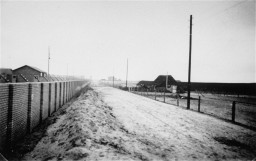
View of the wall enclosing the Esterwegen concentration camp, 1936.
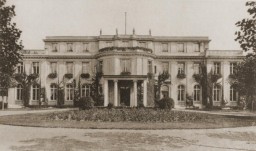
On January 20, 1942, the villa was the site of the Wannsee Conference.
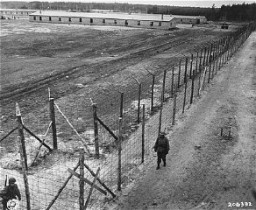
On May 2, 1945, the 8th Infantry Division and the 82nd Airborne Division encountered the Wöbbelin concentration camp. Here, American soldiers patrol the perimeter of the camp. Germany, May 4-May 10, 1945.
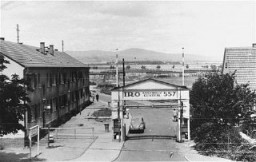
View of the Zeilsheim displaced persons camp. Zeilsheim, Germany, 1947-1948.The Zeilsheim camp was located 12 miles west of Frankfurt in the American-occupied zone of Germany.
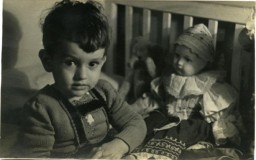
Benjamin Kedar (born Villiam Krausz) sits with a doll and a teddy bear shortly before his family went into hiding.Villiam's parents married in Prague and settled in Nitra, Slovakia. They worked as physicians. They had a daughter, Helen, in 1934, and Villiam in 1938. In 1942 the family relocated to a nearby village until September 1944. At that point, they went into hiding with Slovak peasants to avoid deportation to Auschwitz.Villiam, his sister, and his parents survived the Holocaust.…
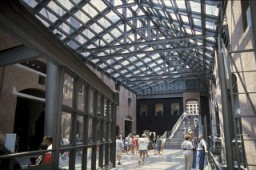
Visitors in the Hall of Witness at the United States Holocaust Memorial Museum. Washington, DC., April 1998.
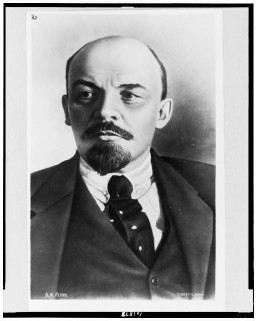
Vladimir Lenin was the leader of a faction of Russian communists known as the Bolsheviks. After the Russian Revolution broke out in 1917, Lenin seized control and established the Soviet Union. Photographed circa 1920.The Nazis had declared themselves the sworn enemies of Bolshevik Russia, its architect and dictator Vladimir Lenin, and his successor Josef Stalin.
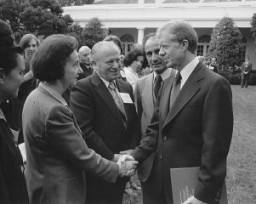
Vladka and Benjamin Meed (center) with President Jimmy Carter at a White House Rose Garden ceremony marking the official presentation of the report of the US Holocaust Commission to the president by commission chairman Elie Wiesel. Washington, DC, September 27, 1979.
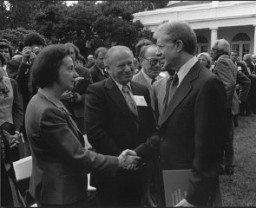
Vladka Meed shakes the hand of President Jimmy Carter at a White House Rose Garden ceremony. The ceremony marked the official presentation of the report of the US Holocaust Commission to the president by commission chairman Elie Wiesel (second from right, with Benjamin Meed, center). Washington, DC, September 27, 1979.
View of the Vught transit camp. Vught, the Netherlands, after September 9, 1944.
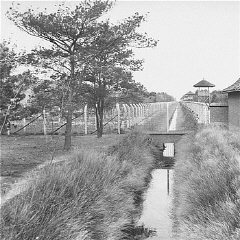
Jewish inmates at forced labor in the Vyhne concentration camp in Slovakia, 1941–44.
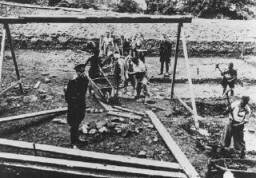
After the occupation of Odessa, Ukrainian Jews wait to register. Odessa, Soviet Union, October 22, 1941.
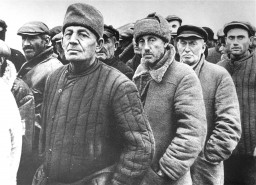
Waitstill and Martha Sharp supervise the arrival of 14 tons of milk products to distribute to children in the region. Pau, France, August 1940.
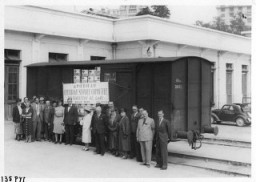
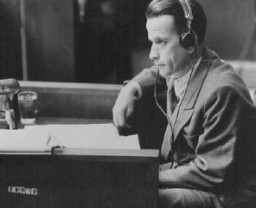
Waldemar Hoven, head SS doctor at the Buchenwald concentration camp, testifies in his own defense at the Doctors Trial. Hoven conducted medical experiments on prisoners. Nuremberg, Germany, June 23, 1947.
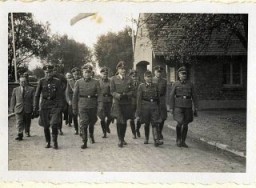
Walking to a ceremony; from left to right: Dr. Carl Clauberg, Dr. Enno Lolling, Karl Höcker (behind), Richard Baer, Dr. Eduard Wirths, Karl Bischoff (behind Wirths on the right) Rudolf Höss, and Karl Möckel.
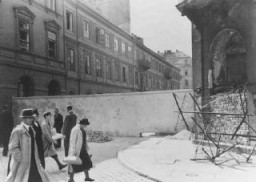
Polish civilians walk by a section of the wall that separated the Warsaw ghetto from the rest of the city. Warsaw, Poland, 1940–41.
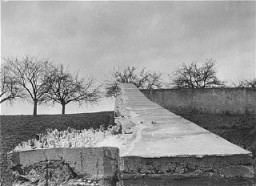
View of the wall surrounding the cemetery of the Hadamar euthanasia killing center. Jagged pieces of glass were placed on the wall to discourage observers. This photograph was taken by an American military photographer soon after the liberation of Hadamar. Germany, April 5, 1945.
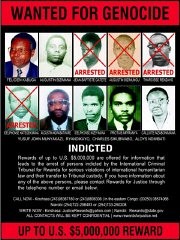
Wanted poster, published by the Rewards for Justice program, seeking key perpetrators who have been indicted by the International Criminal Tribunal for Rwanda (ICTR).
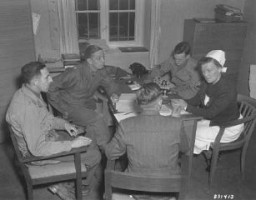
War crimes investigators interrogate chief nurse Irmgard Huber in connection with mass killings at the Hadamar Institute, one of main facilities in the Nazi Euthanasia Program. Hadamar, Germany, May 1945.
We would like to thank Crown Family Philanthropies, Abe and Ida Cooper Foundation, the Claims Conference, EVZ, and BMF for supporting the ongoing work to create content and resources for the Holocaust Encyclopedia. View the list of donor acknowledgement.