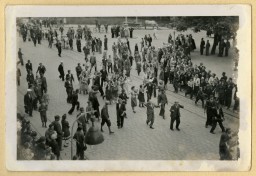
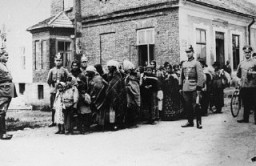
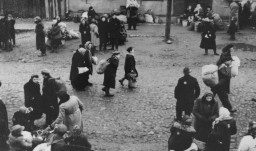
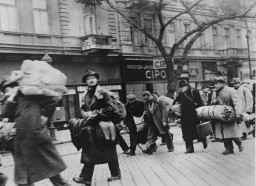
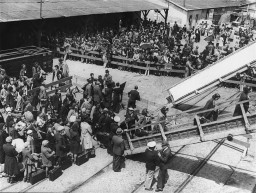
![Jews carrying bundles of possessions before their deportation from the Kovno ghetto. [LCID: 10687]](https://encyclopedia.ushmm.org/images/large/bf0512c5-c30e-49ed-bfc8-d5dec057e5df.jpeg)
The Holocaust was the systematic, state-sponsored persecution and murder of six million European Jews by the Nazi German regime and its allies and collaborators. The Holocaust was an evolving process that took place throughout Europe between 1933 and 1945. During this period, Nazi Germany also persecuted and murdered millions more victims.
The Nazi Party was based on an ideology of antisemitism and racism. When the Nazis first rose to power in 1933, their initial plan was to force all German Jews to leave the country. But as Nazi Germany launched World War II and conquered most of Europe, they decided to pursue a plan to kill every Jew in Europe. A combination of factors made the Holocaust possible, such as the Nazis’ extreme ideology, antisemitism, racism, and the progress of World War II. Many Germans and Europeans who were not Nazis chose to collaborate with them. Many others did nothing to stop them. These actions helped make the Holocaust possible.
Learn about the Holocaust through six key questions and related articles.
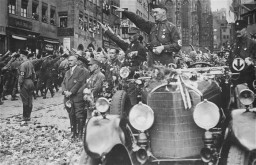
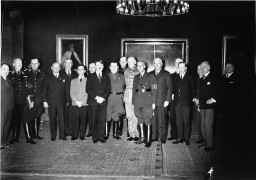
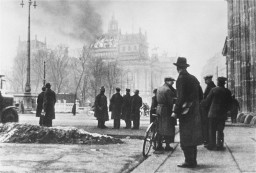
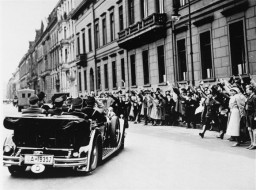
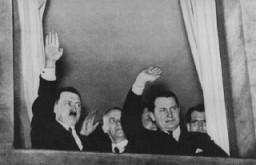
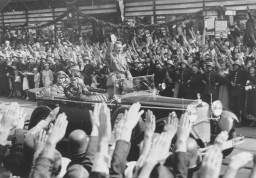
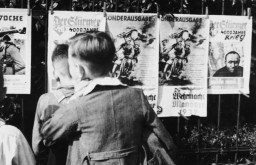
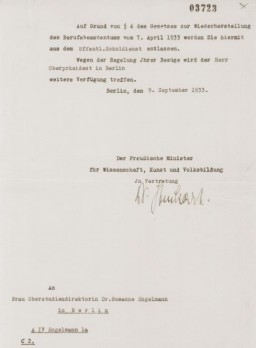
When the Nazis came to power, Germany was a democratic republic known as the Weimar Republic (1918–1933). The Nazis and their supporters hated democracy and claimed it was a weak and ineffective form of government that could not address Germany’s problems. Many citizens were not committed to Germany’s young democracy. Nonetheless, the Nazis used the country’s fragile democratic political system to rise to power. Nazi Party leader Adolf Hitler was appointed chancellor through Germany’s legal political process. Once in power, the Nazis used laws, propaganda, and terror to undermine and ultimately destroy German democracy. They targeted political opponents and racial enemies, stripped away German citizens’ rights and freedoms, and reshaped Germany into a one-party dictatorship.
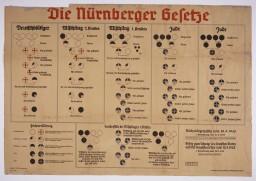
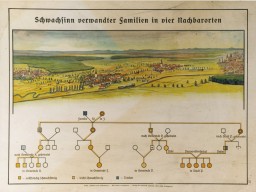
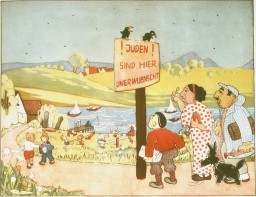
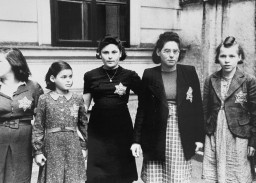
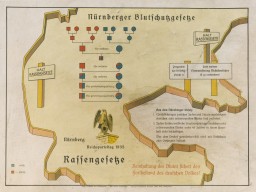
The Nazi Party was based on an ideology of racism, antisemitism, and ethno-nationalism.[1] The Nazis and their supporters wanted to reshape Germany into a “national community” of people who shared the same racial and ethnic characteristics. They persecuted people they considered outsiders or enemies. The Nazis saw Jews as their primary enemy. They persecuted Jewish men, women, and children with unrelenting focus. The Nazis also persecuted political opponents, gay men, Jehovah’s Witnesses, Roma, people with disabilities, and many others.
[1] Ethno-nationalism is the belief that a person can only belong to a nation or a nation-state if they belong to its dominant ethnic or racial group. According to this view, membership is defined by ancestry rather than shared citizenship. Members of the nation would have a shared common language and ethnic heritage. Nazi ideology was based on the idea that only ethnic Germans whom the Nazis classified as “Aryans” could belong to the so-called “national community.” Jews, Roma, and others were excluded.
The Holocaust could not have happened without the involvement of many people across Europe, including those who were not dedicated Nazis. For a variety of reasons, many Germans and other Europeans chose to help the Nazi regime actively in some way. Others accepted the persecution of Jews because they held antisemitic prejudices or received some kind of material benefit. Many other people chose not to speak out against the persecution of Jewish people or to oppose it in any way. A minority of people chose to resist and help Jews—even at great personal risk.
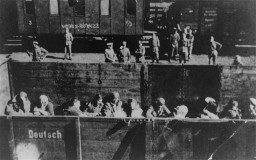
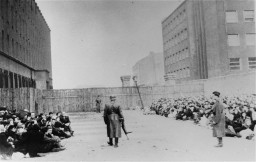
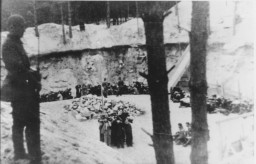
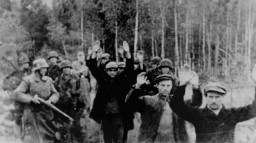
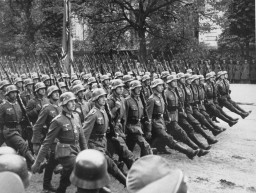
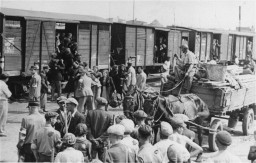
Nazi anti-Jewish policies became more radical and deadly as World War II (1939–1945) progressed. The Nazi German authorities developed murderous policies amid the violent climate of war and as Germany and its allies conquered foreign territories, which brought millions more Jews under Nazi control. The German invasion of the Soviet Union in June 1941 was a turning point. Nazi leaders planned this attack as a “war of annihilation.” They targeted the Communist Soviet state and the peoples who lived there, including millions of Jews. That summer, German units and their allies and collaborators began to carry out the mass murder of entire Jewish communities at frightening speed. In 1942, they began sending Jews to be gassed. The systematic killing of Jews only stopped with the defeat of Nazi Germany in 1945.
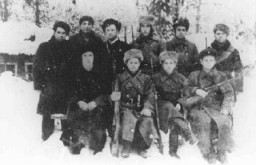
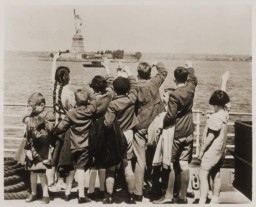
Jewish people responded to the Holocaust in many different ways. European Jews had a variety of religious, political, and social traditions that helped shape their responses to antisemitism and violence. Despite centuries of persecution, Jewish people often could not imagine the reality of the Nazi regime’s unprecedented genocidal plans. The choices available to Jews varied by time and place and shrank over time. Hundreds of thousands of Jews managed to flee Nazi control before and during World War II. However, most were unable to escape. In the face of impossible choices, many Jews found ways to cope and maintain their dignity. Some engaged in armed resistance.
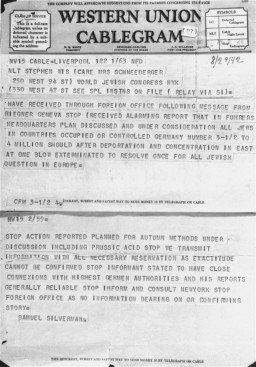
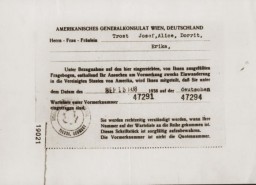
In the 1930s, the Nazi persecution of Jews was public knowledge in the United States and elsewhere. Most countries were reluctant to open their doors to Jewish refugees. During World War II, the leaders of Allied countries received reports about the mass murder of Jews. While they sometimes publicly denounced the violence towards Jews, the Allies prioritized winning the war over the rescue of Jews. Some rescue efforts by Allied and neutral governments came late in the war. By this point, the vast majority of Jews had been killed. In some cases, ordinary citizens overcame enormous challenges to aid Jews, often working with non-government organizations.
We would like to thank Crown Family Philanthropies, Abe and Ida Cooper Foundation, the Claims Conference, and BMF for supporting the ongoing work to create content and resources for the Holocaust Encyclopedia. View the list of all donors.