![A transport of Jewish prisoners marches through the snow from the Bauschovitz train station to Theresienstadt. [LCID: 69720]](https://encyclopedia.ushmm.org/images/large/781755a6-1ba5-4d8e-8b2b-9f25bdf3687f.jpg)
Browse an alphabetical list of articles about the Holocaust and World War II. Learn more about topics such as the Nazi rise to power, how and why the Holocaust happened, life in Nazi camps and ghettos, and the postwar trials.
<< Previous | Displaying results 376-398 of 1225 for "Article" | Next >>
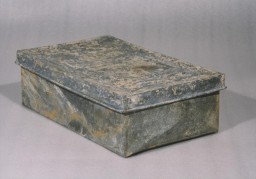
Emanuel Ringelblum was a Warsaw-based historian and social welfare worker before WWII. Learn about the secret archive he would establish in the Warsaw ghetto.
In July 1938, 32 nations met in Evian, France, to discuss immigration policies for Jewish refugees fleeing Nazi Germany. Learn how these discussions impacted Jewish lives.

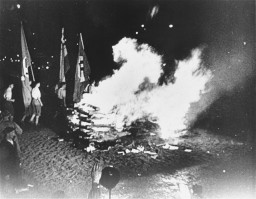
Emil Ludwig was a liberal journalist and popular biographer whose works were burned under the Nazi regime in 1933. Learn more.
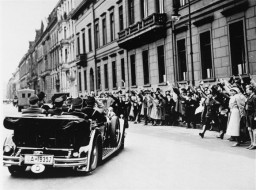
Learn about the Enabling Act of 1933 and how it allowed Adolf Hitler to issue laws without the consent of Germany’s parliament.
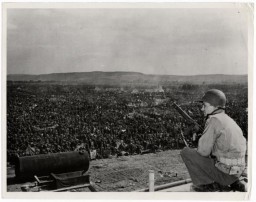
Encircling the Ruhr region was a key Allied military goal. Learn about the military campaign to capture the industrial center of western Germany in the last months of WWII.
Jews were the main target of Nazi hatred. Other individuals and groups considered "undesirable" and "enemies of the state" were also persecuted.
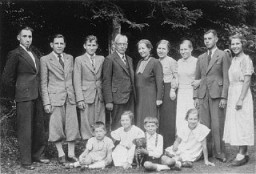
Erich Kästner was a popular political satirist and left-liberal author whose works were burned under the Nazi regime in 1933. Learn more.
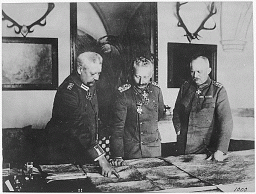
German General Erich Ludendorff was a key proponent of the fictitious “Stab-in-the-Back” myth which blamed Jews and others for Germany’s defeat in WWI.
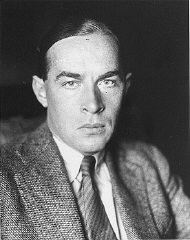
Erich Maria Remarque wrote the classic novel “All Quiet on the Western Front,” which became a Hollywood film. His works were burned under the Nazi regime in 1933.
In 1933, Nazi students at more than 30 German universities pillaged libraries in search of boo...
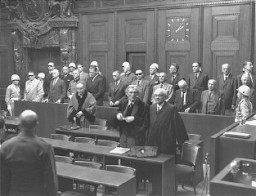
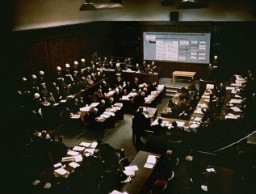
Brief overview of the charges against Erich Raeder, German navy commander in chief, during the International Military Tribunal at Nuremberg.
Ernest Hemingway was a legendary American author. In 1933, his classic novel, "A Farewell to Arms," was burned under the Nazi regime. Learn more.

Ernst Gläser wrote the antiwar novel "Jahrgang 1902." His works, considered leftist and anti-fascist, were burned in Nazi Germany in 1933. Learn more.
Brief overview of the charges against Ernst Kaltenbrunner, Reich Security Main Office leader, during the International Military Tribunal at Nuremberg.
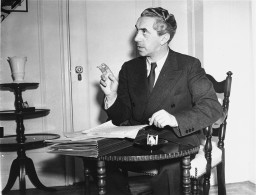
Ernst Toller was one of the best-known German dramatists of the 1920s. He wrote against Nazism, and was among those whose works were burned under the Nazi regime.
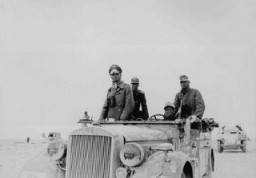
Erwin Rommel was commander of the German Afrika Korps in North Africa during WWII. Learn about Rommel's military career, death, and ongoing questions around his commitment to Nazism.
Many Jews sought to leave Germany after the Nazi rise to power. After WWII began, escape from areas under Nazi control became increasingly difficult or impossible.
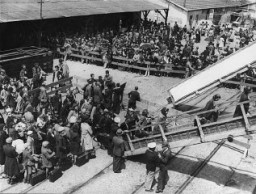
After WWII, many Holocaust survivors, unable to return to their homes, lived in displaced persons camps in Germany, Austria, and Italy. Read about Eschwege DP camp.
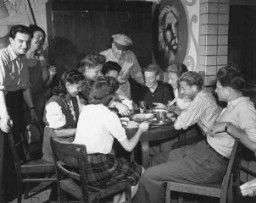
Explore Estelle Laughlin’s biography and learn about her experiences during the Warsaw ghetto uprising.
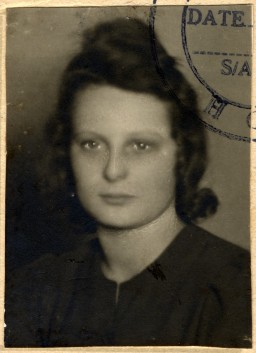
Esterwegen was part of the Nazi regime’s early system of concentration camps, created to hold people arrested as opponents of the new regime.
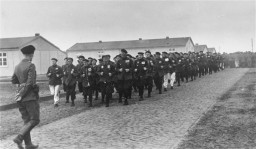
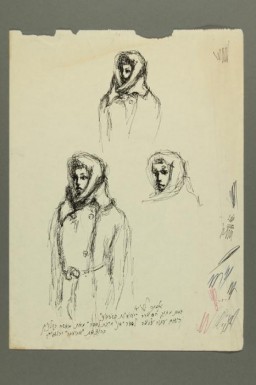
Artist Esther Lurie documented life in the Kovno ghetto for its secret archives. Learn about her watercolors and sketches, the majority of which have never been found.
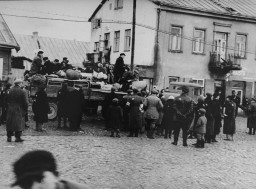
Between 1940 and 1944, Estonia was occupied by the Soviets and then by the Germans. These occupations had a dramatic impact on Jews in Estonia. Learn more.
We would like to thank Crown Family Philanthropies, Abe and Ida Cooper Foundation, the Claims Conference, EVZ, and BMF for supporting the ongoing work to create content and resources for the Holocaust Encyclopedia. View the list of donor acknowledgement.