![A transport of Jewish prisoners marches through the snow from the Bauschovitz train station to Theresienstadt. [LCID: 69720]](https://encyclopedia.ushmm.org/images/large/781755a6-1ba5-4d8e-8b2b-9f25bdf3687f.jpeg)
Browse an alphabetical list of articles about the Holocaust and World War II. Learn more about topics such as the Nazi rise to power, how and why the Holocaust happened, life in Nazi camps and ghettos, and the postwar trials.
<< Previous | Displaying results 226-250 of 973 for "Article" | Next >>
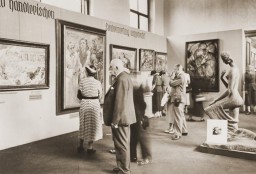
Nazi leaders sought to control all spheres of German society, including art. They labeled art that did not meet the regime's criteria "degenerate." Learn more.
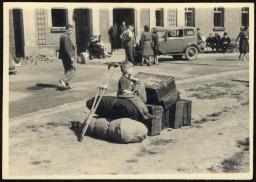
After WWII, many Holocaust survivors, unable to return to their homes, lived in displaced persons camps in Germany, Austria, and Italy. Read about Deggendorf DP camp.
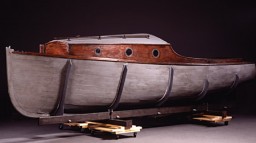
Learn about the Jewish population of Denmark, the German occupation, and resistance and rescue in Denmark during WWII and the Holocaust.
As part of the “Final Solution,” Nazi Germany organized systematic deportations of Jews from across Europe to ghettos and killing centers. Read more.
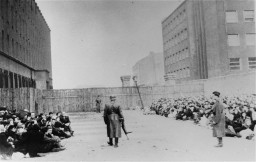
At its height, the Warsaw ghetto held over 400,000 people living in horrendous and worsening conditions. Learn about deportations both to and from the ghetto.
With help from allies and collaborators, German authorities deported Jews from across Europe to killing centers. The vast majority were gassed almost immediately after their arrival in the killing centers.
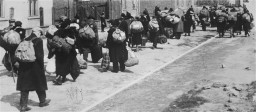
The Nazi Ministry of Propaganda exploited motion pictures as a medium to spread antisemitic messages. Learn about one such film, Der ewige Jude.
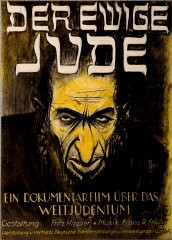
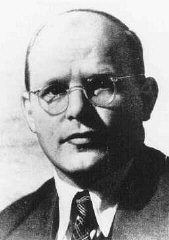
German pastor and theologian Dietrich Bonhoeffer was an early critic of the Nazi regime. He was arrested in 1943 and executed in the Flossenbürg camp in 1945.
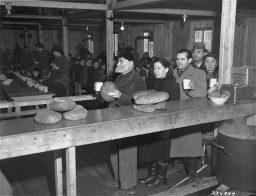
After WWII, many Holocaust survivors, unable to return to their homes, lived in displaced persons camps in Germany, Austria, and Italy. Learn about the experiences of Jewish DPs.
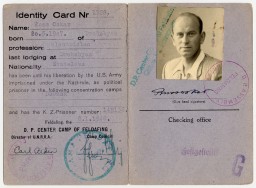
Learn about the establishment and administration of displaced persons camps after WWII and the experiences of Jewish DPs.
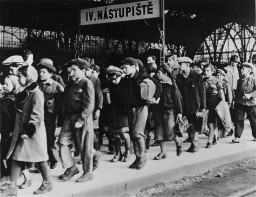
After WWII, many Holocaust survivors, unable to return to their homes, lived in displaced persons camps in Germany, Austria, and Italy. Read about Steiermark District DP camps.
The Medical Case, or Doctors Trial, was Case #1 of 12 Subsequent Nuremberg Proceedings against leading German industrialists, military figures, SS perpetrators, and others.
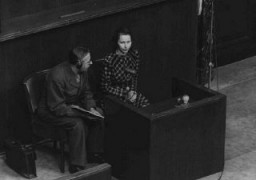
Roma (Gypsies) were persecuted in Europe before and during World War II. This history is well documented in archives throughout Europe and the United States. Learn more.
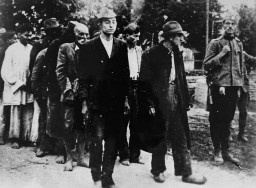
Army Signal Corps photographer Arnold E. Samuelson documented Allied military campaigns, Nazi crimes, and the plight of concentration camp prisoners.
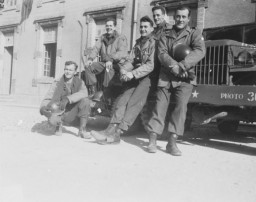
Learn about J Malan Heslop, one of the first Allied photographers in the Army Signal Corps to document evidence of Nazi crimes.
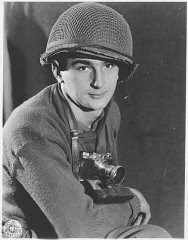
German Jews trying to immigrate to the US in the late 1930s met extreme bureaucratic hurdles, including documentation that was often virtually impossible to obtain.
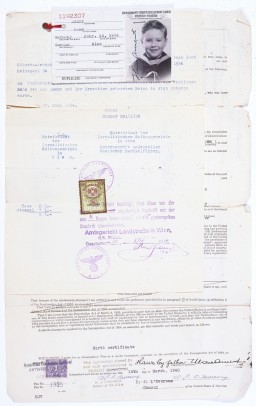
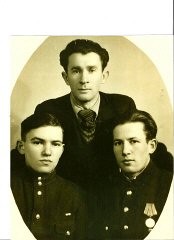
Read the Jewish Partisan Educational Foundation's short biography of Dora Oltulski.
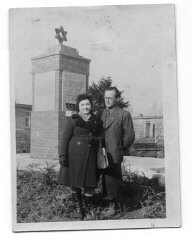
Originally a subcamp of Buchenwald, Dora-Mittelbau became the center of an extensive network of forced-labor camps for the production of V-2 missiles and other weapons.
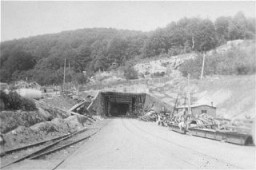
The Germans established an internment camp at Drancy in August 1941. The following summer, Drancy became the main transit camp for deportations of Jews from France.
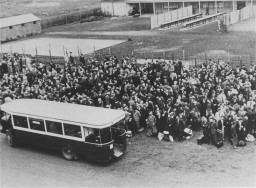
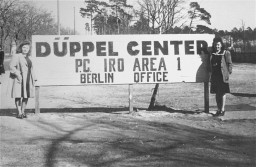
After WWII, many Holocaust survivors, unable to return to their homes, lived in displaced persons camps in Germany, Austria, and Italy. Read about Düppel Center DP camp.
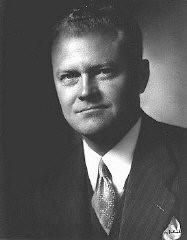
Earl G. Harrison, Commissioner for Immigration and Naturalization under FDR, is known for a report harshly criticizing the US and British treatment of Jewish DPs.
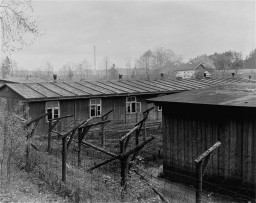
After WWII, many Holocaust survivors, unable to return to their homes, lived in displaced persons camps in Germany, Austria, and Italy. Read about Ebensee DP camp.
Explore Erika Eckstut's biography and learn about the difficulties and dangers she faced in the Czernowitz ghetto.
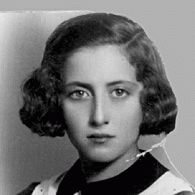
Eduard Schulte was a prominent German industrialist and secret anti-Nazi who leaked the first report to the west that the Nazis intended to murder all Jews in Europe.
We would like to thank Crown Family Philanthropies, Abe and Ida Cooper Foundation, the Claims Conference, and BMF for supporting the ongoing work to create content and resources for the Holocaust Encyclopedia. View the list of all donors.