![A transport of Jewish prisoners marches through the snow from the Bauschovitz train station to Theresienstadt. [LCID: 69720]](https://encyclopedia.ushmm.org/images/large/781755a6-1ba5-4d8e-8b2b-9f25bdf3687f.jpeg)
Browse an alphabetical list of articles about the Holocaust and World War II. Learn more about topics such as the Nazi rise to power, how and why the Holocaust happened, life in Nazi camps and ghettos, and the postwar trials.
<< Previous | Displaying results 1-25 of 44 for "Article" | Next >>
After WWII, many Holocaust survivors, unable to return to their homes, lived in displaced persons camps in Germany, Austria, and Italy. Read about Gabersee DP camp.
In April 1945, US troops encountered a barn on the outskirts of Gardelegen where the SS and its accomplices had massacred over 1,000 concentration camp prisoners.
The Nazi regime carried out a campaign against male homosexuality and persecuted gay men between 1933 and 1945.

Learn about the history of discrimination against Roma in Europe and how the Nazi regime committed genocide against European Roma during WWII.
Key dates in the use of the term genocide as part of the political, legal, and ethical vocabulary of responding to widespread threats of violence against groups.
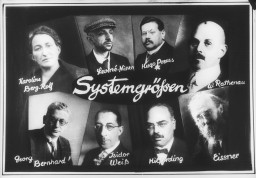
Georg Bernhard was a prominent financial columnist. The Nazis declared that German journalism must be "cleansed" of Jews. Bernhard’s work was burned in 1933.
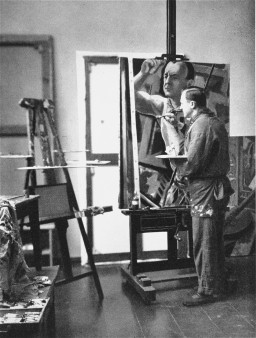
Georg Grosz was a German artist of the Dada movement. His books, which had many of his best-known plates, were burned in Nazi Germany in 1933. Learn more.
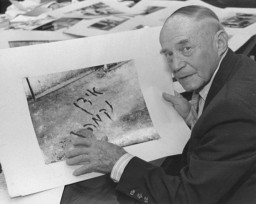
At great risk, George Kadish secretly documented life in the Kovno ghetto in Lithuania, creating a key photographic record of ghetto life during the Holocaust.
Germany invaded Poland on September 1, 1939. Learn about the administrative units that Germany established after annexing and occupying parts of prewar Poland.

Some German and Austrian Jewish refugees fleeing Nazi persecution before WWII sought safety in Shanghai, which did not require entry visas. Learn about their experiences.
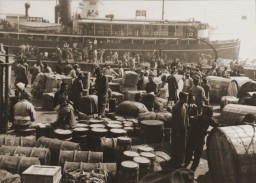
The German Armed Forces High Command, headed by Hitler, directed Germany’s armed forces before and during WWII. It was deeply complicit in the Holocaust and other crimes of the Third Reich.
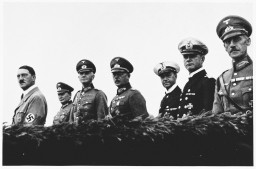
How did Christians and their churches in Germany respond to the Nazi regime and its laws, particularly to the persecution of the Jews? Learn more.
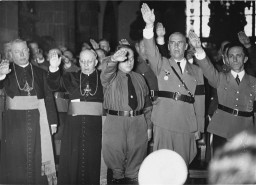
The German Foreign Office played an integral role in Nazi anti-Jewish policies and the Holocaust. Learn more about the office's responsibilities during that time.
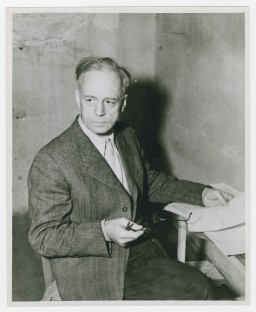
Adolf Hitler came to power with the goal of establishing a new racial order in Europe dominated by the German “master race.” This goal drove Nazi foreign policy. Learn more
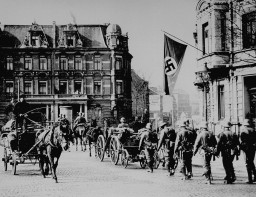
When Germany invaded Poland in September 1939, hundreds of thousands of Jewish and non-Jewish refugees fled the advancing German army. Learn about their experiences.
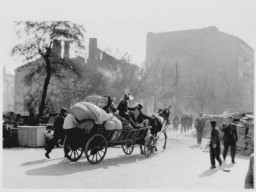
German troops overran Belgium, the Netherlands, Luxembourg, and France in six weeks starting in May 1940. Anti-Jewish measures soon followed in occupied western Europe.

Learn more about the plight of Jewish refugees who attempted to escape Germany between 1933 and 1939.
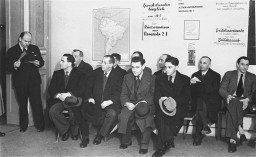
By September 1939, over half of German Jews had emigrated. WWII would accelerate the persecution, deportation, and later, mass murder, of the remainder of Germany's Jews.
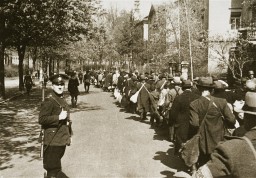
The German military played a vital role in the consolidation of Nazi power and persecution and mass murder of Jews and other groups. Learn more
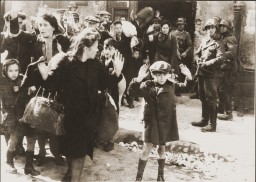
In Nazi Germany, German military personnel swore an oath directly to Adolf Hitler. Learn about the oath and its impact.
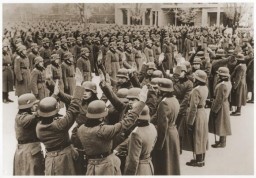
Adolf Hitler was determined to overturn the military and territorial provisions of the Treaty of Versailles. Learn more about Nazi German territorial aggression before WWII.
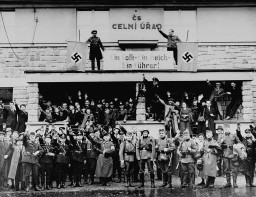
The European rail network played a crucial role in the implementation of the Final Solution. Millions were deported by rail to killing centers and other sites.

Despite Hitler’s popularity, there was also opposition. Learn more about German resistance, which ranged from non-compliance to assassination attempts.
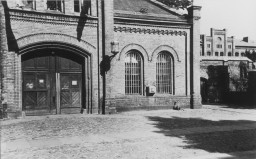
Throughout the 1930s and 40s, Nazi Germany invaded much of Eastern and Western Europe. Learn more about German rule in occupied territories.
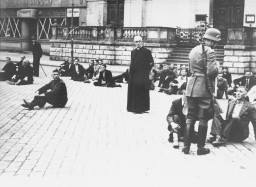
Between 1939-1942, Nazi Germany invaded multiple countries across Europe. Learn more about German expansion during World War II.
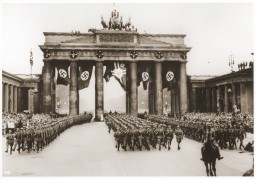
We would like to thank Crown Family Philanthropies, Abe and Ida Cooper Foundation, the Claims Conference, and BMF for supporting the ongoing work to create content and resources for the Holocaust Encyclopedia. View the list of all donors.