![A transport of Jewish prisoners marches through the snow from the Bauschovitz train station to Theresienstadt. [LCID: 69720]](https://encyclopedia.ushmm.org/images/large/781755a6-1ba5-4d8e-8b2b-9f25bdf3687f.jpg)
Browse an alphabetical list of curated media essays that explore various topics pertaining to the Holocaust and World War II. These essays give a brief overview of the topic and provide related media, including photographs, maps, oral histories, and films.
<< Previous | Displaying results 551-575 of 783 for "Media Essay" | Next >>
The German army occupied Vilna (Vilnius), Lithuania, on June 24, 1941. The following month, German Einsatzgruppen and their Lithuanian auxiliaries murdered thousands of Jewish residents of Vilna at a killing site in the Ponary (Paneriai) Forest, southwest of Vilna. By the end of 1941, Einsatzgruppen had killed about 40,000 Jews in Ponary. By July 1944, perhaps as many as 75,000 people had been killed at the site, the vast majority of them Jews. These photographs and narratives shed light on the Vilna…
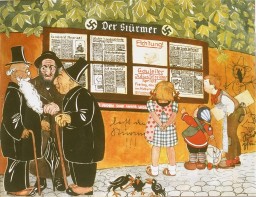
The Protocols of the Elders of Zion is the most widely distributed antisemitic publication of modern times. It falsely purports to be the record of secret meetings of Jewish leaders who were plotting to take over the world. The Protocols of the Elders of Zion has been discredited, but continues to circulate today.
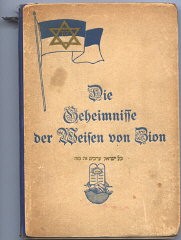
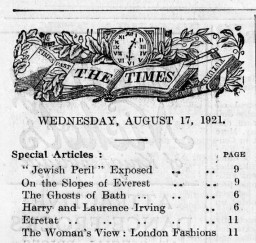
The Protocols of the Elders of Zion is the most widely distributed antisemitic publication of modern times. It falsely purports to be the record of secret meetings of Jewish leaders who were plotting to take over the world. In 1921, a London...
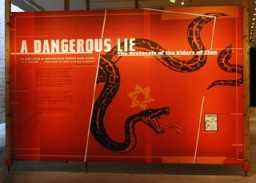
The Protocols of the Elders of Zion is the most widely distributed antisemitic publication of modern times. It falsely purports to be the record of secret meetings of Jewish leaders who were plotting to take over the world. The Protoc...
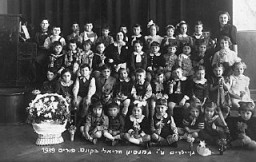
The Jewish holiday of Purim marks the deliverance of the Jews from a royal death dec...
The Płaszów camp was established in 1942 under the authority of the SS and police leaders in Krakow (Cracow). Płaszów was initially a forced-labor camp for Jews, but became a concentration camp in 1944. The largest number of people confined there....
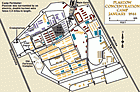
The Płaszów camp was established in 1942 under the authority of the SS and police leaders in Krakow (Cracow). Płaszów was initially a forced-labor camp for Jews, but became a concentration camp in 1944. The largest....
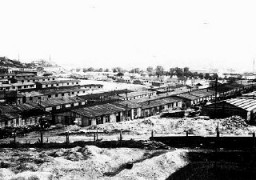
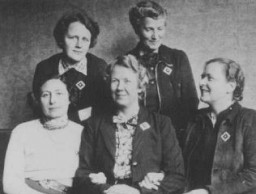
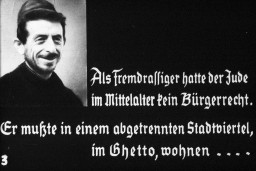
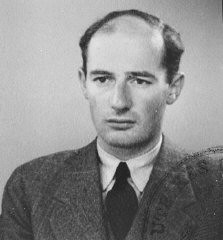
The Ravensbrück concentration camp was the largest concentration camp for women in the German Reich. The SS required Ravensbrück prisoners to perform forced labor. Starting in the summer of 1942, prisoners were also...
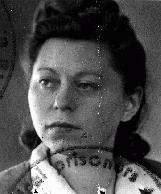
The Ravensbrück concentration camp was the largest concentration camp for women in the German Reich.
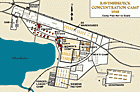
The Ravensbrück concentration camp was the largest concentration camp for women in the German Reich. The SS required Ravensbrück prisoners to perform forced labor. Starting in the summer of 1942, prisoners were also subjected to unethical medical....
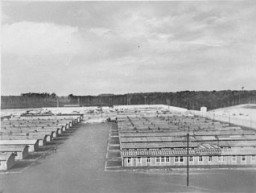
The Auschwitz camp complex was the only location that issued identifying tattoos during the Holocaust. Only prisoners selected for forced labor were assigned serial numbers. Prisoners who were sent directly to the gas chambers were not registered...
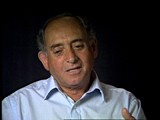
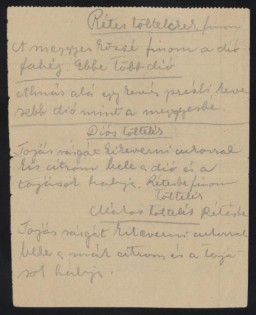
The documentation of treasured recipes evokes memories of happier times and bears witness to the will to create under the most dire of circumstances. In some cases, this type of documentation was even a way to preserve a past that the Nazis and th...
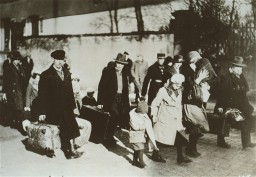
Refugees faced enormous obstacles in finding safe havens during the Great Depression and World War II.
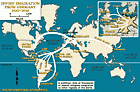
Explore maps related to the search for refuge both during and after the period of the Holocaust.
We would like to thank Crown Family Philanthropies, Abe and Ida Cooper Foundation, the Claims Conference, EVZ, and BMF for supporting the ongoing work to create content and resources for the Holocaust Encyclopedia. View the list of donor acknowledgement.