
The Höcker Album: An SS Officer’s Photo Album from Auschwitz
The Höcker Album is a photo album that originally belonged to SS officer Karl Höcker. Höcker was stationed at the Auschwitz concentration camp complex in 1944–1945, during the last eight months of its operation. Höcker's photo album shows Auschwitz officers and staff during official visits and ceremonies, as well as at social gatherings.
Key Facts
-
1
The Höcker Album includes 116 pictures taken in and around Auschwitz between May 1944 and January 1945.
-
2
The men and women who appear in the album staffed the Auschwitz camp complex during a deadly period at the Auschwitz-Birkenau killing center. At the time, the SS oversaw the mass murder of hundreds of thousands of Jews from Hungary and elsewhere.
-
3
This previously unknown photo album was donated to the United States Holocaust Memorial Museum in 2007 by an anonymous donor.
The Höcker Album originally belonged to SS officer Karl Höcker. Höcker was stationed at the Auschwitz concentration camp complex in 1944–1945, during the last eight months of its operation. The previously unknown album was donated to the United States Holocaust Memorial Museum in 2007. Höcker’s name does not appear anywhere in the album. Museum experts used evidence from the photo album to identify Höcker as its owner.
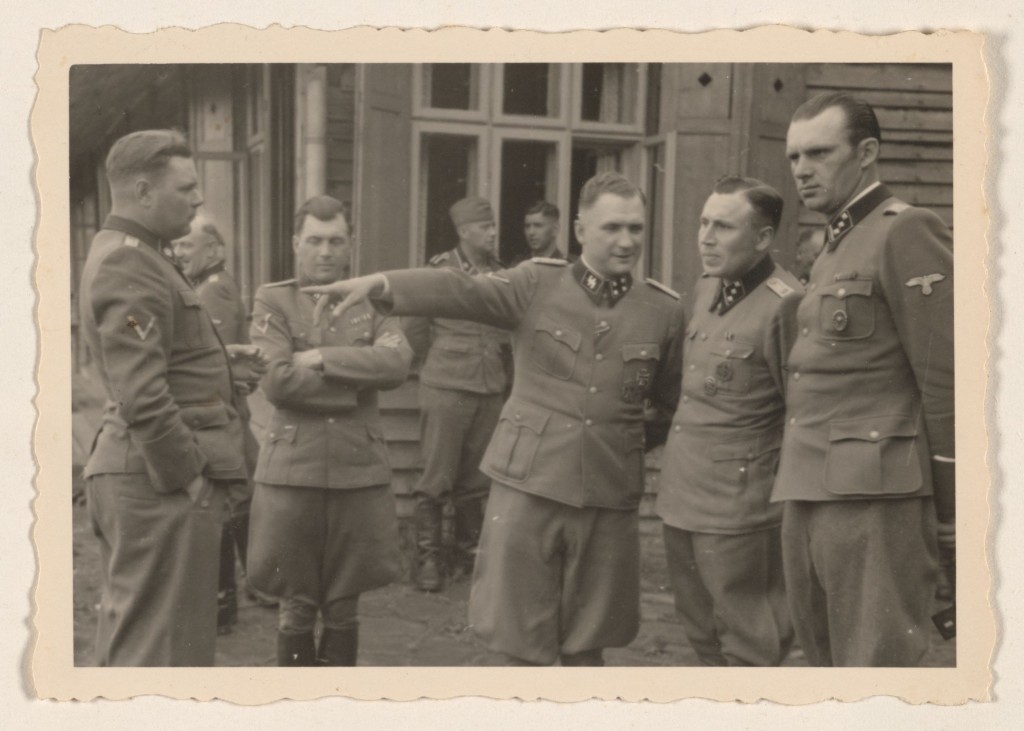
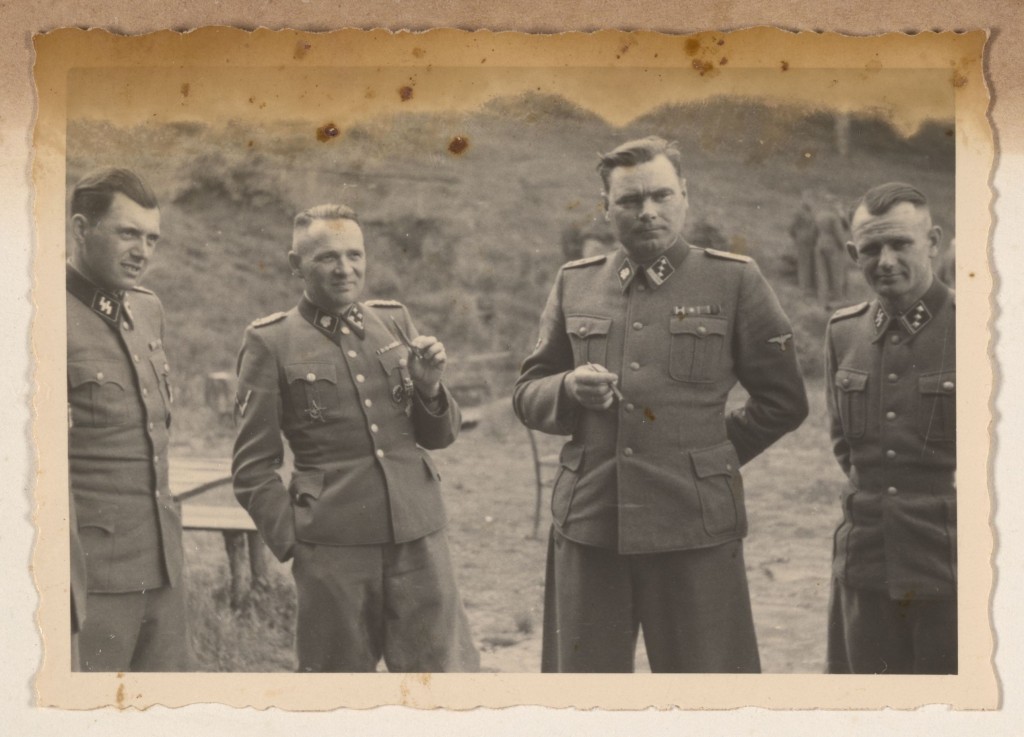
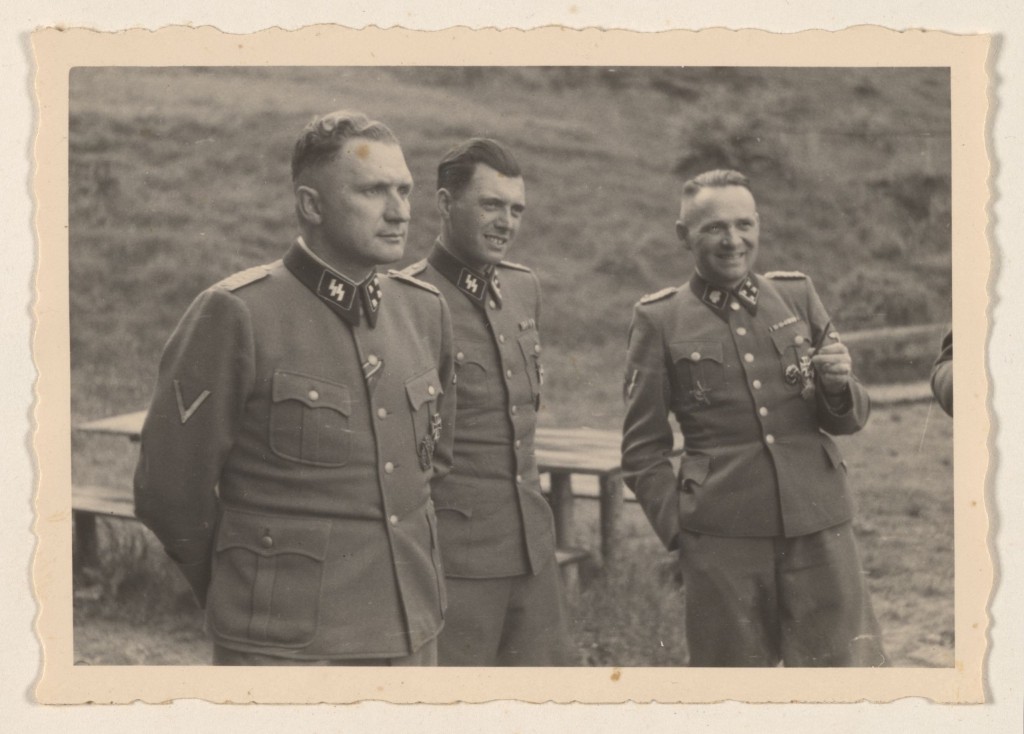
Höcker’s photo album includes 116 pictures taken in and around Auschwitz between May 1944 and January 1945. Among the images are photographs of Auschwitz officers and staff taken during official visits and ceremonies, as well as at social gatherings. Karl Höcker appears on almost every page of the album and in most of the photos. Some of the photos also show prominent Nazi perpetrators such as Rudolf Höss, Josef Mengele, Richard Baer, and Oswald Pohl. The photographs do not show the crimes these men were committing. The Höcker Album does not have any images of Auschwitz prisoners, gas chambers, or crematoria.
The time period of the photographs is especially important. Many of them were taken during the summer and fall of 1944, the deadliest period at the Auschwitz-Birkenau killing center. At this time, the SS officers shown in the photos were carrying out the mass murder of hundreds of thousands of Jews. The Jews they killed came from Hungary, the Łódź ghetto, the Theresienstadt ghetto, and other places.
Some of the photographs were taken around the same time as the photos in the Auschwitz Album (the Lili Jacob Album). The Auschwitz Album photos show Jews from Hungary upon arrival at the Auschwitz-Birkenau killing center. Several of the SS officers who appear in the Höcker Album can also be seen in the Auschwitz Album.
Who Was Karl Höcker?
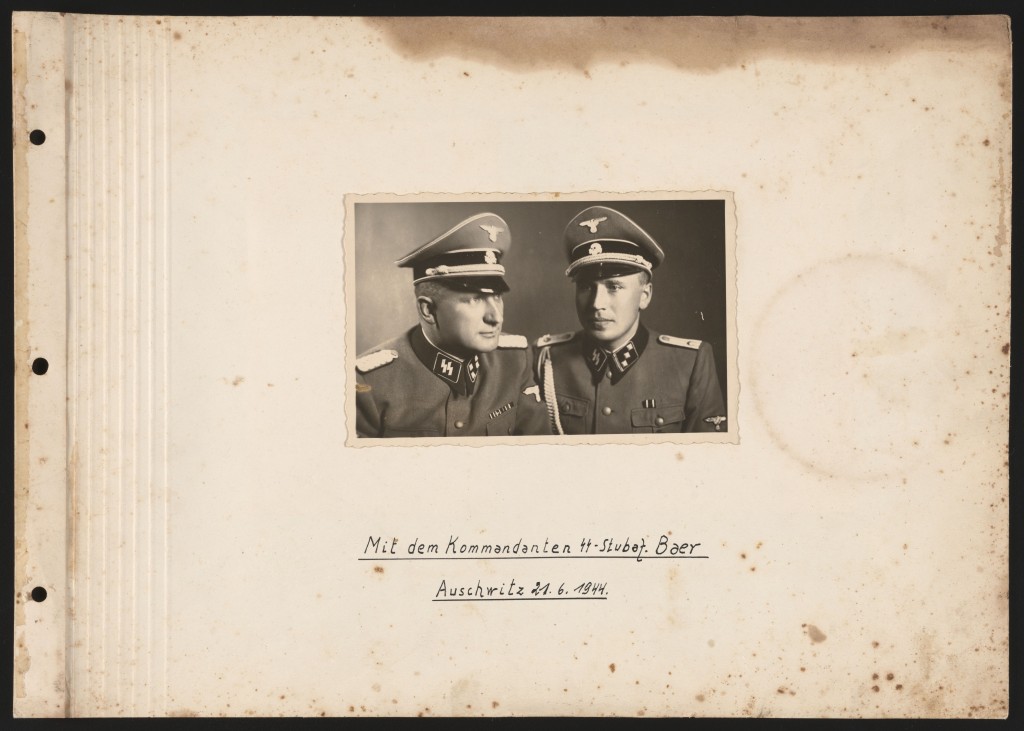
Karl Höcker was an SS officer who served in multiple concentration camps during World War II. He was stationed at Auschwitz from May 1944 until its evacuation in January 1945. Höcker served as the adjutant to SS officer Richard Baer, the last commandant of Auschwitz. Adjutant is a military title. It refers to an officer who serves as the executive and administrative aide to a higher-ranking officer. As the Auschwitz commandant’s adjutant, Höcker was responsible for keeping Baer informed of camp activities and overseeing Baer’s staff. Höcker was actively involved in running the camp.
Höcker’s Biography and Career in Nazi Germany
Karl Höcker was born in Engershausen, Germany, in December 1911. He was the youngest of six children. His father, a mason, was killed in World War I, and his mother struggled to support the family. Höcker, who worked as a bank teller in Lübbecke, joined the SS in 1933 and the Nazi Party in 1937. He also married in 1937. The couple had two children: a daughter born in 1939 and a son born in 1944. In 1939, Höcker joined the Waffen-SS.
In April 1940, Höcker was assigned to the Neuengamme concentration camp. He worked in the office of the camp commandant. From May 1943 to May 1944, he was the adjutant to the commandant of the Lublin concentration camp (called Majdanek). Höcker was stationed at Majdanek during the massacre of Jews known as Operation “Harvest Festival.”
In May 1944, Höcker was transferred to the Auschwitz concentration camp, where he served as commandant Richard Baer’s adjutant. Höcker remained at Auschwitz until its evacuation in January 1945. Baer and Höcker were transferred to the Mittelbau (Dora) concentration camp, where Baer served as camp commandant. Höcker fled before the Allies liberated the camp in April 1945. At some point after this, he disguised himself as a German soldier. Shortly afterwards, British troops captured him near Hamburg.
Höcker After the War and on Trial
Höcker remained in British custody after the war, still disguised as a soldier. British authorities released him in 1946. They did not know who he really was and were unaware of the role he had played in committing Nazi crimes. Once released, Höcker went into hiding for several years. He eventually came out of hiding and lived a relatively normal life. He found work as an accountant in Lübbecke and even underwent the denazification process.
As part of efforts to bring Nazi perpetrators at Auschwitz to justice, Karl Höcker was later identified as a war criminal. In 1963–1965, he was tried in Frankfurt alongside other SS officers who had served at Auschwitz. This trial was part of what became known as the Frankfurt Auschwitz Trials. The court found him guilty of aiding and abetting the murder of 1,000 people on three separate occasions. He was sentenced to seven years in prison. In April 1970, Höcker was released on parole.
In 1988, Höcker stood trial in West Germany for crimes he had committed at Majdanek. He was convicted in 1989 for aiding and abetting murder and sentenced to four years in prison. After his release in 1992, Höcker returned to Lübbecke. He died in 2000 at age 88.
The Photos in the Höcker Album
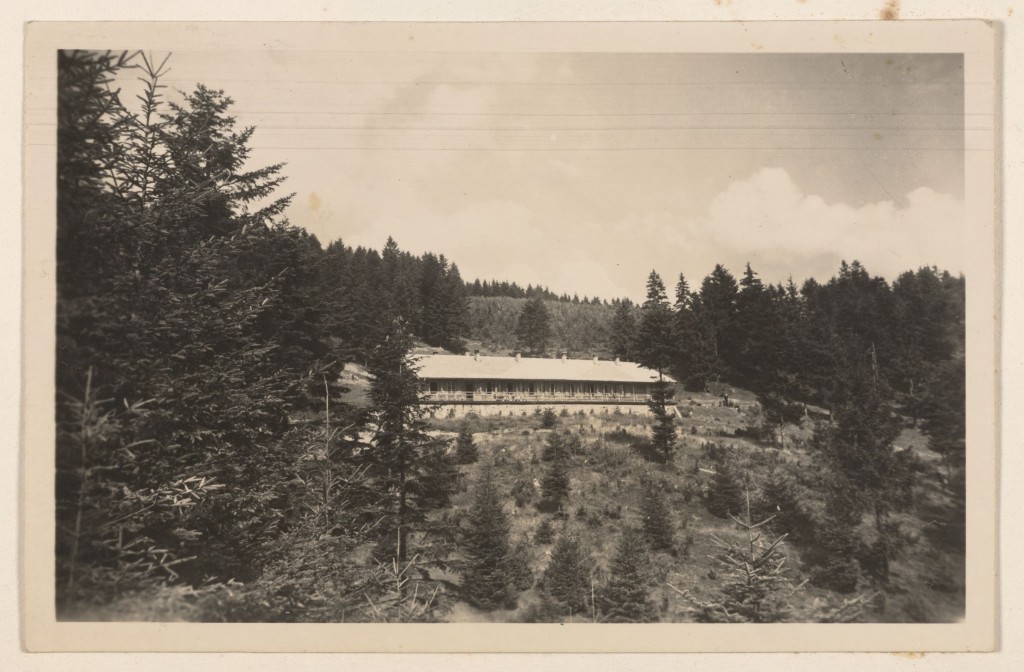
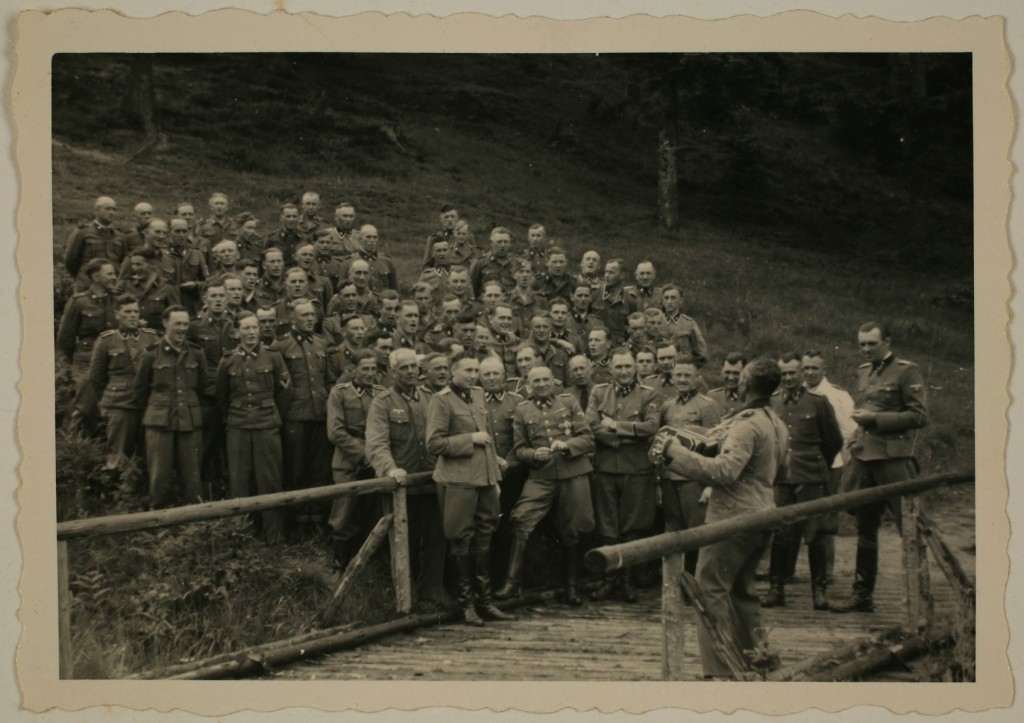
Karl Höcker’s photo album shows Auschwitz officers and staff during official visits and ceremonies, as well as at social gatherings and on day trips. Many of the photos were taken at Solahütte, an SS retreat at Międzybrodzkie Lake on the Soła River. This retreat was located about 20 miles south of Auschwitz. It was a place where SS men could relax and socialize.
The photos do not show the SS men in their day-to-day jobs running the Nazis’ most notorious concentration camp and killing center.
Official Visits from High-Ranking Nazis
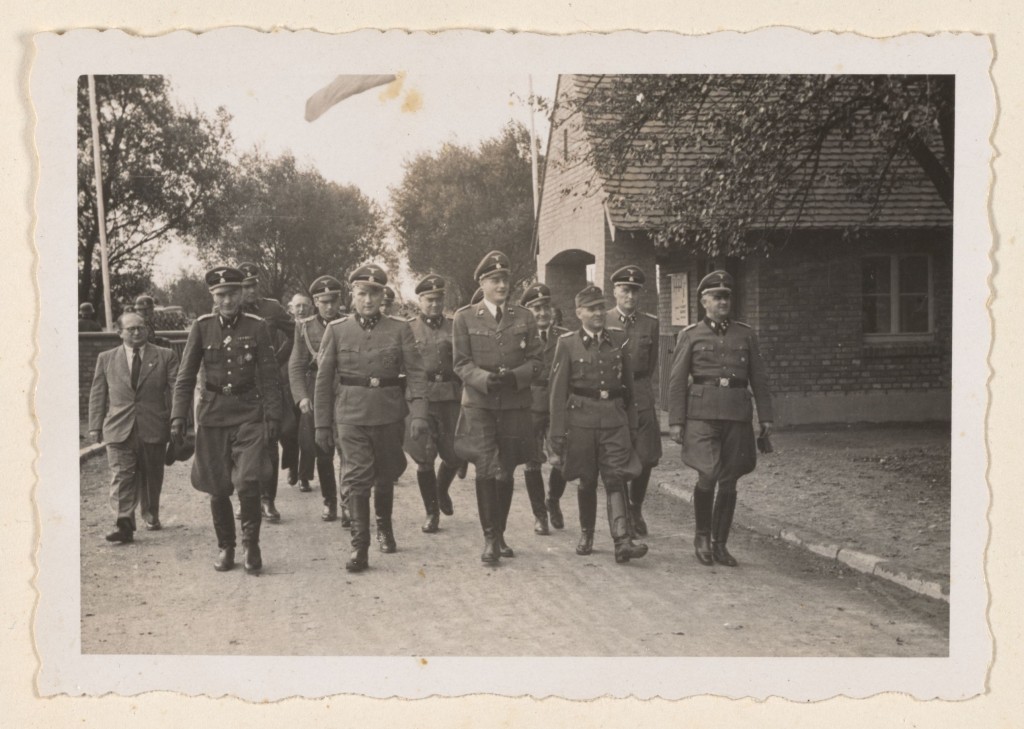
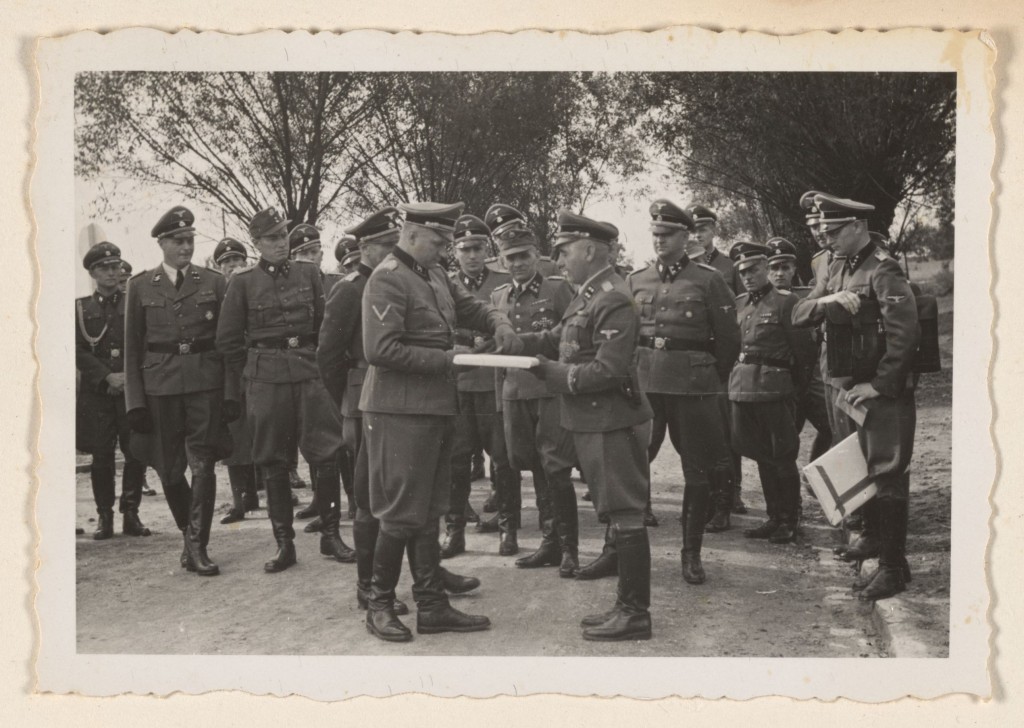
Several pages of the album include photographs taken during visits of high-ranking Nazis to Auschwitz. These included a visit in June 1944 by SS-Obergruppenführer Oswald Pohl and SS-Obergruppenführer Ernst-Heinrich Schmauser. Pohl was the leader of the SS Economic and Administrative Main Office (SS-Wirtschafts- und Verwaltungshauptamt; SS-WVHA). The SS-WVHA oversaw the administration of the concentration camp system. Schmauser was the Higher SS and Police Leader in Breslau, Germany (today Wrocław, Poland).
Luftwaffe General Erich Quade’s visit to Auschwitz is also documented in the album. Quade gave a lecture to the SS staff there on May 31, 1944. His lecture was entitled “German Air Warfare” (“Die deutsche Luftkriegsführung”).
Group Outing for Rudolf Höss at Solahütte
On July 15, 1944, SS officers stationed at the Auschwitz camp gathered at Solahütte for a farewell celebration for Rudolf Höss. Höss had served as the first commandant of Auschwitz from 1940 to 1943. He oversaw the camp’s expansion into a sprawling complex, including a killing center. Höss returned to Auschwitz in May 1944 as SS garrison commander. His task was to oversee the murder of hundreds of thousands of Jews from Hungary. By the time the SS officers gathered at Solahütte on July 15, Höss had mostly completed this murderous task.
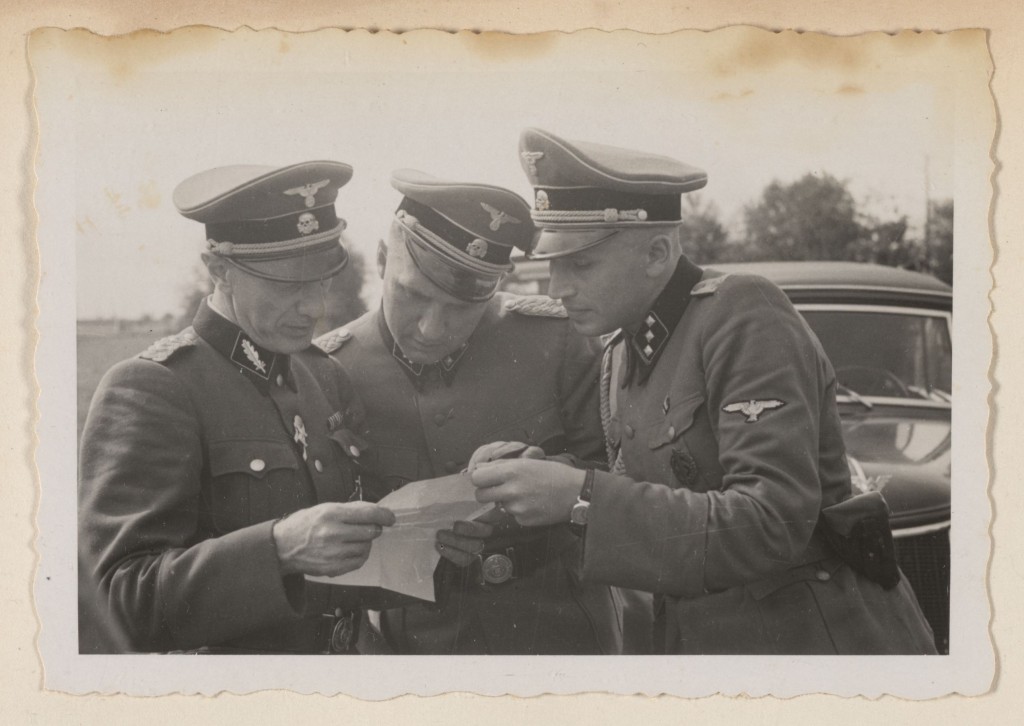
Among the SS officers who appear in these candid images are notorious Auschwitz perpetrators. In addition to Höss, Höcker, and Baer, scholars have identified, among others:
- SS-Hauptsturmführer Dr. Josef Mengele, who at the time was the physician responsible for Birkenau’s Zigeunerlager (literally, “Gypsy camp”) and who was also conducting inhumane medical experiments on prisoners;
- SS-Hauptsturmführer Josef Kramer, the commandant of Auschwitz-Birkenau (Auschwitz II);
- SS-Hauptscharführer Otto Moll, the supervisor of the crematoria;
- SS-Obersturmführer Franz Hössler, commander of the women’s camp at Auschwitz-Birkenau (Auschwitz II); and
- SS-Untersturmführer Walter Schmidetzki, supervisor of the Kanada II storage warehouse.
Many of these SS officers also appear in other photographs in the album.
SS Military Hospital Commemoration
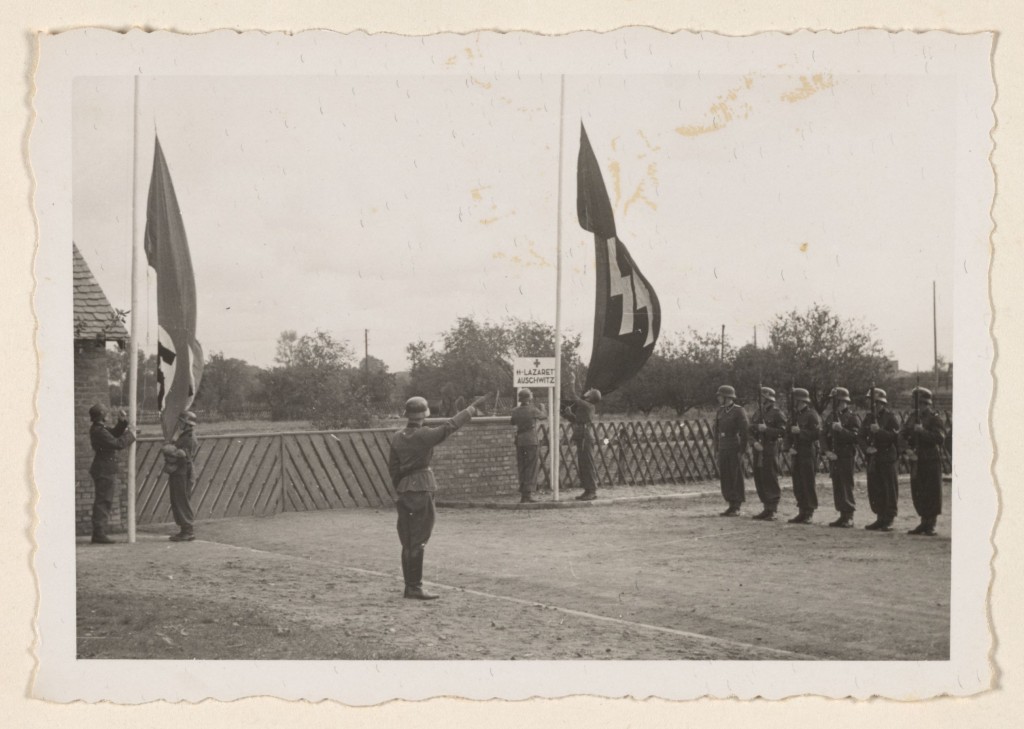
Several pages of the album depict a ceremony on September 1, 1944, for the opening of the SS military hospital. The label reads “Inauguration of the SS Hospital in Auschwitz” (“Einweihung des SS-Lazarettes in Auschwitz”). The event included an honor guard and official presentations by Baer and Dr. Enno Lolling. Lolling was the head of the Office for Medical Services and Camp Hygiene in the SS concentration camp system. SS officials from other camps also attended this event. Among the Nazis in these photos are doctors and nurses stationed at Auschwitz. They include:
- SS officer Dr. Eduard Wirths, head Auschwitz physician who carried out pharmacological and gynecological experiments on prisoners;
- Dr. Carl Clauberg, a research gynecologist who conducted forced sterilization experiments on prisoners;
- SS officer and dentist Willi Schatz; and
- SS officer and pharmacist Gerhard Gerber.
These men and other SS medical personnel also appear in other photographs in the album.
Photos of Female Staff at Solahütte
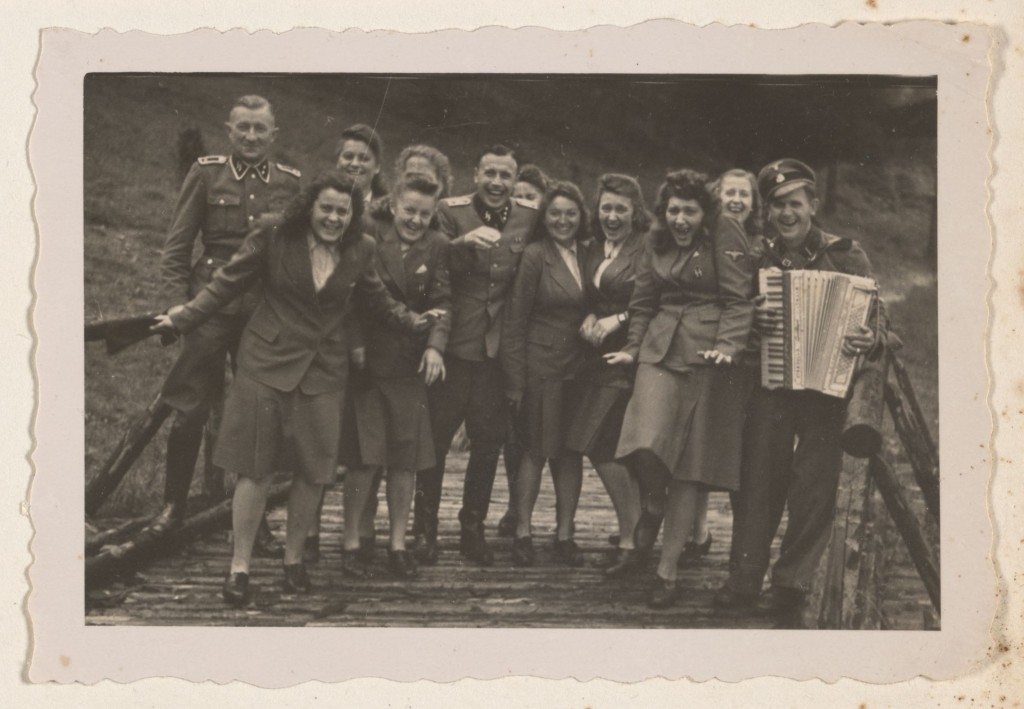
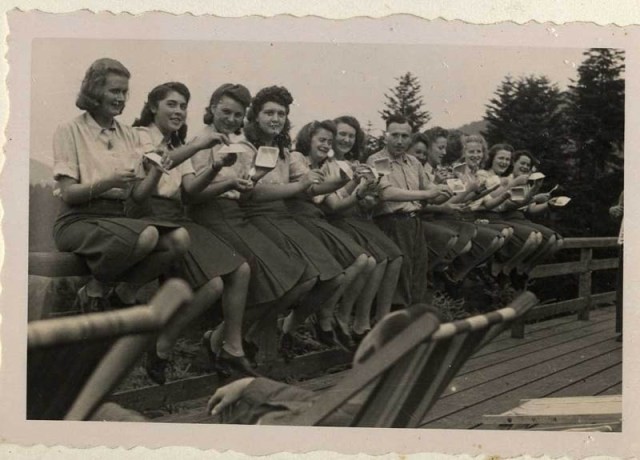
Fifteen photos in the album were taken at Solahütte on July 22, 1944. These photos show Karl Höcker accompanying a group of SS Helferinnen on a day trip to the retreat. The Helferinnen were female auxiliaries who worked for the SS as communications specialists. The photos from July 22 show the women arriving at Solahütte by bus, posing on a footbridge, and relaxing on a terrace. The album also includes two postcards showing the retreat at Solahütte.
Other Photos in the Album
The album also contains photographs from a variety of other events, including:
- funerals for SS personnel killed in American bombing raids;
- a gathering of a hunting society;
- a trip to the shooting range;
- “Yuletide” celebrations at Christmas;
- a trip to a coal mine; and
- other outings and events.
Discovering and Donating the Album to USHMM
For decades after the Holocaust, Höcker’s photo album remained unknown. In December 2006, a man wrote to the United States Holocaust Memorial Museum Archives about a photo album in his possession. He was a retired US Army lieutenant colonel and former member of the Counter Intelligence Corps (CIC), a military intelligence agency. The CIC had investigated Nazi perpetrators for US prosecutors in the Judge Advocate General’s Office. While stationed in Germany in 1946, this officer found a photo album in an abandoned apartment in Frankfurt and took it home with him. In 2006–2007, he donated the album to the Museum but wanted his donation to remain anonymous.
In January 2007, the United States Holocaust Memorial Museum Archives received the photo album, now known as the Höcker Album. The inscription “Auschwitz 21.6.1944” on its first page signaled its importance. The Museum’s conservators quickly verified the album’s authenticity. They confirmed that all of its components were of the type used in Europe in the 1940s. Museum staff identified Karl Höcker as the album’s owner and began identifying other SS officers shown in the photographs.
Since 2007, the Höcker Album has served as visual evidence of how Nazi perpetrators at Auschwitz socialized with one another even as they murdered hundreds of thousands of Jews. Scholars continue to research these images and the crimes of the men pictured in them.
Footnotes
-
Footnote reference1.
Richard Baer became the commandant of the Auschwitz main camp (also called Auschwitz I) on May 11, 1944. When Rudolf Höss left his position as SS garrison commander in July 1944, Baer took over this position as well.
Critical Thinking Questions
Why do militaries and individuals document their activities?
How might the German population and the local community in Poland have been aware of this camp, its purpose, and the conditions within?
Did the outside world have any knowledge about these camps? If so, what actions were taken by other countries and their officials? What choices do other countries have in the face of mistreatment of civilians?
How does the example of this camp demonstrate the complexity and the systematic nature of the German efforts to abuse and kill the Jews?