![A transport of Jewish prisoners marches through the snow from the Bauschovitz train station to Theresienstadt. [LCID: 69720]](https://encyclopedia.ushmm.org/images/large/781755a6-1ba5-4d8e-8b2b-9f25bdf3687f.jpg)
Browse an alphabetical list of articles about the Holocaust and World War II. Learn more about topics such as the Nazi rise to power, how and why the Holocaust happened, life in Nazi camps and ghettos, and the postwar trials.
<< Previous | Displaying results 1176-1197 of 1225 for "Article" | Next >>
Nazi Germany’s dedicated filming of itself became evidence of its crimes and was displayed at the International Military Tribunal at Nuremberg. Learn more.
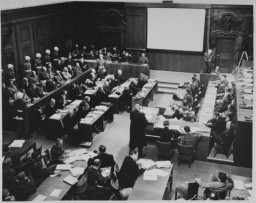
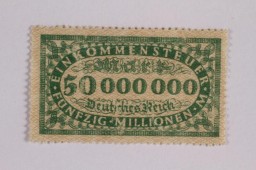
The Weimar Republic was a liberal democratic republic founded in Germany in the aftermath of WWI. Learn about the era’s political and economic crises and social trends.
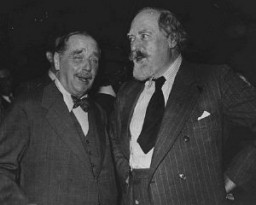
H.G. Wells was an author best known for science fiction titles. The Nazis objected to "The Outline of History," a non-fiction work, which was burned in 1933.
Werner Hegemann was a city planner and author. The Nazis opposed his views of American architecture and German historical figures. His book was burned in 1933.
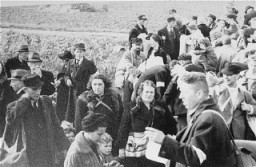
The Westerbork transit camp, located in the German-occupied Netherlands, served as a temporary collection point for Jews in the Netherlands before deportation.
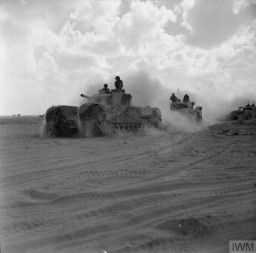
Learn more about the Western Desert campaign during World War II in Egypt and Libya between 1940-1943.
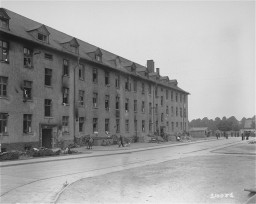
After WWII, many Holocaust survivors, unable to return to their homes, lived in displaced persons camps in Germany, Austria, and Italy. Read about Wetzlar DP camp.
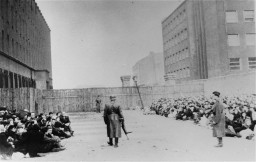
Jews were the primary targets for mass murder by the Nazis and their collaborators. Nazi policies also led to the brutalization and persecution of millions of others.
The term genocide refers to violent crimes committed against groups with the intent to destroy the existence of the group. Learn about the origin of the term.
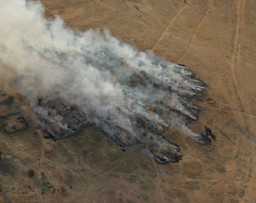
Nazi Germany established killing centers in order to murder Jew in gas chambers. Killing centers are sometimes called “death camps” or “extermination camps.”
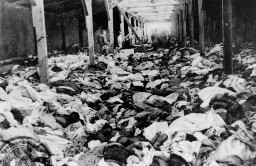
The White Rose, led by students including Hans and Sophie Scholl, was an anti-Nazi group during WWII. Its members spread leaflets denouncing the regime.
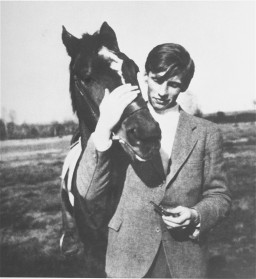
The prosecutors for the trial of Nazi war criminals at Nuremberg came the victorious Allied nations—the United States, Great Britain, France, and the Soviet Union.
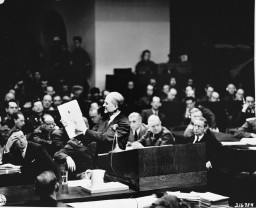
The International Military Tribunal charged 24 defendants representing a cross-section of German diplomatic, economic, political, and military leadership.
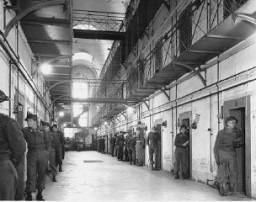
Survivor Elie Wiesel devoted his life to educating the world about the Holocaust. Learn about key events in the world and his life from 1928–1951.
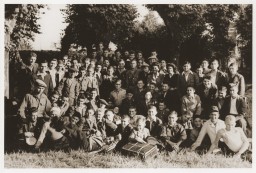
Brief overview of the charges against Wilhelm Frick during the International Military Tribunal at Nuremberg. Frick was Reich minister of the interior 1933-1943.
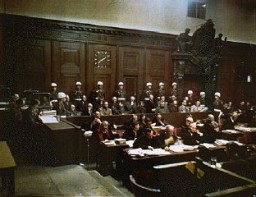
Brief overview of the charges against Wilhelm Keitel, German Armed Forces High Command leader, during the International Military Tribunal at Nuremberg.
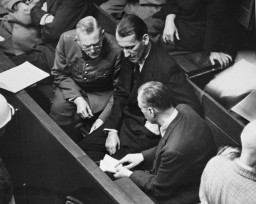
Field Marshal Wilhelm Keitel was commander of all German armed forces during World War II. Learn about his military career and postwar trial.
American journalist, foreign correspondent, author, and pioneer radio broadcaster William L. Shirer was one of the key observers and chroniclers of the Nazi regime.
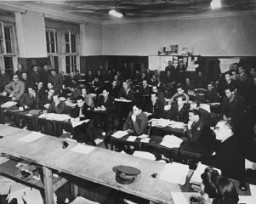
Many journalists, private citizens, and staff observed the historic events of the International Military Tribunal at Nuremberg from the visitors' gallery.
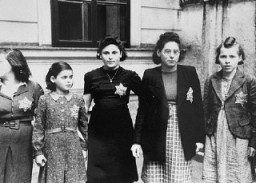
Under the Nazis, Jewish and other “non-Aryan” women were often subjected to brutal persecution. Learn more about the plight of women during the Holocaust.
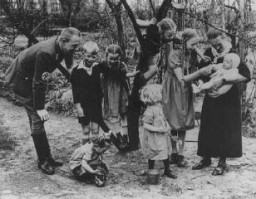
Despite the Nazi Party's ideology of keeping women in the home, their roles expanded beyond wives and mothers.
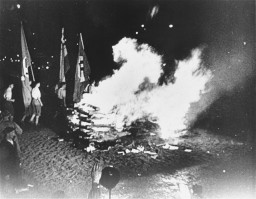
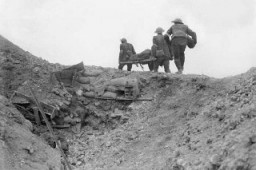
The experiences of World War I and its aftermath would profoundly shape the attitudes and actions of leaders and ordinary people during the Holocaust.
We would like to thank Crown Family Philanthropies, Abe and Ida Cooper Foundation, the Claims Conference, EVZ, and BMF for supporting the ongoing work to create content and resources for the Holocaust Encyclopedia. View the list of donor acknowledgement.